The hum of the microwave is a familiar sound in your kitchen, a promise of quick meals and reheated leftovers. You press a few buttons, set the time, and in minutes, your food is ready. But do you truly understand what’s happening inside that metal box? Microwave cooking isn’t magic; it’s science, and understanding the fundamental principles can elevate your culinary creations from merely heated to perfectly cooked. This guide will demystify the science behind your microwave, equipping you with the knowledge to cook smarter, safer, and more delicious meals.
You’ve probably heard the term “microwaves” thrown around, but what exactly are they, and how do they work their culinary magic? It all comes down to electromagnetic radiation, specifically at a frequency of around 2.45 gigahertz.
Understanding Electromagnetic Radiation
Imagine a spectrum of energy that travels in waves. This is the electromagnetic spectrum, and it includes everything from radio waves and visible light to X-rays and gamma rays. Microwaves sit in a specific part of this spectrum, a frequency that is particularly good at interacting with water molecules.
The Role of Frequency and Wavelength
The frequency of a wave determines how many times it oscillates per second, measured in Hertz (Hz). Gigahertz (GHz) means billions of oscillations per second. A higher frequency generally means a shorter wavelength. The specific 2.45 GHz frequency used in most home microwaves is crucial because it has a wavelength that allows it to penetrate food effectively.
The Power of Dielectric Heating
Microwave ovens don’t heat food by simply warming the air around it, like a conventional oven. Instead, they employ a process called dielectric heating. This is where the science gets truly interesting.
Water Molecules: The Key Ingredient
The magic happens because water molecules, which are present in virtually all foods, have a unique structure. They are polar, meaning they have a slight positive charge on one end and a slight negative charge on the other, like tiny magnets.
The Dance of the Molecules
When microwaves bombard your food, their oscillating electromagnetic field causes these polar water molecules to rapidly spin back and forth, trying to align themselves with the changing field. This rapid spinning and bumping into each other generates friction, and friction, as you know, creates heat. This internal friction is what cooks your food from the inside out.
Beyond Water: How Other Molecules Respond
While water is the primary player, other molecules in food can also contribute to heating. Fats and sugars are also polar to some extent and can be heated by microwaves, though generally to a lesser degree than water. This is why foods with higher fat or sugar content might cook differently or even brown slightly in a microwave, although significant browning is rare.
The Limitations of Microwaves
It’s important to understand that microwaves primarily heat water. If a food item is very dry, it will not heat effectively in a microwave. This is why some recipes call for adding a little water or liquid when microwaving certain ingredients.
Understanding the science behind common microwave rules can greatly enhance your cooking experience and ensure food safety. For a deeper dive into the principles that govern microwave cooking, you can check out this informative article that explores the physics of microwaves and offers practical tips for effective use: Freaky Science. This resource provides valuable insights into how microwaves heat food and why certain practices, like covering dishes or stirring food, are recommended.
The Physics of Penetration: How Microwaves Reach the Core
You might wonder how those invisible waves can reach the center of a thick piece of chicken or a dense casserole. The depth to which microwaves can penetrate food is a critical factor in understanding how they cook.
Penetration Depth: A Crucial Factor
The distance microwaves travel into food before their energy is absorbed is known as the penetration depth. This depth varies depending on the food’s composition and the microwave’s power.
Factors Influencing Penetration
- Food Composition: Foods with high water content allow microwaves to penetrate further. Denser foods and those with higher fat or sugar content will absorb microwave energy more readily, limiting penetration.
- Microwave Power: Higher wattage microwaves can deliver more energy, which can influence how quickly and deeply the microwaves are absorbed.
- Frequency: While most microwaves operate at a standard frequency, variations in industrial or specialized microwave ovens can affect penetration.
The “Edge” Effect: Why Food Cooks Unevenly
Because microwaves are absorbed as they penetrate, the outer layers of food tend to cook faster than the inner layers. This is a primary reason for uneven cooking in microwaves. The energy is depleted as it travels, meaning the innermost parts receive less of the microwave bombardment.
Understanding the Hot and Cold Spots
This uneven energy distribution leads to what are commonly referred to as “hot spots” and “cold spots” in microwaved food. You’ve likely experienced this – one bite is piping hot, while another is lukewarm.
Strategies for Even Cooking
To combat uneven cooking, several strategies are employed:
Rotating and Stirring: Your Best Friends
The most effective way to ensure even cooking is to periodically rotate or stir your food. This moves the cooler, less cooked parts into areas that have received more microwave energy and vice versa. For larger or irregularly shaped items, using a turntable is essential. For liquids or dishes with distinct components, stirring halfway through the cooking time is highly recommended.
Arranging Food Strategically
When microwaving multiple items or ingredients of varying sizes, arranging them strategically can help. Place thicker or denser pieces towards the outside of the microwave-safe dish, as the outer edges of the dish tend to receive more direct microwave energy. Smaller or thinner pieces can be placed in the center.
Covering Your Food
Covering food can help trap steam, which aids in more even cooking and prevents moisture loss. It also helps to distribute the heat more uniformly. However, be sure to vent the cover slightly to allow steam to escape and prevent pressure buildup.
The Science of Food Chemistry: How Microwaves Affect Nutrients and Textures
Beyond just heating, microwaves interact with the complex chemical makeup of food, influencing everything from nutrient retention to texture and flavor.
Nutrient Retention: A Surprising Advantage
Contrary to popular belief, microwave cooking can actually be a superior method for retaining certain nutrients compared to other cooking methods, especially boiling.
Water-Soluble Vitamins: The Winners
Water-soluble vitamins like Vitamin C and B vitamins are often lost when food is boiled because they leach into the cooking water. Microwaving, with its shorter cooking times and minimal use of water, often results in significantly higher retention of these vitamins.
Fat-Soluble Vitamins: Less Affected
Fat-soluble vitamins (A, D, E, and K) are generally less affected by cooking methods as they are not leached into water. Their retention in microwaved food is comparable to other cooking methods.
Minerals: Similar Retention
Minerals are also generally well-retained in microwaved food due to the reduced cooking time and minimal water usage.
Textural Changes: The Bouncy and the Brittle
Microwaves can have a profound impact on the texture of food. The rapid heating and the way water molecules behave can lead to distinct textural outcomes.
The “Rubbery” Phenomenon
Overcooking in a microwave is a common culprit for achieving that undesirable “rubbery” texture, particularly in meats and cheeses. This happens when the proteins in the food become overly denatured and coagulated due to the rapid and intense heating.
Moisture Loss and Drying Out
If food isn’t covered or if cooked for too long, the rapid evaporation of water can lead to drying out and a brittle texture.
The Art of Texture Control
To achieve desirable textures:
- Monitor Cooking Times Closely: This is paramount. It’s always better to undercook slightly and add more time than to overcook.
- Use Appropriate Power Levels: Not all foods require full power. Lowering the power level for delicate items can prevent overcooking and textural damage.
- Allow for Standing Time: This is a crucial, often overlooked step. After microwaving, the food continues to cook due to residual heat. Allowing food to stand for a few minutes lets the heat distribute evenly, completing the cooking process and often improving texture.
Flavor and Aroma Development: A Different Approach
Microwave cooking is not typically associated with the browning and caramelization that contribute to complex flavors in traditional cooking.
Limited Maillard Reaction
The Maillard reaction, responsible for the delicious browning and complex flavors in roasted, grilled, or fried foods, requires higher temperatures and longer cooking times than typically achieved in a microwave. This is why microwaved foods can sometimes lack depth of flavor.
Strategies for Flavor Enhancement
- Pre-cook or Sear: For meats, consider searing them on the stovetop before microwaving to develop flavor and color.
- Add Flavorings Post-Microwaving: Herbs, spices, sauces, and garnishes added after microwaving can significantly enhance the flavor profile.
- Utilize Microwave-Specific Recipes: Many recipes are specifically designed for microwave cooking and incorporate ingredients and techniques to maximize flavor.
Safety First: Navigating the Microwave Environment
While incredibly convenient, microwave ovens operate using powerful electromagnetic energy. Understanding safety guidelines is crucial to ensure you and your family are protected.
Material Matters: What Can and Cannot Go In
Not all containers are created equal when it comes to microwave use. The wrong materials can melt, spark, or even leach harmful chemicals into your food.
Microwave-Safe Ceramics and Glass
Generally, glass and ceramic dishes without metallic trim are safe for microwave use. Look for a “microwave safe” label.
Plastics: The Nuances
Many plastics are microwave-safe, but it’s essential to check for labels. Some plastics can warp, melt, or release chemicals like BPA (Bisphenol A) when heated. Opt for BPA-free or specifically labeled microwave-safe plastics. Avoid plastic wrap directly touching food as it can melt.
Metals: A Big No-No
Metal reflects microwaves, causing them to bounce around the oven cavity. This can lead to arcing (sparks) and potentially damage your microwave. This includes aluminum foil, metal utensils, and dishes with metallic trim.
Paper Products: Use with Caution
Plain white paper plates and towels are generally safe for short heating times, but avoid recycled paper products which may contain metal flecks. Never use paper bags, as they can ignite.
The Myth of Radiation Leaks
Modern microwave ovens are designed with robust safety features to contain the electromagnetic radiation.
The Faraday Cage Principle
The metal casing of your microwave acts as a Faraday cage, which is designed to block electromagnetic fields. The door is sealed with a mesh screen that allows you to see inside but prevents microwaves from escaping.
When to Be Concerned
If your microwave door is damaged, bent, or doesn’t close properly, it’s best to have it inspected or replaced. A damaged door is the most common way for radiation leaks to occur.
Preventing Fires and Explosions
While rare, fires and explosions can happen in microwaves if improper foods or materials are used.
Foods to Avoid
- Whole Eggs: The steam builds up inside the shell, causing them to explode.
- Certain Peppers: The capsaicin (the compound that makes peppers hot) can vaporize and irritate your eyes and throat.
- Grease Fires: While not an explosion, excessive grease buildup can ignite. Clean your microwave regularly.
Water Boiling Danger: The “Superheating” Phenomenon
Water can become “superheated” in a microwave, meaning it heats beyond its boiling point without visibly bubbling. When disturbed (e.g., by adding a tea bag or spoon), it can suddenly and violently erupt. To prevent this:
- Stir Water Before Heating: Always stir water before or after microwaving to break the surface tension.
- Place a Wooden Spoon or Skewer in the Water: This provides nucleation sites for bubbles to form.
- Use a Microwave-Safe Mug: Avoid very smooth-walled mugs.
Understanding the science behind common microwave rules can greatly enhance your cooking experience and ensure food safety. For those interested in delving deeper into this topic, a related article explores the principles of microwave cooking and the reasons behind specific guidelines. You can read more about it in this informative piece on Freaky Science, which discusses how microwaves work and why certain materials should be avoided. By following these insights, you can make the most of your microwave while keeping your meals delicious and safe.
Mastering Microwave Cooking: Advanced Techniques and Tips
| Microwave Rule | Science Behind |
|---|---|
| Stirring food | Helps distribute heat evenly and prevent hot spots |
| Standing time | Allows food to continue cooking and heat to distribute after microwave is turned off |
| Covering food | Traps steam to help food cook more evenly and retain moisture |
| Arranging food evenly | Ensures even exposure to microwave energy for consistent cooking |
Once you understand the fundamentals, you can start to move beyond simply reheating and embrace the microwave as a versatile cooking tool.
Power Levels: Your Secret Weapon
Most microwaves offer adjustable power levels, often displayed as percentages (e.g., 50% power, 70% power). This is not just about cooking faster; it’s about controlling the intensity of the microwave energy.
When to Use Lower Power Levels
- Delicate Foods: Fish, custards, and some vegetables benefit from lower power settings to prevent overcooking and maintain moisture.
- Melting: Chocolate, butter, and cheese melt more evenly and with less risk of burning at lower power levels.
- Simmering: You can gently simmer sauces or broths at lower power settings.
Experimentation is Key
Don’t be afraid to experiment with different power levels for various foods. Your microwave’s manual might offer some guidance, but personal experience will be your best teacher.
Standing Time: The Unsung Hero of Microwaving
As mentioned before, standing time is critical. When the microwave stops, the cooking process doesn’t. The heat generated continues to distribute throughout the food.
Allowing for Even Heat Distribution
This “carryover cooking” allows the heat to penetrate deeper into the food, finishing the cooking process and ensuring a more even temperature throughout.
Optimal Standing Times
- Short cooking times (1-2 minutes): 1-2 minutes of standing time.
- Medium cooking times (3-5 minutes): 3-5 minutes of standing time.
- Longer cooking times (over 5 minutes): 5-10 minutes of standing time.
Browning and Crisping: Achieving What Microwaves Don’t Do Naturally
Microwaves, by themselves, don’t brown or crisp food. However, you can achieve these desirable textures with a few clever techniques.
Combination Ovens: The Best of Both Worlds
Many modern microwaves are “combination ovens,” meaning they also have conventional heating elements or convection fans. These ovens can grill, bake, and roast, offering the best of both worlds.
Using Microwave-Safe Grilling Accessories
Some microwave-safe accessories are designed to help brown and crisp food. These often have metal components that heat up to provide some surface browning. Follow the manufacturer’s instructions carefully.
The “Two-Stage” Cooking Method
For a more hands-on approach, you can use a two-stage cooking method:
- Microwave to Cook: Cook the food in the microwave until it’s almost done.
- Broil or Pan-Sear to Brown: Transfer the food to a conventional oven’s broiler or a hot pan for a few minutes to achieve browning and crispiness.
Reheating Smarter: Elevating Leftovers
Reheating leftovers in the microwave doesn’t have to result in rubbery chicken or dried-out pasta.
Add a Splash of Liquid
For many dishes, adding a tablespoon or two of water, broth, or sauce before reheating can help prevent drying out and revive moisture.
Cover Loosely
Covering your leftovers loosely with microwave-safe plastic wrap or a lid traps steam and helps maintain moisture. Vent the cover to prevent pressure buildup.
Stir and Rotate
Just as with initial cooking, stirring and rotating your leftovers during reheating ensures even heating and prevents cold spots.
By understanding the science behind your microwave, you can transform it from a simple reheating appliance into a powerful and versatile cooking tool. Experiment, observe, and most importantly, enjoy the convenience and speed that microwave cooking offers, all while ensuring your food is cooked safely and deliciously.
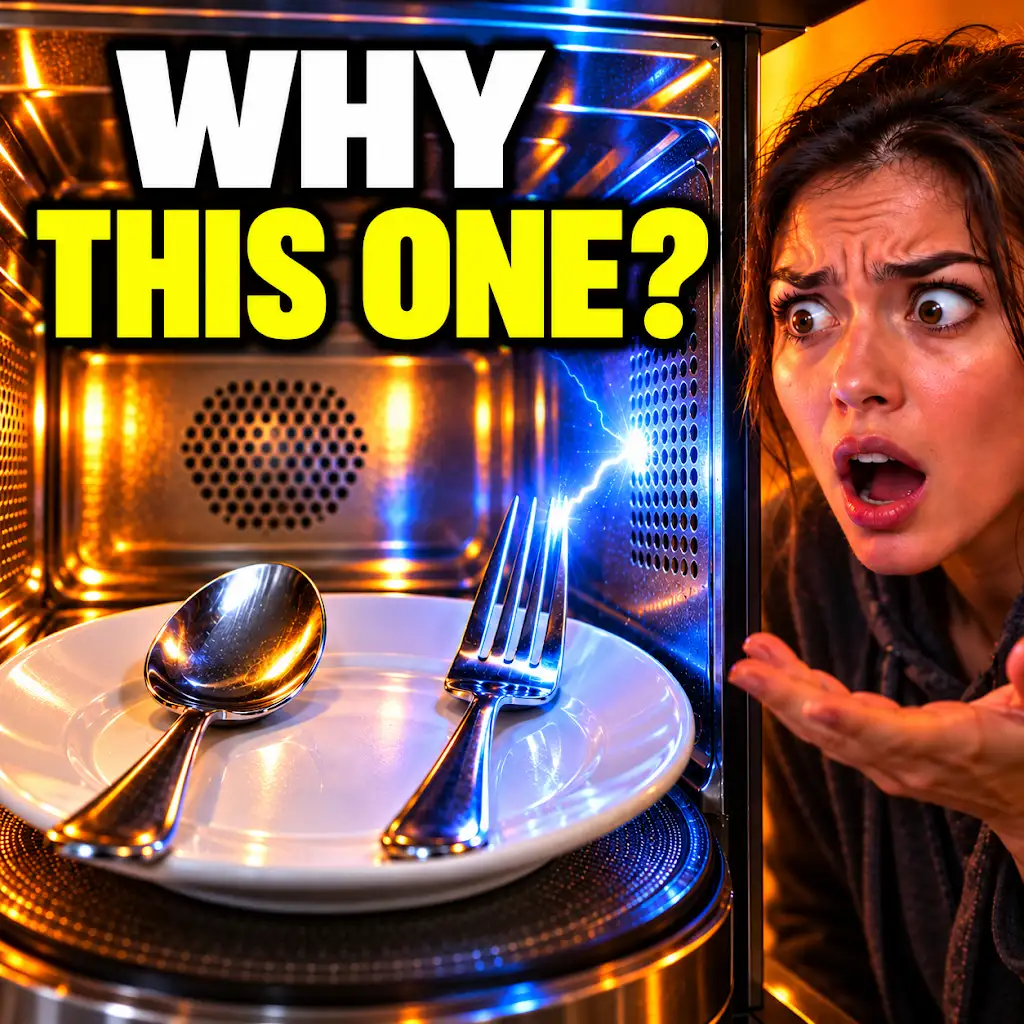
A Fork and a Spoon React Differently in a Microwave. Why?
FAQs
What is the science behind not putting metal in the microwave?
Metal reflects microwaves, causing them to bounce around the inside of the microwave and potentially cause sparks or fires. This can also damage the microwave itself.
Why should you not microwave food in plastic containers?
Some plastic containers can release harmful chemicals when heated, which can then leach into the food. It’s best to use microwave-safe glass or ceramic containers instead.
What happens when you microwave food for too long?
Overcooking food in the microwave can cause it to dry out or become tough. This is because the microwave heats the water molecules in the food, and when all the water is gone, the food can become overcooked.
Why is it important to cover food when microwaving?
Covering food helps to trap steam, which can help the food cook more evenly and retain moisture. It also helps to prevent splattering and keeps the inside of the microwave clean.
How does the microwave heat food?
Microwaves work by causing water molecules in the food to vibrate, which creates heat. This heat then cooks the food from the inside out.