
You’ve probably seen them in sleek, modern kitchens, or perhaps a friend raved about how quickly their soup simmered to perfection. Induction cooktops are the new frontier of stovetop cooking, promising speed, precision, and an energy efficiency that traditional gas and electric ranges can only dream of. But how exactly do these futuristic appliances work? The secret lies in a fascinating application of physics, specifically the science of electromagnetism. Forget about glowing coils or dancing flames; induction cooking is a marvel of unseen forces, converting electrical energy directly into heat within your cookware itself.
This isn’t magic, though it might feel like it when your water boils in a blink. It’s a sophisticated understanding of how magnetic fields interact with conductive materials, a principle that has been known for centuries but only recently harnessed for our culinary convenience. You’re not just turning a knob; you’re engaging a complex interplay of electrical currents, magnetic fields, and the very molecular structure of your pots and pans.
Before we delve into the nitty-gritty of your induction cooktop, let’s take a brief detour into the fundamental principles that make it all possible. The concept of electromagnetism, the unification of electricity and magnetism, is a cornerstone of modern science. It tells us that electricity and magnetism are not independent forces but rather two sides of the same coin, inextricably linked and capable of influencing each other.
Faraday’s Law of Induction: The Heart of the Matter
At the core of induction cooking lies Michael Faraday’s groundbreaking discovery in the early 19th century: Faraday’s Law of Induction. This law states that a changing magnetic field will induce an electromotive force (EMF) – which is essentially a voltage – in a conductor. Think of it like this: if you have a magnetic field that’s constantly shifting or moving, and you place a metal object within that field, you’re essentially pushing electrons around within that metal, creating an electrical current.
This might sound abstract, but it’s the very mechanism that powers many technologies you use daily, from electric generators to wireless charging pads. In your induction cooktop, this law is employed with exquisite precision. You’re not just heating the surface of the cooktop; you’re creating a powerful, rapidly changing magnetic field beneath the smooth, ceramic glass surface.
Lenz’s Law: The Direction of the Current
Closely related to Faraday’s Law is Lenz’s Law, which describes the direction of the induced current. Lenz’s Law states that the induced current will flow in a direction that opposes the change in magnetic flux that produced it. While you don’t need to be a physicist to operate your induction stove, understanding this adds another layer to the scientific elegance. It’s a natural regulatory mechanism, ensuring that the energy transfer is efficient and controlled.
Induction cooking is a fascinating technology that utilizes electromagnetic fields to generate heat directly in cookware, making it an efficient and precise cooking method. For those interested in learning more about the science behind induction cooking and its benefits, you can explore a related article on this topic at Freaky Science. This resource delves into the principles of induction heating and how it compares to traditional cooking methods, providing valuable insights for both cooking enthusiasts and professionals alike.
Beneath the Surface: The Induction Coil and Its Role
So, where does this crucial magnetic field come from? It originates from the induction coil, a vital component hidden beneath the ceramic glass surface of your cooktop. This coil isn’t just any piece of wire; it’s specifically designed to generate the powerful, alternating magnetic field needed for induction cooking.
The Anatomy of the Induction Coil
The induction coil is typically made of copper wire, chosen for its excellent electrical conductivity. It’s usually wound in a flat spiral, the shape and dimensions of which are carefully calculated to create the optimal magnetic field for the cooking zone. When you turn on your induction cooktop, an alternating current (AC) is sent through this copper coil.
The Power of Alternating Current (AC)
The key here is the “alternating” nature of the current. Unlike direct current (DC), where electrons flow in one direction, AC current constantly reverses its direction. This rapid oscillation is what creates the changing magnetic field that Faraday’s Law describes. The frequency of this AC current is typically in the kilohertz range (thousands of cycles per second), which is high enough to generate a significant and rapidly fluctuating magnetic field.
The Magnetic Dance: How Heat is Generated in Your Cookware

Now, let’s bring it all together. You’ve placed your specially designed pot on the induction cooktop. The induction coil beneath is humming with alternating current, generating that powerful, oscillating magnetic field. What happens next is where the magic truly unfolds.
Eddy Currents: The Invisible Heaters
When the rapidly changing magnetic field from the induction coil interacts with the base of your ferromagnetic cookware (more on that later), it induces electrical currents within the metal itself. These are known as eddy currents. Imagine the magnetic field lines weaving through the metal of your pot. As these field lines change, they “push” and “pull” the free electrons in the metal, causing them to flow in circular paths – these are the eddy currents.
Resistive Heating (Joule Heating): Turning Current into Heat
Here’s where the science gets really practical. The metal of your cookware, while a good conductor, isn’t perfectly conductive. It has electrical resistance. As these eddy currents flow through the metal, they encounter this resistance. Just like friction creates heat when you rub your hands together, the resistance within the metal causes the eddy currents to dissipate their energy as heat. This phenomenon is known as Joule heating, or resistive heating. The faster and more intense the eddy currents, the more heat is generated.
Direct Heating: A Game Changer
This is the fundamental difference between induction and traditional cooking methods. With a gas stove, you’re heating the air and then the pot. With a radiant electric coil, you’re heating the coil, which then heats the pot through conduction and radiation. With induction, however, the heat is generated directly within the base of the cookware itself. This means far less heat is lost to the surrounding air, making induction incredibly energy-efficient. You’re not heating the cooktop surface to heat the pot; you’re heating the pot to cook your food.
The Crucial Ingredient: Ferromagnetic Cookware
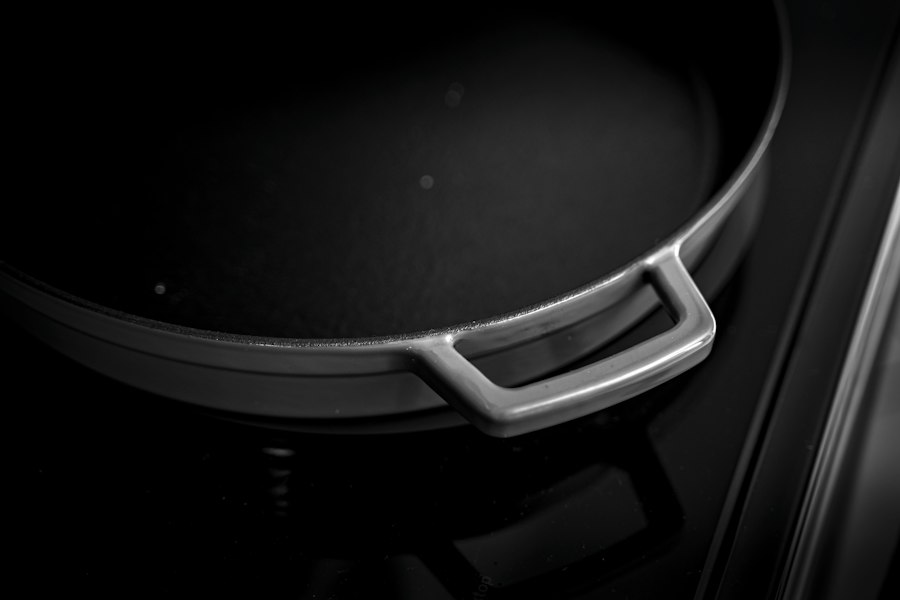
Not just any pot or pan will work on an induction cooktop. The entire principle relies on the cookware being susceptible to the magnetic field. This means your cookware needs to be made of, or contain, a ferromagnetic material.
What is Ferromagnetism?
Ferromagnetic materials are those that can be strongly attracted to a magnet and can be permanently magnetized. Common examples include iron and nickel, and alloys like steel. The unique magnetic properties of these materials allow them to efficiently interact with the magnetic field generated by the induction coil.
How to Tell if Your Cookware is Induction-Compatible
The easiest way to check if your existing cookware is induction-compatible is to use a magnet. If a magnet sticks firmly to the base of your pot or pan, it’s very likely to work on an induction cooktop. If the magnet weakly sticks or doesn’t stick at all, you’ll probably need to invest in new cookware. Look for cookware specifically labeled as “induction compatible.” Many manufacturers will display a small coil symbol on their packaging.
Why Other Materials Won’t Work (or Work Poorly)
Materials like aluminum, copper, glass, and ceramics are generally not ferromagnetic. While they can be good conductors of heat, they don’t interact with magnetic fields in the way required for induction. If you try to use a purely aluminum pot on an induction cooktop, the magnetic field will pass right through it, and very little to no heat will be generated. Some manufacturers offer induction-compatible cookware with a ferromagnetic disc bonded to the base of an otherwise non-ferromagnetic pot, allowing for the benefits of materials like copper or aluminum while still enabling induction.
Induction cooking has gained popularity for its efficiency and precision, but many people wonder where the heat actually comes from. The process involves the use of electromagnetic fields to directly heat cookware, making it a unique alternative to traditional cooking methods. For a deeper understanding of how this technology works, you can explore a related article that delves into the science behind induction cooking. This article provides insights into the mechanics and benefits of this innovative cooking technique, making it a great resource for anyone interested in modern culinary methods. To learn more, visit this informative page.
The Efficiency Advantage: Why Induction is Smarter Cooking
| Aspect | Description | Details |
|---|---|---|
| Source of Heat | Electromagnetic Induction | Heat is generated directly in the cookware by magnetic fields induced by the cooktop coil. |
| Cooktop Component | Induction Coil | Coil beneath the cooktop surface creates an alternating magnetic field when electric current passes through it. |
| Cookware Material | Ferromagnetic Metals | Cookware must be made of magnetic materials like cast iron or stainless steel to generate heat. |
| Heating Mechanism | Eddy Currents | Magnetic field induces eddy currents in the cookware, which produce heat due to electrical resistance. |
| Heat Location | Cookware Base | Heat is generated directly in the base of the cookware, not on the cooktop surface. |
| Efficiency | High | Because heat is generated in the cookware, energy loss is minimized compared to traditional methods. |
The direct generation of heat within the cookware leads to a significant advantage in terms of energy efficiency. This is one of the primary reasons why induction cooking is gaining popularity.
Minimizing Heat Loss
Traditional cooktops lose a considerable amount of energy to the surrounding environment. Gas flames lick up the sides of pots, and radiant electric elements heat the air around them. This wasted energy translates to higher energy bills and a less comfortable kitchen environment, especially in warmer months. With induction, the heat is precisely directed into the base of your cookware, with minimal spillage. The ceramic glass surface of the cooktop itself only gets warm as a byproduct of the heat transferred from the cookware.
Faster Heating Times
Because the heat is generated directly in the pan, induction cooktops can heat up much faster than their conventional counterparts. Water can boil in a fraction of the time, and searing meats becomes incredibly quick and efficient. This speed not only saves energy but also saves you time in the kitchen.
Precise Temperature Control
Beyond just speed, induction offers exceptional control over cooking temperatures. The power delivered to the induction coil can be adjusted with great precision, allowing for very fine-tuned temperature settings. This means you can go from a rolling boil to a gentle simmer with immediate responsiveness, eliminating the lag time often associated with adjusting gas or electric controls. This precision is invaluable for delicate tasks like melting chocolate or cooking sauces.
In conclusion, the science of induction cooking is a testament to the elegant interplay of fundamental physics principles. By harnessing the power of electromagnetism, specifically Faraday’s Law of Induction and Lenz’s Law, induction cooktops create eddy currents within ferromagnetic cookware, which then generate heat through Joule heating. This direct and efficient method of heat generation, coupled with the need for specialized cookware, results in a cooking experience that is faster, more energy-efficient, and offers unparalleled temperature control. You’re not just turning on a stove; you’re engaging a sophisticated scientific process to bring your culinary creations to life.

The Pan Is the Heater: How Induction Cooking Really Works
FAQs
What is induction cooking?
Induction cooking is a method of cooking that uses electromagnetic energy to heat cookware directly, rather than relying on heat transfer from a flame or electric heating element.
Where does induction cooking heat come from?
The heat in induction cooking comes from the electromagnetic field generated by the induction cooktop. This field induces a current in the cookware, which in turn generates heat due to resistance in the material of the cookware.
Is induction cooking energy efficient?
Yes, induction cooking is considered to be very energy efficient. Since the heat is generated directly in the cookware, there is minimal heat loss, making it more efficient than traditional gas or electric cooking methods.
Is induction cooking safe?
Induction cooking is generally considered to be safe. The cooktop itself does not get hot, reducing the risk of burns. However, it is important to note that the cookware used must be compatible with induction cooking to ensure safety and efficiency.
Can any cookware be used for induction cooking?
Not all cookware is suitable for induction cooking. Cookware must be made of a magnetic material, such as cast iron or stainless steel, in order to work with induction cooktops. Non-magnetic materials like aluminum or copper will not work on an induction cooktop.