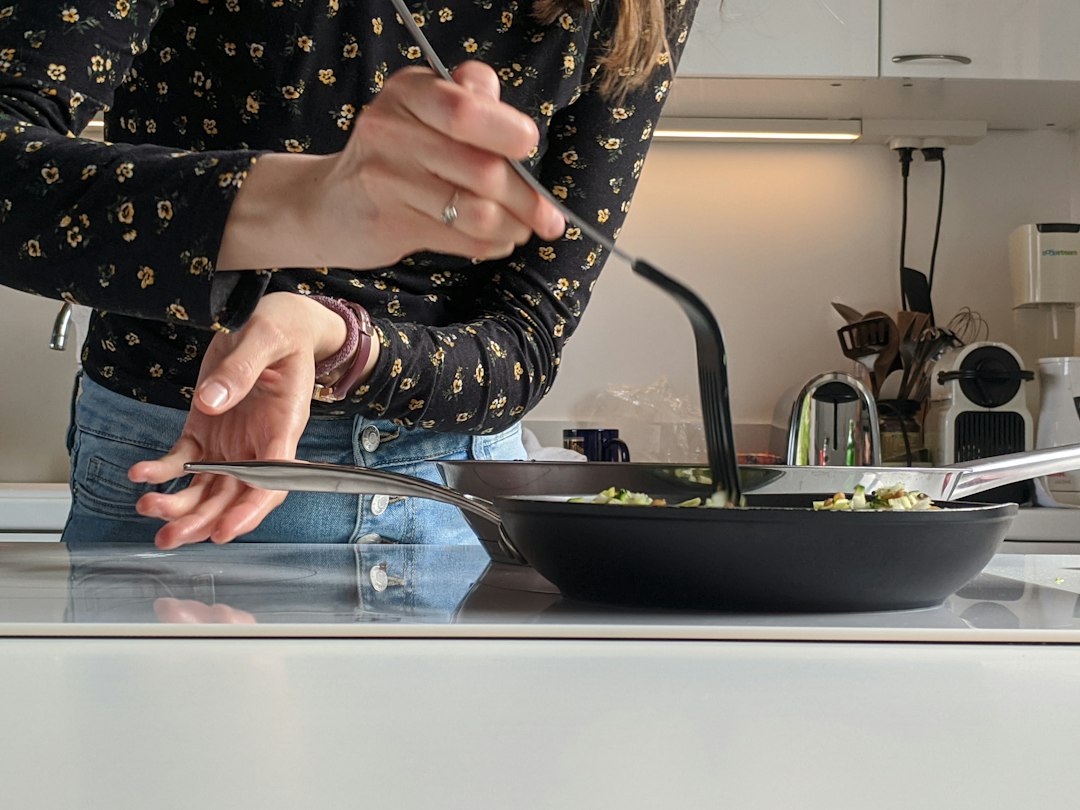
You’ve seen it in showrooms, perhaps in a friend’s kitchen, or maybe you’re considering it for your own. Induction cooking. It’s touted as faster, more efficient, and even safer. But what exactly is this seemingly magical process that heats your pans without a visible flame or glowing element? Let’s delve into the fascinating science behind induction cooking, and by the end, you’ll understand precisely how it works and why it’s more than just a culinary trend.
The core principle of induction cooking lies in the interaction between electromagnetic fields and specific types of cookware. Unlike traditional electric or gas stoves that directly heat a surface or flame, induction creates heat within the pot or pan itself. This is achieved through a sophisticated interplay of magnetism and electricity.
The Electromagnetic Foundation: A Hidden Generator
Beneath the sleek, smooth surface of your induction cooktop lies the true marvel: an electromagnetic coil. This coil is essentially a loop of wire, typically copper, that is connected to a high-frequency alternating current (AC) power source. When you turn on an induction burner and place a compatible pot on it, the cooktop’s electronics send this alternating current through the coil.
The Dance of Electrons: Generating the Magnetic Field
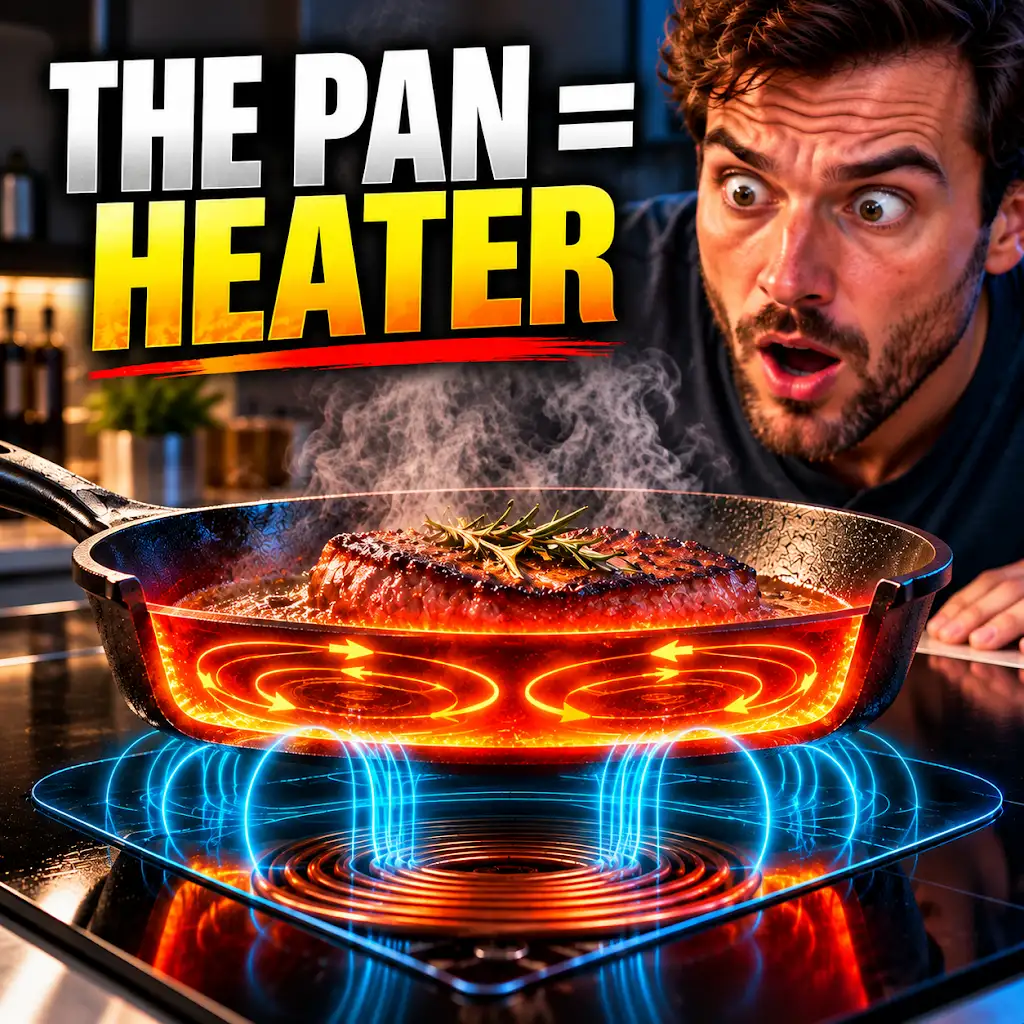
As the alternating current flows through the copper coil, it creates a rapidly changing magnetic field. Imagine this field as an invisible force that oscillates back and forth, much like a vibrating string. This magnetic field extends upwards from the coil, permeating the bottom of your cookware. The frequency of this alternating current is crucial – it’s typically in the range of 20-100 kilohertz, which is far higher than the 50 or 60 Hertz of household electricity. This high frequency is what enables the efficient generation of the magnetic field required for induction.
Faraday’s Law of Induction: The Spark of Heat
This is where Sir Humphry Davy and Michael Faraday’s groundbreaking work comes into play. Faraday’s Law of Induction states that a changing magnetic field through a conductor will induce an electromotive force (and therefore a current) within that conductor. In your induction cooktop, the rapidly changing magnetic field generated by the coil acts upon the conductive material of your cookware.
Eddy Currents: The Tiny Electrical Whirlwinds
This induced current within the pot or pan isn’t a single, uniform flow. Instead, it takes the form of small, circulating electrical currents known as “eddy currents.” These eddy currents are essentially tiny electrical whirlwinds that are generated throughout the conductive material of the cookware. They flow in closed loops within the metal.
Resistance to the Flow: The Birth of Heat
Now, metals, while excellent conductors, are not perfect. They possess electrical resistance. As these eddy currents are forced to flow through the resistance of the cookware’s metal, they encounter opposition. This opposition to the flow of electricity manifests as heat. Think of it like trying to push water through a narrow pipe; the resistance creates friction and generates warmth. The more resistance, and the stronger the eddy currents, the more heat is produced. This phenomenon is known as Joule heating, or resistive heating.
Why Not All Cookware Works: The Importance of Ferromagnetism
This leads us to a critical point: not all pots and pans are compatible with induction cooktops. The key lies in the material’s magnetic properties.
The Magnetic Attraction Test: A Simple Indicator
The simplest way to check if your cookware is induction-compatible is the “magnet test.” If a magnet sticks firmly to the bottom of your pot or pan, it’s likely made of a ferromagnetic material (containing iron or steel alloys) and will work with induction.
Ferromagnetic Materials: The Ideal Candidates
Ferromagnetic materials, such as cast iron and most types of stainless steel, are excellent at interacting with the magnetic field. When the changing magnetic field from the cooktop interacts with these materials, it efficiently induces strong eddy currents. This is why cast iron pans heat up so quickly and evenly on an induction surface.
Non-Ferromagnetic Materials: The Unsuited
Materials like aluminum, copper, and glass, while good conductors of heat, are not ferromagnetic. They do not respond effectively to the magnetic field. While some multi-ply cookware might have a ferromagnetic base layer to enable induction compatibility, a pan made entirely of aluminum or copper will not heat up on an induction cooktop on its own.
Induction cooking is a fascinating topic that combines culinary art with physics, particularly in the way it utilizes electromagnetic fields to heat cookware directly. For those interested in a deeper understanding of the principles behind induction cooking, a related article can be found at Freaky Science, where the science of induction heating is explored in detail. This resource provides insights into how induction cooktops work and the advantages they offer over traditional cooking methods.
The Efficiency Advantage: Energy Transfer at its Finest
One of the most celebrated benefits of induction cooking is its remarkable energy efficiency. This efficiency stems directly from how heat is generated.
Direct Energy Transfer: No Wasted Heat
In traditional stovetops, a significant amount of heat energy is lost to the surrounding environment. With gas stoves, heat rises and dissipates around the pot. With radiant electric cooktops, the element heats up, and then transfers heat to the pan, with considerable heat loss during this transfer. Induction, however, bypasses these intermediaries. The heat is generated directly within the cookware.
Minimizing Ambient Heat Loss: A Cooler Kitchen
Because the cooktop surface itself doesn’t get excessively hot (it only heats up from residual heat transferred back from the pan), there is very little heat escaping into your kitchen. This translates to a cooler cooking environment, especially during warmer months, and a more pleasant cooking experience. Your energy bill will also thank you.
Higher Conversion Rates: More Watts In, More Watts To Your Food
Induction cooktops boast impressive energy conversion rates, often exceeding 85-90%. This means that a very high percentage of the electrical energy consumed is directly converted into heat that cooks your food. Compare this to gas stoves, which typically have efficiency ratings around 40-50%, with the rest of the heat escaping. Even traditional electric resistance cooktops, while better than gas, are generally less efficient than induction.
Speed and Responsiveness: The Instantaneous Nature of Induction
The direct generation of heat within the cookware also gives induction cooking its signature speed and responsiveness.
Rapid Heating: Boiling Water in a Flash
Because the heat is generated directly and efficiently, induction cooktops can bring water to a boil significantly faster than other cooking methods. The energy is immediately focused on heating the contents of your pot, leading to a noticeable reduction in cooking times for many tasks.
Precise Temperature Control: Like a Gas Flame, but Better
While gas stoves offer a visual cue of the flame’s intensity, their temperature control can be imprecise due to fluctuations in gas pressure and the heat distribution of the flame. Induction, on the other hand, offers incredibly precise temperature control.
Digital Precision: Setting the Exact Wattage
Induction cooktops often allow you to set the power level in specific wattage increments. This digital precision means you can dial in the exact heat you need, whether it’s a gentle simmer or a high-heat sear, and maintain it consistently.
Instantaneous Adjustment: Reacting to Your Needs
When you adjust the power setting on an induction cooktop, the change in heat output is almost instantaneous. This immediate responsiveness allows for dynamic cooking, where you can quickly adapt to the needs of your dish, much like a seasoned chef reacting to the subtle cues of their ingredients. No more waiting for a coil to cool down or a gas flame to adjust.
Safety Features: A Cooler, Safer Kitchen
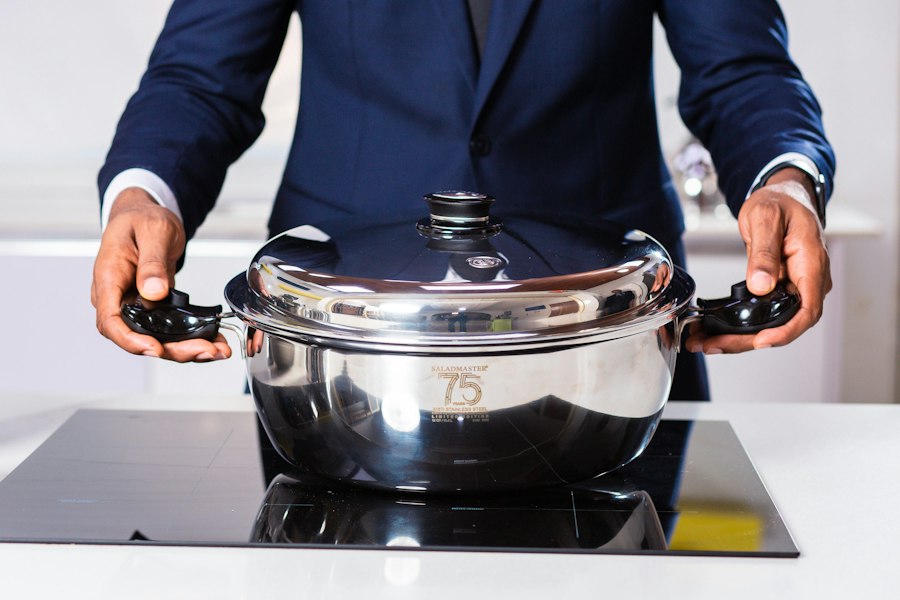
Beyond efficiency and speed, induction cooking offers significant safety advantages, making it a preferred choice for many households, especially those with children.
The Cool-to-Touch Surface: Minimizing Burn Risks
As mentioned earlier, the induction cooktop surface itself does not generate its own heat. It only becomes warm from residual heat that radiates back from the hot cookware. This means the surface remains significantly cooler than traditional electric or gas cooktops, greatly reducing the risk of accidental burns. You can often touch the surface of an induction cooktop a few moments after removing a pot without discomfort.
No Open Flames: Eliminating Fire Hazards
The absence of an open flame on an induction cooktop eliminates the risk of accidental fires that can occur with gas stoves, such as ignited grease or flammable materials coming into contact with the flame.
Automatic Pan Detection: Preventing Accidental Activation
Most induction cooktops are equipped with automatic pan detection. This means the burner will only activate and generate heat when a compatible, ferromagnetic pan is placed on it. If you accidentally turn on a burner without a pan, or with an incompatible item, it will not heat up, further enhancing safety.
Spillover Shut-Off: Peace of Mind During Cooking
Many induction units also feature spillover detection. If a liquid boils over and touches the cooktop surface, the sensor will detect the moisture and automatically shut off the burner. This not only prevents messes but also further minimizes potential hazards.
Induction cooking is a fascinating topic that combines the principles of electromagnetism and thermal conductivity to create an efficient cooking method. For those interested in a deeper understanding of the physics behind this technology, you can explore a related article that delves into the science of induction cooking. This article explains how induction cooktops use magnetic fields to heat pots and pans directly, making cooking faster and more energy-efficient. To learn more about this intriguing subject, check out the article here.
The Technology Behind the Surface: Beyond the Coil
| Parameter | Description | Typical Value / Range | Unit |
|---|---|---|---|
| Operating Frequency | Frequency of the alternating current generating the magnetic field | 20 – 100 | kHz |
| Magnetic Field Strength | Intensity of the magnetic field produced by the induction coil | 10 – 100 | mT (millitesla) |
| Induced Eddy Currents | Electric currents generated in the cookware by the magnetic field | Depends on cookware material and coil current | A (amperes) |
| Cookware Material | Material properties affecting induction heating efficiency | Ferromagnetic metals (e.g., cast iron, stainless steel) | N/A |
| Skin Depth | Depth at which the magnetic field penetrates the cookware | 0.1 – 1 | mm |
| Power Output | Electrical power supplied to the induction coil | 500 – 3500 | W (watts) |
| Heating Efficiency | Ratio of heat delivered to cookware vs electrical power input | 80 – 90 | % |
| Temperature Rise Rate | Speed at which cookware temperature increases | 5 – 15 | °C/min |
While the electromagnetic coil is the heart of induction cooking, the overall user experience and performance are enhanced by sophisticated electronics and design.
The Control Panel: Your Interface with Induction
The control panel of an induction cooktop is your gateway to harnessing its power. Modern panels are typically touch-sensitive, offering a sleek and modern aesthetic.
Digital Displays: Visualizing Power and Time
These displays provide clear visual feedback on the selected power level, cooking time, and any active features. This digital interface contributes to the precise control and ease of use.
Pre-programmed Settings: Simplifying Common Tasks
Many induction cooktops come with pre-programmed settings for common cooking tasks like boiling, simmering, or melting. These settings take the guesswork out of achieving optimal results for specific dishes.
The Glass-Ceramic Surface: Durability and Aesthetics
The smooth, durable glass-ceramic surface is a hallmark of induction cooktops. This material is not only aesthetically pleasing, making cleaning a breeze, but also robust enough to withstand the rigors of everyday cooking.
Heat Resistance: Withstanding the Indirect Heat
While it doesn’t get directly heated, the glass-ceramic surface is designed to withstand the indirect heat transferred from the cookware and any minor residual heat.
Easy Cleaning: A Wipe Away Messes
The seamless, flat surface makes cleaning incredibly easy. Spills and splatters can typically be wiped away with a damp cloth without the need for harsh scrubbing.
Cooling Systems: Maintaining Optimal Performance
Beneath the surface, sophisticated cooling systems are in place to prevent the electronic components from overheating. Fans quietly dissipate heat generated by the internal electronics, ensuring the longevity and optimal performance of the cooktop.
In conclusion, induction cooking is a testament to the elegant application of fundamental scientific principles. By harnessing the power of electromagnetism and the properties of ferromagnetic materials, it offers a cooking experience that is faster, more efficient, more responsive, and significantly safer than its predecessors. So, the next time you see that smooth, flat surface at work, you’ll know it’s not magic, but rather a well-understood and brilliantly executed application of science.
The Pan Is the Heater: How Induction Cooking Really Works
FAQs
What is induction cooking?
Induction cooking is a method of cooking that uses electromagnetic induction to heat cookware directly, without the need for a traditional heating element like a gas flame or electric coil.
How does induction cooking work?
Induction cooking works by creating a magnetic field that induces a current in the cookware, which in turn generates heat. The heat is produced directly in the cookware, making the cooking process more efficient and precise.
What are the advantages of induction cooking?
Some advantages of induction cooking include faster heating times, better temperature control, energy efficiency, and safety. Induction cooktops also cool down quickly after cooking, reducing the risk of burns.
Are all cookware suitable for induction cooking?
Not all cookware is suitable for induction cooking. Cookware must be made of a magnetic material, such as cast iron or stainless steel, in order to work with induction cooktops. Non-magnetic materials like aluminum or copper will not heat up on an induction cooktop.
Is induction cooking safe?
Induction cooking is generally considered safe, as the cooktop itself does not get hot during cooking. However, it is important to be cautious when using induction cooktops, as the cookware can become very hot. Additionally, people with pacemakers or other electronic medical devices should consult with their doctor before using induction cooktops.