
The Science of Consciousness: Explained
Have you ever stopped to consider the most fundamental aspect of your existence? It’s not the air you breathe, the food you eat, or even the thoughts that flit through your mind. It’s the very experience of being, the subjective awareness that colors every moment. This, my friend, is consciousness. It’s the elusive ghost in the machine, the dazzling light that illuminates your inner world, and the ultimate mystery that scientists and philosophers alike have wrestled with for millennia. But what if I told you that the bewildering realm of consciousness is not entirely beyond our grasp? What if the tools of science, combined with relentless curiosity, are beginning to peel back its layers, revealing a complex and fascinating tapestry woven from neurons, information, and perhaps something more? Prepare to embark on a journey into the science of consciousness – a journey that will illuminate your own self-awareness like never before.
You experience consciousness every second of your waking life. You feel the warmth of the sun on your skin, taste the sweetness of sugar, hear the music playing, and ponder profound questions. Yet, when you try to precisely define it, to capture its essence in words, it seems to slip through your fingers like smoke. This is the “hard problem” of consciousness, a term coined by philosopher David Chalmers. It’s not just about understanding how the brain processes information, but why those processes give rise to subjective experience – to the feeling of what it’s like to be you.
What Exactly Is Consciousness?
Defining consciousness is the first hurdle. Is it simply awareness? Is it self-awareness? Is it the ability to feel emotions? Or is it something more fundamental, the very backdrop against which all these phenomena occur? Scientists often differentiate between:
Phenomenal Consciousness: The Subjective Experience
This is the “what it’s like” aspect. The redness of red, the pain of a stubbed toe, the joy of a loved one’s smile – these are all instances of phenomenal consciousness. It’s the raw, qualitative feel of experience. This is the most difficult aspect to explain through purely objective, third-person scientific observation. You can describe the wavelengths of light that correspond to red, the neural pathways activated by pain, but this doesn’t capture the feeling of redness or pain.
Access Consciousness: The Information We Can Report
This refers to the information that is available to our cognitive systems for reasoning, reporting, and controlling behavior. If you can think about your thoughts, report on your perceptions, or make decisions based on that information, you’re demonstrating access consciousness. This is more amenable to scientific study, as it involves observable behaviors and measurable cognitive processes. However, access consciousness doesn’t necessarily equate to the full richness of phenomenal consciousness.
The Unbridgeable Gap: The Mind-Body Problem
For centuries, thinkers have grappled with the relationship between the mind and the body. Dualism, the idea that the mind and body are separate entities, was popularized by René Descartes. While appealing in its separation of the immaterial soul from the material body, it raises the question of how these two distinct substances can possibly interact. How does your non-physical mind influence your physical brain, and vice versa? Modern neuroscience largely leans towards monism, particularly physicalism, which posits that all that exists is physical. But even within this framework, explaining how subjective experience arises from physical matter remains a profound challenge.
The “Easy Problems” vs. the “Hard Problem”
Philosophers and scientists often distinguish between the “easy problems” and the “hard problem” of consciousness. The “easy problems” are those that can be addressed through standard scientific methods:
- Detecting and responding to stimuli: Understanding how our senses pick up information and how our brains initiate a response.
- Reporting mental states: Investigating how we can verbally or behaviorally communicate what we are experiencing.
- Focusing attention: Mapping the neural mechanisms involved in directing our attention.
- Intentional action: Explaining the brain’s role in planning and executing purposeful movements.
- Distinguishing between wakefulness, sleep, and dreaming: Identifying the neural correlates of different states of consciousness.
The “hard problem,” however, is why and how these physical processes are accompanied by subjective experience. Why does a certain neural firing pattern feel like seeing blue? Why does a surge of certain neurochemicals feel like happiness? This subjective qualitative aspect is what makes consciousness so uniquely challenging to explain within a purely objective, materialist framework.
The science of consciousness is a fascinating field that explores the nature of awareness and perception. For those interested in delving deeper into this topic, a related article titled “Understanding the Science of Consciousness” provides valuable insights and research findings. You can read more about it by visiting this link: Understanding the Science of Consciousness. This article discusses various theories and experiments that aim to unravel the complexities of human consciousness.
The Brain as the Seat of Consciousness: Unraveling the Neural Correlates
While the exact mechanism remains elusive, the overwhelming scientific consensus points to the brain as the biological substrate of consciousness. Billions of neurons, communicating through a complex network of electrochemical signals, create the intricate symphony that gives rise to your awareness. For decades, researchers have been diligently searching for the “neural correlates of consciousness” (NCCs) – the minimal neuronal activity jointly sufficient for any specific conscious experience.
Mapping the Brain: Tools for Discovery
Neuroscience employs a sophisticated arsenal of tools to probe the brain’s intricate workings:
Functional Magnetic Resonance Imaging (fMRI): Peering into Brain Activity
fMRI machines measure changes in blood flow associated with neural activity. When a region of the brain is more active, it requires more oxygen, leading to increased blood flow. By tracking these changes, fMRI allows researchers to see which parts of the brain are engaged during particular tasks or experiences. This has been instrumental in identifying brain regions associated with perception, memory, emotion, and attention.
Electroencephalography (EEG): Listening to the Brain’s Electrical Symphony
EEG systems place electrodes on the scalp to record the electrical activity of the brain, primarily from the cerebral cortex. EEG is excellent at capturing the timing of neural events, providing insights into the rapid fluctuations of brain states and the synchronization of neural populations. Specific EEG patterns, like gamma waves, have been proposed as potential markers of conscious awareness.
Magnetoencephalography (MEG): Magnetic Fields of Thought
MEG measures the magnetic fields produced by electrical currents in the brain. Similar to EEG, it offers high temporal resolution but with better spatial localization of neural activity, especially for deeper brain structures.
Transcranial Magnetic Stimulation (TMS): Perturbing Neural Circuits
TMS uses magnetic pulses to stimulate or inhibit specific areas of the brain. By temporarily disrupting activity in a particular region and observing the effect on consciousness or behavior, researchers can infer the causal role of that region in conscious processes.
Lesion Studies: Learning from Damage
Examining individuals who have sustained brain damage due to stroke, injury, or disease provides invaluable insights. By correlating the location of the damage with specific deficits in consciousness, perception, or cognition, scientists can identify brain areas essential for various conscious functions.
Key Brain Regions Implicated in Consciousness
While consciousness is likely a distributed phenomenon, certain brain regions consistently appear to be crucial for its emergence and maintenance:
- The Thalamus: This structure acts as a central relay station for sensory information, filtering and routing it to the cerebral cortex. It plays a critical role in regulating arousal and consciousness.
- The Cerebral Cortex: The outer layer of the brain, responsible for higher-level cognitive functions like perception, memory, language, and consciousness. Different areas of the cortex are specialized for processing various types of information, and their coordinated activity is thought to be fundamental to conscious experience.
- The Brainstem: This PDU regulates basic life functions like breathing, heart rate, and sleep-wake cycles. Damage to the brainstem can lead to a complete loss of consciousness.
- Connectivity and Networks: Increasingly, research highlights the importance of how different brain regions communicate with each other. Networks, such as the default mode network and the frontoparietal control network, appear to be involved in different aspects of conscious processing. The synchronized firing of neurons across widespread brain areas is a key focus of current research.
Theories of Consciousness: Piecing Together the Puzzle
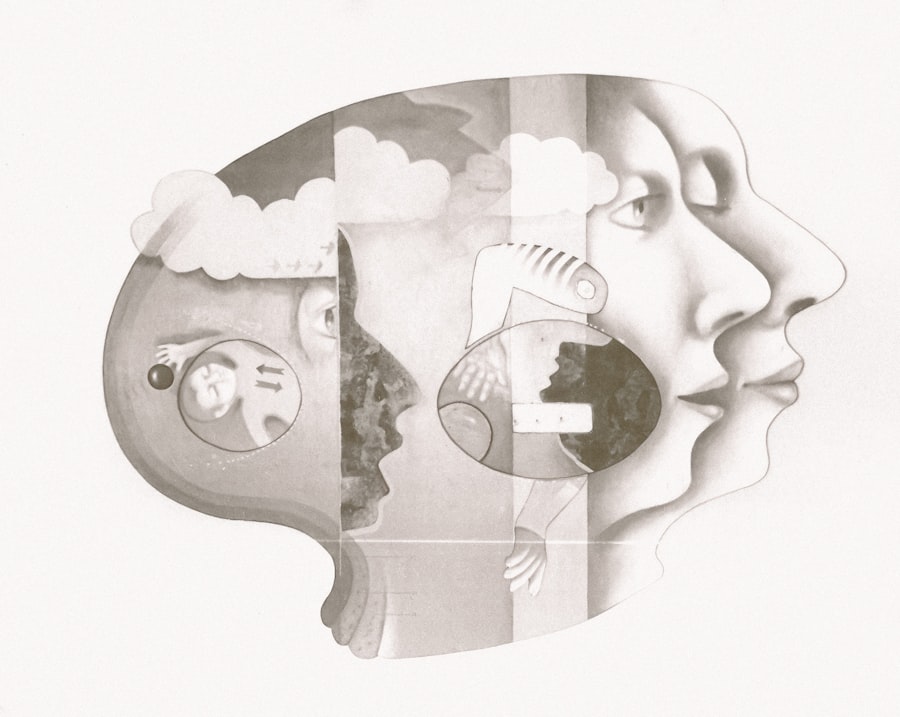
Given the complexity of consciousness, numerous theories have emerged, each offering a different perspective on how it might arise. While no single theory has gained universal acceptance, they provide frameworks for understanding and guiding future research.
Integrated Information Theory (IIT): The Measure of Consciousness
IIT, developed by Giulio Tononi, proposes that consciousness is a fundamental property of physical systems and is directly related to their capacity to integrate information. The theory posits that a system is conscious to the extent that it can generate a unified, irreducible whole from its parts.
The Concept of Phi ($Phi$)
IIT introduces a mathematical measure called $Phi$ (phi), which quantifies the amount of integrated information a system possesses. The higher the $Phi$ value, the more conscious the system is considered to be. This theory has the ambitious goal of providing a unified framework for understanding consciousness across different species and even artificial systems.
Implications of IIT
IIT suggests that consciousness is not binary but exists on a spectrum. It has implications for understanding consciousness in animals, infants, and individuals in altered states of consciousness. It also raises profound questions about the possibility of artificial consciousness.
Global Neuronal Workspace Theory (GNWT): The Spotlight of Awareness
Proposed by Bernard Baars and elaborated by Stanislas Dehaene, GNWT views consciousness as a global broadcast system. Information becomes conscious when it is made available to a wide range of specialized cognitive modules throughout the brain, integrated into a “global workspace.”
Broadcasting Information
In this model, unconscious processing happens in specialized modules. When certain information reaches a threshold of activation and is deemed important, it is amplified and broadcast to the global workspace. This broadcast makes the information accessible for higher-level cognitive functions like planning, reporting, and problem-solving.
The Role of Attention
Attention acts as a gatekeeper, selecting which information gets amplified and broadcast into the global workspace. This theory aligns well with findings that suggest conscious perception requires widespread neural activation and communication.
Higher-Order Thought Theories: Thinking About Thinking
These theories suggest that a mental state becomes conscious when there is another, higher-order thought or mental state that is about that first state. In essence, you are conscious of something when you have a thought about that experience.
The “Inner Eye”
Imagine looking at a red apple. According to higher-order thought theories, you are conscious of the redness not just because there are visual neurons firing, but because you have a meta-cognitive state – a thought or awareness – that recognizes you are seeing red.
Critiques and Challenges
A major challenge for higher-order thought theories is explaining the consciousness of simple organisms or infants who may not possess sophisticated meta-cognitive abilities. It also raises questions about the nature of these higher-order thoughts themselves.
Predictive Processing Theories: The Brain as a Prediction Machine
These theories, gaining significant traction, propose that the brain is constantly making predictions about incoming sensory information and updating its internal models based on prediction errors. Consciousness, in this view, is closely tied to the brain’s predictive capabilities.
The Active Inference Framework
This framework, a prominent example of predictive processing, suggests that our perception of the world is driven by the brain’s attempts to minimize prediction errors. We don’t passively receive sensory input; we actively infer what is causing it.
Consciousness as Model Confidence
Some interpretations suggest that consciousness arises from the confidence the brain has in its predictive models. When the brain is highly confident about its predictions, it leads to a vivid and coherent conscious experience. Conversely, when there are significant prediction errors, it can lead to confusion or altered states of awareness.
Consciousness Beyond the Brain: Exploring Alternative Perspectives

While the brain is undoubtedly the primary focus of scientific inquiry into consciousness, exploring other avenues can broaden our understanding and challenge our assumptions.
The Role of the Body: Embodied Cognition
Embodied cognition theories argue that our thoughts, feelings, and consciousness are not solely confined to the brain but are deeply intertwined with our physical bodies and our interactions with the environment. Your physical sensations, your movements, and your interactions with the world shape your conscious experience.
Gut-Brain Connection: The Second Brain
The gut microbiome, often referred to as the “second brain,” has a profound influence on our mood, emotions, and even cognitive function. Research into the gut-brain axis is revealing complex communication pathways that can impact our conscious state.
The Importance of Sensory Input
How we perceive and interact with the world through our senses is fundamental to our conscious experience. Without sensory input, our world would be a blank slate, and our consciousness would likely be profoundly different, if it existed at all.
Consciousness in Different Organisms: A Spectrum of Awareness
As we delve deeper into the science of consciousness, the question of whether animals, and to what extent, possess consciousness becomes increasingly pertinent. While self-report is impossible, behavioral, neurological, and evolutionary evidence suggests a hierarchical rather than a binary presence of consciousness.
Animal Consciousness: Sophisticated Minds in Animal Kingdom
Studies on animals like primates, cetaceans, birds, and even octopuses reveal complex cognitive abilities, problem-solving skills, social behaviors, and emotional responses that strongly suggest forms of consciousness. The debate often centers on the type and degree of consciousness.
The Case of Plants and Fungi: Challenging Definitions
While not fitting traditional definitions of consciousness, research into plant and fungal communication and responsiveness to stimuli is prompting us to reconsider our anthropocentric views and explore broader definitions of awareness and information processing in the biological world.
Artificial Intelligence and Consciousness: The Future Frontier
The rapid advancements in artificial intelligence (AI) have ignited a debate about the possibility of creating conscious machines. Can AI ever truly be conscious, or will it always be a sophisticated mimic?
The Turing Test and Beyond
The Turing Test, which assesses a machine’s ability to exhibit intelligent behavior equivalent to, or indistinguishable from, that of a human, is a starting point. However, many argue that true consciousness involves subjective experience, which is far more difficult to measure in machines.
Ethical Considerations
The prospect of artificial consciousness raises profound ethical questions about rights, responsibilities, and the definition of life itself. As AI becomes more sophisticated, these questions will become increasingly urgent.
The science of consciousness is a fascinating field that delves into the nature of awareness and perception. For those interested in exploring this topic further, a related article can be found on Freaky Science, which discusses various theories and experiments surrounding consciousness. You can read more about it in their insightful piece on the mysteries of the mind. This exploration not only sheds light on how we experience reality but also raises intriguing questions about the essence of self and existence.
The Future of Consciousness Research: Unanswered Questions and Emerging Frontiers
| Topic | Metrics |
|---|---|
| Brain Activity | Electroencephalography (EEG) measurements |
| Consciousness Levels | Assessment using the Glasgow Coma Scale |
| Neural Correlates | Identification of specific brain regions associated with consciousness |
| Quantum Mechanics | Exploration of quantum processes in the brain |
The study of consciousness is a vibrant and rapidly evolving field. While significant progress has been made, many fundamental questions remain unanswered, paving the way for exciting future research.
The Nature of Subjective Experience: The Ultimate Mystery
The “hard problem” of consciousness – the explanation of subjective experience – continues to be the ultimate frontier. Scientists are exploring novel approaches, including quantum mechanics and new computational models, in the hope of bridging the gap between the physical and the phenomenal.
Altered States of Consciousness: Unlocking New Insights
Investigating altered states of consciousness, such as those induced by psychedelic drugs, meditation, or near-death experiences, offers unique opportunities to understand the plasticity of consciousness and the underlying neural mechanisms involved. These states can shed light on the default modes of brain operation and the boundaries of conscious experience.
The Role of Consciousness in Evolution and Development
Understanding how consciousness evolved and how it develops from infancy to adulthood is crucial for a complete picture. Research into developmental neuroscience and comparative neurobiology is shedding light on the evolutionary trajectory of conscious abilities.
Towards a Unified Theory of Consciousness
The ultimate goal is to develop a comprehensive and unifying theory that can explain all aspects of consciousness. This will likely require an interdisciplinary approach, integrating insights from neuroscience, psychology, philosophy, physics, and computer science.
Your Own Consciousness: A Personal Exploration
Understanding the science of consciousness is not just an academic pursuit; it offers a profound opportunity for self-reflection and personal growth. By exploring the mechanisms that underpin your awareness, you can gain a deeper appreciation for the richness of your own inner world.
Mindfulness and Meditation: Cultivating Awareness
Practices like mindfulness and meditation are ancient techniques that train your attention and cultivate a deeper awareness of your thoughts, feelings, and sensations. Engaging in these practices can provide a direct, experiential understanding of the principles of consciousness science.
The Power of Reflection and Self-Awareness
Consciously observing your own thoughts, biases, and reactions is a powerful tool for personal development. By understanding the processes that shape your perceptions, you can make more informed choices and lead a more intentional life.
Embracing the Mystery
While science strives to explain the mechanisms of consciousness, there will likely always be an element of mystery, a sense of wonder at the sheer fact of our subjective existence. Embracing this mystery can lead to a richer and more profound appreciation for the gift of being aware.
In conclusion, the science of consciousness is a journey of discovery, a quest to understand the very essence of what it means to be alive. From the intricate dance of neurons to the subjective tapestry of experience, each step reveals new wonders and deeper questions. As you continue your own journey through life, remember that you are living within a phenomenon that scientists are only just beginning to unravel. The next time you marvel at a sunset, feel the pang of nostalgia, or ponder the vastness of the universe, know that you are experiencing the cutting edge of scientific inquiry – the magnificent, bewildering, and utterly captivating science of consciousness.

You’ve Never Experienced the Present
FAQs
What is the science of consciousness?
The science of consciousness is a multidisciplinary field that seeks to understand the nature of consciousness, including its neural and cognitive basis, its relationship to the physical world, and its role in shaping human experience and behavior.
What are some key theories in the science of consciousness?
Some key theories in the science of consciousness include the global workspace theory, integrated information theory, and the neural correlates of consciousness. These theories attempt to explain how consciousness arises from the brain and how it relates to the physical world.
How is the science of consciousness studied?
The science of consciousness is studied using a variety of methods, including neuroimaging techniques such as fMRI and EEG, behavioral experiments, philosophical analysis, and computational modeling. Researchers from fields such as neuroscience, psychology, philosophy, and artificial intelligence contribute to the study of consciousness.
What are some current challenges in the science of consciousness?
Some current challenges in the science of consciousness include understanding the neural mechanisms underlying consciousness, explaining how subjective experience arises from physical processes, and integrating findings from different disciplines into a unified theory of consciousness.
Why is the science of consciousness important?
The science of consciousness is important because it has the potential to shed light on fundamental questions about the nature of human experience, the relationship between mind and body, and the ethical implications of consciousness. Understanding consciousness may also have practical applications in fields such as medicine, artificial intelligence, and psychology.