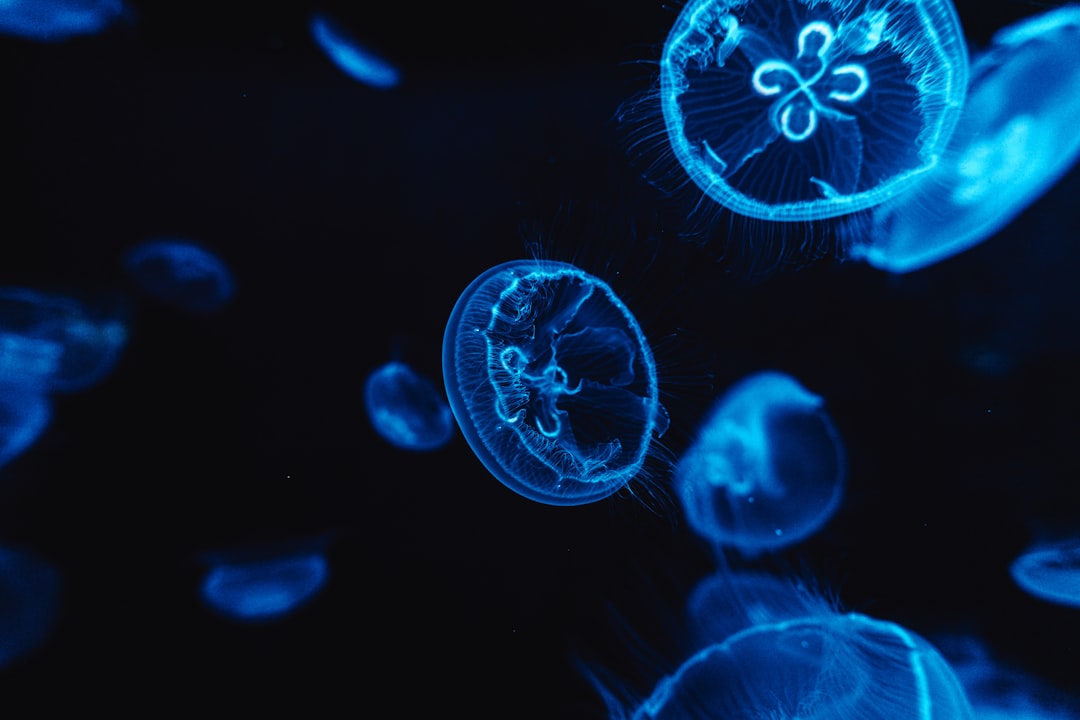
The abyss, a realm of perpetual darkness and crushing pressure, harbors a hidden world of breathtaking beauty and astonishing adaptations. Among the most mesmerizing of these are the creatures that wield their own internal light, a phenomenon known as bioluminescence. Far from being a mere spectacle, this biological light production is a sophisticated evolutionary tool, crucial for survival in the sunless depths. Understanding the science behind this living glow reveals a fascinating interplay of chemistry, biology, and ecological function.
Bioluminescence is not a mystical emanation, but a precisely orchestrated chemical process. At its core, the generation of light relies on the interaction of specific molecules. While the exact chemical composition can vary between species, the fundamental principle remains the same: an enzyme acts upon a substrate, releasing energy in the form of visible light.
Luciferin: The Light-Emitting Substrate
The star of the bioluminescent show is a class of molecules collectively known as luciferins. These are typically small, organic compounds that possess the inherent ability to emit light when oxidized. The diversity of luciferins is a testament to the independent evolution of bioluminescence across different lineages. For instance, the luciferins found in dinoflagellates, microscopic marine plankton, are chemically distinct from those found in many deep-sea fish or squid. This chemical diversity points to convergent evolution, where unrelated organisms independently develop similar traits to solve similar environmental challenges.
Different Flavors of Luciferin
- Coelenterazine: This is perhaps the most widespread luciferin in marine environments. It is found in a vast array of organisms, including jellyfish, comb jellies, crustaceans, and many fish. Its prevalence suggests a strong evolutionary advantage associated with its use.
- Vargulin: This luciferin is characteristic of ostracods, tiny crustaceans known for their brilliant blue-green light displays.
- Bacterial Luciferin: Certain bacteria possess their own unique luciferin-luciferase systems, which are often symbiotic with host organisms.
Luciferase: The Catalytic Engine
Working in tandem with luciferin is luciferase, an enzyme that catalyzes the oxidation reaction. Luciferase is the biological equivalent of a match, providing the spark that ignites the luciferin. It binds to the luciferin molecule, facilitating its reaction with oxygen. The efficiency of different luciferases varies, impacting the brightness and duration of the emitted light. Some luciferases are highly specific to their corresponding luciferin, while others can act on a broader range of substrates.
The Role of Oxygen
Oxygen is an indispensable component of the bioluminescent reaction. It acts as the oxidizing agent, accepting electrons from the luciferin during the light-producing cascade. Without sufficient oxygen, the chemical reaction cannot proceed, and therefore, no light is generated. This dependency explains why bioluminescence is less common in anoxic zones of the ocean.
Co-factors and Accessories: Fine-Tuning the Light
In many cases, the simple luciferin-luciferase-oxygen interaction is not enough to produce the observed light. Additional molecules, known as co-factors, are often required to enhance the reaction or modify its properties.
Calcium Ions and ATP
In some organisms, particularly those exhibiting rapid flashes of light, calcium ions ($Ca^{2+}$) play a crucial role. The influx of calcium ions can trigger the release of luciferin or activate the luciferase enzyme, leading to a sudden burst of light. Adenosine triphosphate (ATP), the universal energy currency of cells, is also involved in the bioluminescent reactions of some organisms, particularly in bacteria.
The Spectacle of Color: Wavelength and Pigments
The color of bioluminescent light is determined by the wavelength of the emitted photons. This, in turn, is influenced by the chemical structure of the luciferin and the microenvironment in which the reaction occurs. In the deep sea, blue and green wavelengths are most common, as these are the colors that travel furthest through seawater. Red light, while rare in the deep ocean, is produced by a few specialized species and serves unique purposes.
Pigments as Filters and Modifiers
Some organisms utilize fluorescent pigments to absorb the initial light emitted by the luciferin-luciferase reaction and re-emit it at a different, longer wavelength. This process can shift the color of the light, often towards green or yellow. These pigments can act as filters, enhancing the visibility of the bioluminescence against the dark background.
Bioluminescence is a fascinating phenomenon observed in various deep-sea animals, allowing them to produce light through chemical reactions within their bodies. This adaptation serves multiple purposes, such as attracting prey, deterring predators, and facilitating communication among species in the dark depths of the ocean. For a deeper understanding of how bioluminescence works and its significance in the marine ecosystem, you can read more in this related article: Freaky Science.
Evolutionary Roots: The Genesis of Living Light
The ability to produce light has arisen independently numerous times throughout evolutionary history, a testament to its profound adaptive value. The origins of bioluminescence in deep-sea creatures are deeply intertwined with the challenges and opportunities presented by the aphotic zone.
Independent Inventions: Convergent Evolution at Play
The diverse chemical mechanisms of bioluminescence underscore the concept of convergent evolution. Different lineages, facing similar environmental pressures, have independently evolved the capacity to produce light through distinct molecular pathways. This implies that the selective advantage conferred by bioluminescence is significant enough to drive its repeated emergence.
Early Pioneers: Microbes and Symbiosis
The earliest forms of bioluminescence likely originated in microorganisms. Many marine bacteria are bioluminescent, and they often form symbiotic relationships with larger marine animals. The host provides a safe environment and nutrients, while the bacteria supply the light. This ancient partnership is a cornerstone of bioluminescence in the deep sea.
Bacterial Symbiosis in Anglerfish
A classic example is the bioluminescent lure of the anglerfish. These fish harbor light-producing bacteria in a specialized organ, the esca, which dangles from a modified dorsal fin spine. The anglerfish controls the light emission by regulating blood flow to the esca, either nourishing the bacteria and thus promoting light production or restricting it, causing the light to dim.
The Rise of Organelles: Dedicated Light Organs
As organisms became more complex, some evolved dedicated organelles, or light organs, to house and control their bioluminescence. These organs can be quite sophisticated, featuring reflective tissues to amplify the light, lenses to focus it, and shutters to modulate its intensity.
Photophores: The Light Sacs of the Deep
Photophores are specialized structures found in many deep-sea fish and invertebrates. These can range from simple clusters of photocytes (light-producing cells) to complex organs with accessory structures that enhance and direct the light. The arrangement and pattern of photophores are often species-specific, serving as important identification markers.
Functional Marvels: Why Glow in the Dark?
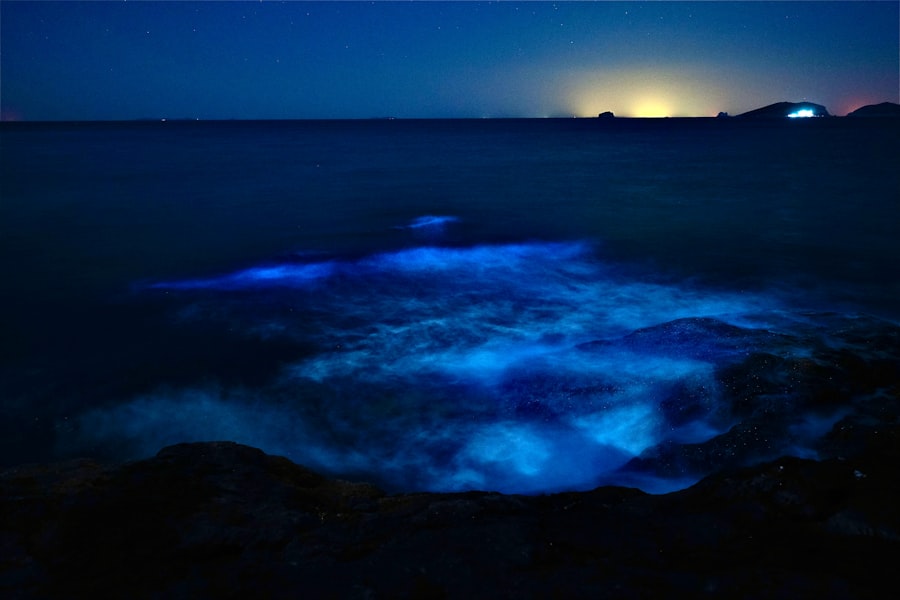
The reasons for bioluminescence in the deep sea are as varied as the creatures that possess it. From attracting prey to evading predators and communicating with conspecifics, living light serves a multitude of critical functions.
Attracting Prey: The Lure of the Abyss
For many predators in the deep sea, bioluminescence is an essential tool for luring unsuspecting prey within striking distance. The darkness of their environment means that visual cues are limited, making a glowing lure an irresistible beacon for smaller organisms.
The Anglerfish’s Deceptive Dance
As mentioned, the anglerfish’s bioluminescent esca is a prime example. It mimics small prey, attracting curious fish that are then swiftly consumed. The subtle pulsing or flickering of the lure can further enhance its attractiveness.
Luminous Trails as Bait
Some organisms, like certain squid, can release bioluminescent clouds to distract and confuse predators while they escape. These glowing clouds can also serve as a temporary bait, drawing attention away from the escaping squid.
Defense Mechanisms: A Light Show for Survival
Bioluminescence also plays a significant role in defense, acting as a warning, a distraction, or even an offensive weapon.
Startling Predators: The Flash and Bang
Many deep-sea creatures possess the ability to produce a sudden, intense flash of light when threatened. This startling illumination can momentarily disorient a predator, providing the prey with an opportunity to escape. This is often referred to as “burglar alarm” bioluminescence, where the prey illuminates itself to attract a larger predator that might prey on its attacker.
Counter-illumination: Blending In with the Light
One of the most elegant uses of bioluminescence for defense is counter-illumination. Animals in the mesopelagic zone, where some faint sunlight penetrates, can produce light on their ventral (underside) surfaces to match the ambient light from above. This effectively erases their silhouette, making them invisible to predators lurking below.
Ink and Light: A Double Whammy
Some squid and octopuses can release a cloud of bioluminescent material, akin to an ink cloud, that glows brightly. This serves to disorient and distract predators while the cephalopod makes its escape. The glowing particles can also confuse predators about the true size and location of the escaping prey.
Communication and Mating: Finding a Spark in the Dark
In the vast, dark expanse of the deep sea, finding a mate can be a significant challenge. Bioluminescence provides a crucial means of communication, allowing individuals to locate and identify each other.
Species-Specific Signals: The Glow of Recognition
Many deep-sea organisms exhibit species-specific patterns or flashes of bioluminescence. These “light signatures” act like beacons, enabling individuals of the same species to recognize and approach one another for mating. The complexity of these signals can vary, from simple flashes to intricate sequences.
Courtship Displays: A Romantic Glow
Bioluminescence can also be incorporated into elaborate courtship displays. Males and females may engage in synchronized flashing or pulsing patterns to signal their readiness to mate and to assess the fitness of a potential partner.
Sex-Specific Lighting: A Biological Dialect
In some species, there are distinct differences in bioluminescent capabilities or patterns between males and females, adding another layer of complexity to their communication. This can include different colors or flashing frequencies.
Bioluminescence and Human Endeavors: From Research to Medicine

The captivating glow of deep-sea creatures has not only fueled scientific curiosity but has also found practical applications in various human endeavors, from basic research to advanced medical diagnostics.
Illuminating Research: Tools for Scientific Discovery
The biochemical components of bioluminescence, particularly luciferins and luciferases, have become invaluable tools in biological and medical research.
Reporter Genes: Tracking Biological Processes
Luciferase genes are widely used as reporter genes. When introduced into cells or organisms, they allow researchers to track gene expression and other biological processes by measuring the emitted light. This is particularly useful for studying cellular activity, drug efficacy, and the spread of infections.
Immunoassays: Detecting Disease with Light
Bioluminescent assays are employed in various diagnostic tests, including those for detecting diseases and quantifying the presence of specific molecules. The high sensitivity of these assays allows for the detection of very low concentrations of substances.
Biomedical Applications: Future Possibilities
The unique properties of bioluminescence continue to inspire innovation in the biomedical field.
Cancer Detection and Therapy
Researchers are exploring the use of bioluminescence for more precise cancer detection and even for targeted drug delivery and photodynamic therapy. The ability of some bioluminescent systems to penetrate tissues offers promising avenues for in-vivo imaging.
Environmental Monitoring: A Glowing Indicator
Bioluminescent organisms can also serve as sensitive indicators of environmental health. Changes in their light output or distribution can signal the presence of pollutants or other environmental stressors.
Bioluminescence is a fascinating phenomenon observed in various deep-sea animals, allowing them to produce light through chemical reactions within their bodies. This unique ability serves multiple purposes, such as attracting prey, communication, and camouflage in the dark depths of the ocean. For a deeper understanding of the mechanisms behind bioluminescence and its applications in science, you can explore this related article on Freaky Science, which delves into the intricacies of this captivating subject.
The Future of Deep-Sea Luminescence: Uncharted Territories
| Deep Sea Animal | Bioluminescent Mechanism |
|---|---|
| Anglerfish | Uses a bioluminescent lure to attract prey |
| Squid | Bioluminescent organs called photophores used for communication and camouflage |
| Jellyfish | Bioluminescent cells in the body used for defense and attracting prey |
Despite significant advancements in our understanding of bioluminescence, the deep sea continues to hold many secrets. As technology allows us to explore these depths more effectively, our knowledge of this remarkable phenomenon is bound to expand.
Undiscovered Species and Mechanisms: A Biological Treasure Trove
The vast majority of the deep ocean remains unexplored, suggesting that countless new bioluminescent species and novel biochemical mechanisms await discovery. Each new find promises to deepen our understanding of the evolutionary forces that shape life in the abyss.
The Role of Microbes in the Unseen
Further research into the microbial communities of the deep sea is likely to reveal new symbiotic relationships and novel bioluminescent capabilities. These microscopic organisms often play crucial roles in the functioning of the deep-sea ecosystem.
Technological Advancements: Probing Deeper
The development of more advanced submersibles, autonomous underwater vehicles (AUVs), and sensitive optical detectors will enable scientists to observe and collect bioluminescent organisms and their light emissions with unprecedented detail.
High-Resolution Imaging and Spectroscopy
Future research will benefit from technologies that can capture high-resolution images of bioluminescent displays in situ and perform detailed spectroscopic analysis of the emitted light, providing crucial insights into its chemical composition and functional significance.
The science of bioluminescence in deep-sea creatures is a testament to the ingenuity of nature. It is a captivating fusion of chemistry and biology, driven by the relentless forces of evolution. As we continue to unravel the mysteries of this living light, we gain not only a deeper appreciation for the wonders of the deep ocean but also valuable tools for advancing human knowledge and well-being. The glow of the abyss continues to illuminate our path towards discovery.

The Deeper You Go, the Less Life Looks Like Life
FAQs
What is bioluminescence?
Bioluminescence is the production and emission of light by living organisms. It is a chemical reaction that occurs within the organism’s body, resulting in the release of light.
How do deep sea animals use bioluminescence?
Deep sea animals use bioluminescence for a variety of purposes, including communication, attracting prey, camouflage, and mating. Some animals use bioluminescent light to lure prey closer to them, while others use it to communicate with members of their own species.
What chemicals are involved in bioluminescence?
The chemical reaction that produces bioluminescent light typically involves a light-emitting molecule called luciferin, an enzyme called luciferase, and oxygen. When luciferin reacts with oxygen in the presence of luciferase, it produces light.
How do deep sea animals produce bioluminescent light?
Deep sea animals have specialized cells or organs called photophores that contain the necessary chemicals for bioluminescence. When the animal wants to produce light, it can control the release of the chemicals and the intensity of the light.
What are some examples of deep sea animals that use bioluminescence?
Some examples of deep sea animals that use bioluminescence include anglerfish, jellyfish, flashlight fish, and certain species of squid and shrimp. These animals use bioluminescence in different ways to survive and thrive in the dark depths of the ocean.