The Invisible Barrier: Understanding the Conditions for Supercooling
The common experience of water is its predictable transformation: above 0 degrees Celsius (32 degrees Fahrenheit), it flows as a liquid; at or below this temperature, it solidifies into ice. This fundamental behavior is deeply ingrained in our understanding of the natural world. However, water possesses a fascinating property that defies this everyday intuition: supercooling. Supercooled water is liquid water that has been cooled below its freezing point without actually freezing. It is a state of metastable equilibrium, meaning it is stable under certain conditions but can rapidly transition to a more stable state, in this case, ice, with a slight disturbance. This phenomenon, seemingly a contradiction in terms, is not a mere laboratory curiosity but a crucial element in understanding cloud formation, the behavior of frost, and even the challenges of cryopreservation. The scientific quest to understand supercooling delves into the intricate dance between molecular behavior, energy states, and environmental influences. It requires a careful examination of the conditions that allow water molecules to momentarily resist the urge to form the ordered crystalline structure of ice. This invisible barrier that water must overcome to freeze is not an inherent resistance of the water itself, but rather a consequence of the nucleation process, the initial step in forming a solid crystal from a liquid or gas. Without a suitable catalyst or trigger, water molecules can remain in a liquid state even when their kinetic energy is too low to sustain liquidity under normal circumstances.
The Absence of Nucleation Sites: A Prerequisite for Supercooling
The primary reason water can be supercooled lies in the absence of nucleation sites. Nucleation is the process by which a new phase, in this case, solid ice, begins to form within a parent phase, liquid water. For ice to form, water molecules must arrange themselves into a highly ordered, crystalline lattice. This arrangement is energetically unfavorable at the very beginning of the process. Imagine trying to build a perfectly symmetrical structure from a jumble of loose bricks; the initial brick placements are precarious and require effort to maintain. Similarly, the first few water molecules that attempt to form an ice crystal must overcome an energy barrier. This barrier exists because forming a new surface – the surface of the nascent ice crystal – requires energy. This surface tension is a significant hurdle for crystallization.
The Role of Purity and Surface Interactions
To achieve supercooling, the water must be exceptionally pure. Impurities, such as dissolved salts, minerals, or even microscopic dust particles, act as inadvertent nucleation sites. These impurities provide surfaces with irregularities and chemical compositions that can facilitate the assembly of water molecules into an ice lattice. Even seemingly inert particles can offer preferential sites for water molecules to orient themselves in a way that lowers the energy cost of initiating crystallization. Therefore, experiments demonstrating supercooling often employ distilled or deionized water, meticulously cleaned containers, and controlled environments to minimize the presence of these heterogeneous nucleation agents.
The Influence of Surface Smoothness and Container Material
Beyond chemical purity, the nature of the container in which the water is cooled also plays a significant role. Rough surfaces, with their numerous microscopic peaks and valleys, offer more potential sites for nucleation than perfectly smooth surfaces. The interaction between water molecules and the container material itself can also influence the process. Some materials may promote or hinder the alignment of water molecules required for ice formation. For instance, hydrophobic surfaces (water-repelling) are generally better at allowing water to supercool because they interact weakly with water molecules, making it harder for them to anchor and initiate crystal growth. Conversely, hydrophilic surfaces (water-attracting) can provide more opportunities for the ordered structure of ice to begin forming. Scientists have even developed specialized coatings for containers to further enhance the supercooling potential of water.
Supercooling water is a fascinating phenomenon that has intrigued scientists for years, as it allows water to remain in a liquid state even below its freezing point. For those interested in exploring this topic further, a related article can be found at Freaky Science, which delves into the principles of supercooling and its various applications in science and technology. This article provides insights into the conditions necessary for supercooling to occur and the implications it has for understanding phase transitions in materials.
The Molecular Dance: How Water Molecules Behave in a Supercooled State
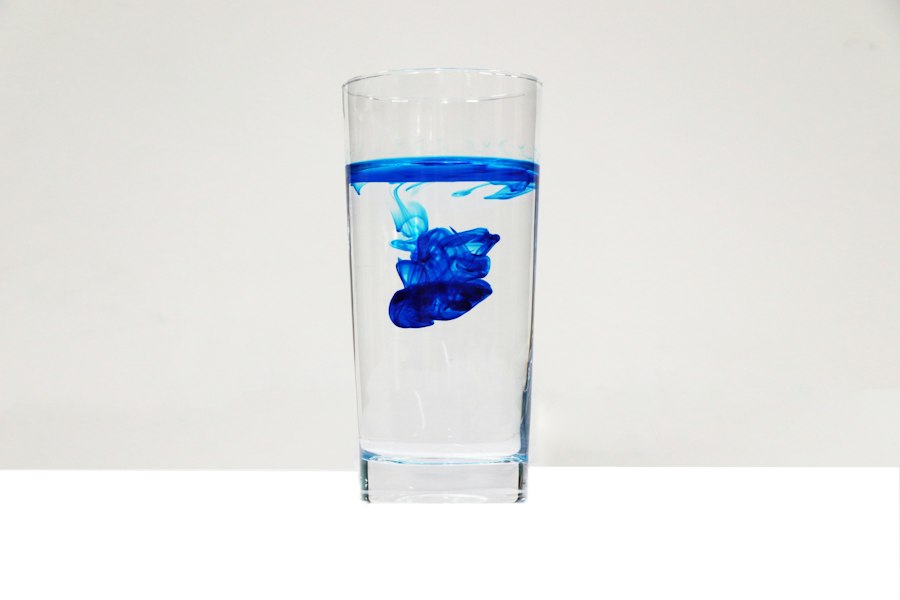
Understanding supercooling requires a deeper dive into the behavior of individual water molecules. At temperatures above freezing, water molecules possess enough kinetic energy to move freely, overcoming the relatively weak hydrogen bonds that momentarily link them. As the temperature drops, the kinetic energy of these molecules decreases, making them more sluggish. Hydrogen bonds, which are temporary attractive forces between a hydrogen atom of one water molecule and the oxygen atom of another, become more stable and influential. In bulk liquid water, these hydrogen bonds are constantly forming and breaking, creating a dynamic network.
The Energetic Landscape of Freezing
The transition from liquid water to ice involves a significant change in the energy state of the water molecules. In liquid water, the hydrogen bonds are transient and constantly rearranging. This dynamic nature contributes to the fluid properties of water. As the temperature approaches freezing, the hydrogen bonds become more persistent, and molecules begin to adopt more ordered arrangements. Freezing represents a transition to a state of lower energy, where the molecules are locked into a rigid, crystalline lattice. However, this transition is not spontaneous. There is an energy barrier that must be overcome to initiate this ordering.
The Energy Barrier to Nucleation: A Delicate Balance
The formation of an ice crystal from supercooled water is an example of a phase transition that requires overcoming an activation energy barrier. This barrier arises from the surface tension of the nascent ice embryo. Initially, the small cluster of ice molecules has a high surface area-to-volume ratio, and the energy required to create this new surface is substantial. As the ice crystal grows, its volume increases faster than its surface area, and the net energy change becomes favorable. However, reaching this critical size requires the initial formation of a stable nucleus, a process that is kinetically hindered without assistance. This is where the absence of nucleation sites becomes critical. In pure, undisturbed water, the random thermal motion of molecules might occasionally bring a few together in a configuration that resembles the ice lattice, but these small clusters are fleeting and usually disintegrate before they can grow.
The Role of Molecular Motion and Random Fluctuations
Even in a supercooled state, water molecules are still in motion. However, their motion is significantly reduced compared to liquid water. The hydrogen bonds are more prevalent, creating a more viscous liquid. The transition to ice is essentially a spontaneous process driven by random fluctuations in molecular arrangement. In the absence of external stimuli, these fluctuations may not be sufficient to overcome the nucleation barrier. It is the external trigger – a vibration, a foreign particle, or a sudden temperature change – that provides the necessary nudge to push a sufficient number of molecules into the critical configuration, initiating rapid ice crystal formation.
Triggers for Crystallization: How Supercooled Water Breaks its Spell
While the absence of nucleation sites allows water to exist in a supercooled state, this state is inherently unstable. A slight perturbation is all that is needed to break the spell and induce rapid freezing. These triggers can be physical, chemical, or even involve the introduction of specific types of particles. Understanding these triggers is crucial for both appreciating the phenomenon and for practical applications. It highlights that the “supercooled” state is more of a temporary pause than a permanent condition.
Physical Disturbances: Shaking and Impact
The most common and easily demonstrated trigger for supercooled water is physical disturbance. A gentle shake, a tap on the container, or even dropping the container can be enough to initiate freezing. These actions impart kinetic energy to the water molecules, causing them to jostve and collide. This increased motion can help overcome the nucleation barrier by randomly aligning molecules into the ice lattice. In some cases, the shockwave generated by an impact can create localized areas of higher pressure or shear, further encouraging the formation of ice nuclei. It is a dramatic demonstration of how a seemingly stable liquid can instantly transform.
Introduction of Ice Nucleating Agents: Seeding the Process
Beyond random disturbances, scientists can intentionally induce freezing by introducing specific substances known as ice nucleating agents (INAs). These agents are materials that possess surface structures and chemical properties that closely mimic the ice lattice, making it energetically favorable for water molecules to arrange themselves around them. Common INAs include certain types of bacteria, such as Pseudomonas syringae, which produce proteins that are remarkably efficient at promoting ice formation. Other examples include silver iodide, which has a crystalline structure similar to ice, and finely divided mineral dust. By introducing even a tiny amount of an INA into supercooled water, the nucleation barrier is effectively bypassed, and rapid freezing occurs.
Temperature Fluctuations and Convection Currents
Even subtle changes in temperature can act as triggers. If a small region of the supercooled water experiences a slight, localized drop in temperature, it can create conditions more favorable for ice nucleation. Similarly, convection currents within the water, which can be initiated by minor temperature gradients or disturbances, can bring molecules together in configurations that promote crystallization. The precise nature of the trigger and its interaction with the supercooled water are often complex and depend on the specific conditions. However, the underlying principle is that any event that increases the likelihood of molecules achieving the critical nucleus size will lead to freezing.
Real-World Implications and Applications of Supercooling
The phenomenon of supercooling, while seemingly counterintuitive, has significant implications across various scientific disciplines and practical applications. From the formation of clouds in the atmosphere to the preservation of biological tissues, understanding and manipulating supercooled water is essential. These applications demonstrate that supercooling is not just a scientific curiosity but a phenomenon with tangible impact.
Atmospheric Science: Cloud Formation and Precipitation
One of the most significant areas where supercooling plays a vital role is in atmospheric science. Clouds are often composed of supercooled water droplets, even at temperatures well below freezing. These droplets are crucial for the formation of precipitation. When these supercooled droplets encounter ice nuclei, such as dust particles or ice crystals themselves, they can rapidly freeze, growing into snowflakes or hailstones. Without supercooling, cloud formation and subsequent precipitation would be drastically different, potentially impacting global weather patterns and water cycles. The processes by which ice crystals form and grow within supercooled clouds are complex and are areas of ongoing research in meteorology.
Food Science and Cryopreservation: Preventing Ice Crystal Damage
In the realm of food science and biotechnology, supercooling holds promise for improving preservation techniques. Flash freezing, a method used to rapidly freeze food, aims to create small ice crystals, which cause less damage to cellular structures than larger ice crystals formed during slow freezing. However, even with rapid freezing, some ice crystal formation is inevitable. Researchers are exploring methods to induce and maintain supercooling in biological samples, such as organs and tissues, for cryopreservation. The idea is to keep the water in a liquid state at very low temperatures, thereby avoiding the damaging effects of ice crystal formation, which can rupture cell membranes and compromise tissue integrity. Subsequent thawing processes would then need to be carefully controlled to prevent re-crystallization.
Engineering and Material Science: Preventing Frost and Ice Formation
Understanding supercooling is also crucial for engineers and material scientists dealing with the challenges of frost and ice formation. In cold climates, ice accumulation on aircraft wings, power lines, and bridges can lead to significant structural damage and safety hazards. Research into supercooling helps develop strategies to prevent or mitigate ice formation. This includes the development of novel anti-icing and de-icing materials that are designed to either prevent water from adhering to surfaces or to promote the formation of a supercooled liquid layer that can be easily shed. By understanding the conditions that lead to supercooling and the triggers that cause freezing, scientists can design more effective solutions to combat the detrimental effects of ice.
Scientific Research and Education: Demonstrating Phase Transitions
Supercooling also serves as a compelling and accessible demonstration of a phase transition in scientific education. The dramatic and rapid freezing of supercooled water upon a simple trigger provides a tangible and memorable illustration of the principles of nucleation and metastability. It allows students to witness a phenomenon that challenges their everyday understanding of water and to explore the underlying physics and chemistry involved. Such demonstrations are invaluable for fostering scientific curiosity and understanding complex concepts.
Supercooling water is a fascinating phenomenon that has intrigued scientists for years, and a related article that delves deeper into this topic can be found on Freaky Science. This article explores the conditions under which water can remain in a liquid state below its freezing point and the implications of this behavior in various scientific fields. For more insights, you can read the full article here.
The Future of Supercooling Research: Pushing the Boundaries of Water’s Behavior
| Parameter | Description | Typical Values | Notes |
|---|---|---|---|
| Freezing Point of Pure Water | Temperature at which water normally freezes | 0°C (32°F) | Standard atmospheric pressure |
| Supercooling Temperature Range | Temperature range where water remains liquid below freezing point | 0°C to approximately -40°C | Depends on purity and container surface |
| Homogeneous Nucleation Temperature | Temperature at which pure water spontaneously freezes without impurities | About -40°C | Rarely achieved in typical conditions |
| Heterogeneous Nucleation Temperature | Freezing temperature influenced by impurities or surfaces | Between 0°C and -10°C | Most common freezing mechanism |
| Cooling Rate | Speed at which water temperature is lowered | Varies (e.g., 1°C/min to 10°C/min) | Faster cooling can increase supercooling |
| Effect of Impurities | Presence of particles or dissolved substances | Can reduce supercooling by initiating nucleation | Distilled water supercools more easily |
| Volume of Water Sample | Amount of water being supercooled | Microliters to milliliters | Smaller volumes tend to supercool more |
| Surface Roughness of Container | Texture of container walls in contact with water | Smooth to rough | Rough surfaces promote nucleation, reducing supercooling |
The scientific exploration of supercooling is far from complete. Researchers continue to push the boundaries of our understanding, investigating the precise molecular mechanisms at play and exploring novel applications for this fascinating property of water. The ability to control and manipulate the freezing process has far-reaching implications for various fields.
Advanced Materials and Coatings: Designing for Supercooling
The development of new materials and coatings that can promote or inhibit supercooling is an active area of research. Scientists are designing surfaces with specific micro- and nano-structures, as well as chemical compositions, to precisely control the nucleation of ice. This could lead to the creation of self-cleaning surfaces, improved insulation materials, and more efficient de-icing systems for transportation and infrastructure. The aim is to engineer materials that can either facilitate controlled supercooling for specific applications or actively prevent it to avoid ice buildup.
Cryobiology and Medicine: Enhancing Organ Preservation
In the field of cryobiology, the ultimate goal is to achieve long-term preservation of organs and tissues for transplantation, often referred to as “suspended animation.” Supercooling is considered a critical intermediate step in achieving this goal. If organs can be reliably supercooled to very low temperatures without ice formation, it opens up possibilities for significantly extending their viability and expanding the window for transplantation. Researchers are investigating cryoprotective agents and optimized cooling protocols to maximize supercooling duration and depth.
Understanding Extreme Environments: From Comets to Biological Systems
Supercooling also offers insights into phenomena occurring in extreme environments. The behavior of water within interstellar ice grains, on comets, and in other celestial bodies can be influenced by supercooling processes. Understanding these processes can help us unravel the chemical evolution of the universe and the potential for life beyond Earth. Similarly, studying supercooling in biological systems, such as the cells of hibernating animals or the formation of ice within living organisms, provides clues about survival mechanisms in sub-zero environments.
Theoretical Modeling and Simulation: Unraveling Molecular Mysteries
Advancements in computational power and theoretical modeling are enabling scientists to simulate the behavior of water molecules at the atomic and molecular level. These simulations can provide unprecedented detail about the nucleation process, the role of impurities, and the dynamics of hydrogen bonding in supercooled water. By correlating theoretical predictions with experimental observations, researchers can gain a deeper understanding of the fundamental principles governing supercooling and explore scenarios that are difficult or impossible to replicate in the laboratory. This interplay between theory and experiment is crucial for unlocking the full potential of supercooling research.
Why Hot Water Freezes Faster Than Cold (The Mpemba Effect)
FAQs
What is supercooling water?
Supercooling water is the process of cooling liquid water below its freezing point without it solidifying into ice.
How is supercooling water achieved?
Supercooling water can be achieved by carefully controlling the conditions in which the water is cooled, such as using purified water, smooth containers, and avoiding disturbances that could trigger the freezing process.
What are some applications of supercooling water?
Supercooling water has various applications, including preserving biological samples, studying the behavior of supercooled liquids, and creating instant ice sculptures.
Is supercooling water safe to drink?
Supercooling water does not change its chemical composition, so it is generally safe to drink. However, precautions should be taken to ensure that the water remains free from contaminants during the supercooling process.
What happens when supercooled water is disturbed or agitated?
When supercooled water is disturbed or agitated, it can rapidly freeze into ice due to the introduction of nucleation sites that trigger the crystallization process.