So, you’ve seen those streetlights with the distinct purple glow and wondered, “Why are they purple?” It’s not just for show, and it’s not a random choice. The purple hue is a direct result of the specific type of bulb used and the way its light interacts with our atmosphere. Primarily, it’s a characteristic of High-Pressure Sodium (HPS) lamps, and the purple isn’t the bulb’s intended color; it’s a byproduct of aging.
The Humble Beginnings of HPS Lighting
High-Pressure Sodium lamps have been a workhorse in street lighting for decades, and for good reason. They’re efficient, long-lasting, and provide a decent amount of light for illuminating roadways and public spaces. Their basic design involves an arc tube, typically made of translucent ceramic (like alumina), containing a mixture of sodium, mercury, and xenon. When electricity passes through this mixture, it excites the gases and vaporizes the sodium, creating a bright, yellowish-orange light.
How HPS Lamps Actually Work
At its core, an HPS lamp is a type of gas-discharge lamp. When you power it up, an electrical arc starts between electrodes at either end of the arc tube. This arc heats up the mercury and xenon, which help to establish the arc and increase its temperature. As the temperature rises, the sodium metal inside vaporizes, and it’s the excited sodium atoms that are primarily responsible for emitting light. The light produced is predominantly in the yellow and orange parts of the visible spectrum, which is why traditional HPS lamps have that familiar warm, almost amber glow. This spectrum is quite effective for visibility, as our eyes are sensitive to these wavelengths.
The Efficiency Advantage
One of the main reasons HPS lamps became so popular was their efficiency. They convert a good portion of the electrical energy they consume into visible light, making them a cost-effective choice for municipalities that need to light vast areas. Compared to older technologies like incandescent or mercury vapor lamps, HPS offered a significant improvement in terms of energy savings and lifespan. This meant less electricity to pay for and fewer bulb replacements, which translates to lower operational costs for city councils and utility companies.
The science behind the purple color of streetlights has garnered attention for its potential effects on urban environments and human behavior. For a deeper understanding of this phenomenon, you can explore a related article that discusses the implications of colored lighting in public spaces. To read more about this intriguing topic, visit Freaky Science.
The Science of Color and Light Emission
Understanding why streetlights turn purple requires a little dive into how light works and how different elements produce specific colors. Light is essentially electromagnetic radiation, and when atoms are energized, they emit photons – particles of light – at specific wavelengths. These wavelengths correspond to different colors that we perceive. For example, sodium atoms, when excited, emit strongly at certain wavelengths that fall within the yellow-orange range of the visible spectrum.
Atomic Excitation and Emission Spectra
Every element has a unique “fingerprint” of light it emits when its atoms get excited. Think of it like a musical instrument producing a specific set of notes. For sodium, those notes are predominantly in the yellow and orange frequencies. When electricity zaps the sodium vapor inside the HPS bulb, the electrons in the sodium atoms jump to higher energy levels. As they fall back down to their normal state, they release energy in the form of photons of light. The energy difference determines the wavelength, and thus the color, of the light emitted. For sodium, this is why the light is so intensely yellow.
The Role of Other Gases
While sodium is the primary light emitter in HPS lamps, other gases like mercury and xenon are present. Mercury contributes to the initial arc and helps to raise the lamp’s operating temperature and pressure, which in turn affects the sodium’s light output. Xenon is often used as a starting gas because it’s easy to ionize. These additional gases can subtly influence the overall light spectrum, but the dominant color remains the characteristic yellow-orange of sodium. The interplay of these gases and their specific energy levels is what creates the overall spectral output of the lamp.
The Aging Process: Where Purple Enters the Picture
The key to the purple streetlight isn’t the brand-new bulb; it’s the bulb that’s been running for a while. Over time, the components inside an HPS lamp can degrade, and this degradation can alter the light it produces. Specifically, certain elements within the arc tube, or the tube itself, can react or evaporate in ways that change the light’s spectral output.
Material Degradation in the Arc Tube
The intense heat and electrical current inside an HPS lamp put a lot of stress on its components. The ceramic arc tube, while robust, isn’t immune to this. Over thousands of hours of operation, the inner surface of the arc tube can begin to erode. This erosion can release trace amounts of other elements or alter the way the light from the sodium interacts with the tube’s material. Furthermore, the internal pressure and gas composition can shift over time due to these ongoing chemical reactions and material changes.
The Unexpected Emission of Blue and Violet
It’s a bit of a chemical serendipity. As the arc tube degrades, the light emission from the lamp starts to shift. While sodium’s yellow-orange light remains dominant, the degradation can cause other elements within the tube, or even the residual gases and sputtered material, to emit light at shorter wavelengths. These shorter wavelengths correspond to the blue and violet parts of the spectrum. When this weaker blue/violet light is mixed with the strong yellow-orange light, the overall perceived color shifts towards purple. It’s like adding a little bit of blue and red paint to a large amount of yellow paint – the result is a browner, or in this case, a purpler hue.
Why Not Just Make Them Purple From the Start?
The reason streetlights aren’t manufactured to be purple from day one is simple: it’s not the most effective or efficient way to produce light for visibility. The specific wavelengths of light that contribute to the purple hue are not as efficient for human night vision as the yellow-orange light produced by a healthy HPS lamp. Furthermore, deliberately engineering a lamp to produce purple light would likely be more complex and costly.
The Importance of Light Spectrum for Visibility
When we talk about visibility, especially at night, we’re concerned with how well our eyes can detect contrast and detail. The yellow and orange parts of the spectrum are generally well-suited for this. They offer good contrast against most road surfaces and are less prone to scattering in atmospheric conditions like fog or rain, compared to bluer light. While some blue light can be beneficial for alertness, a heavy blue or violet component can sometimes lead to glare and reduced overall visibility for certain tasks, like reading road signs.
The “Accident” of Aging is More Practical
For municipalities, the primary goal of street lighting is safe and efficient illumination. The purple hue is an unintended consequence of using reliable and cost-effective HPS technology that has been pushed to its operational limits. Replacing an aging bulb that’s started to turn purple is far more practical and economical than trying to create a new type of bulb specifically designed to emit a purple glow, especially when the original yellow-orange light still functions reasonably well, albeit with a color shift. The purple is essentially a visual cue that the lamp is nearing the end of its lifespan and might need replacement soon.
Recent studies have explored the intriguing effects of streetlight color on urban environments, particularly focusing on the impact of purple lighting. This innovative approach not only enhances the aesthetic appeal of cityscapes but also plays a role in influencing human behavior and safety. For a deeper understanding of the science behind this phenomenon, you can read more in this related article on Freaky Science. The findings suggest that the use of purple streetlights could lead to a more vibrant and secure atmosphere in urban areas.
The Future of Streetlight Color
| Metric | Description | Value / Range | Unit |
|---|---|---|---|
| Wavelength | Dominant wavelength of purple light emitted by streetlights | 380 – 450 | nm (nanometers) |
| Color Temperature | Approximate correlated color temperature of purple streetlight | 2500 – 3000 | K (Kelvin) |
| Luminous Intensity | Brightness of the purple streetlight | 500 – 1500 | cd (candela) |
| CRI (Color Rendering Index) | Ability to render colors accurately under purple streetlight | 60 – 80 | Index (0-100) |
| Energy Consumption | Power usage of purple streetlight | 30 – 100 | W (watts) |
| Photopic Efficiency | Efficiency of light perceived by human eye under purple light | 0.1 – 0.3 | lm/W (lumens per watt) |
| Peak Emission | Peak emission wavelength of purple LED or lamp | 410 – 430 | nm (nanometers) |
As technology advances, the familiar purple glow of aging HPS lamps is becoming less common. Newer LED (Light Emitting Diode) streetlights are rapidly replacing older technologies. LEDs offer greater efficiency, longer lifespans, and importantly, more control over the color of light emitted. This means we’re seeing a shift away from the spectrum that causes the purple hue, towards different shades of white light.
The Rise of LED Technology
LEDs are fundamentally different from HPS lamps. Instead of a gas discharge, LEDs use semiconductor materials that emit light when an electric current passes through them. This allows for a much wider range of light colors and spectral distributions to be produced. Manufacturers can tune LEDs to emit specific shades of white, from warm to cool, depending on the intended application and the desired visual effect.
The New Palette of Streetlight White
The white light produced by modern LEDs is often designed to mimic natural daylight more closely, or to be optimized for visual acuity. This typically means a broader spectrum of colors, including blues, greens, yellows, and reds, all blended together to appear white. The specific “color temperature” of LED streetlights can vary. Some might be warmer, with a slight yellowish tint, while others might be cooler, with a bluer cast. The advantage here is that the light can be tailored for specific environments, potentially improving visibility, reducing light pollution, and even influencing human circadian rhythms. As LED adoption continues, the unique, albeit accidental, purple streetlight is likely to become a nostalgic sight.
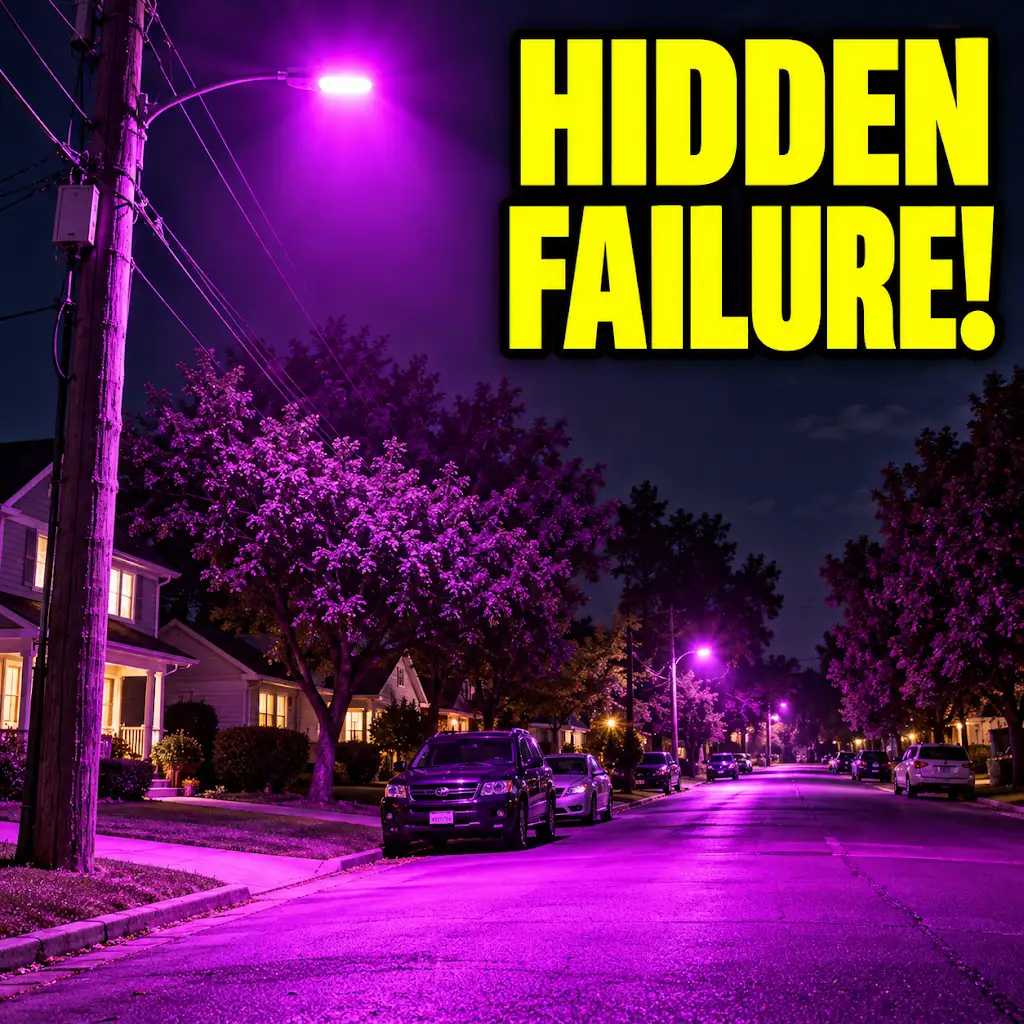
Why The Streetlights Are Turning Purple
FAQs
Why are some streetlights purple in color?
Some streetlights appear purple due to the use of LED lights that emit a bluish-white light, which can sometimes appear purple to the human eye.
Is there a specific reason why purple LED lights are used for streetlights?
Purple LED lights are not typically used for streetlights. The purple hue may be a result of the specific type of LED used or a malfunction in the lighting system.
Do purple streetlights affect visibility for drivers and pedestrians?
Purple streetlights can affect visibility as the color may distort the perception of objects and make it harder to distinguish details, potentially impacting safety for drivers and pedestrians.
Are there any benefits to using purple streetlights?
There are no specific benefits to using purple streetlights. In fact, the unusual color may cause confusion and discomfort for individuals accustomed to traditional white or yellow street lighting.
Can the purple color of streetlights be adjusted or corrected?
The color of streetlights can be adjusted or corrected by using different LED bulbs or adjusting the color temperature settings of the lighting system to ensure proper visibility and reduce any potential negative impacts of the purple hue.