So, why do some streetlights have that cool purple glow? It’s not just for looks; it’s a consequence of the specific type of gas inside them and how that gas interacts with electricity. Think of it like a light-up sign, but on a much bigger scale.
The Invisible Spark: How Gas-Discharge Lamps Work
Streetlights, especially older ones, often rely on a principle called gas discharge. This is basically making gas light up by running electricity through it. It sounds a bit abstract, but it’s a pretty straightforward process at its core.
Electrifying the Gas
The magic starts when electricity flows through a tube filled with a specific type of gas. This electricity excites the atoms within the gas, essentially giving them a jolt. When these excited atoms return to their normal state, they release energy in the form of light. The color of this light depends entirely on the type of gas being used.
Different Gases, Different Hues
Different gases emit different colors when excited. For instance, neon gas, famously used in signs, glows red. Argon typically produces a blueish light, and mercury vapor can create a whiter, sometimes slightly greenish, light. The purple hue we’re interested in comes from a specific mixture or a particular gas being used under certain conditions.
The phenomenon of purple light emitted by streetlights has intrigued many, leading to discussions about its underlying physics and effects on the environment. For those interested in exploring this topic further, a related article can be found at Freaky Science, which delves into the science behind different light wavelengths and their implications for urban lighting.
The Purple Culprit: Sodium Vapor’s Story
The most common reason for that distinct purple glow in streetlights is the use of low-pressure sodium vapor. This type of lighting was popular for a long time because it was very efficient, meaning it produced a lot of light for the amount of electricity it consumed.
Sodium’s Atomic Dance
When electricity passes through sodium vapor, the sodium atoms get excited. As they calm down, they emit light. The key here is that sodium vapor emits light in very specific wavelengths. One of the dominant wavelengths it emits is in the yellow-orange part of the spectrum.
The Illusion of Purple
So, if sodium emits yellow-orange light, why do we see purple? This is where things get a bit clever. Many older sodium vapor lamps, particularly the high-pressure ones, had a coating inside the glass tube. This coating contained phosphors, similar to what’s in fluorescent lights. These phosphors absorbed the light emitted by the sodium and then re-emitted it at different wavelengths.
Phosphor Magic and Color Mixing
The specific phosphors used in these lamps were designed to absorb the strong yellow-orange light from the sodium and re-emit it as a broader spectrum of light, including blues and reds. When these wavelengths mixed together, our eyes perceive the result as a purplish or pinkish-white light. It’s not that the sodium itself is producing purple, but rather the combination of the sodium’s emission and the phosphor’s modification of that light.
The Physics of Light: Wavelengths and Perception

Understanding why we see purple involves a quick dive into the physics of light itself. Light is made up of electromagnetic waves, and each color we see corresponds to a specific wavelength.
The Electromagnetic Spectrum
The visible light spectrum is just a small part of the larger electromagnetic spectrum, which also includes radio waves, microwaves, infrared radiation, ultraviolet radiation, X-rays, and gamma rays. Within the visible spectrum, shorter wavelengths are perceived as blues and violets, while longer wavelengths are seen as reds and oranges.
How Light Interacts with Matter
When light hits an object, it can be absorbed, reflected, or transmitted. In the case of our streetlights, the gas emits light, and this light then travels through the air to our eyes. The color we perceive is determined by the wavelengths of light that reach our eyes.
The Role of the Eye and Brain
Our eyes have specialized cells called cones that are sensitive to different wavelengths of light (red, green, and blue). The brain then processes the signals from these cones to interpret the color we are seeing. So, it’s not just the light itself, but also our biological system that determines our perception of color.
Beyond Purple: Other Streetlight Colors and Their Reasons
While purple might be a memorable color, it’s not the only hue you’ll find in streetlights. Different lighting technologies are used for various reasons, each with its own scientific explanation for its color.
The Reign of High-Pressure Sodium (HPS)
As mentioned, high-pressure sodium lamps were a dominant force in street lighting for decades. Their characteristic yellow-orange glow is due to the properties of sodium vapor at high pressure. While efficient, their monochromatic light (meaning it’s mostly one color) can distort the perception of other colors, making things look less vibrant. This is why you sometimes see a distinct yellow haze under HPS lamps.
The Rise of LED Streetlights
Light Emitting Diodes (LEDs) have become the modern standard for street lighting. LEDs offer significant advantages in terms of energy efficiency, lifespan, and controllability. However, their color can vary.
White LEDs: A Spectrum of Choices
Most white LEDs achieve their color by using a blue LED chip coated with phosphors. The blue light from the chip excites the phosphors, which then emit light across a broader spectrum, creating a white light. The exact composition of the phosphors determines the “color temperature” of the white light, ranging from warm yellowish white to cool bluish white. This means you’ll see a range of whites from modern LED streetlights, not a single, uniform color.
The Impact of Color Rendering Index (CRI)
Another factor influencing the perceived color under LED lights is their Color Rendering Index (CRI). CRI measures how accurately a light source reveals the true colors of objects compared to a natural light source. Higher CRI lights are generally preferred for better color perception, and this can influence the “warmth” or “coolness” of the white light.
Metal Halide: A Whiter Option
Metal halide lamps were also used, offering a whiter light than sodium vapor. They work by passing an electric arc through a mixture of gases and metal halide salts. The specific salts used determine the resulting color, which can range from a warm white to a more bluish tint.
The intriguing phenomenon of purple light emitted by streetlights has sparked interest in the field of physics, particularly in understanding how different wavelengths affect our perception and environment. For those curious about the science behind this unique lighting, a related article can provide deeper insights into the principles of light and color. You can explore more about this topic in the article found at Freaky Science, which delves into the fascinating aspects of light physics and its applications in everyday life.
The Evolution and Future of Streetlight Color
| Parameter | Description | Typical Value | Unit |
|---|---|---|---|
| Wavelength | Peak wavelength of purple light emitted by streetlights | 400 – 450 | nm |
| Photon Energy | Energy of photons at purple light wavelength | 2.75 – 3.10 | eV |
| Luminous Efficacy | Efficiency of converting electrical power to visible light | 50 – 70 | lm/W |
| Color Temperature | Perceived color temperature of purple streetlight | 2700 – 3500 | K |
| Intensity | Light intensity at 1 meter distance | 100 – 200 | cd |
| Scattering Coefficient | Atmospheric scattering effect on purple light | 0.15 – 0.25 | m⁻¹ |
| Penetration Depth | Distance purple light travels before intensity halves | 3 – 5 | m |
The move away from purple-glowing streetlights is part of a broader trend towards more energy-efficient and color-accurate lighting solutions.
Why the Shift Away from Purple?
The primary reasons for the decline of purple-glowing streetlights are their inefficiencies compared to newer technologies and the desire for better color rendering. While the purple light might have been a recognizable aesthetic, it wasn’t always the most practical for visibility and safety, especially when it came to distinguishing colors of objects or clothing at night.
Towards Smarter, More Adaptable Lighting
Modern street lighting is increasingly focusing on “smart” technologies. This includes LEDs that can be dimmed when not needed, have their color temperature adjusted, and even communicate with other city infrastructure. The goal is to provide optimal lighting levels and colors where and when they are needed, improving both energy savings and public safety.
The Lasting Impression of the Purple Glow
Even as purple streetlights become less common, they leave a distinct impression in our collective memory. They represent a particular era of urban illumination, a time when gas-discharge lamps were the workhorses of our streets. Understanding the science behind that glow helps us appreciate the ingenuity of past lighting technologies and the continuous evolution of how we illuminate our world.
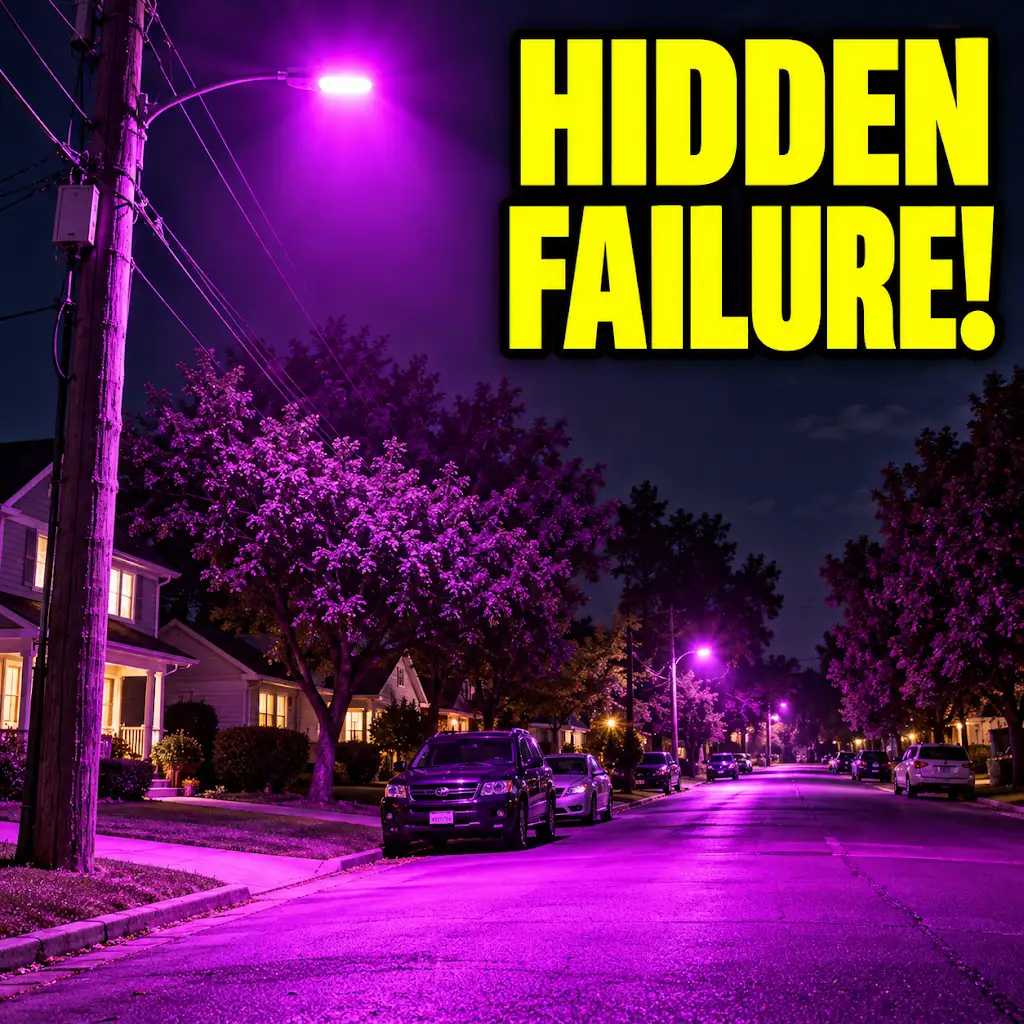
Why The Streetlights Are Turning Purple
FAQs
1. How does a streetlight produce purple light?
A streetlight produces purple light by using a combination of red, blue, and green LEDs. When these three colors are mixed together, they create the perception of purple light.
2. What is the physics behind the color purple in streetlights?
The color purple in streetlights is a result of the way our eyes perceive light. Purple light is created by stimulating the red and blue cones in our eyes, which then send signals to our brain interpreting the light as purple.
3. Why is purple light less common in streetlights compared to other colors?
Purple light is less common in streetlights because it has a shorter wavelength and higher energy compared to other colors like yellow or white. This makes it more expensive to produce and maintain, leading to its limited use in street lighting.
4. How does purple light affect visibility on the streets?
Purple light can affect visibility on the streets by causing objects to appear less defined or clear compared to other colors like white or yellow. This can make it harder for drivers and pedestrians to see clearly in low light conditions.
5. Are there any benefits to using purple light in streetlights?
One potential benefit of using purple light in streetlights is its calming effect on the environment. Some studies suggest that purple light can help reduce stress and create a more relaxing atmosphere, which may be beneficial in certain urban areas.