You’ve probably marveled at how quickly your induction cooktop brings a pot of water to a rolling boil. It’s a stark contrast to the leisurely simmer of a gas burner or the patient heat-up of a traditional electric coil. This isn’t magic; it’s a fascinating application of physics and electromagnetism. Let’s delve into the science that makes your induction cooktop so impressively fast.
At its core, induction cooking relies on a fundamental principle of physics: electromagnetism. You might recall this from science class – the idea that electricity and magnetism are intricately linked. Moving electric charges create magnetic fields, and conversely, changing magnetic fields can induce electric currents. Induction cooktops leverage this two-way street to generate heat directly within your cookware, bypassing the need to heat the cooktop surface itself.
Faraday’s Law of Induction: The Spark of Creation
The cornerstone of induction is Faraday’s Law of Induction. This law states that a changing magnetic flux through a circuit induces an electromotive force (EMF), which in turn drives an electric current. In simpler terms, if you have a magnetic field that is constantly changing in strength or direction, it can push electrons around in a conductor, creating an electrical current.
Magnetic Flux: The Invisible Flow
Magnetic flux is a measure of the total magnetic field passing through a given area. Imagine magnetic field lines as invisible streams. Magnetic flux is like quantifying how many of those streams are flowing through a specific opening.
Induced EMF: The Driving Force
When this magnetic flux changes over time, it creates an “electromotive force” – think of it as a voltage or a push – that can make electrons move. This movement of electrons is, by definition, an electric current.
Lenz’s Law: The Counteracting Force
While Faraday’s Law explains that a current is induced, Lenz’s Law explains the direction of that induced current. Lenz’s Law states that the direction of the induced current will be such that it opposes the change in magnetic flux that produced it. This is an important principle, though for the purpose of rapid boiling, we’re primarily concerned with the creation of the current itself.
Induction cooktops are renowned for their ability to boil water quickly, a feature that can significantly enhance cooking efficiency. This rapid heating is primarily due to the electromagnetic technology used in induction cooking, which directly heats the cookware rather than the cooktop surface. For a deeper understanding of the science behind this technology and its advantages, you can read a related article on the topic at Freaky Science.
The Induction Cooktop’s Inner Workings: Generating the Magnetic Field
Now, how does your induction cooktop harness these principles? It all starts with an alternating current (AC) flowing through a coil of wire embedded beneath the ceramic glass surface. This is the heart of the induction process.
The Induction Coil: The Magnetic Engine
Beneath the smooth glass of your induction cooktop lies a carefully wound coil of copper wire. When you switch the cooktop on and select a power setting, an alternating current is sent through this coil.
Alternating Current (AC): The Key to Change
Unlike direct current (DC), which flows in one direction, AC constantly changes its direction. This is crucial for induction. The AC flowing through the induction coil creates a magnetic field that is also constantly changing in polarity and strength.
Generating a Fluctuating Magnetic Field: The Continuous Push and Pull
As the AC flows back and forth through the coil, it generates a rapidly oscillating magnetic field. This magnetic field extends upwards from the coil, through the ceramic glass.
The Ceramic Glass: A Transparent Barrier
The ceramic glass itself plays a vital role. It’s not just for aesthetics; it’s a good electrical insulator, meaning it prevents the current in the induction coil from flowing into your cookware directly. However, it’s also transparent to magnetic fields, allowing the generated magnetic field to pass through unimpeded to reach your pot or pan.
The Magic of Induction: Heat Generated in the Pan
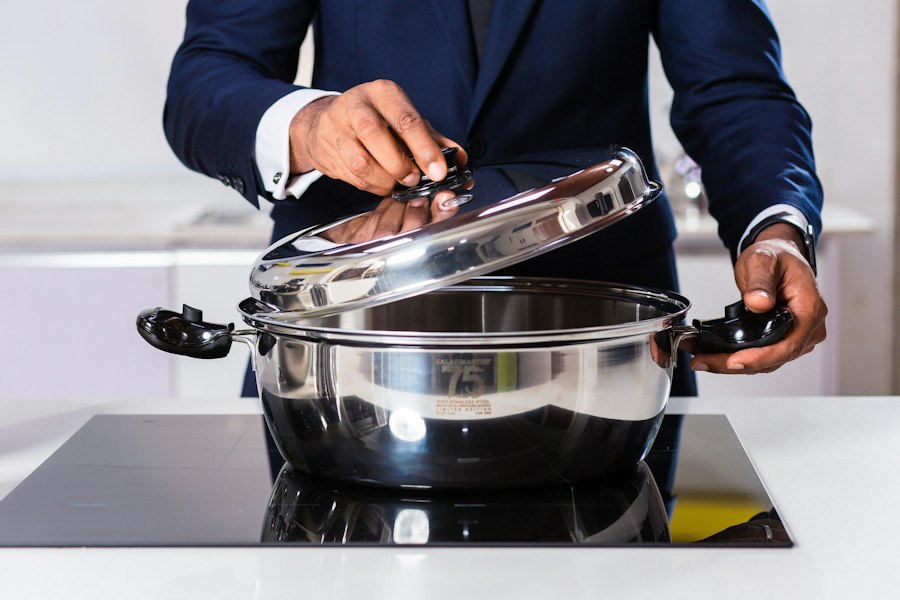
This is where the real action happens. When you place a compatible piece of cookware on the induction cooktop, the fluctuating magnetic field from the coil interacts with the metal of the pan.
Eddy Currents: The Tiny Swirling Rivers of Energy
The changing magnetic field passing through the base of your ferromagnetic cookware induces powerful electrical currents within the metal itself. These currents are known as “eddy currents.” Imagine the magnetic field lines as causing tiny whirlpools of electrons to form and swirl within the metal of your pan.
Induced Currents within the Cookware: The Pan Becomes the Heater
These eddy currents are not simply flowing in a straight line. They are circular and form complex patterns within the metal. They are essentially miniature electrical circuits formed directly in the pan.
The Path of Least Resistance: How Eddy Currents Form
The eddy currents are driven by the changing magnetic field, but they also encounter resistance within the metal of the cookware. This resistance is the key to generating heat.
Joule Heating: The Birth of Rapid Heat
As these eddy currents flow through the resistive metal of your cookware, they encounter friction. This friction converts the electrical energy of the eddy currents into heat energy. This phenomenon is known as Joule heating, or resistive heating.
Resistance and Heat Generation: The Fundamental Principle
The hotter your pan gets is directly proportional to the amount of resistance in the metal and the square of the current flowing through it (P = I²R, where P is power, I is current, and R is resistance). Since induction cooktops generate strong eddy currents and are designed to maximize this effect in compatible cookware, the heat generation is incredibly efficient and rapid.
Why Only Ferromagnetic Cookware? The Magnetic Connection
This is also why induction cooktops only work with cookware that has ferromagnetic properties (meaning it can be attracted by a magnet). Pure aluminum, copper, or glass cookware won’t work because they don’t have the necessary magnetic properties to efficiently interact with the induction coil’s magnetic field and generate strong eddy currents. Stainless steel, cast iron, and enameled cast iron are excellent choices because they are typically ferromagnetic.
The Science Behind the Speed: Optimizing Heat Transfer
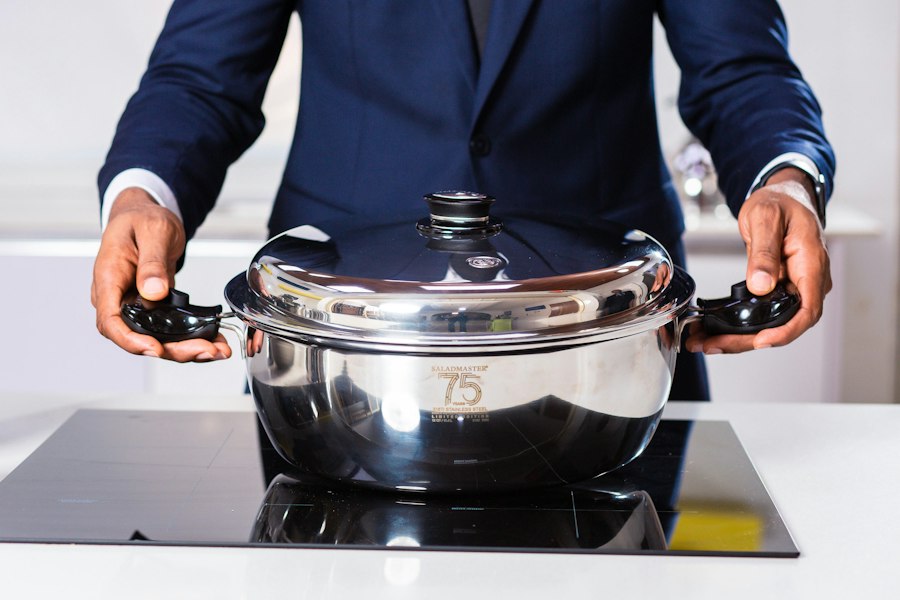
The rapid boiling you observe isn’t just about generating heat; it’s about generating a lot of heat quickly and transferring it efficiently to the contents of your pot. Induction excels at both.
High Frequency, High Power: The Dual Engine of Speed
Induction cooktops operate at very high frequencies, typically ranging from 20 to 100 kHz (kilohertz). This high frequency is critical for generating strong eddy currents and thus significant Joule heating.
Frequency Matters: Faster Oscillations, Stronger Currents
A higher frequency means the magnetic field is changing direction more rapidly. This faster change induces stronger and more numerous eddy currents within the cookware. Think of it like trying to push a swing: if you push it more frequently and with more force, it will swing higher and faster.
Power Output: The Intensity of the Magnetic Field
Beyond frequency, the power output of the induction cooktop dictates the strength of the magnetic field. Higher power settings mean a stronger magnetic field, which in turn leads to more vigorous eddy currents and even faster heating.
Direct Heat Transfer: No Intermediate Steps
Unlike conventional electric or gas cooktops, where heat is first generated in a heating element or burner and then transferred to the cookware, induction generates heat directly within the base of the pot or pan. This eliminates a significant step in the heat transfer process.
Eliminating the Middleman: From Coil to Pan Bottom
With gas or electric coils, you’re heating air or a resistive element, which then heats the pot. This involves convective and conductive heat transfer, both of which have inherent inefficiencies and speed limitations. Induction cuts out these intermediate steps, meaning almost all the energy generated by the cooktop is directly converted into heat within your cookware.
Minimizing Heat Loss: Keeping the Energy Where it Belongs
Because the heat is generated internally in the cookware, there’s far less wasted heat escaping into the surrounding air. This makes induction exceptionally energy-efficient, and also contributes to the speed of boiling, as the energy isn’t being lost to the environment.
Efficient Energy Conversion: A Near-Perfect System
The overall efficiency of induction cooking is remarkably high, often exceeding 85%. This means that a significant percentage of the electrical energy consumed by the cooktop is actually used to heat your food.
Minimizing Waste Heat: A Cooler Kitchen
This high efficiency translates to less wasted heat escaping the cooktop. You’ll notice that the glass surface of an induction cooktop remains relatively cool compared to other types of cooktops, even when in use. This not only reduces the risk of burns but also keeps your kitchen cooler.
Precise Control and Responsiveness: The Feeling of Power
The direct nature of heat generation also leads to incredibly precise temperature control and responsiveness. When you turn up the power on an induction cooktop, you see the results almost instantaneously. This level of control contributes to a more enjoyable and efficient cooking experience, and indirectly to faster cooking times because you can quickly dial in the precise heat needed.
Induction cooktops are known for their ability to boil water quickly, which can be attributed to their unique heating technology that directly heats the cookware rather than the cooking surface. This efficiency not only saves time but also energy, making them a popular choice in modern kitchens. For a deeper understanding of the science behind this rapid heating process, you can explore a related article that delves into the principles of induction cooking and its advantages. Check it out here for more insights.
Beyond Boiling: The Versatility and Efficiency of Induction
| Metric | Induction Cooktop | Traditional Electric Cooktop | Gas Cooktop | Explanation |
|---|---|---|---|---|
| Heat Transfer Efficiency | 85-90% | 65-70% | 40-55% | Induction cooktops use electromagnetic fields to directly heat the pot, minimizing heat loss. |
| Time to Boil 1 Liter of Water | 3-4 minutes | 6-8 minutes | 5-7 minutes | Faster heating due to direct energy transfer in induction cooktops. |
| Energy Consumption (kWh) | 0.1 – 0.12 | 0.15 – 0.2 | 0.13 – 0.18 | Lower energy use for boiling water with induction due to efficiency. |
| Surface Temperature During Boiling | Moderate (cool to touch except under pot) | High (hot surface) | High (hot surface) | Induction cooktops heat the pot, not the cooktop surface, reducing heat loss. |
| Response Time to Adjust Heat | Instant (milliseconds) | Slow (seconds) | Fast (seconds) | Induction allows precise and immediate control of heat output. |
While rapid boiling is a standout feature, the science behind induction cooktops extends to their overall versatility and efficiency in various cooking tasks.
Precise Temperature Control: From Gentle Simmer to Searing Heat
The direct heat generation and responsive nature of induction allow for incredibly precise temperature control. You can go from a gentle simmer to a vigorous boil or a searing hot pan with immediate feedback.
Fine-Tuning the Heat: The Art of Induction Cooking
This precision is invaluable for delicate tasks like melting chocolate or simmering sauces, where over-heating can be disastrous. It also allows for rapid and controlled searing of meats, locking in juices and flavor.
Instantaneous Response: Adapting to Your Needs
Unlike electric coil or even gas cooktops that retain heat, induction’s heat output changes almost instantly when you adjust the power setting. This means you can react quickly to changes in your cooking, preventing burning or undercooking.
Energy Efficiency: Saving Power and Money
As mentioned, induction cooktops are significantly more energy-efficient than their traditional counterparts. This is due to the direct heat generation and minimized heat loss.
Lower Energy Consumption: A Greener Choice
This translates to lower electricity bills and a smaller carbon footprint. The energy that would have been lost as wasted heat on other cooktops is instead used to cook your food.
Reduced Kitchen Heat: A More Comfortable Environment
The fact that the cooktop surface doesn’t get excessively hot also means your kitchen stays cooler, reducing the need for air conditioning and further saving energy.
Safety Features: A Cooler, Safer Surface
The inherent design of induction cooktops also contributes to enhanced safety.
Cool-to-Touch Surface: Minimizing Burn Risks
Because the heat is generated directly in the cookware, the ceramic glass surface of the cooktop itself remains significantly cooler than with other types of cooktops. This greatly reduces the risk of accidental burns.
Automatic Shut-Off: Peace of Mind
Many induction cooktops also feature automatic shut-off functions, which detect when cookware is removed from the surface and turn off the heat. This adds an extra layer of safety and prevents accidental overheating.
Pan Detection: Only Heating When Necessary
The cooktop will only activate and generate heat when it detects the presence of a ferromagnetic pan. If you accidentally turn it on without a pan, or if a pan is removed, it will not generate heat, further enhancing safety.
Conclusion: The Power of Applied Physics in Your Kitchen
The next time you marvel at how quickly your induction cooktop boils water, take a moment to appreciate the sophisticated science at play. It’s a testament to the power of applied physics, where electromagnetic principles are harnessed to create a cooking experience that is not only incredibly fast but also remarkably efficient, precise, and safe. The induction cooktop is more than just a modern appliance; it’s a brilliant demonstration of how understanding fundamental scientific laws can revolutionize our everyday lives. You’re not just cooking; you’re harnessing the very forces of the universe to prepare your meals.
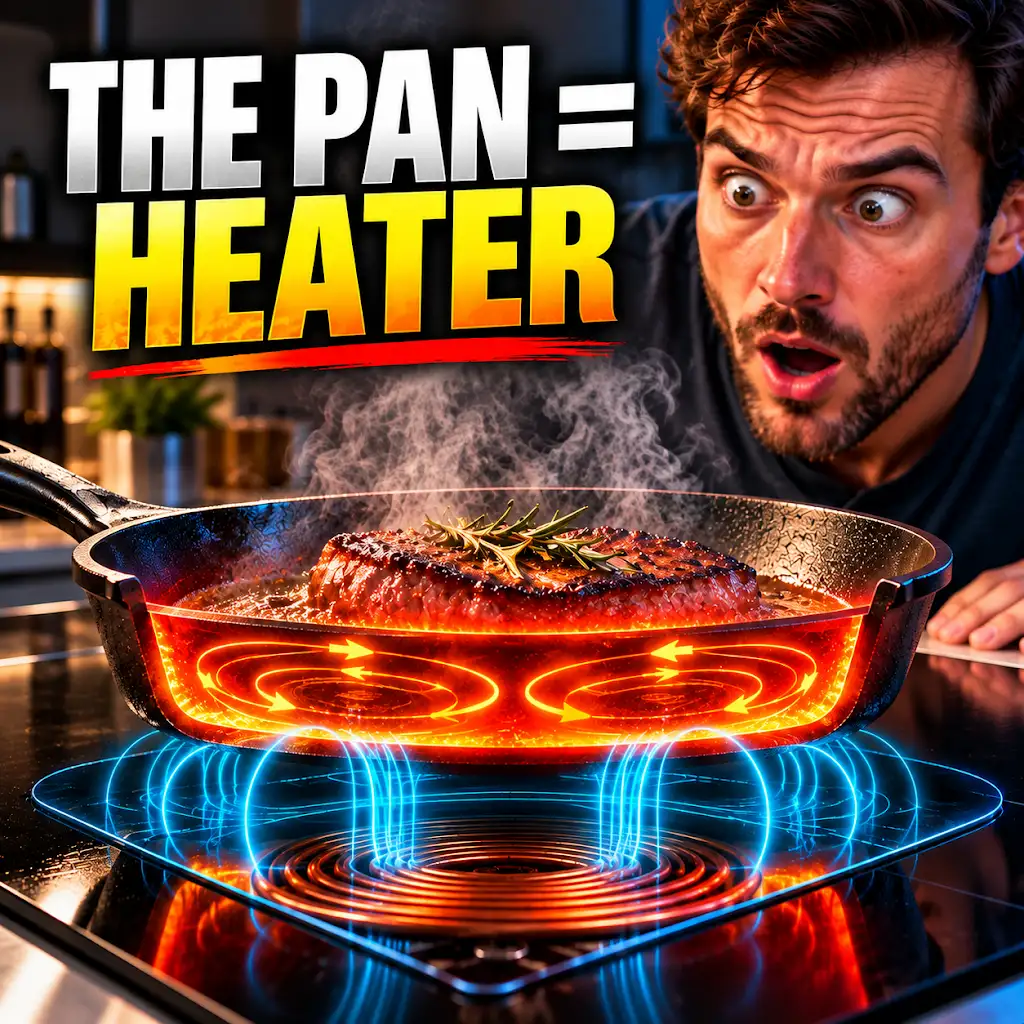
The Pan Is the Heater: How Induction Cooking Really Works
FAQs
1. How do induction cooktops work to boil water quickly?
Induction cooktops use electromagnetic energy to directly heat the pot or pan, rather than the cooktop surface. This allows for faster and more efficient heating, resulting in quicker boiling times.
2. What makes induction cooktops more efficient at boiling water compared to traditional gas or electric stoves?
Induction cooktops have a higher energy transfer rate, which means they can heat up the cookware and its contents more quickly. This efficiency results in faster boiling times for water and other liquids.
3. Are there any safety benefits to using induction cooktops for boiling water?
Induction cooktops are considered safer than gas or electric stoves for boiling water because they do not have open flames or exposed heating elements. Additionally, induction cooktops only generate heat when in contact with compatible cookware, reducing the risk of burns or accidental fires.
4. Can induction cooktops boil water faster than a microwave?
In general, induction cooktops can boil water faster than a microwave. While microwave ovens are known for their speed in heating liquids, induction cooktops can often achieve boiling temperatures more rapidly due to the direct heat transfer to the cookware.
5. Are there any drawbacks to using induction cooktops for boiling water quickly?
One potential drawback of using induction cooktops for boiling water quickly is the need for compatible cookware with magnetic properties. Induction cooktops require pots and pans made of ferrous materials like cast iron or magnetic stainless steel to work effectively.