The Humble Magic Behind Your Cold Drinks
Imagine a scorching summer day. You reach into your refrigerator, and a blast of cool air envelops your hand. Your drink is perfectly chilled, a testament to a silent, unseen process working tirelessly to combat the heat. This marvel is the refrigeration cycle, a fundamental principle that underpins not just your kitchen appliance but also the air conditioners that cool your homes and the freezers that preserve your food. It’s a sophisticated dance of pressure, temperature, and phase changes, a clever manipulation of thermodynamics to achieve the seemingly impossible: making something colder than its surroundings. You might think of it as a closed loop, a continuous journey for a special fluid, but understanding its nuances reveals a deeper appreciation for the engineering that makes our modern lives so comfortable.
This article will guide you through the intricate workings of the refrigeration cycle, demystifying the science behind that refreshing chill. We’ll explore each stage of the cycle, from the initial expansion that chills the refrigerant to its ultimate condensation, ready to begin the journey anew. You’ll discover the roles of the key components – the compressor, condenser, expansion valve, and evaporator – and how they interact to create this remarkable cooling effect. By the end, you’ll not only understand how your refrigerator works but also gain a new respect for the elegant physics that makes it all possible.
The refrigeration cycle is a fascinating process that involves the transfer of heat from one area to another, effectively cooling the desired space. For a deeper understanding of this cycle and its various stages, you can explore a related article that provides insights into the mechanics and applications of refrigeration systems. To learn more, visit this article which delves into the science behind refrigeration and its importance in everyday life.
The Heart of the System: The Compressor’s Role
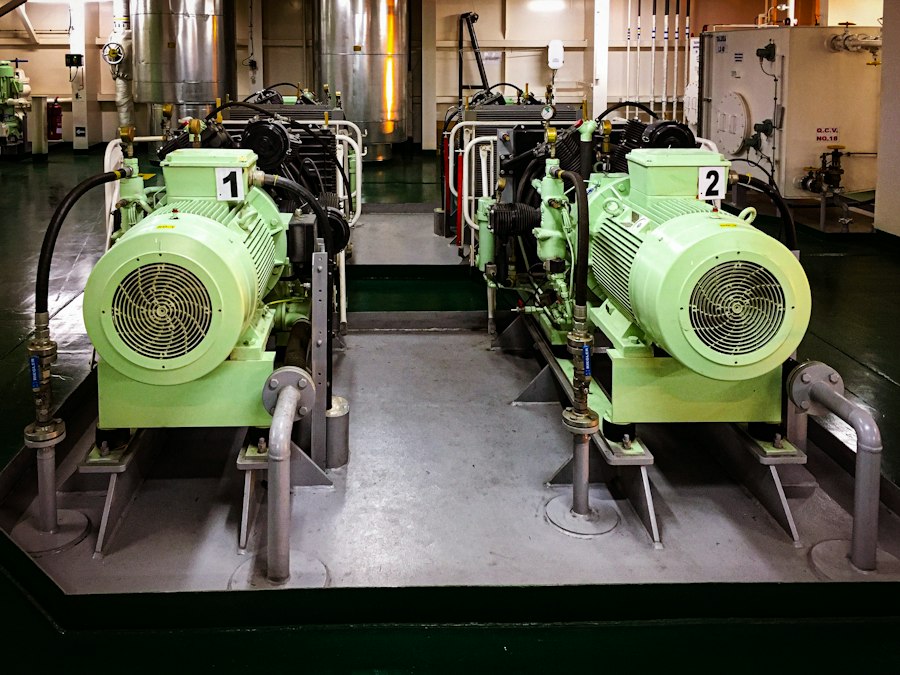
At the very core of the refrigeration cycle lies the compressor, the energetic engine that drives the entire process. Think of it as the powerhouse, the component responsible for initiating the critical pressure and temperature changes that are essential for cooling. Without the compressor, the refrigerant would remain in a state where it couldn’t effectively absorb heat, rendering the entire system inert. Its tireless work is what allows the magic of refrigeration to occur, making it arguably the most crucial element in the entire loop.
Increasing the Pressure: The Compressor’s Primary Function
The compressor’s primary task is to take the refrigerant in its gaseous state, at a low pressure and temperature, and compress it into a high-pressure, high-temperature gas. This is achieved through mechanical action, typically involving pistons or rotating scrolls that squeeze the refrigerant vapor. As the volume of the refrigerant is reduced, its pressure dramatically increases. This increase in pressure is not arbitrary; it’s directly linked to a rise in temperature. According to the ideal gas law, when you compress a gas, its internal energy increases, manifesting as a higher temperature. This heated, high-pressure gas is then ready for the next stage of the cycle, where it will release its absorbed heat.
Overcoming Resistance: Why Compression is Necessary
You might wonder why this compression is so vital. The answer lies in the physics of heat transfer. Heat naturally flows from a warmer object to a cooler object. In a refrigeration system, the goal is to extract heat from inside the refrigerator (the cold space) and release it into the warmer environment outside. To achieve this, the refrigerant inside the evaporator (the cold coils) needs to be at a lower temperature than the air inside the refrigerator. However, after absorbing heat in the evaporator, the refrigerant is still relatively cool. To then effectively release this heat to the warmer ambient air, its temperature needs to be significantly higher than the surrounding environment. The compressor is the component that elevates the refrigerant’s temperature to this necessary level, enabling it to efficiently shed its heat in the condenser. Without this forced elevation of temperature and pressure, the refrigerant wouldn’t be able to transfer heat out of the system effectively.
Dissipating the Heat: The Condenser’s Crucial Task
Once the compressor has done its work, the refrigerant is a hot, high-pressure gas. Its next destination is the condenser, a component where it releases the heat it has absorbed from the interior of the refrigerator and the heat it gained during compression. This stage is where the refrigerant transitions from a gas back into a liquid, a critical phase change that is fundamental to the cycle’s operation. The condenser is essentially a radiator, designed to efficiently transfer heat from the refrigerant to the surrounding environment.
From Gas to Liquid: The Condensation Process
In the condenser, the hot, high-pressure gaseous refrigerant flows through a series of tubes or fins. These tubes are exposed to the ambient air, which is cooler than the refrigerant. As the hot gas flows through the condenser, it transfers its thermal energy to the surrounding air. This loss of heat causes the refrigerant to cool down. As it cools, it reaches its saturation temperature at the given high pressure, and it begins to condense, transitioning from a gaseous state to a liquid state. This phase change is a significant event because it releases a large amount of latent heat, the energy that was used to keep the refrigerant in its gaseous form. This latent heat is effectively dumped into the environment, a key part of the cooling process.
Location, Location, Location: Where Condensers Live
The placement of the condenser is crucial for its effectiveness. In most domestic refrigerators, you’ll find the condenser coils on the back of the appliance. This location allows them to dissipate heat directly into the room’s air. You might have noticed these coils can get quite warm and collect dust, which is why cleaning them periodically is important for efficient operation. In larger refrigeration systems or air conditioners, the condenser is often a larger unit with a fan to actively blow air across its coils, further enhancing the heat dissipation process. The goal is always to maximize the surface area exposed to the cooler air to facilitate the most efficient heat transfer.
The Cooling Catalyst: The Expansion Valve’s Role
After the refrigerant has shed its heat in the condenser and become a high-pressure liquid, it needs to undergo a dramatic transformation before it can re-enter the evaporator and begin absorbing heat again. This is where the expansion valve, also known as a throttling valve or capillary tube in simpler systems, plays its vital role. This seemingly simple component is a critical bottleneck that orchestrates a significant drop in pressure and temperature, preparing the refrigerant for its next cooling mission.
A Sudden Drop: The Pressure and Temperature Fall
The expansion valve is essentially a restriction in the refrigerant line. As the high-pressure liquid refrigerant is forced through this narrow opening, its pressure plummets. This sudden depressurization causes a phenomenon known as the Joule-Thomson effect. As the refrigerant expands, its molecules move further apart, and the intermolecular forces require energy to overcome. This energy is drawn from the refrigerant itself, leading to a significant drop in its temperature. It’s akin to releasing a pressurized can of air; the can feels cold because the air inside has expanded and cooled. This rapid cooling is precisely what’s needed to make the refrigerant cold enough to absorb heat from the interior of the refrigerator.
Controlling the Flow: The Valve’s Precise Function
While the primary function of the expansion valve is to reduce pressure and temperature, it also plays a crucial role in controlling the flow rate of the refrigerant into the evaporator. In more sophisticated systems, the expansion valve is a thermostatic device that senses the temperature of the refrigerant leaving the evaporator. If the evaporator is too warm, indicating it’s not absorbing enough heat, the valve will open slightly to allow more refrigerant to flow in. Conversely, if the evaporator is too cold, the valve will restrict the flow to prevent overcooling. This precise control ensures that the refrigeration system operates efficiently and maintains the desired temperature without freezing up or becoming too warm.
The refrigeration cycle is a fascinating process that involves the transformation of refrigerant from a gas to a liquid and back again, allowing for effective heat removal from a designated area. For a deeper understanding of the principles behind this cycle and its applications, you can explore a related article on the topic at Freaky Science. This resource provides valuable insights into how the refrigeration cycle operates and its significance in everyday life, from household refrigerators to large-scale industrial cooling systems.
The Cold Embrace: The Evaporator’s Heat Absorption
| Stage | Process | Description | Key Metrics |
|---|---|---|---|
| Compression | Refrigerant gas is compressed | The refrigerant gas is compressed by the compressor, increasing its pressure and temperature. | Pressure: Low to High Temperature: Low to High |
| Condensation | Hot gas releases heat | The high-pressure hot gas passes through the condenser coils, releasing heat to the surroundings and condensing into a liquid. | Temperature: High to Medium Phase: Gas to Liquid |
| Expansion | Pressure reduction | The liquid refrigerant passes through an expansion valve, reducing its pressure and temperature. | Pressure: High to Low Temperature: Medium to Low |
| Evaporation | Liquid absorbs heat | The low-pressure liquid refrigerant evaporates in the evaporator coils, absorbing heat from the environment and cooling the space. | Temperature: Low to Medium Phase: Liquid to Gas |
Having been drastically cooled by the expansion valve, the refrigerant is now a cold, low-pressure mixture of liquid and vapor. It’s ready for its most important task: absorbing heat from the space you want to cool. This happens in the evaporator, a network of coils typically located inside the refrigerator compartment. This is where the actual “cooling” takes place, as the refrigerant diligently works to remove thermal energy from the surrounding air.
Turning Back to Gas: Evaporation and Heat Capture
As the cold, low-pressure refrigerant flows through the evaporator coils, the warmer air from inside the refrigerator comes into contact with them. The temperature difference between the air and the refrigerant is significant, driving heat transfer. The refrigerant absorbs this heat from the air, and as it does, it begins to evaporate. This phase change from liquid to vapor requires energy, and it draws this energy directly from the surrounding air. As the refrigerant absorbs heat and evaporates, the air inside the refrigerator loses heat, becoming cooler. This continuous process of absorption and evaporation is what maintains the low temperature inside your refrigerator.
The Source of the Chill: Where the Cold Comes From
It’s important to understand that the evaporator doesn’t “create” cold; it removes heat. The cold you feel is the absence of heat, or rather, the transfer of heat from one place to another. The refrigerant in the evaporator is colder than the air inside the refrigerator, so heat naturally flows from the warmer air to the colder refrigerant. This absorbed heat then energizes the refrigerant, causing it to vaporize and carry the heat away to be expelled elsewhere in the cycle. Think of it as a sponge soaking up water; the evaporator is the sponge, and the heat is the water it’s diligently absorbing from the interior of your refrigerator.
The Cycle Completes: A Continuous Journey
The beauty of the refrigeration cycle lies in its continuous, closed-loop nature. The refrigerant, having absorbed heat in the evaporator, is now a low-pressure gas. This gas then travels back to the compressor, ready to begin the entire process anew. This never-ending journey ensures that your refrigerator, air conditioner, or freezer maintains its set temperature with consistent efficiency. Each component plays a vital, interconnected role, and the seamless flow of the refrigerant through these stages is what makes modern refrigeration possible.
Maintaining the Balance: Efficiency and Sustainability
The efficiency of the refrigeration cycle is a key consideration in appliance design. Engineers strive to optimize each stage to minimize energy consumption. Factors like the type of refrigerant used, the size and design of the components, and the insulation of the system all contribute to its overall efficiency. As environmental concerns grow, the development of more energy-efficient and environmentally friendly refrigerants is an ongoing area of research and innovation. The goal is to achieve effective cooling with the least possible impact on our planet.
Beyond the Fridge: Applications of the Cycle
While the refrigerator is the most common example, the refrigeration cycle is a cornerstone of many technologies that enhance our lives. Air conditioning systems that keep our homes and offices comfortable, freezers that preserve food for extended periods, and even industrial processes that require precise temperature control all rely on this fundamental principle. Understanding the refrigeration cycle allows you to appreciate the sophisticated engineering that surrounds you, from the food on your table to the air you breathe indoors. It’s a testament to human ingenuity, a constant, silent worker ensuring our comfort and convenience in a world of ever-changing temperatures.

Your AC Blows Hot Air Outside. Is That Heat From Your Room?
FAQs
What is the refrigeration cycle?
The refrigeration cycle is a process that removes heat from a space or substance to lower its temperature. It involves the circulation of a refrigerant through a closed loop system.
What are the main components of the refrigeration cycle?
The main components of the refrigeration cycle include the compressor, condenser, expansion valve, and evaporator. Each component plays a specific role in the process of removing heat from the space or substance.
How does the refrigeration cycle work?
The refrigeration cycle works by compressing the refrigerant gas in the compressor, which increases its temperature and pressure. The hot gas then flows to the condenser where it releases heat and condenses into a liquid. The liquid refrigerant then passes through the expansion valve, which reduces its pressure and temperature. The low-pressure liquid then enters the evaporator where it absorbs heat from the space or substance, turning back into a low-pressure gas.
What is the purpose of the refrigeration cycle?
The main purpose of the refrigeration cycle is to remove heat from a space or substance, thereby lowering its temperature. This is essential for maintaining cold temperatures in refrigerators, freezers, air conditioning systems, and other cooling applications.
What are some common refrigerants used in the refrigeration cycle?
Some common refrigerants used in the refrigeration cycle include R-134a, R-410A, and R-22. These refrigerants have different properties and environmental impacts, with newer refrigerants being developed to replace older ones with higher global warming potential.