
The Quantum World: Exploring Science for Curious Minds
The Unseen Architects: Introducing the Realm of the Quantum
For centuries, humanity’s understanding of the universe was built upon a foundation of classical physics. Objects moved predictably, governed by elegant laws of motion and gravity. Light was a wave, and particles were tiny, solid balls. This macroscopic world, the one we experience daily, operates with a comforting regularity. Yet, as scientists delved deeper, probing the very building blocks of existence, they encountered a realm that defied intuition and challenged our very perception of reality: the quantum world.
This subatomic universe, where the familiar rules of our everyday lives crumble, is governed by principles that are both bizarre and profoundly powerful. Here, particles can be in multiple places at once, objects can tunnel through seemingly impenetrable barriers, and the act of observation itself can fundamentally alter what is being observed. To explore the quantum world is to embark on a journey into the most fundamental nature of reality, a quest that has captivated scientists and thinkers for over a century and continues to push the boundaries of human knowledge. This exploration is not just for the seasoned physicist; it is a landscape rich with wonder, accessible to any curious mind willing to embrace the strange and the marvelous.
The quantum realm operates at scales unimaginably small – the domain of atoms, electrons, photons, and other elementary particles. At these infinitesimally tiny dimensions, classical physics, which describes the behavior of macroscopic objects, falters. Its predictive power breaks down, replaced by a probabilistic and often counterintuitive framework. This is the realm where the grand tapestry of the universe is woven, where the fundamental forces are mediated, and where the very essence of matter and energy is determined. Understanding these quantum principles is not merely an academic exercise; it is key to unlocking the secrets of everything from the stars in the sky to the functioning of our own bodies, and it forms the bedrock of technologies that are rapidly reshaping our modern world.
For those who are eager to explore the wonders of science, a fascinating article can be found at Freaky Science. This site delves into various intriguing scientific concepts and phenomena, making complex ideas accessible and engaging for curious minds. Whether you’re interested in the latest discoveries in physics, biology, or technology, this resource offers a wealth of information that can spark your imagination and deepen your understanding of the world around you.
The Pillars of Quantum Mechanics: Unraveling the Core Concepts
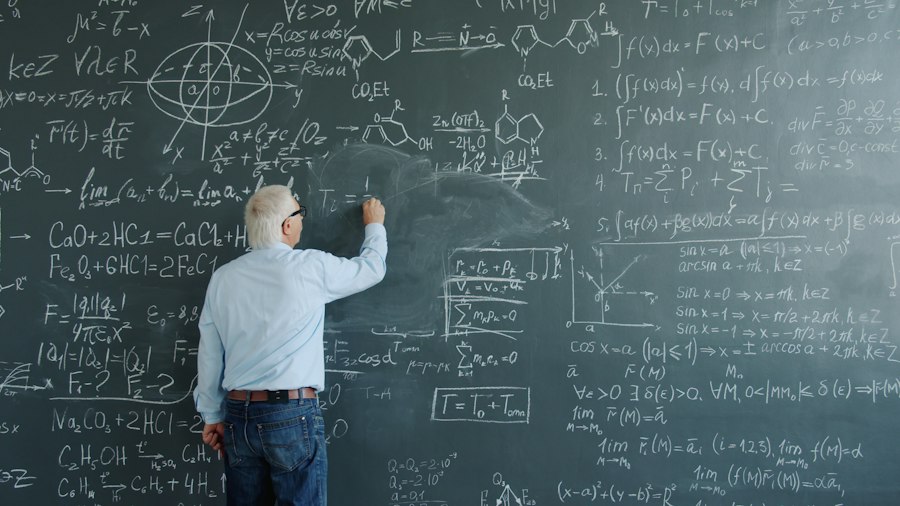
At the heart of the quantum world lie a set of revolutionary ideas that, while seemingly paradoxical, have been repeatedly confirmed by rigorous experimentation. These are the pillars upon which our understanding of quantum mechanics is built, and they offer a glimpse into the alien logic of the subatomic.
Wave-Particle Duality: The Elusive Nature of Reality
Perhaps the most fundamental and mind-bending concept in quantum mechanics is wave-particle duality. In the classical world, an object is either a wave or a particle. A thrown baseball is a particle, its trajectory predictable. Ripples on a pond are waves, exhibiting interference and diffraction. However, at the quantum level, this distinction dissolves. Elementary particles, such as electrons and photons (particles of light), exhibit characteristics of both waves and particles, depending on how they are observed.
This phenomenon was first proposed by Louis de Broglie, who hypothesized that all matter possesses wave-like properties. This was later experimentally confirmed through experiments like the Davisson-Germer experiment, which showed electrons diffracting like waves. When an electron is fired towards a barrier with two slits, it doesn’t simply go through one slit or the other. Instead, it behaves like a wave, passing through both slits simultaneously and creating an interference pattern on a screen behind the slits – a hallmark of wave behavior. Yet, when we try to detect which slit the electron goes through, its wave-like nature collapses, and it behaves like a localized particle, appearing at a single point. This duality is not a matter of one or the other; it is a fundamental property of quantum entities, an inherent fuzziness that defines their existence until interaction forces them to adopt a more defined state.
Quantization: The Discrete Steps of Energy
Another cornerstone of quantum theory is quantization. In the macroscopic world, energy can flow continuously. Think of filling a glass with water; the water level rises smoothly. However, in the quantum realm, energy, and other physical quantities like angular momentum, are not continuous. Instead, they exist in discrete, quantized packets or “quanta.”
This concept was famously introduced by Max Planck in his study of blackbody radiation, where he proposed that energy could only be emitted or absorbed in discrete bundles. Later, Niels Bohr applied this idea to the atom, suggesting that electrons orbit the nucleus in specific energy levels, and can only jump between these levels by absorbing or emitting specific amounts of energy, corresponding to photons of particular frequencies. This explains the characteristic spectral lines observed when atoms are excited – each element emits and absorbs light at a unique set of frequencies, a direct consequence of its quantized energy levels. This discreteness is what gives atoms their stability and their unique chemical properties, dictating how they interact with one another to form the molecules that make up everything we see.
Superposition and Probability: The Realm of Possibilities
Quantum mechanics introduces the concept of superposition, where a quantum system can exist in multiple states simultaneously until it is measured. Imagine a coin spinning in the air before it lands. In our everyday experience, it’s either heads or tails, even while spinning. However, according to quantum mechanics, a quantum coin, before it’s observed, is in a superposition of both heads and tails. This is often illustrated with the famous Schrödinger’s cat thought experiment, where a cat in a box, its fate linked to a quantum event, is considered to be both alive and dead simultaneously until the box is opened.
This probabilistic nature is central to quantum mechanics. We cannot predict with certainty the outcome of a single quantum event. Instead, quantum mechanics provides probabilities for each possible outcome. The wave function, a mathematical description of a quantum system, encodes these probabilities. When a measurement is made, the wave function “collapses,” and the system settles into one of its possible states, with the probability of landing in a particular state determined by the wave function. This inherent uncertainty and reliance on probability are stark departures from the deterministic nature of classical physics.
The Quantum Entanglement Phenomenon: Spooky Action at a Distance

Among the most perplexing and awe-inspiring phenomena in the quantum world is entanglement. Albert Einstein famously described it as “spooky action at a distance,” a phrase that captures the essence of its counterintuitive nature. Entanglement occurs when two or more quantum particles become linked in such a way that their fates are intertwined, regardless of the distance separating them.
The Connectedness of Entangled Particles
When particles are entangled, they share a common quantum state. This means that the properties of one particle are intrinsically linked to the properties of the other, even if they are light-years apart. If you measure a specific property of one entangled particle, such as its spin or polarization, you instantly know the corresponding property of the other entangled particle. This correlation is not due to any classical communication between the particles; it appears to be an instantaneous connection that defies the speed of light limit imposed by relativity.
Consider two entangled electrons. Electrons have a property called spin, which can be either “up” or “down.” If these two electrons are entangled in a specific way, and you measure one electron’s spin and find it to be “up,” you instantly know that the other entangled electron’s spin must be “down,” and vice-versa. This holds true whether the electrons are in the same laboratory or on opposite sides of the galaxy. This instantaneous correlation has been experimentally verified numerous times, leading to profound questions about the nature of reality, locality, and the very fabric of spacetime.
Implications and Applications of Entanglement
The implications of quantum entanglement are vast, extending far beyond theoretical curiosity. It is a critical resource for many emerging quantum technologies. One of the most significant applications is in quantum computing. Entangled qubits (quantum bits) can perform computations that are impossible for classical computers, enabling the development of algorithms that could solve certain problems exponentially faster.
Entanglement is also fundamental to quantum cryptography, a method of secure communication that relies on the laws of quantum mechanics to ensure unbreakable encryption. By distributing entangled particles, two parties can generate a secret key. Any attempt by an eavesdropper to intercept or measure these particles would inevitably disturb their entangled state, immediately alerting the legitimate users to the presence of an intrusion. Furthermore, entanglement is a key component in quantum teleportation, a process that allows the transfer of quantum information from one location to another without physically moving the particle itself. While it doesn’t involve teleporting matter in the science-fiction sense, it represents a crucial step towards future quantum communication networks.
Quantum Field Theory: The Universe as a Symphony of Fields
While quantum mechanics describes the behavior of individual particles, quantum field theory (QFT) provides a more comprehensive framework for understanding the fundamental constituents of the universe. QFT posits that the universe is not made of discrete particles in the classical sense, but rather of pervasive fields that permeate all of spacetime.
The Concept of Quantum Fields
In QFT, every fundamental particle – like electrons, photons, quarks, and neutrinos – is understood as an excitation or a ripple in its corresponding quantum field. Imagine a vast, invisible ocean that fills the entire universe. This ocean is the quantum field. When energy is added to this field in a specific way, it creates a localized disturbance, which we perceive as a particle. For example, a photon is an excitation of the electromagnetic field, and an electron is an excitation of the electron field.
This perspective elegantly unifies quantum mechanics and special relativity, providing a consistent description of particles and their interactions. QFT explains how particles are created and annihilated, how they interact with each other through the exchange of force-carrying particles (also excitations of their respective fields), and how energy and momentum are conserved. It is the language used to describe the Standard Model of particle physics, our most successful theory of the fundamental forces and particles that make up the universe.
Force Mediation and the Standard Model
Quantum field theory explains the fundamental forces of nature – electromagnetism, the strong nuclear force, and the weak nuclear force – as arising from the exchange of specific quantum particles. These are known as force carriers or bosons. For example, the electromagnetic force, which governs interactions between charged particles like electrons and protons, is mediated by the exchange of photons. The strong nuclear force, which binds quarks together to form protons and neutrons, is mediated by gluons. The weak nuclear force, responsible for radioactive decay, is mediated by W and Z bosons.
The Standard Model of particle physics, built upon the principles of QFT, successfully describes all known fundamental particles and their interactions, except for gravity. It categorizes elementary particles into two main groups: fermions (matter particles like electrons and quarks) and bosons (force-carrying particles like photons and gluons). QFT is a remarkably predictive theory, and its predictions, such as the existence of the Higgs boson, have been experimentally confirmed with astonishing accuracy. Despite its successes, QFT still faces challenges, particularly in incorporating gravity into its framework, a quest that leads to theories like string theory and loop quantum gravity.
For those who are eager to explore the fascinating world of science, a great resource is the article found at Freaky Science, which delves into various intriguing topics that spark curiosity and encourage deeper understanding. Whether you’re interested in the latest discoveries or the mysteries of the universe, this site offers a wealth of information that can satisfy your thirst for knowledge.
The Quantum Future: Innovations and the Uncharted Territory
| Topic | Key Concept | Example Experiment | Fun Fact |
|---|---|---|---|
| Physics | Gravity | Dropping objects of different masses to see they fall at the same rate | Gravity on the Moon is 1/6th of Earth’s gravity |
| Chemistry | Acid-Base Reactions | Mixing vinegar and baking soda to produce carbon dioxide gas | pH scale ranges from 0 (acidic) to 14 (basic) |
| Biology | Photosynthesis | Observing oxygen bubbles from aquatic plants in sunlight | Plants convert sunlight into energy using chlorophyll |
| Astronomy | Phases of the Moon | Tracking the Moon’s shape changes over a month | The Moon takes about 29.5 days to complete its phases |
| Geology | Rock Cycle | Identifying igneous, sedimentary, and metamorphic rocks | Rocks can transform from one type to another over millions of years |
The principles of quantum mechanics are not confined to the theoretical musings of physicists; they are actively being harnessed to create technologies that promise to revolutionize our world. The “second quantum revolution” is well underway, moving beyond the fundamental understanding of the quantum realm to its practical applications.
Quantum Computing and its Potential
Quantum computing stands as one of the most transformative applications of quantum mechanics. Unlike classical computers that store information as bits representing either 0 or 1, quantum computers use qubits. Qubits, leveraging the principles of superposition and entanglement, can represent 0, 1, or a combination of both simultaneously. This allows quantum computers to explore a vast number of possibilities in parallel, enabling them to tackle problems that are intractable for even the most powerful supercomputers.
The potential applications of quantum computing are immense. It could revolutionize drug discovery and materials science by simulating molecular interactions with unprecedented accuracy. It could break current encryption methods, necessitating the development of new quantum-resistant cryptography. Optimization problems, such as those found in logistics, finance, and artificial intelligence, could be solved far more efficiently. While quantum computers are still in their nascent stages of development, facing challenges in stability, error correction, and scalability, their eventual realization promises a paradigm shift in computation and scientific discovery.
Quantum Technologies on the Horizon
Beyond computing, quantum mechanics is driving innovation in a myriad of other fields. Quantum sensors, for example, utilize the extreme sensitivity of quantum systems to detect minute changes in magnetic fields, gravity, or time with unparalleled precision. These sensors have applications in medical imaging, navigation, geological surveying, and fundamental scientific research.
Quantum communication, as mentioned earlier, is another area where entanglement plays a crucial role. The development of quantum networks promises secure and efficient transfer of information across vast distances. Furthermore, research into quantum materials, materials exhibiting exotic quantum properties, is opening doors to new electronic devices and energy technologies. The ongoing exploration of the quantum world is not just expanding our understanding of the universe; it is actively shaping the future of technology, ushering in an era of unprecedented capabilities and possibilities. The journey into the quantum realm is far from over; it is a continuous adventure into the very fabric of reality, promising new discoveries and innovations for generations to come.

Why Hot Water Freezes Faster Than Cold (The Mpemba Effect)
FAQs
What is science?
Science is a systematic enterprise that builds and organizes knowledge in the form of testable explanations and predictions about the universe.
How does the scientific method work?
The scientific method involves making observations, forming a hypothesis, conducting experiments to test the hypothesis, analyzing the data, and drawing conclusions based on the results.
What are some branches of science?
Some branches of science include biology, chemistry, physics, astronomy, geology, and environmental science, among others.
Why is science important?
Science helps us understand the world around us, solve problems, make informed decisions, and improve our quality of life through advancements in technology and medicine.
How can I get involved in scientific research?
You can get involved in scientific research by pursuing a degree in a scientific field, volunteering at research institutions, attending scientific conferences, or participating in citizen science projects.