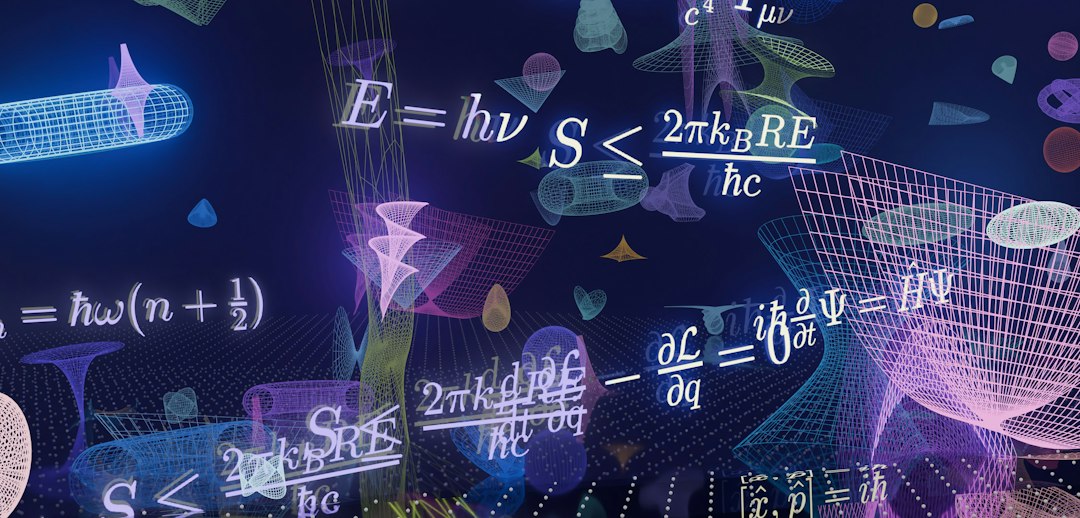
The Quantum Realm: A Weird Physics Documentary delves into the perplexing and mind-bending world of quantum mechanics, a field that challenges our everyday understanding of reality. This documentary, with its compelling narrative and accessible explanations, aims to demystify the fundamental laws governing the universe at its smallest scales. It takes viewers on a journey from the early intuitions of Planck and Einstein to the cutting-edge experiments that continue to push the boundaries of our knowledge. The film masterfully blends historical context with modern scientific inquiry, showcasing the brilliance of the minds that have grappled with these enigmatic phenomena and the ongoing quest to unify our understanding of the cosmos.
The early 20th century marked a seismic shift in physics. For centuries, classical physics, embodied by the elegant equations of Newton and Maxwell, had successfully described the macroscopic world. Planets orbited stars, billiard balls collided with predictable trajectories, and light behaved as a wave. However, certain experimental observations began to poke holes in this seemingly perfect edifice.
Blackbody Radiation and the Birth of the Quantum Hypothesis
One of the first cracks appeared in the problem of blackbody radiation. Classical physics predicted that a heated object would emit an infinite amount of energy at high frequencies, a phenomenon known as the “ultraviolet catastrophe.” Max Planck, a German physicist, proposed a radical solution in 1900: energy is not continuous, but rather comes in discrete packets, or “quanta.” He posited that the energy of these quanta was directly proportional to the frequency of the radiation, a relationship famously expressed as $E = hf$, where $h$ is Planck’s constant. This idea, initially intended as a mathematical trick, proved to be a fundamental insight into the nature of energy and light.
The Photoelectric Effect: Einstein’s Photon Revelation
Building upon Planck’s work, Albert Einstein, in 1905, took the concept of quanta a step further. He used Planck’s hypothesis to explain the photoelectric effect, where light striking a metal surface can eject electrons. Classical wave theory couldn’t account for why only light of a certain frequency, regardless of its intensity, could trigger this emission. Einstein proposed that light itself is composed of discrete particles, which he later called “photons.” Each photon carries a specific amount of energy, and only when this energy is sufficient can it dislodge an electron. This groundbreaking idea, which earned Einstein the Nobel Prize, solidified the particle-like nature of light, introducing the concept of wave-particle duality.
Bohr’s Atomic Model: Quantizing Electron Orbits
The structure of the atom itself presented another puzzle. Rutherford’s model, with electrons orbiting a nucleus, faced a critical flaw: according to classical physics, an accelerating charged particle should continuously radiate energy and spiral into the nucleus, causing atoms to collapse. Niels Bohr, in 1913, proposed a model that incorporated quantum ideas. He suggested that electrons could only occupy specific, quantized orbits around the nucleus, and that they would not emit energy while in these stable states. Electrons could “jump” between these orbits by absorbing or emitting discrete packets of energy, precisely matching the observed spectral lines of elements. Bohr’s model, while ultimately superseded by more advanced theories, was a crucial step in understanding atomic structure through the lens of quantum mechanics.
If you’re intrigued by the bizarre and often mind-bending concepts explored in the weird physics documentary, you might also enjoy reading an article that delves deeper into the strange phenomena of the universe. This article offers a fascinating look at the quirks of quantum mechanics and the implications they have on our understanding of reality. To explore these captivating ideas further, check out the article at Freaky Science.
The Double-Slit Experiment: Where Probability Reigns Supreme
Perhaps the most iconic and perplexing demonstration of quantum weirdness is the double-slit experiment. This experiment, in its various forms, repeatedly demonstrates that the fundamental building blocks of the universe behave in ways that defy classical intuition.
The Classical Expectation: Particles vs. Waves
The experiment typically involves firing particles, such as electrons or photons, at a screen with two narrow slits. If the particles were classical entities, like tiny bullets, one would expect to see two distinct bands on a detector screen behind the slits, corresponding to the particles that passed through each slit. If, instead, we were dealing with waves, like water waves, we would observe an interference pattern: alternating bands of high and low intensity, a hallmark of constructive and destructive interference.
The Quantum Revelation: Wave-Particle Duality in Action
However, when the double-slit experiment is performed with quantum particles, the results are astonishing. Even when fired one at a time, the particles build up an interference pattern on the detector screen, as if they had somehow passed through both slits simultaneously and interfered with themselves. This suggests that the particles are behaving like waves.
The Role of Observation: The Observer Effect
The truly mind-boggling aspect emerges when we try to determine which slit each particle goes through. If we place detectors at the slits to observe the particle’s path, the interference pattern disappears, and we revert to the classical expectation of two bands. It appears that the act of observation itself collapses the wave-like nature of the particle, forcing it to behave as a discrete entity. This “observer effect” is a central tenet of quantum mechanics, raising profound philosophical questions about the nature of reality and the role of consciousness. The documentary highlights the various interpretations of this phenomenon, from Copenhagen to Many-Worlds, illustrating the ongoing debate within the physics community.
Quantum Entanglement: Spooky Action at a Distance
Another of quantum mechanics’ most baffling features is entanglement, a phenomenon that even perplexed Einstein, who famously dubbed it “spooky action at a distance.” Entanglement describes a peculiar connection between two or more quantum particles, where their fates become intertwined, regardless of the distance separating them.
The Intertwined Fates of Entangled Particles
When particles become entangled, their properties, such as spin or polarization, are correlated in a way that cannot be explained by classical physics. If you measure the property of one entangled particle, you instantaneously know the corresponding property of the other, no matter how far apart they are. This instantaneous correlation occurs faster than the speed of light, seemingly violating Einstein’s theory of relativity.
Bell’s Theorem and Experimental Verification
The nature of this correlation was a subject of intense debate. Einstein believed that there must be “hidden variables” predetermining the outcome of measurements. However, John Stewart Bell, in the 1960s, formulated a theorem that provided a way to experimentally test whether these hidden variables exist or if quantum mechanics’ predictions are indeed correct. Numerous experiments, most notably by Alain Aspect and his colleagues, have since confirmed the predictions of quantum mechanics, demonstrating that entanglement is a genuine quantum phenomenon, devoid of classical explanations. The documentary explores the implications of these findings, suggesting that the universe might be more interconnected than we previously imagined.
Quantum Teleportation: Not What You Might Think
The documentary also touches upon the fascinating implications of entanglement for technologies like quantum teleportation. It’s crucial to clarify that quantum teleportation does not involve the instantaneous beaming of physical objects from one place to another, as often depicted in science fiction. Instead, it’s a process that uses entanglement to transfer the quantum state of a particle from one location to another, effectively “teleporting” information. This has profound implications for the future of quantum computing and secure communication.
The Quantum Realm: A Realm of Probabilities and Uncertainty
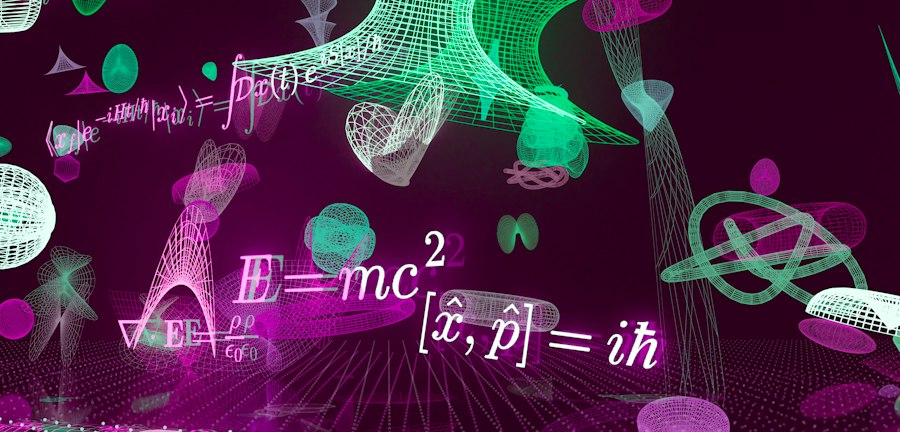
At the heart of quantum mechanics lies the principle of uncertainty, first articulated by Werner Heisenberg. This principle suggests that there are fundamental limits to how precisely we can know certain pairs of physical properties of a particle simultaneously.
The Uncertainty Principle: A Fundamental Limit
Heisenberg’s Uncertainty Principle states that it is impossible to know both the position and momentum of a particle with perfect accuracy at the same time. The more precisely you measure one, the less precisely you can know the other. This is not a limitation of our measuring instruments; it is an inherent property of the quantum world. The documentary illustrates this with vivid analogies, explaining how the very act of measuring one property inevitably disturbs the other.
Probability Amplitudes and the Wave Function
In the quantum world, particles do not have definite properties until they are measured. Instead, they are described by a wave function, which represents a probability amplitude. This wave function encodes the probabilities of finding a particle in a certain state or at a certain position. The documentary emphasizes that before measurement, a quantum particle exists in a superposition of all possible states simultaneously.
Schrödinger’s Cat: A Thought Experiment for the Ages
The paradoxical nature of superposition is famously illustrated by Schrödinger’s cat thought experiment. In this scenario, a cat is placed in a box with a radioactive atom, a Geiger counter, a hammer, and a vial of poison. If the atom decays, the Geiger counter detects it, triggering the hammer to break the vial, killing the cat. According to quantum mechanics, until the box is opened and the atom’s state is observed, the atom is in a superposition of both decayed and undecayed states. This, in turn, means the cat is simultaneously alive and dead, a situation that seems absurd in our macroscopic experience. The documentary uses this thought experiment to highlight the conceptual challenges of applying quantum rules to the macroscopic world.
If you’re intrigued by the bizarre phenomena explored in the weird physics documentary, you might find the article on freaky science particularly captivating. It delves into the strange and often counterintuitive aspects of the universe, offering insights that complement the themes presented in the documentary. To learn more about these fascinating concepts, check out the article here.
The Future of Quantum Mechanics: From Computing to Communication
| Title | Release Year | Duration (minutes) | Main Topic | Viewer Rating (out of 10) | Notable Feature |
|---|---|---|---|---|---|
| Quantum Quirks | 2018 | 90 | Quantum Mechanics Oddities | 8.2 | Explores entanglement and superposition |
| The Strange World of Physics | 2020 | 75 | Unusual Physical Phenomena | 7.5 | Focus on bizarre experiments |
| Physics Beyond Reality | 2019 | 85 | Paranormal and Physics | 7.8 | Links physics with unexplained events |
| Weird Science: The Physics Edition | 2021 | 60 | Unconventional Physics Theories | 8.0 | Interviews with fringe scientists |
| Physics Anomalies | 2017 | 70 | Unexplained Physical Effects | 7.3 | Documented strange lab results |
The “weirdness” of quantum mechanics is not merely an academic curiosity. It is the foundation for a revolution in technology that is already underway, promising to reshape our world.
Quantum Computing: Unleashing Unprecedented Power
One of the most exciting applications of quantum mechanics is quantum computing. Unlike classical computers that store information in bits representing either 0 or 1, quantum computers use qubits. Qubits can represent 0, 1, or a superposition of both, allowing them to perform vastly more complex calculations simultaneously. The documentary explores how this parallel processing power could revolutionize fields like drug discovery, materials science, and artificial intelligence, tackling problems that are currently intractable for even the most powerful supercomputers.
Quantum Communication and Cryptography: Unbreakable Security
Entanglement and quantum properties also pave the way for unhackable communication. Quantum key distribution (QKD) leverages quantum mechanics to generate and share encryption keys that are inherently secure. Any attempt to eavesdrop on a quantum communication channel would inevitably disturb the quantum state, immediately alerting the communicating parties. This promises to usher in an era of truly secure data transmission.
The Quest for a Unified Theory: Bridging the Quantum and the Cosmic
Despite its successes, quantum mechanics remains incomplete. It describes the very small with remarkable precision but struggles to reconcile with Einstein’s theory of general relativity, which describes gravity and the large-scale structure of the universe. The documentary concludes by looking towards the future, highlighting the ongoing quest for a unified theory of everything, a single framework that can encompass both the quantum realm and the vastness of the cosmos. The exploration of string theory, loop quantum gravity, and other speculative theories underscores the fact that the journey into the weird and wonderful world of quantum physics is far from over. The Quantum Realm: A Weird Physics Documentary leaves viewers with a profound sense of wonder and an appreciation for the mind-bending nature of reality at its most fundamental level.
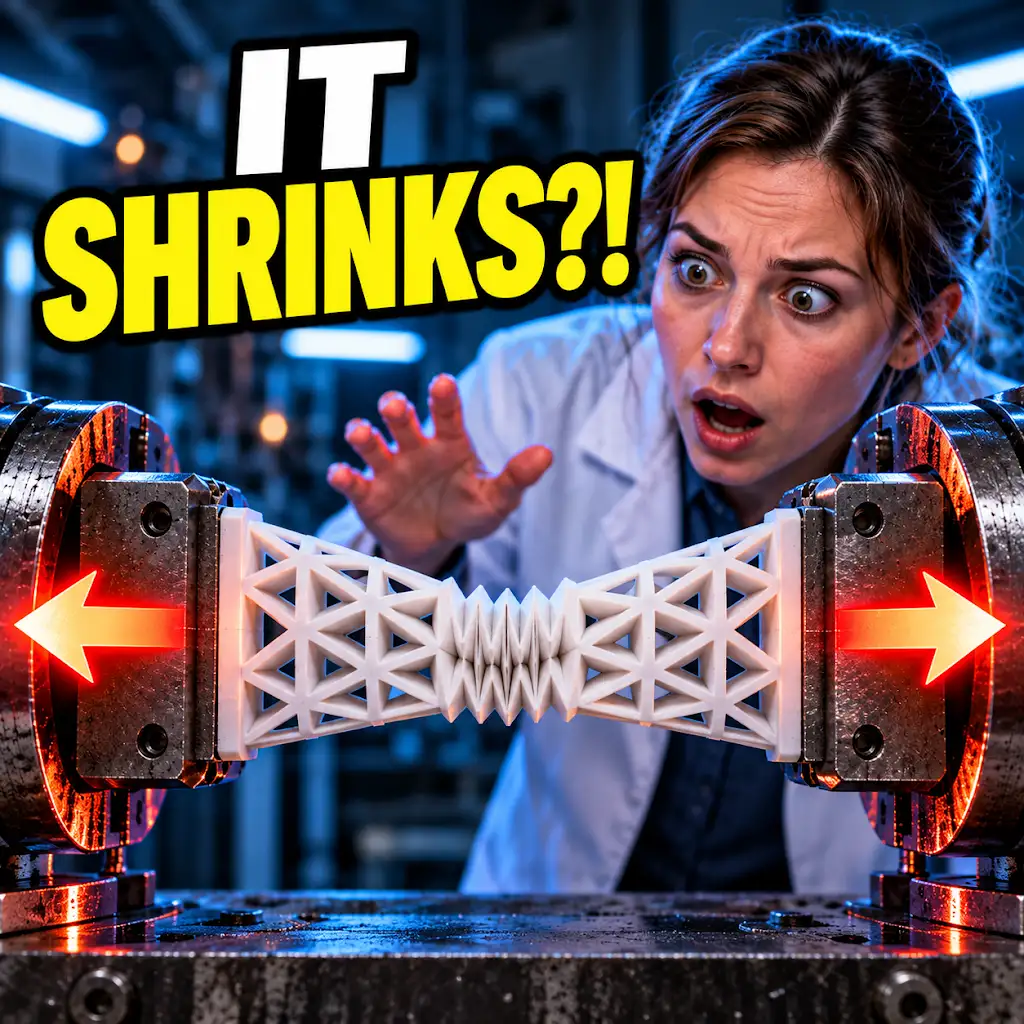
Pull Harder… and This Material Suddenly Gets Shorter
FAQs
1. What is the weird physics documentary about?
The weird physics documentary explores strange and mind-bending concepts in the field of physics that challenge our understanding of the universe.
2. Who is the target audience for the weird physics documentary?
The target audience for the weird physics documentary is anyone with an interest in science, physics, and the mysteries of the universe.
3. What topics are covered in the weird physics documentary?
The weird physics documentary covers topics such as quantum mechanics, parallel universes, time travel, black holes, and other fascinating and unconventional theories in physics.
4. Is the weird physics documentary based on real scientific research?
Yes, the weird physics documentary is based on real scientific research and theories proposed by physicists and scientists, although some concepts may be speculative or theoretical in nature.
5. Where can I watch the weird physics documentary?
The weird physics documentary may be available for streaming on various platforms such as streaming services, online rental services, or through purchase on DVD or Blu-ray.