
You’ve probably seen them. Those gleaming, often wire-frame, metal shelves nestled inside your microwave. Maybe you’ve even used one, or perhaps you’ve wondered why they’re even there. You might think they’re just decorative, some leftover piece from the factory floor. But these aren’t mere afterthoughts; they are deliberate additions, designed to enhance your microwave cooking experience in ways you might not have considered. Understanding the purpose of these metal racks is key to unlocking your microwave’s full potential, moving beyond simple reheating to a more versatile and efficient culinary tool.
Before diving into the specifics of their purpose, it’s crucial to grasp the fundamental nature of these metallic additions. You’re not just looking at a piece of metal; you’re observing a carefully engineered component designed to interact with the unique way microwaves heat food.
Understanding Microwave Heating: The Invisible Waves
Your microwave operates on a principle that’s both ingenious and, to some extent, invisible to the naked eye. It generates electromagnetic radiation, specifically in the microwave frequency range. These waves don’t carry heat in the traditional sense like a flame or a heated element. Instead, they excite the water molecules (and other polar molecules) within your food. When these molecules vibrate rapidly, they generate friction, and it’s this friction that produces heat, cooking your meal from the inside out, to a degree.
The Role of Frequency and Wavelength
The effectiveness of microwave heating is directly tied to the frequency and wavelength of the radiation. Standard kitchen microwaves typically operate at 2.45 gigahertz. This frequency is chosen because it’s readily absorbed by water, fats, and sugars, the primary components of most foods. The wavelength dictates how far these waves can penetrate into the food. Understanding this basic physics is essential to appreciating why the presence of a metal rack isn’t just a passive element but an active participant in the heating process.
Material Matters: Why Metal?
You might initially balk at the idea of putting metal in a microwave. We’ve all heard the warnings about sparks and potential damage. However, the metal racks in your microwave are specifically designed to overcome these concerns. They are not solid blocks of metal that would reflect microwaves uncontrollably. Instead, they are typically made of wire or perforated materials, which influences how the microwaves interact with them.
Reflective Properties and Their Controlled Use
Metal, in general, is highly reflective of microwaves. This is why you’re advised against putting large, solid metal objects in your microwave, as they can bounce the waves back to the magnetron (the microwave generator), potentially damaging it. However, the open structure of microwave racks allows for a more controlled interaction. The wires act as a partial barrier and a conductor, influencing the electromagnetic field within the oven cavity. This controlled reflection and conduction are precisely what allows the racks to serve their intended purposes.
Placement is Key: Integrating with the Oven Cavity
The design and placement of the metal racks are not arbitrary. They are positioned to work in conjunction with the microwave’s internal structure, including the turntable and the oven walls. This strategic placement maximizes their effectiveness and ensures safe operation.
The Turntable’s Dance and the Rack’s Stance
Your microwave likely has a turntable that rotates your food. This is crucial for even heating, as microwaves can create “hot spots” and “cold spots.” The metal rack, when used, often sits above or below the turntable, sometimes even elevated by small feet. This positioning allows the food to be heated more uniformly, as the rack can help distribute the microwave energy more evenly throughout the cooking chamber and around the food itself.
Microwave ovens often come equipped with metal racks to enhance cooking efficiency by allowing better air circulation and even heating of food. This design feature is particularly beneficial when cooking multiple dishes simultaneously, as it maximizes the use of space within the microwave. For a deeper understanding of how these metal racks function and their advantages, you can read more in this related article: Why Some Microwave Ovens Have Metal Racks.
Elevating Your Culinary Game: Enhanced Cooking Performance
The most immediate and apparent purpose of these metal racks is to improve the way your food cooks. They are not just about holding food; they are about actively contributing to a better cooking outcome.
Achieving Crispier Textures: Beyond Soggy Delights
One of the biggest drawbacks of microwave cooking is the tendency for food to become soggy, especially items you’d prefer to have a bit of crunch. Think about reheating pizza crust or oven-fried chicken. The steam generated during microwaving can get trapped, leading to a less-than-ideal texture. This is where the metal rack truly shines.
Facilitating Air Circulation for Crispiness
By elevating your food, the metal rack allows for significantly better air circulation around it. This improved airflow helps to dissipate steam more effectively. As steam escapes, it prevents moisture from accumulating on the surface of your food, which is the primary culprit behind sogginess. This allows for a crisper finish, making your microwaved leftovers taste much closer to their freshly cooked counterparts. Imagine biting into a reheated spring roll or a piece of fried chicken that actually has a satisfying crunch – the rack is your ally here.
Multi-Level Cooking: Maximizing Capacity and Efficiency
Beyond just improving texture, the metal racks open up a world of possibility for cooking multiple items simultaneously. This is a game-changer for busy individuals or when you need to prepare several components of a meal at once.
The Power of Stacking: Two Meals in One Cycle
Many microwaves come with racks designed to be placed at different heights, or you can strategically position a single rack to create a second cooking surface. This allows you to cook or reheat two different dishes at the same time. For example, you might place vegetables on the lower rack and a smaller protein on the upper rack. This not only saves you time by reducing the number of cooking cycles required but also means less cleanup afterward. It’s a simple yet incredibly effective way to boost your microwave’s efficiency.
Even Heating: Combating Hot and Cold Spots
As mentioned earlier, microwaves can create uneven heating patterns. The metal rack plays a role in mitigating this problem, leading to more consistently cooked food.
Redirecting and Distributing Microwave Energy
The metal wires of the rack can act as a diffuser, subtly altering the path of the microwaves. Instead of them hitting the food directly and in concentrated beams, the rack can help to scatter and distribute the energy more broadly. This can result in a more even cooking temperature throughout your food, reducing the likelihood of encountering a cold center while the edges are overcooked. It’s about creating a more balanced thermal environment within the microwave cavity.
Specialized Functions: Beyond Basic Reheating
While enhancing basic cooking is a primary function, many metal racks are designed with more specific culinary applications in mind, expanding your microwave’s versatility even further.
Browning and Crisping with Convection Features
Some advanced microwaves come equipped with convection fan systems. When combined with a metal rack, these convection features can transform your microwave into a small convection oven.
The Convection-Rack Synergy
In a convection microwave, the fan circulates hot air around the food. When your food is placed on a metal rack, this hot air can reach all sides of the food more effectively. The rack’s open design prevents it from trapping heat and moisture, allowing the convection fan to do its job unimpeded. This synergy is what enables you to achieve browning and crisping that would be impossible with traditional microwave-only cooking. Think of it as getting a mini-roast or oven-baked fries directly from your microwave.
Defrosting with Enhanced Airflow
While microwaves are designed to defrost, the process can sometimes be uneven, leaving icy patches while other areas are already cooking. The metal rack can subtly assist in this process as well.
Promoting Even Thawing and Reduced Cooking Time
By lifting the food off the turntable, the rack allows for better air circulation around the frozen item. This can help to promote more even thawing, reducing the chance of the outer edges becoming mushy before the center has thawed. Furthermore, as the food begins to thaw, the increased airflow can also contribute to slightly faster cooking once you switch from defrost to a cooking setting, as the entire item is closer to an even temperature from the start.
Safety and Maintenance: Ensuring Optimal Performance

It’s not enough to simply understand how the racks work; you also need to know how to use and care for them to ensure both safety and longevity.
Understanding Microwave-Safe Racks
Not all metal is created equal, and not all metal racks are interchangeable. Your microwave comes with specific racks designed for its particular model and power output.
Identifying and Using Manufacturer-Provided Racks
Always use the metal racks that came with your microwave. These are specifically engineered to be safe for use within that appliance. They are designed to have the right dimensions, wire spacing, and structural integrity to withstand microwave energy without causing issues. Attempting to use a rack from a different microwave, or a generic metal shelf, could be hazardous. Familiarize yourself with the instructions that came with your appliance to understand which racks are intended for which functions.
Cleaning and Care: Keeping Your Racks Pristine
Like any kitchen tool, your metal racks will benefit from regular cleaning and proper care. This not only keeps them hygienic but also ensures they continue to function effectively.
Simple Cleaning Methods for Stubborn Residue
Most metal racks can be easily cleaned with warm, soapy water and a non-abrasive sponge or cloth. For more stubborn baked-on food particles, you might consider soaking the rack in hot water before scrubbing. Dishwashers are often a convenient option, but always check your microwave’s manual to confirm if the racks are dishwasher-safe. Avoid using harsh chemicals or abrasive scouring pads, as these can scratch the metal and potentially damage its finish or even its microwave-safe properties over time.
Storing Your Racks: Keeping Them Accessible and Safe
When you’re not using your metal racks, proper storage is important to prevent them from getting lost or damaged.
Designated Storage Solutions for Your Racks
Many microwave ovens have designated storage areas for their racks, often within the oven cavity itself or in a separate compartment. If your microwave doesn’t have a specific storage solution, find a safe place in your kitchen cabinet or pantry where the racks can be stored without being bent or scratched. Keeping them organized ensures you can easily retrieve them when needed, enhancing the overall convenience of your microwave cooking.
Many people wonder why some microwave ovens come equipped with metal racks, which can seem counterintuitive given the general advice against using metal in microwaves. However, these racks are specifically designed to enhance cooking efficiency by allowing better air circulation and maximizing the cooking space. For a deeper understanding of the science behind this feature, you can explore a related article that explains how these metal racks work and their benefits in microwave cooking. To learn more, check out this informative piece on Freaky Science.
Beyond the Basics: Creative Uses and Advanced Techniques
“`html
| Reasons for Metal Racks in Microwave Ovens |
|---|
| 1. Even Cooking: Metal racks help to elevate food, allowing for more even cooking as the microwaves can reach all areas of the food. |
| 2. Air Circulation: The metal racks allow for better air circulation around the food, preventing moisture buildup and ensuring more consistent cooking. |
| 3. Multi-Level Cooking: Metal racks enable multi-level cooking, allowing for the preparation of multiple dishes at the same time. |
| 4. Grilling and Browning: Some microwave ovens with metal racks have a grill function, allowing for grilling and browning of food. |
“`
Once you’ve mastered the fundamental purposes of your metal racks, you can start to explore more creative and advanced ways to utilize them, further expanding your microwave’s capabilities.
Steaming with Elevated Baskets
While often thought of for crisping, the rack can also be an excellent tool for steaming. By placing your steaming basket on the metal rack, you elevate it above the water in the base of the microwave, allowing for efficient steam production.
Creating a Compact Steaming Station
This setup mimics a stovetop steamer. You can place chopped vegetables, fish, or dumplings in your steaming basket, which then rests on the metal rack. The rack’s height ensures that the food is suspended above the water, allowing the steam to circulate effectively and cook your food gently and healthily. This is a fantastic way to prepare delicate items that might otherwise overcook or become mushy in direct microwave radiation.
Achieving Perfect Reheating for Delicate Foods
Some foods require a very specific approach to reheating. The metal rack can help you achieve this, especially for items that are prone to drying out or becoming rubbery.
The Gentle Touch: Balancing Moisture and Heat
For things like bread, pastries, or even certain types of pasta, the metal rack, combined with careful microwave timing, can make a significant difference. By elevating the food, you allow for a more controlled release of moisture. You can also experiment with covering the food loosely to trap some steam while still allowing excess to escape. The rack provides the crucial foundation for this more nuanced approach, preventing direct, intense microwave energy from overwhelming the food and leading to undesirable textures.
Encouraging Browning on Baked Goods
While not a full oven, you can achieve some limited browning on baked goods using the metal rack in conjunction with your microwave’s features.
The Browning Assistant: A Precursor to Oven Perfection
If your microwave has a grill function or a browning element, using the metal rack underneath can enhance the effectiveness of these features. The rack can help to create a more even distribution of heat from the browning element, leading to a more uniform golden-brown finish on items like cookies or small pastries. It’s a way to add that finishing touch that makes your microwaved baked goods look more appealing and taste that much better.
Conclusion: Unlocking the Hidden Potential
You might have viewed those metal racks as an insignificant accessory, but as you’ve seen, they are integral to your microwave’s functionality. From transforming soggy leftovers into crispy delights to enabling multi-level cooking and facilitating specialized culinary techniques, these seemingly simple metal structures play a vital role. By understanding their purpose and utilizing them correctly, you unlock a new level of efficiency and versatility in your kitchen, proving that your microwave is far more than just a reheating box. So next time you open your microwave door, take a moment to appreciate the ingenuity of those metal racks – they are your silent partners in creating better, more delicious meals.
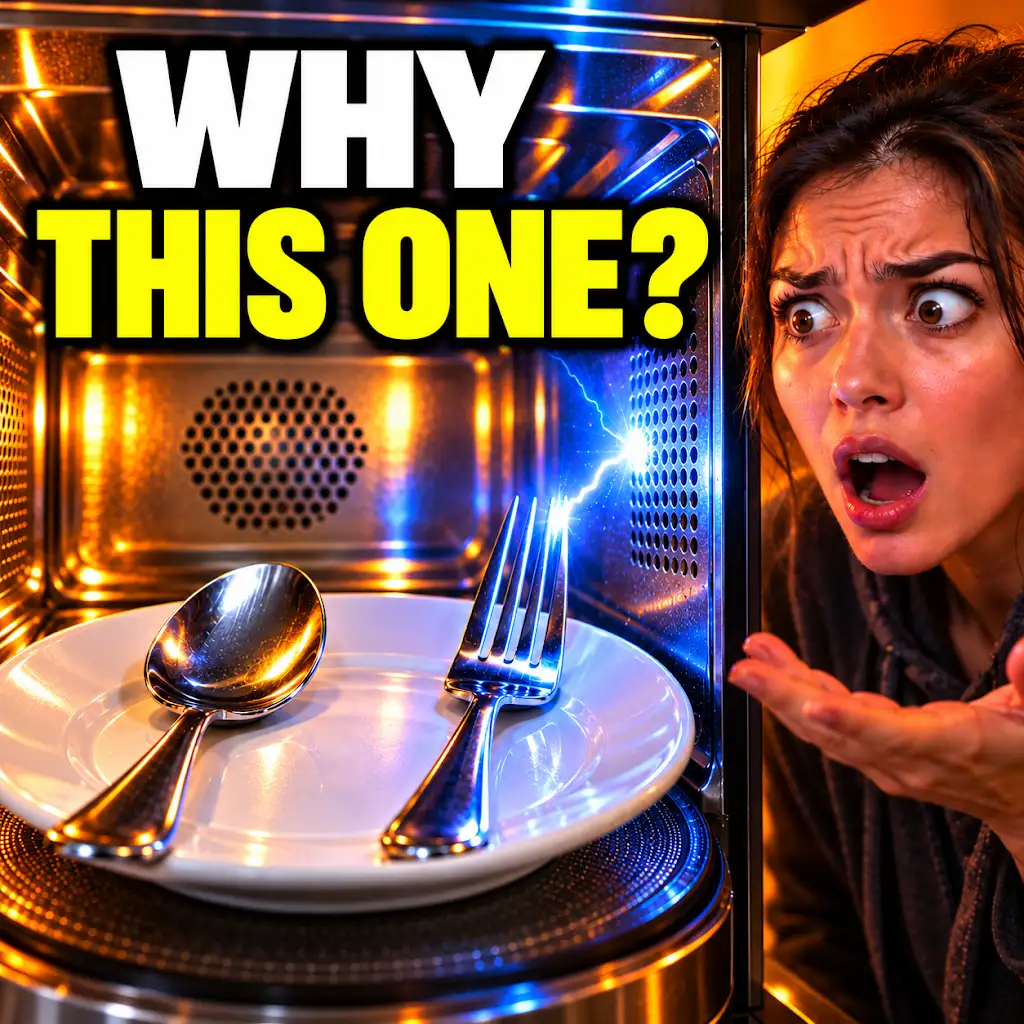
A Fork and a Spoon React Differently in a Microwave. Why?
FAQs
1. Why do some microwave ovens have metal racks?
Metal racks in microwave ovens are designed to allow for more even cooking and heating of food. The metal rack helps to elevate the food, allowing the microwaves to penetrate from the bottom as well as the top, resulting in more consistent cooking.
2. Are metal racks safe to use in microwave ovens?
Yes, metal racks that are specifically designed for use in microwave ovens are safe to use. These racks are made of materials that are not affected by microwaves and are designed to withstand the heat generated during the cooking process.
3. Can I use any metal rack in a microwave oven?
No, it is important to only use metal racks that are specifically designed for use in microwave ovens. Using any other type of metal rack can cause arcing, sparking, and potential damage to the microwave oven.
4. Do all microwave ovens come with metal racks?
No, not all microwave ovens come with metal racks. Some microwave ovens are designed to be used without a metal rack, and instead rely on the turntable to ensure even cooking and heating of food.
5. Can I purchase a metal rack for my microwave oven if it didn’t come with one?
Yes, you can purchase a metal rack that is specifically designed for use in your specific model of microwave oven. It is important to ensure that the metal rack is compatible with your microwave oven to avoid any potential safety hazards.