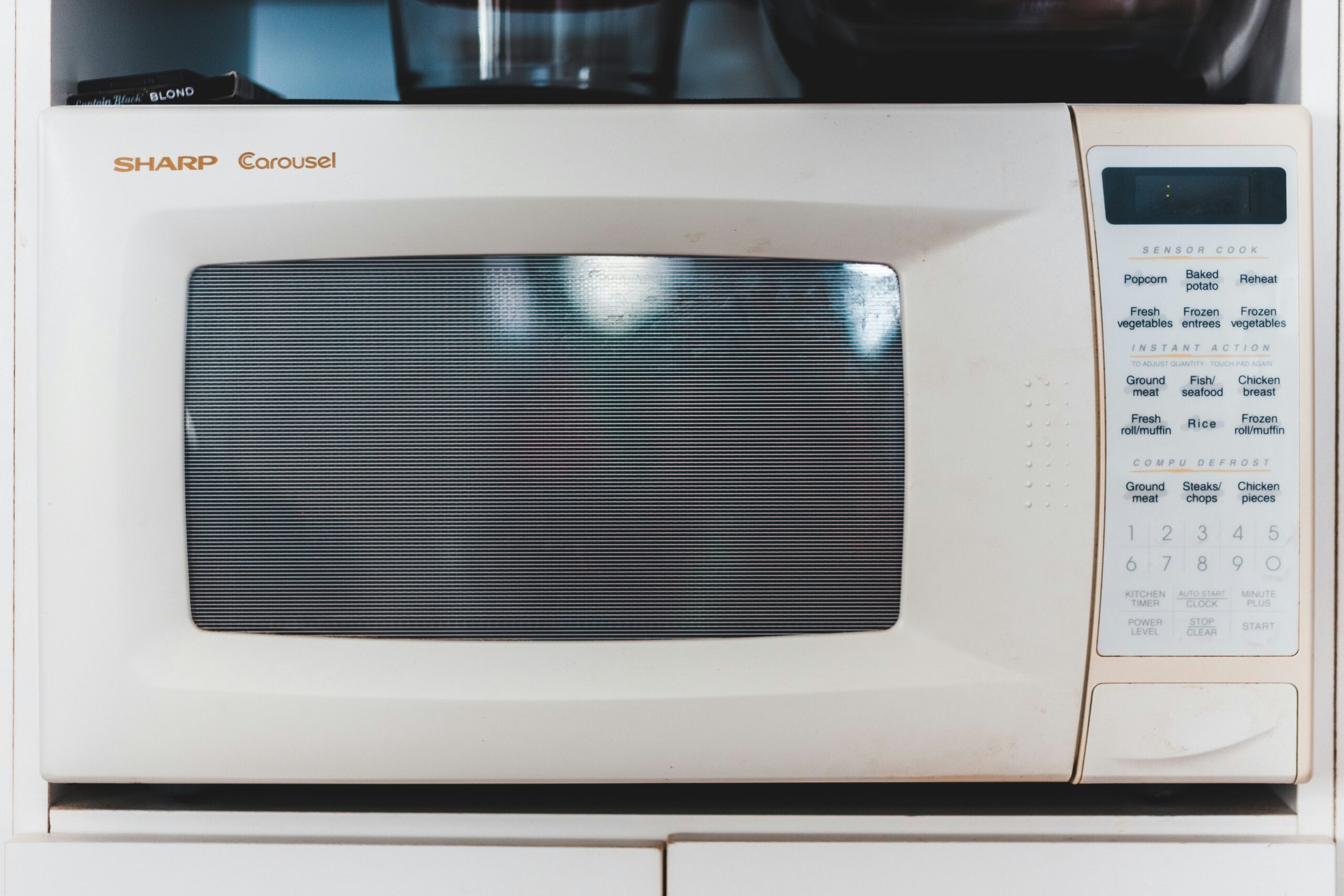
You’re standing in your kitchen, probably reaching for a snack. You’ve got something in a foil wrapper, or maybe a metal utensil slipped in by accident. You press the start button, a hum fills the air, and then – crack, pop, fizz! – a dazzling display of tiny lightning dances across the inside of your microwave. You’ve just witnessed a spark, a miniature electrical discharge born from the physics of your kitchen appliance. It’s a common, if slightly alarming, phenomenon, and understanding why it happens involves delving into the fascinating world of electromagnetic radiation, materials, and the very nature of electricity.
Before you can understand the sparks, you need to understand the machine creating them. Your microwave oven is a marvel of applied physics, a sophisticated device designed to heat food using a specific type of electromagnetic wave. It’s not about heat in the traditional sense – like the radiant heat from an oven coil or the convective heat from circulating air. Instead, your microwave utilizes a principle that directly interacts with the food itself.
The Magnetron: The Heart of the Operation
At the core of every microwave oven lies the magnetron. This isn’t just a fancy component; it’s the engine that generates the magic. The magnetron is a vacuum tube that converts electrical energy into high-frequency microwave radiation. Think of it as a specialized oscillator. When you power it up, a stream of electrons is accelerated through a strong magnetic field. As these electrons move, they interact with resonant cavities within the magnetron, causing them to oscillate at very specific frequencies, typically around 2.45 gigahertz (GHz). This frequency is crucial because it’s perfectly tuned to excite water molecules, the primary component of most foods.
Electrons in Motion: The Dance of the Magnetron
The process within the magnetron is a ballet of charged particles. A high voltage is applied, creating a potential difference that pulls electrons from a cathode. These electrons are then influenced by powerful magnets, forcing them into a circular or spiral path. As they traverse these paths, they pass by strategically placed cavities. This interaction causes the electrons to “bunch up” and then spread out, creating oscillations that are amplified and directed outwards as microwave energy. It’s a carefully orchestrated chaos that results in a powerful and focused beam of electromagnetic waves.
Waveguides: Directing the Energy
Once generated, these microwaves need to be delivered to the food. This is the job of the waveguide. It’s essentially a hollow metal tube, typically rectangular, that guides the microwave energy from the magnetron to the cooking chamber. The dimensions of the waveguide are critical; they are designed to allow the microwaves to propagate efficiently without significant loss. The waves bounce off the metal walls, maintaining their direction and intensity as they travel towards the food.
Bouncing Beams: The Metal Maze
Imagine throwing a ball down a narrow, polished hallway. It will likely bounce off the walls multiple times before reaching the end. The waveguide works on a similar principle, but with electromagnetic waves. The metal walls of the waveguide reflect the microwaves, effectively corralling them and directing them towards the turntable and into the food. This efficient redirection is essential for the microwave to function effectively.
The Cooking Chamber: A Reflective Environment
The inside of your microwave oven is a Faraday cage, lined with metal. This isn’t just for aesthetics; it’s a critical design feature. The metal walls are highly reflective to microwaves. This reflection ensures that the waves bounce around the chamber, bombarding the food from multiple angles. This multi-directional bombardment is what leads to more even cooking. Without this reflective environment, the microwaves would simply escape out of the opening, rendering the appliance useless.
The Mirrored Prison: Trapping the Waves
Think of the cooking chamber as a highly polished, enclosed box. Any microwave energy that enters will bounce off the walls almost perfectly. This bouncing back and forth ensures that the energy is contained and has a greater chance of interacting with the food. The door, with its metal mesh, also plays a crucial role. While you can see through it, the holes in the mesh are significantly smaller than the wavelength of the microwaves, effectively preventing them from escaping.
The fascinating physics behind sparks in a microwave is a topic that has intrigued many, as it involves the interaction of electromagnetic waves with metal objects. When metal is placed inside a microwave, it can cause a buildup of electrical energy, leading to the creation of sparks. For a deeper understanding of this phenomenon, you can explore a related article that delves into the science behind it. Check it out here: Freaky Science.
The Science of Heat: How Microwaves Cook Food
Now that you know how the microwaves are generated and directed, let’s talk about how they actually heat your food. It’s not magic; it’s molecular physics. The key player in this process is water.
Dielectric Heating: The Molecular Jiggle
Microwaves are a form of electromagnetic radiation, and like all electromagnetic waves, they have an oscillating electric field. Water molecules are polar, meaning they have a positive end and a negative end. When these polar molecules encounter the oscillating electric field of the microwaves, they try to align themselves with the field. As the field rapidly flips polarity (billions of times per second), the water molecules frantically rotate back and forth, trying to keep up. This rapid rotation creates friction between the molecules, and friction, as you know, generates heat. This process is known as dielectric heating.
Water’s Wiggle: The Molecular Dance Floor
Imagine a tiny, perfectly balanced dancer. Now, imagine the floor beneath them is rapidly tilting in alternating directions. The dancer would have to constantly adjust their stance, spinning and twirling to stay upright. Water molecules in your food are like these dancers, and the oscillating electric field of the microwaves is the tilting floor. This constant, frantic movement generates kinetic energy, which we perceive as heat.
Beyond Water: Other Polar Molecules
While water is the primary driver of microwave heating, other polar molecules in food can also contribute. Fats and sugars, for instance, also have some degree of polarity and can be affected by the microwave field, albeit to a lesser extent than water. This is why foods with higher fat or sugar content can sometimes heat up more quickly or develop different textures in a microwave.
Fat and Sugar’s Fascination: A Subtle Sway
Fats and sugars aren’t as enthusiastically polar as water, but they still possess some electrical asymmetry. The microwave’s oscillating field can still exert a slight pull on these molecules, causing them to move and vibrate. It’s like a gentle nudge compared to water’s full-blown jig, but it still contributes to the overall heating process.
The Dangers of Metal: Why Sparks Fly

This is where the exciting (and potentially problematic) part comes in. Metal, in its solid, bulk form, behaves very differently in a microwave compared to food. This fundamental difference in interaction is the reason behind those dramatic sparks.
Reflection and Refraction: The Metal Barrier
Metals are excellent conductors of electricity. The free electrons within a metal are very mobile. When microwaves, with their oscillating electric fields, hit a piece of metal, these free electrons are forced to move. They essentially “surf” the incoming waves. However, unlike water molecules that rotate and generate heat, these electrons tend to create a phenomenon known as charge buildup.
Electron Avalanche: The Static Shock Effect
Imagine a crowd of people all trying to run through a narrow doorway at the same time. They’re going to bump into each other, create congestion, and build up pressure. The free electrons in metal, when hit by microwaves, do something similar. They pile up on certain points of the metal surface, creating localized areas of intense positive and negative charge. This rapid charge accumulation creates a strong electric field.
Electric Field Breakdown: The Birth of a Spark
If the electric field created by the charge buildup becomes strong enough – exceeding the dielectric strength of the air (or whatever is surrounding the metal) – it can cause the air to ionize. Ionization means that electrons are stripped from the air molecules, creating a plasma. This plasma is conductive, allowing electricity to flow. This sudden, rapid flow of electricity is what you see as a spark. It’s essentially a miniature lightning strike, a controlled (or rather, uncontrolled) electrical discharge.
Air’s Breaking Point: The Ionization Zone
Air, when under normal conditions, is an insulator. It resists the flow of electricity. However, if the electric field pushing those free electrons becomes too powerful, it can overcome this resistance. It’s like pushing a spring too far – eventually, it breaks. When the electric field exceeds the air’s dielectric strength, it forces electrons off their atoms, creating a cascade of charged particles that conduct electricity, and thus, a spark.
Specific Scenarios: When Sparks are Most Likely
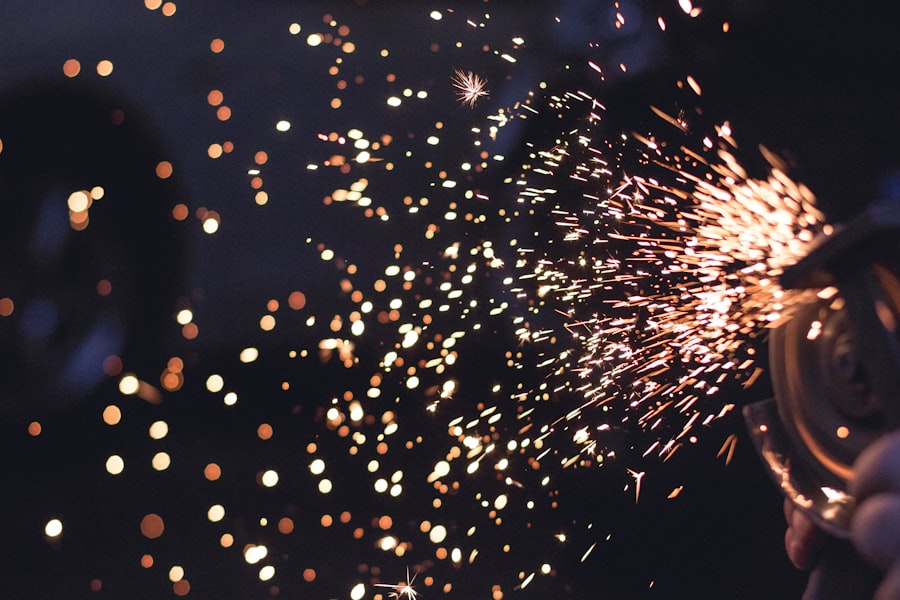
Not all metal in a microwave will cause sparks, but certain configurations and types of metal are more prone to it. Understanding these nuances can help you avoid a kitchen light show.
Sharp Edges and Thin Materials: Concentrated Charge
Thin, crinkly pieces of foil, especially if they have sharp edges or are crumpled, are prime candidates for sparking. The small surface area and sharp points concentrate the charge buildup. Imagine trying to discharge a balloon by touching it to a needle versus touching it to a flat surface – the needle will discharge it much more readily. Similarly, sharp edges on metal amplify the electric field.
The Pointy Peril: Focusing the Energy
Think of a lightning rod. Its purpose is to attract lightning, and it achieves this by having a sharp point. This point concentrates the electric field, making it more likely for a discharge to occur there. Metal with sharp edges in a microwave acts similarly, concentrating the charge and increasing the likelihood of reaching the breakdown voltage of the air.
Loops and Grids: The Antenna Effect
Metal objects shaped like loops or grids can act as antennas, resonating with the microwave frequencies. This resonance can lead to significantly amplified electric fields within the metal, increasing the chances of sparking. Think of how a radio antenna is designed to pick up specific frequencies – metal objects in a microwave can inadvertently become antennas for microwave radiation.
The Resonant Riddle: Amplifying the Electric Field
If a metal object has dimensions that are a fraction of the microwave’s wavelength, it can start to absorb and amplify the energy. This absorption and amplification leads to a much stronger oscillating electric field within the metal, making it far more likely to cause a spark. This is why a fork, with its prongs, can be more problematic than a solid, round metal ball.
The Inside vs. The Outside: A Matter of Containment
Metal that is entirely enclosed within the food might not spark. This is because the food itself can absorb some of the microwave energy and act as a buffer. However, if the metal protrudes or is near the edge of the food, it’s more exposed to the direct microwave field and the reflective environment of the oven, making sparking more likely.
The Foody Fences: Insulation and Absorption
Food, especially moist food, can absorb microwave energy. This absorption can help to dissipate some of the energy before it reaches a point where it can cause a significant charge buildup on any metal that might be partially embedded. However, if the metal is largely exposed, this insulating effect is minimal.
The fascinating physics behind sparks in a microwave can be better understood by exploring the interactions between electromagnetic waves and various materials. For a deeper dive into this topic, you might find this article on the science of microwaves particularly enlightening. It explains how certain metals can cause arcing and sparks when exposed to microwave radiation. To read more about it, check out this related article that delves into the underlying principles of microwave technology and its effects on different substances.
The Consequences and Precautions: Staying Safe
| Physics behind sparks in a microwave | |
|---|---|
| Electromagnetic waves | Generated by the microwave’s magnetron |
| Dielectric heating | Causes polar molecules in food to rotate and produce heat |
| Ionization of air | Can occur when metal objects are placed inside the microwave, leading to sparks |
| Electric discharge | Occurs when high voltage is generated, leading to sparks and arcing |
While a few sparks might seem harmless, it’s important to understand the potential risks and take precautions. Repeated or intense sparking can damage your microwave.
Microwave Damage: The Wear and Tear of Sparks
The intense heat and electrical discharge associated with sparking can erode the interior surfaces of your microwave. Over time, this can weaken the oven’s structure and affect its performance. In severe cases, the magnetron itself could be damaged.
The Scars of the Spark: Internal Erosion
Imagine repeated tiny explosions happening inside your oven. Each spark is a small burst of energy that can leave microscopic scars on the metal walls. Over many such incidents, these scars can accumulate, compromising the integrity of the Faraday cage and potentially leading to other issues.
Fire Hazard: A More Serious Concern
In rare but serious instances, prolonged or intense sparking can ignite food particles or packaging. This can lead to a small fire inside your microwave, which can then spread. It’s crucial to never leave a sparking microwave unattended.
The Smoldering Danger: Escalating Risks
The heat generated by a spark can be substantial. If this heat is applied to flammable materials – like dry food scraps or certain types of packaging – it can reach their ignition point. This is why it’s essential to address sparking immediately by stopping the microwave.
What NOT to Put In: A Simple Checklist
The best way to avoid sparks is to know what not to put in your microwave. Generally, avoid:
- Aluminum foil: Unless it’s a very specific microwave-safe product designed for this purpose and used according to instructions, steer clear.
- Metal utensils: Forks, spoons, knives – any metal cutlery.
- Metal-trimmed dishes: Many decorative plates have metallic accents that can cause sparking.
- Twist ties with metal cores: Even small amounts of metal can be problematic.
- Certain types of packaging: Some food packaging contains metallic elements. Always check the packaging for microwave-safe symbols.
The “No-Fly” List: Common Culprits
Think of your microwave as a controlled environment. Metal, in most common forms, disrupts this control. It’s like introducing a foreign object that doesn’t play by the rules. So, before you press that start button, take a quick scan of what’s inside. If you see any of these, it’s best to remove them.
When to Stop and Reassess: Your Kitchen Safety Net
If you do see sparks, don’t hesitate to stop the microwave immediately. Open the door and assess the situation. If it’s a small, isolated incident with a clear culprit (like a stray fork), you can usually just remove it and continue. However, if the sparking is persistent, intense, or if you’re unsure of the cause, it’s best to err on the side of caution and unplug the appliance.
The Emergency Stop: Immediate Action
Your microwave has a stop button for a reason. If you see sparks, that’s your cue to use it. Don’t try to “ride it out” or see what happens. Immediate action is key to preventing damage or potential hazards. Once stopped, carefully inspect the contents and the interior of the microwave. If in doubt, consult your appliance manual or a professional.

A Fork and a Spoon React Differently in a Microwave. Why?
FAQs
What causes sparks in a microwave?
Sparks in a microwave are typically caused by the presence of metal objects or materials with metallic coatings inside the microwave. When these objects are exposed to the microwave’s electromagnetic field, it can cause electrical arcing and sparks.
Why are metal objects not safe to put in a microwave?
Metal objects reflect microwaves, which can cause electrical arcing and sparks. This can lead to damage to the microwave and pose a fire hazard. Additionally, metal objects can cause uneven cooking and heating in the microwave.
What is the physics behind sparks in a microwave?
The physics behind sparks in a microwave involves the interaction between the microwave’s electromagnetic field and metal objects. When microwaves encounter metal, they induce electric currents in the metal, which can lead to electrical arcing and sparks.
How can sparks in a microwave be prevented?
To prevent sparks in a microwave, avoid putting metal objects or materials with metallic coatings inside the microwave. Use microwave-safe cookware and utensils made of materials like glass, ceramic, or microwave-safe plastic.
Are sparks in a microwave dangerous?
Sparks in a microwave can be dangerous as they can lead to damage to the microwave, pose a fire hazard, and potentially cause injury. It is important to address any sparking in a microwave and avoid putting metal objects inside to ensure safe operation.