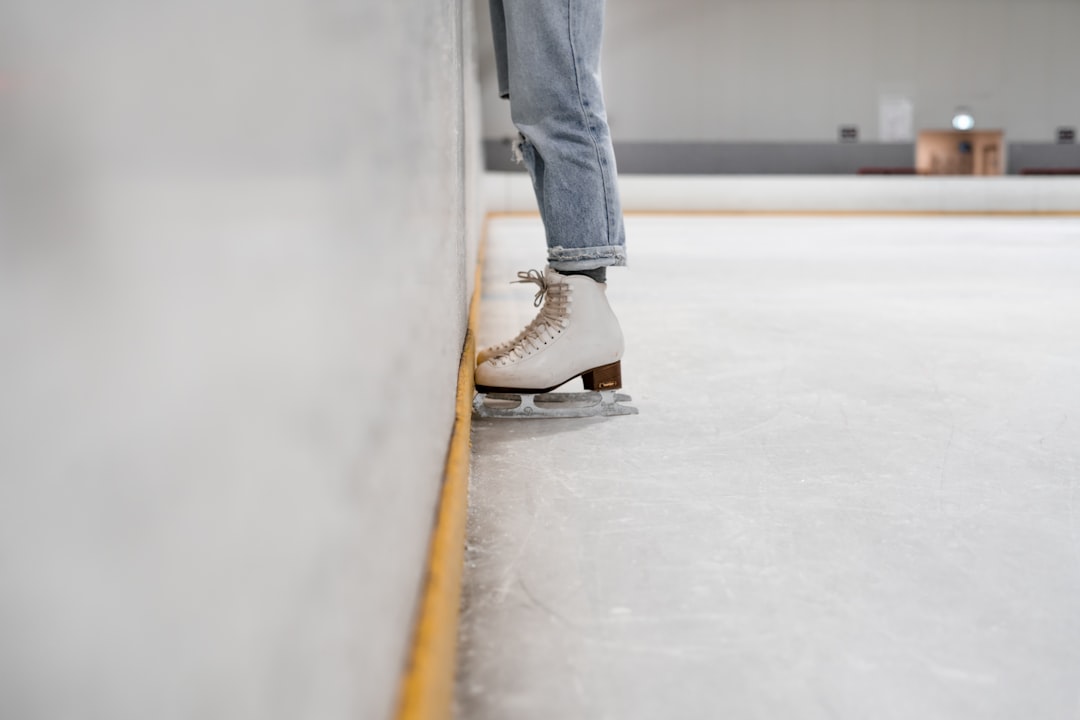
Ice skating, a ballet of motion performed on a razor-thin blade, is a spectacle that captivates. The effortless glide, the powerful spins, and the breathtaking jumps all owe their existence to a delicate interplay of physics principles. From the fundamental forces at play to the intricate mechanics of body control, understanding the physics of ice skating unlocks the secrets behind this elegant sport. This exploration delves into the core concepts of gliding, friction, and momentum, unraveling the science that makes ice skating possible and pushing the boundaries of human performance.
The seemingly effortless glide of an ice skater is a testament to Newton’s laws of motion, particularly the first and third laws. The fundamental principle behind gliding is the reduction of resistance, allowing the skater to maintain motion with minimal energy expenditure.
Inertia and the First Law of Motion
Newton’s First Law of Motion, also known as the law of inertia, states that an object at rest stays at rest, and an object in motion stays in motion with the same speed and in the same direction unless acted upon by an unbalanced force. In ice skating, once a skater achieves a certain velocity, they will continue to move forward at that speed and in that direction until an external force, primarily friction, slows them down. The skater’s initial push-off provides the necessary force to overcome inertia and begin their motion. The longer and more powerful the initial push, the greater the initial velocity, and thus, the longer they can glide before friction significantly alters their trajectory. This initial impulse is crucial for building momentum, which then allows for sustained gliding. Without this initial input of energy, the skater would remain stationary.
The Role of the Blade
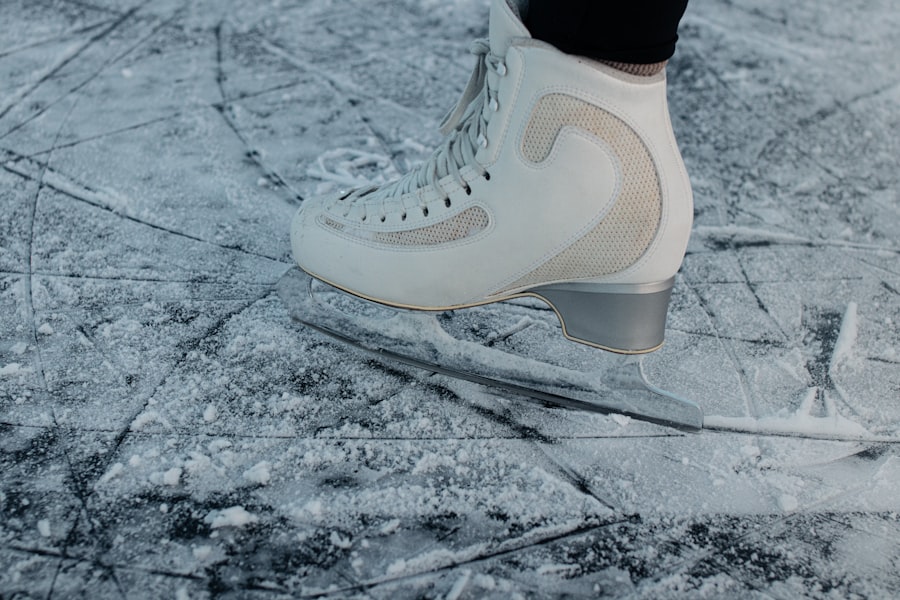
The design of the ice skate blade is paramount to achieving a smooth glide. Ice skate blades are remarkably thin, typically only a few millimeters wide. This narrow contact area is critical for two reasons. Firstly, it concentrates the skater’s weight onto a very small surface, increasing the pressure exerted on the ice. Secondly, it minimizes the overall area of contact, thereby reducing the potential for friction. The curvature of the blade, known as the “rocker,” also plays a role. This subtle curve allows for agile turns and maneuvers, enabling the skater to shift their weight and carve into the ice. The sharper the edge, the more effectively it can bite into the ice, providing grip for propulsion and control.
Pressure Melting: A Key to Lubrication
One of the most fascinating aspects of ice skating is the phenomenon of pressure melting. As the skater applies their weight to the thin blade, the pressure exerted on the ice directly beneath the blade increases significantly. This localized pressure lowers the freezing point of water according to the Clausius-Clapeyron relation. Even at temperatures below 0°C, the increased pressure can cause a thin layer of water to form between the blade and the ice. This thin film of water acts as a lubricant, drastically reducing the friction between the blade and the ice. Without this phenomenon, ice skating as we know it would be impossible, as the friction would be far too great to allow for any significant gliding. The exact contribution of pressure melting is still a subject of scientific debate, with other factors like friction-induced heating also contributing to the lubricating layer.
Ice skating is a fascinating sport that combines artistry and physics, allowing skaters to glide effortlessly across the ice while demonstrating remarkable agility and balance. The principles of friction, momentum, and angular momentum play crucial roles in a skater’s ability to perform intricate moves and maintain speed. For those interested in exploring the scientific aspects of ice skating further, a related article can be found at Freaky Science, which delves into the real physics behind this captivating sport.
The Dance with Friction: A Necessary Evil
While pressure melting offers a welcome reduction in friction, it is never entirely eliminated. Friction is an inherent force that opposes motion between surfaces in contact. In ice skating, friction comes in several forms, each with its own impact on the skater’s performance.
Kinetic Friction: The Primary Opponent
The most significant form of friction encountered by an ice skater is kinetic friction. This is the friction that exists between two surfaces that are sliding relative to each other. In this case, it’s the friction between the ice skate blade and the layer of water (and ice) beneath it. The magnitude of kinetic friction is generally proportional to the normal force (the force pressing the surfaces together, which is the skater’s weight in this context) and the coefficient of kinetic friction. The coefficient of kinetic friction for ice and a skate blade is remarkably low, especially when the lubricating layer is present, but it is not zero. This is the force that gradually slows the skater down.
Factors Affecting Kinetic Friction
Several factors influence the amount of kinetic friction experienced:
- Normal Force (Weight): A heavier skater will exert more pressure on the ice, leading to a greater normal force and, consequently, higher kinetic friction. However, as discussed, this increased pressure also enhances pressure melting, creating a complex relationship.
- Surface Area: While the blade is narrow, any imperfections or variations in the ice surface can alter the effective contact area and thus affect friction.
- Ice Conditions: The temperature and state of the ice itself play a crucial role. Colder ice is generally harder and may exhibit slightly higher friction if pressure melting is less effective. Smoother, well-maintained ice will have less microscopic debris or imperfections that could increase friction.
- Blade Condition: A dull or dirty blade will have a higher coefficient of friction compared to a sharp, clean one. The sharpness of the edge is critical for “cutting” into the ice, minimizing the surface area in contact and providing better control, which indirectly influences the effective friction.
Static Friction: The Key to Propulsion
While kinetic friction slows the skater down, static friction is what allows them to move forward in the first place. Static friction is the force that prevents an object from moving when a force is applied to it. When a skater pushes off the ice, they are utilizing static friction. The blade digs into the ice, creating a high-friction interface that allows the skater to exert a powerful backward force against the ice. By Newton’s Third Law, the ice exerts an equal and opposite forward force on the skater, propelling them forward. Without sufficient static friction, the blade would simply slip on the ice, and no forward propulsion would be achieved.
The Balance of Forces for Pushing Off
The push-off is a delicate balance:
- Generating Force: The skater must generate a significant backward force with their leg and skate. This involves the muscles in their legs and core.
- Blade Angle: The angle at which the blade contacts the ice is crucial. A slight tilt or “edge” is used to maximize the bite of the blade into the ice, increasing the static friction available for propulsion.
- Speed and Duration: The longer and more powerfully the skater pushes, the more momentum they gain. However, this also means that the blade is in contact with the ice for a longer period, potentially increasing the contribution of kinetic friction towards the end of the push.
Other Forms of Resistance
Beyond kinetic and static friction, other forces can impede the skater’s motion:
- Air Resistance (Drag): As the skater moves, they push through the air. This creates a drag force that opposes their motion. The faster the skater moves, the greater the air resistance. Skaters often adopt aerodynamic postures, tucking their bodies to minimize their frontal area and reduce drag.
- Internal Friction: While less significant in the context of the overall motion, there is some internal friction within the skater’s joints and muscles as they move.
Momentum: The Engine of Motion
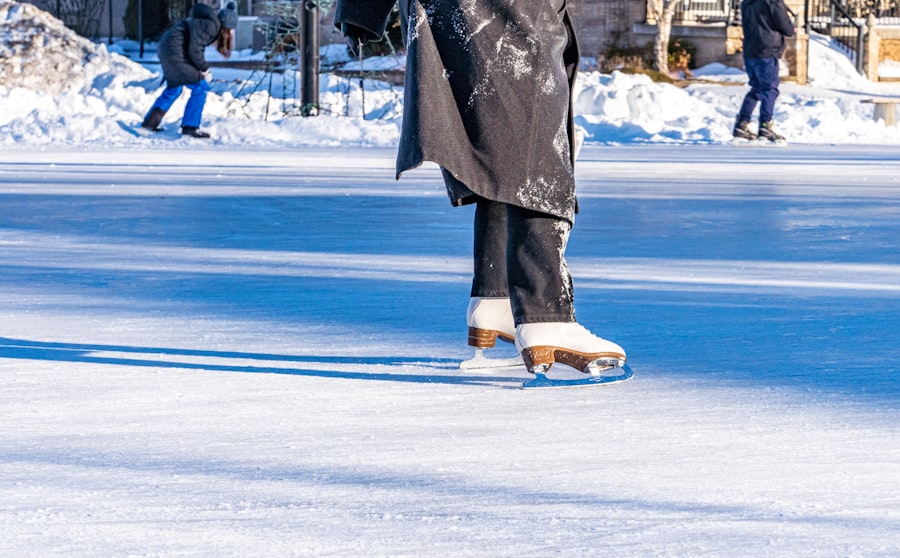
Momentum is a fundamental concept in physics that describes the “quantity of motion” an object possesses. It is defined as the product of an object’s mass and its velocity: $p = mv$. In ice skating, momentum is what allows a skater to maintain their glide, perform complex maneuvers, and recover from balance disruptions.
Conservation of Momentum
The principle of conservation of momentum states that in a closed system, the total momentum remains constant. This means that the total momentum before an event (like a push-off) is equal to the total momentum after the event. This principle is crucial for understanding how skaters generate and transfer momentum. For example, when a skater pushes off the ice, they are transferring momentum from their body to the ice and vice versa. The backward momentum imparted to the ice is equal and opposite to the forward momentum gained by the skater.
Building and Transferring Momentum
Skaters actively manipulate their momentum to their advantage:
- Initial Push: As discussed, the initial push is the primary method for building forward momentum. A powerful push translates to higher initial velocity and thus greater momentum.
- Body Positioning: By changing their body shape, skaters can alter their angular momentum and the distribution of their mass. This is particularly evident in spins.
- Jumps: Jumps are a spectacular display of momentum transfer. Skaters convert linear momentum (forward motion) into angular momentum (rotational motion) to achieve height and rotation. As they ascend, they pull their limbs in, decreasing their moment of inertia and increasing their rotational velocity, thereby conserving angular momentum.
Maintaining Momentum: The Glide
Once momentum is established, the skater’s goal is to maintain it for as long as possible. The glide is the period where the skater is primarily relying on their existing momentum. The efficiency of this glide is determined by how effectively they minimize the forces that oppose their motion, namely friction and air resistance. The less friction and drag they encounter, the longer they can maintain their speed and momentum.
The Physics of Turns and Spins: Angular Momentum in Play
While gliding is about linear motion, turns and spins introduce the complexities of rotational motion and angular momentum. These maneuvers require a deep understanding and application of physics principles for execution.
Angular Velocity and Moment of Inertia
Angular velocity ($ω$) measures how fast an object rotates, and moment of inertia ($I$) is a measure of an object’s resistance to changes in its rotational motion. It depends on the object’s mass and how that mass is distributed relative to the axis of rotation. For a skater, the axis of rotation is typically through their center of mass.
Conservation of Angular Momentum
Just as linear momentum is conserved in a closed system, so too is angular momentum ($L$). Angular momentum is given by the product of the moment of inertia and the angular velocity ($L = Iω$). This principle is the bedrock of spinning on ice. When a skater initiates a spin, they have a certain amount of angular momentum. To spin faster, they must decrease their moment of inertia. This is achieved by pulling their arms and legs in close to their body, concentrating their mass nearer the axis of rotation. Conversely, to slow down or stop, they extend their limbs, increasing their moment of inertia and decreasing their angular velocity.
Executing a Spin
The process of executing a spin involves several physical considerations:
- Initial Push: A strong forward momentum is often converted into rotational momentum through a carefully timed push and body twist.
- Axis of Rotation: Establishing a stable axis of rotation is crucial. This is achieved by maintaining balance over a point on the blade, often the heel or toe pick.
- Arm and Leg Placement: The precise placement of limbs is critical for controlling the rate of rotation. Tightening the core and keeping limbs close maximizes spin speed.
- Blade Contact: The edge of the blade provides the necessary grip to maintain the spin and resist slipping.
Turning Mechanics
Turns, such as crossovers and edge changes, involve a combination of linear and rotational motion.
- Edge Control: Skaters use the edges of their blades to carve into the ice. By tilting their ankle and shifting their weight, they create a “carving” action that generates a centripetal force, pulling them towards the center of the turn.
- Lean: The degree to which a skater leans into a turn is directly related to the centripetal force required to change their direction. The greater the lean, the greater the centripetal force, allowing for tighter and faster turns.
- Counter-Rotation: In some complex turns, skaters may use their upper body to counteract rotational forces generated by their legs and blades, helping them maintain balance and control.
The fascinating physics behind ice skating reveals how skaters utilize principles of momentum and friction to glide effortlessly across the ice. For a deeper understanding of these concepts and their application in sports, you can explore a related article that delves into the science of movement and balance in ice skating. This insightful resource can be found here, where you’ll discover how the laws of physics play a crucial role in enhancing performance on the ice.
The Physics of Jumps: Converting Linear to Rotational Momentum
| Aspect | Metrics |
|---|---|
| Friction | Co-efficient of friction between ice and skate blade |
| Force | Force applied by skater on the ice |
| Momentum | Skater’s mass and velocity |
| Balance | Center of mass and stability on ice |
| Energy | Energy transfer from skater to ice |
Ice skating jumps are arguably the most visually spectacular and physically demanding maneuvers, showcasing a masterful application of physics. These feats of athleticism involve converting linear momentum into rotational momentum, achieving significant height, and executing complex rotations in the air.
The Take-off: A Kinetic Energy Boost
The jump begins with a powerful acceleration across the ice, building substantial linear momentum. This momentum is then converted into kinetic energy through a combination of leg extension and precise edge work.
- The Edge: Skaters utilize specific edges of their blades to initiate the jump. For example, a toe-pick jump involves using the toe pick to gain leverage and then springing upwards, while a single-foot jump relies on the strong edge of the blade to generate upward force.
- Vertical Velocity: The skater’s muscles generate a powerful upward force, converting horizontal kinetic energy into vertical kinetic energy. This lift is essential for gaining the necessary height to complete the rotations.
- Angular Momentum Generation: As the skater prepares to leave the ice, they initiate a rotational motion with their arms and torso. This initial twist is crucial for generating the angular momentum required for the mid-air rotations.
In the Air: Maximizing Rotation
Once airborne, the skater is essentially in a state of free fall, governed by gravity. However, they are also actively controlling their rotation.
- Conservation of Angular Momentum (Revisited): As mentioned earlier, the skater pulls their arms and legs in tightly to their body, significantly decreasing their moment of inertia. This decrease in moment of inertia, due to the conservation of angular momentum, results in a dramatic increase in their angular velocity. This allows them to complete multiple rotations in the air in a very short period.
- Axis of Rotation Stability: Maintaining a stable axis of rotation is vital for consistent and predictable rotations. Experienced skaters have excellent proprioception, allowing them to feel and adjust their body’s position in the air to keep their rotation on track.
- Gravity’s Role: Gravity is the force that eventually brings the skater back down to the ice. The time spent in the air is determined by the initial vertical velocity and the acceleration due to gravity.
The Landing: Absorbing Impact and Recovering Balance
The landing is as critical as the take-off and mid-air rotation. It requires absorbing the impact of landing and transitioning back to stable gliding.
- Impact Absorption: Skaters extend their landing leg, bending their knee and hip to absorb the kinetic energy of the landing. This distributed force helps to prevent injury and maintain balance.
- Edge Control on Landing: The skater aims to land on a specific edge of their blade, which provides stability and allows them to transition smoothly into their next move.
- Momentum Dissipation: The landing process involves dissipating the remaining kinetic and rotational momentum in a controlled manner. This may involve a slight glide or a controlled stop.
The Future of Ice Skating: Physics and Performance Enhancement
The continuous evolution of ice skating, from technique to equipment, is inextricably linked to a deeper understanding and application of physics. As skaters and coaches delve further into the scientific principles governing their sport, new frontiers in performance are continually being explored.
Advanced Blade Technology
Innovations in blade design are constantly pushing the boundaries. Researchers are exploring:
- Material Science: Developing new alloys and materials for blades that offer improved edge retention, reduced friction, and enhanced durability.
- Blade Geometry: Experimenting with different curvatures, lengths, and profiles to optimize grip for different disciplines and individual skater needs. For instance, specialized blades for figure skating may differ significantly from those used in speed skating or hockey.
- Surface Treatments: Investigating coatings and treatments that further reduce friction or enhance the interaction between the blade and the ice.
Biomechanics and Training
The study of biomechanics, which applies mechanical principles to biological systems, is revolutionizing ice skating training.
- Motion Analysis: High-speed cameras and motion capture technology allow for detailed analysis of a skater’s movements, identifying inefficiencies and areas for improvement.
- Force Plate Analysis: Measuring the forces exerted by the skater on the ice during pushes and landings provides invaluable data for optimizing technique and preventing injuries.
- Targeted Strength and Conditioning: Training programs are becoming increasingly sophisticated, focusing on building the specific muscle groups and core strength required for explosive power, stable rotation, and shock absorption, all informed by physics principles.
The Role of Simulation and Data
Computer simulations and advanced data analytics are playing an increasingly important role in understanding and enhancing ice skating performance.
- Predictive Modeling: Simulations can model the complex interactions of forces and motion, allowing coaches and athletes to predict the outcomes of different techniques or equipment changes.
- Performance Metrics: Sophisticated sensors and tracking systems can collect vast amounts of data on speed, acceleration, rotation rates, and impact forces, providing athletes with detailed insights into their performance.
- Personalized Training: By analyzing individual data, training regimens can be tailored to each skater’s unique strengths and weaknesses, maximizing their potential.
In conclusion, ice skating is far more than just an artistic expression; it is a dynamic demonstration of fundamental physics principles. The elegant glide, the powerful momentum, and the breathtaking rotations are all orchestrated by the laws of motion, friction, and energy. As scientific understanding grows and technology advances, the physics of ice skating will continue to unlock new possibilities, pushing the limits of human capability on the ice and inspiring awe in spectators worldwide.

Why Ice Is Slippery Is Stranger Than You Think
FAQs
What is the real physics behind ice skating?
Ice skating involves the principles of physics, including friction, momentum, and balance. When a skater glides across the ice, they are reducing friction by melting a thin layer of ice beneath their skate blades. This creates a smooth surface for the skater to glide on.
How does the conservation of angular momentum apply to ice skating?
The conservation of angular momentum is crucial in ice skating. When a skater pulls their arms in, they decrease their moment of inertia, causing an increase in their angular velocity. This allows the skater to spin faster, demonstrating the principle of conservation of angular momentum.
What role does Newton’s third law play in ice skating?
Newton’s third law states that for every action, there is an equal and opposite reaction. In ice skating, when a skater pushes off the ice, the ice exerts an equal and opposite force, propelling the skater forward. This action-reaction pair allows the skater to move across the ice.
How does friction affect ice skating?
Friction plays a significant role in ice skating. When a skater glides across the ice, they reduce friction by melting a thin layer of ice beneath their skate blades. This creates a smooth surface for the skater to glide on, allowing them to move with minimal resistance.
What is the importance of center of mass in ice skating?
The center of mass is crucial in ice skating as it affects a skater’s balance and stability. By maintaining their center of mass over their skate blades, skaters can execute maneuvers with precision and control. Understanding the physics of center of mass allows skaters to perform complex movements on the ice.