The world hums with the silent, invisible ballet of physics. From the gentle caress of a breeze to the roaring might of a jet engine, every phenomenon we experience, every action we take, is governed by fundamental physical laws. Understanding these principles not only demystifies the seemingly mundane but also reveals the elegant complexity underlying our everyday existence. This article explores the physics behind everyday life, illuminating the unseen forces and interactions that shape our reality.
Gravity, that ubiquitous force, is perhaps the most intuitive yet profound aspect of physics in our daily lives. It’s the reason an apple falls from a tree, why we remain tethered to the Earth, and why the Moon orbits our planet. Albert Einstein’s theory of general relativity offered a more nuanced understanding, describing gravity not as a force in the traditional sense, but as a curvature of spacetime caused by mass and energy.
Newton’s Universal Law of Gravitation: The Foundation
Before Einstein, Sir Isaac Newton laid the groundwork for our understanding of gravity with his Law of Universal Gravitation. This law, elegantly expressed, states that every particle of matter in the universe attracts every other particle with a force that is directly proportional to the product of their masses and inversely proportional to the square of the distance between their centers.
Mass Matters: The More, The Stronger
The “product of their masses” part of Newton’s law is crucial. A more massive object exerts a stronger gravitational pull. This is why we feel the Earth’s gravity so strongly – its immense mass creates a significant attraction. Conversely, the gravitational pull between two small objects, like two apples, is negligible and imperceptible to us. This concept explains why planets orbit stars, and moons orbit planets. The Sun, with its enormous mass, dominates the solar system, keeping all the planets in their orbits.
Distance and Weakening Influence: The Inverse Square Law
The “inversely proportional to the square of the distance” is equally significant. As objects move further apart, the gravitational force between them weakens considerably, and it does so rapidly. If you double the distance between two objects, the gravitational force between them becomes one-fourth of what it was. Triple the distance, and the force drops to one-ninth. This inverse square relationship is why astronauts experience weightlessness in orbit – they are still subject to Earth’s gravity, but the vast distance significantly reduces its effect.
Einstein’s Revolution: Spacetime Curvature
While Newton’s laws are remarkably accurate for most everyday scenarios, Einstein’s general relativity provided a deeper explanation. He proposed that massive objects warp the fabric of spacetime around them, much like a heavy ball placed on a stretched rubber sheet creates a dip. Other objects moving through this warped spacetime follow the curves, which we perceive as the force of gravity.
The Fabric of Spacetime: A Dynamic Canvas
Spacetime, a unified four-dimensional continuum of space and time, is not a passive backdrop but an active participant in the universe’s dynamics. Mass and energy dictate how spacetime curves, and this curvature, in turn, dictates how objects move. Imagine a marble rolling across the dips and valleys of the rubber sheet – its path is determined by the shape of the sheet. Similarly, planets follow the curvature of spacetime around the Sun.
Gravitational Lensing: Bending Light
A striking prediction of general relativity is gravitational lensing, where the gravity of massive objects bends the path of light. This phenomenon, observed through telescopes, allows astronomers to study distant galaxies whose light would otherwise be undetectable. Even light, the fastest thing in the universe, is subject to the curvature of spacetime.
Everyday Manifestations of Gravity
- Walking and Running: Our ability to walk and run smoothly is a constant interplay with gravity. Our legs push off against the ground, and gravity pulls us back down, allowing us to maintain balance and propel ourselves forward.
- Dropping Objects: From keys to groceries, we are constantly dropping and picking up objects. Gravity is the force that pulls these items downwards, making them fall.
- Water Flow: Rivers flow downhill, water drains from a sink, and rain falls from the sky – all driven by gravity’s pull towards the Earth’s center.
- Atmospheric Pressure: The weight of the Earth’s atmosphere, pressing down on us, is a direct consequence of gravity holding the air molecules close to the planet’s surface. This pressure is essential for many biological processes.
- Building Structures: Architects and engineers design buildings to withstand the constant downward pull of gravity, ensuring structural integrity and safety.
In exploring the fascinating intersection of physics and our daily experiences, a related article that delves into the principles governing everyday phenomena can be found at Freaky Science. This resource offers insights into how the laws of physics shape the world around us, from the mechanics of simple machines to the intricacies of motion and energy in our daily lives. Whether you’re curious about the physics behind a rolling ball or the forces at play in a swinging pendulum, this article provides a captivating look at the science that underpins our everyday activities.
The Dance of Forces: Friction and Its Role
Friction, the force that opposes motion between surfaces in contact, is a crucial, often overlooked, element of our daily lives. Without friction, simple actions like walking, holding an object, or even stopping a car would be impossible. It’s a force that can be both a helpful ally and a frustrating impediment.
Types of Friction: A Subtle Distinction
Friction is not a monolithic entity; it manifests in different forms, each with its own characteristics.
Static Friction: The Unmoving Barrier
Static friction is the force that prevents an object from moving when a force is applied to it. It’s the friction between your shoes and the floor that allows you to stand still, or the friction between your hand and a cup that prevents it from slipping. This force can vary in magnitude, increasing to match the applied force up to a certain limit. Once the applied force exceeds this maximum static friction, the object begins to move.
Kinetic Friction: The Resistance to Motion
Kinetic friction, also known as sliding friction, is the force that opposes the motion of an object that is already sliding across a surface. It’s the resistance you feel when pushing a heavy box across the floor. Kinetic friction is generally weaker than the maximum static friction for the same two surfaces.
Rolling Friction: The Easiest to Overcome
Rolling friction occurs when a round object rolls over a surface. It is significantly less than both static and kinetic friction. This is why it’s much easier to push a cart or a suitcase with wheels than to drag it. The deformation of the rolling object and the surface contributes to this reduced resistance.
Factors Affecting Friction
The amount of friction between two surfaces depends on several factors.
Surface Properties: Roughness and Interlocking
The roughness of the surfaces in contact is a primary determinant of friction. Smoother surfaces generally have less friction than rougher ones. This is because at a microscopic level, even seemingly smooth surfaces have irregularities that can interlock. The rougher the surfaces, the more these irregularities can catch on each other, increasing the resistance to motion.
Normal Force: The Squeeze
The normal force, which is the force perpendicular to the surfaces in contact, also plays a significant role. The greater the normal force, the more the surfaces are pressed together, leading to increased interlocking of microscopic irregularities and thus greater friction. When you press down harder on a desk while trying to slide an object across it, you increase the normal force and hence the friction.
Material Composition: The Nature of the Substances
The materials of the surfaces themselves influence friction. Different materials have different molecular properties and surface characteristics that affect how they interact at the point of contact. For example, rubber on asphalt has higher friction than ice on ice.
Friction in Action: Everyday Examples
- Walking and Gripping: The friction between our shoes and the ground provides the grip necessary to walk, run, and even stand still without sliding. Without it, every step would be a slip.
- Braking a Bicycle: Bicycle brakes work by applying friction. Brake pads are pressed against the wheel rim, converting the kinetic energy of the moving bicycle into heat through friction, slowing it down.
- Writing: The friction between the pencil lead (graphite) and paper allows us to leave a mark. The graphite particles are transferred to the paper surface due to this friction.
- Starting a Car: The clutch in a car utilizes friction to gradually transfer power from the engine to the transmission.
- Holding Tools: The textured handles of tools are designed to increase friction, providing a secure grip and preventing them from slipping out of our hands, especially when wet or oily.
The Power of Pressure: Force Distributed
Pressure, the measure of force applied over a unit area, is a fundamental concept that governs how forces manifest in our daily interactions. It’s not just the magnitude of the force that matters, but also how it’s distributed.
Understanding Pressure: Force Per Unit Area
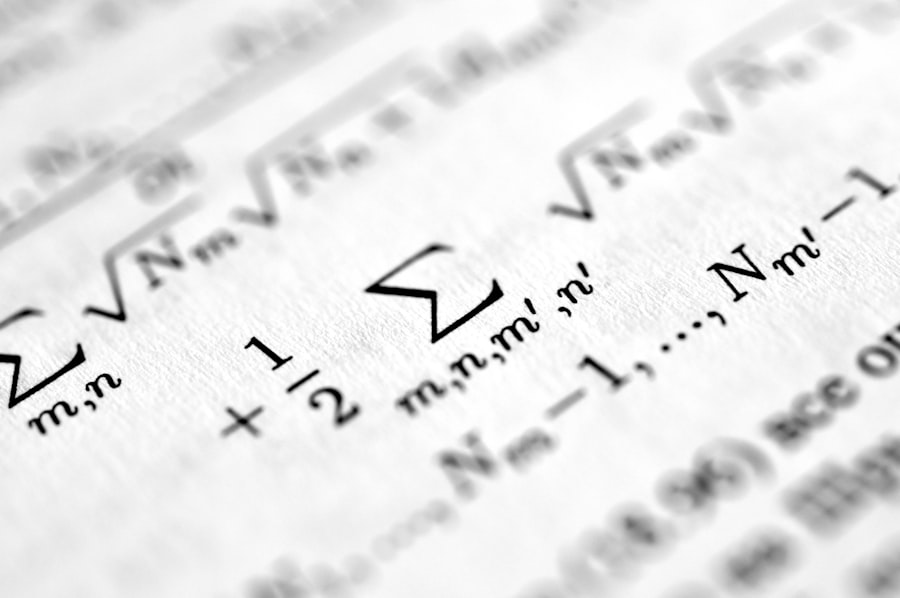
Mathematically, pressure ($P$) is defined as force ($F$) divided by area ($A$): $P = F/A$. This simple equation reveals a critical insight: for a given force, a smaller area results in higher pressure, and a larger area results in lower pressure.
Atmospheric Pressure: The Invisible Embrace
The air around us, though seemingly weightless, has mass. The cumulative weight of the atmosphere pressing down on the Earth’s surface creates atmospheric pressure. This pressure is substantial, approximately 101,325 Pascals (Pa) at sea level, which is equivalent to about 1 kilogram of force per square centimeter.
Implication of Atmospheric Pressure: Keeping Things in Place
- Drinking with a Straw: When you suck on a straw, you reduce the air pressure inside the straw. The higher atmospheric pressure outside then pushes the liquid up into the straw and into your mouth.
- Suction Cups: Suction cups work by expelling the air from beneath them, creating a partial vacuum. The external atmospheric pressure then pushes the cup firmly against the surface, creating a seal.
- Boiling Point of Water: Atmospheric pressure affects the boiling point of water. At higher altitudes, where atmospheric pressure is lower, water boils at a lower temperature.
Fluid Pressure: The Force Within Liquids and Gases
Fluids, both liquids and gases, exert pressure in all directions. This pressure increases with depth in liquids because of the weight of the fluid above.
Hydrostatic Pressure: The Deeper, The Stronger
Hydrostatic pressure is the pressure exerted by a fluid at rest due to the force of gravity. The deeper you go into a body of water, the greater the weight of the water above, and thus the higher the hydrostatic pressure. This is why submarines are built to withstand immense pressure at great depths.
Pascal’s Principle: Transmitting Pressure
Pascal’s principle states that a change in pressure applied to an enclosed fluid is transmitted undiminished to every portion of the fluid and the walls of the containing vessel. This principle is the basis for hydraulic systems.
Everyday Applications of Pressure
- Cutting with Knives: A sharp knife is designed to have a very thin blade, concentrating the force applied to the handle onto a tiny edge. This results in very high pressure, allowing it to slice through food easily. A dull knife, with a thicker edge, distributes the force over a larger area, requiring more force to cut.
- Wearing High Heels: High heels concentrate the wearer’s weight onto a small surface area, creating significant pressure on the floor. This is why they can damage certain floor surfaces.
- Tires: The air pressure inside a tire is crucial for its function. The pressure supports the weight of the vehicle and allows for a smooth ride. Too little pressure causes the tire to deform excessively and can lead to poor handling and increased wear.
- Barometers: Barometers are instruments used to measure atmospheric pressure, which can be an indicator of weather changes.
Thermodynamics: Heat, Work, and Energy Transformations
Thermodynamics, the study of heat and its relation to other forms of energy and work, governs the flow of energy and temperature changes that are fundamental to our comfort and survival. From the warmth of the sun to the operation of our appliances, thermodynamics is constantly at play.
The First Law of Thermodynamics: Conservation of Energy
The first law of thermodynamics, also known as the law of conservation of energy, states that energy cannot be created or destroyed, only transferred or transformed. This means the total energy in an isolated system remains constant.
Energy Transformations in Everyday Life
- Cooking: When you cook food, you are transferring thermal energy (heat) from the stove or oven to the food, transforming it into chemical energy that makes it edible.
- Burning Fuel: In a car engine, the chemical energy stored in gasoline is converted into thermal energy through combustion, which then drives the pistons and produces mechanical energy to move the vehicle.
- Electrical Appliances: Electric heaters convert electrical energy directly into thermal energy. Refrigerators use electrical energy to move heat from inside to outside, making the interior colder.
The Second Law of Thermodynamics: The Direction of Energy Flow
The second law of thermodynamics introduces the concept of entropy, which is a measure of disorder or randomness in a system. This law states that in any natural process, the total entropy of an isolated system either increases or remains constant; it never decreases. This implies that energy transformations are never perfectly efficient; some energy is always lost as unusable heat.
Entropy and the Arrow of Time
The universe naturally tends towards greater disorder. Heat flows from hotter objects to colder objects, never the other way around spontaneously. This unidirectional flow of energy is often referred to as the “arrow of time.”
Implications of the Second Law
- Heat Transfer: Heat naturally flows from a hot object to a cold object. This is why a cup of hot coffee cools down to room temperature, and an ice cube melts in a warm room.
- Inefficiency of Machines: No machine can be 100% efficient. Some energy is always lost as heat due to friction and other processes. This is why power plants don’t convert all the energy from fuel into electricity; some is lost as heat.
- The Need for Refrigeration: Refrigerators work by expending energy to move heat from a colder region (inside the fridge) to a warmer region (the surroundings), defying the natural flow of heat.
Temperature and Heat: A Crucial Distinction
While often used interchangeably in casual conversation, temperature and heat are distinct concepts in thermodynamics.
Temperature: A Measure of Average Kinetic Energy
Temperature is a measure of the average kinetic energy of the particles within a substance. The hotter something is, the faster its molecules are moving on average.
Heat: The Transfer of Thermal Energy
Heat is the transfer of thermal energy from one object or system to another due to a temperature difference. It’s the energy “in transit.”
Everyday Thermodynamic Phenomena
- Feeling Warmth: The sun’s radiation transfers thermal energy to the Earth, warming it up. Our bodies also generate heat through metabolic processes.
- Boiling Water: Applying heat to water increases the kinetic energy of its molecules until they have enough energy to overcome intermolecular forces and transition into a gaseous state (steam).
- Cooling Down: When we sweat, the evaporation of water from our skin removes heat from our bodies, helping us cool down.
- Insulation: Insulating materials, like fiberglass in walls, trap air, which is a poor conductor of heat, slowing down the transfer of thermal energy and keeping buildings warm in winter and cool in summer.
In exploring the fascinating connections between physics and our daily experiences, one can gain a deeper understanding of how the principles of motion and energy influence our lives. For instance, the article on the physics of everyday life provides insights into how simple actions, like walking or riding a bicycle, are governed by fundamental laws of physics. To learn more about these intriguing concepts, you can read the full article here.
Electromagnetism: The Invisible Forces That Power Our World
| Topic | Metric |
|---|---|
| Friction | Coefficient of friction between different surfaces |
| Gravity | Acceleration due to gravity (9.81 m/s^2) |
| Pressure | Atmospheric pressure at sea level (101.3 kPa) |
| Energy | Energy consumption of common household appliances |
| Sound | Decibel levels of common everyday sounds |
Electromagnetism, the study of electric charges and their interactions, and magnetism, the force exerted by magnets, are intimately linked. Together, they form a fundamental force of nature that underpins much of our modern technology.
Electric Charges: The Foundation of Electricity
Electric charges are fundamental properties of matter. There are two types of electric charge: positive and negative. Like charges repel each other, while opposite charges attract.
Static Electricity: Charges at Rest
Static electricity is the accumulation of electric charge on the surface of an object. This can occur through friction, where electrons are transferred from one object to another.
- Rubbing a Balloon on Hair: When you rub a balloon on your hair, electrons are transferred from your hair to the balloon. The balloon becomes negatively charged, and your hair becomes positively charged. This causes your hair to stand on end due to repulsion between the positively charged strands.
- Lightning: Lightning is a massive discharge of static electricity that occurs between clouds or between a cloud and the ground. The rapid movement of charge creates a brilliant flash and a powerful shockwave (thunder).
Electric Current: The Flow of Charge
An electric current is the flow of electric charge, usually electrons, through a conductor. This flow is what powers our electronic devices.
Ohm’s Law: The Relationship Between Voltage, Current, and Resistance
Ohm’s law describes the relationship between voltage ($V$), current ($I$), and resistance ($R$) in an electrical circuit: $V = I \times R$. Voltage is the electrical potential difference that drives the current, while resistance opposes the flow of current.
- Household Wiring: Electrical outlets in our homes provide a voltage difference, allowing current to flow through appliances when they are plugged in. Resistors in circuits limit the flow of current to protect components.
Magnetism: The Force of Attraction and Repulsion
Magnetism is a phenomenon associated with moving electric charges. Magnets have poles (north and south), and like poles repel, while opposite poles attract.
Electromagnets: Temporary Magnets
Electromagnets are created when an electric current flows through a wire coil. The magnetic field produced is temporary and exists only when the current is flowing.
- Electric Motors: Electric motors use the interaction between magnetic fields (generated by electromagnets) and permanent magnets to create rotational motion. This is how blenders, fans, and electric cars work.
- Generators: Generators work on the principle of electromagnetic induction, where a changing magnetic field induces an electric current. This is how most of our electricity is produced.
The Interplay of Electricity and Magnetism
Electricity and magnetism are not separate forces but are two facets of the same fundamental force: electromagnetism.
- Electromagnetic Waves: Light itself is an electromagnetic wave, consisting of oscillating electric and magnetic fields that propagate through space. Radio waves, microwaves, and X-rays are all forms of electromagnetic radiation.
- Magnetic Resonance Imaging (MRI): MRI machines use strong magnetic fields and radio waves to create detailed images of the inside of the human body, exploiting the magnetic properties of atomic nuclei.
- Induction Cooktops: Induction cooktops use electromagnetism to heat cookware directly. A changing magnetic field is generated beneath the cooktop, inducing eddy currents in ferromagnetic cookware, which generates heat through resistance.
The Physics of Everyday Phenomena: Waves and Optics
Waves are a fundamental mode of energy transfer, and understanding their properties helps us comprehend a vast array of everyday phenomena, from the sounds we hear to the light we see. Optics, the study of light and its behavior, is a branch of physics that deals with wave properties like reflection, refraction, and diffraction.
Sound Waves: The Vibrations We Hear
Sound is produced by vibrations that travel through a medium (like air, water, or solids) as waves. These waves are longitudinal, meaning the particles of the medium vibrate parallel to the direction of wave propagation.
Properties of Sound Waves
- Frequency and Pitch: The frequency of a sound wave determines its pitch. Higher frequencies correspond to higher pitches (like a soprano singer), while lower frequencies correspond to lower pitches (like a bass drum).
- Amplitude and Loudness: The amplitude of a sound wave relates to its intensity, which we perceive as loudness. Larger amplitudes mean louder sounds.
- Speed of Sound: The speed of sound depends on the medium through which it travels. Sound travels faster in denser materials like solids and liquids than in gases like air.
Everyday Applications of Sound
- Communication: Sound waves are the primary means of spoken communication. Our vocal cords vibrate to produce sound, which travels through the air to our ears.
- Music: Musical instruments produce sound waves with specific frequencies and amplitudes, creating melodies and harmonies.
- Sonar: Sonar (Sound Navigation and Ranging) uses sound waves to detect objects underwater. By emitting sound pulses and measuring the time it takes for the echoes to return, sonar can determine the distance and location of objects.
- Ultrasound: Ultrasound uses high-frequency sound waves (beyond the range of human hearing) for medical imaging and other applications. The echoes from tissues are used to create images of internal organs.
Light Waves: The Energy That Illuminates
Light is a form of electromagnetic radiation that travels as transverse waves, meaning the oscillations are perpendicular to the direction of propagation.
Reflection and Refraction: Bending Light
- Reflection: When light bounces off a surface, it is called reflection. The law of reflection states that the angle of incidence equals the angle of reflection. This is why we can see ourselves in a mirror.
- Refraction: When light passes from one medium to another (e.g., from air to water), it bends. This phenomenon is called refraction, and it occurs because the speed of light changes in different media. The deeper part of a straw in water appears bent due to refraction.
Optics and Vision
Our eyes work like tiny cameras. The cornea and lens of the eye refract incoming light to focus it onto the retina at the back of the eye. The retina contains photoreceptor cells that convert light into electrical signals, which are then sent to the brain for interpretation as images.
Everyday Optical Phenomena
- Rainbows: Rainbows are formed when sunlight is refracted and reflected by water droplets in the atmosphere. Different colors of light are refracted at slightly different angles, separating them into the visible spectrum.
- Magnifying Glasses: Magnifying glasses are convex lenses that converge light rays to produce an enlarged, virtual image of an object.
- Cameras: Cameras use lenses to focus light onto a sensor or film, capturing images.
- Fiber Optics: Fiber optic cables transmit information as pulses of light through thin strands of glass or plastic. The light is guided through the cable by total internal reflection, allowing for high-speed data transmission.
- Mirages: Mirages are optical illusions caused by the bending of light rays due to variations in air temperature and density.
In conclusion, the physics behind everyday life is not confined to laboratories or textbooks; it is woven into the very fabric of our existence. From the fundamental pull of gravity to the intricate dance of electromagnetic forces and the energetic flow of thermodynamics, these principles are constantly shaping our experiences. By appreciating the underlying physics, we gain a deeper understanding of the world around us, fostering a sense of wonder and enabling us to better interact with and utilize the forces that govern our reality.

Why Ice Is Slippery Is Stranger Than You Think
FAQs
What is the physics of everyday life?
The physics of everyday life refers to the application of fundamental principles of physics to explain and understand common occurrences and phenomena in our daily lives, such as the behavior of objects, the functioning of appliances, and the properties of materials.
How does physics explain everyday phenomena?
Physics explains everyday phenomena by examining the fundamental principles that govern the behavior of matter and energy. For example, the physics of friction explains why it is harder to push a heavy object than a light one, and the physics of electricity explains how electrical appliances work.
What are some examples of the physics of everyday life?
Examples of the physics of everyday life include the behavior of a bouncing ball, the operation of a refrigerator, the motion of a pendulum, the functioning of a car engine, and the properties of different materials like glass, rubber, and metal.
How does understanding the physics of everyday life benefit us?
Understanding the physics of everyday life can help us make informed decisions, solve practical problems, and appreciate the natural world around us. It can also lead to the development of new technologies and innovations that improve our daily lives.
What are some practical applications of the physics of everyday life?
Practical applications of the physics of everyday life include the design of efficient transportation systems, the development of sustainable energy sources, the improvement of medical devices, and the creation of new materials with specific properties for various purposes.