Echoes from the Dawn of Time: Unveiling the Cosmic Microwave Background
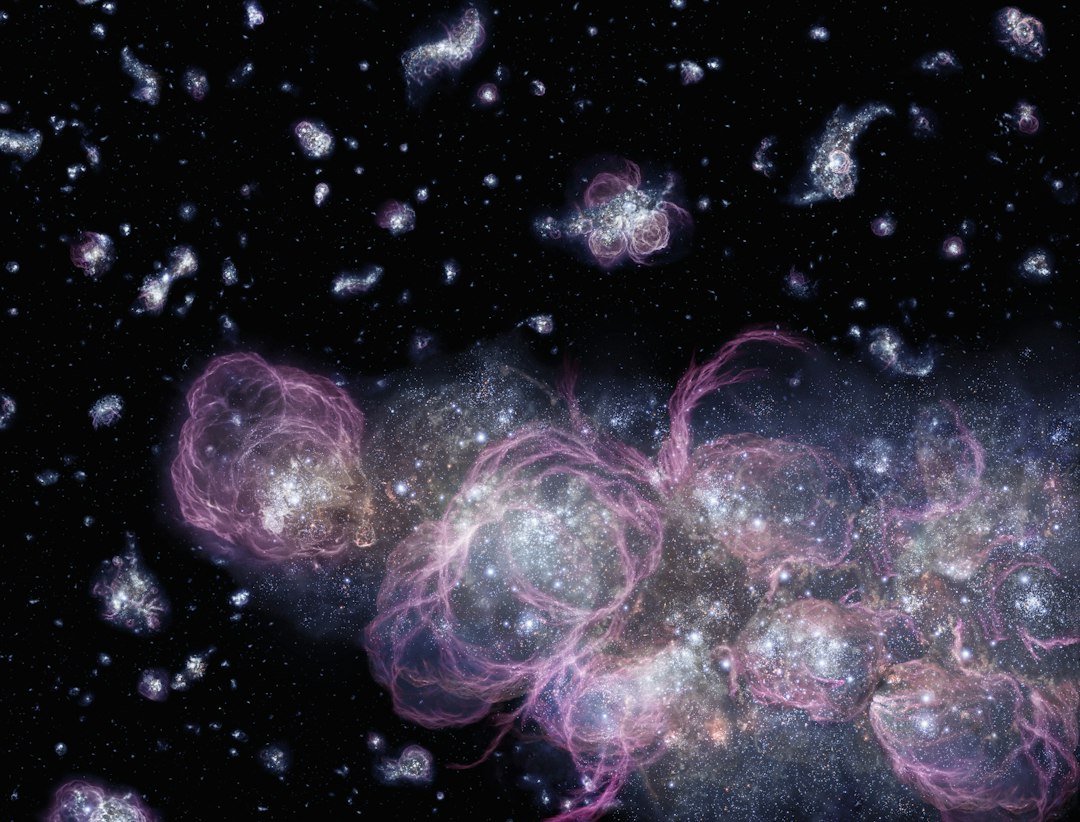
The universe, a canvas of unimaginable scale and complexity, whispers secrets of its origins to those who possess the patience and the tools to listen. Among its most profound pronouncements is a faint, pervasive hum, a ghost of an ancient echo that permeates all of space. This is the Cosmic Microwave Background (CMB) radiation, the oldest light we can possibly observe, a direct snapshot of the universe when it was a mere infant, just a few hundred thousand years old. Its discovery and subsequent study have revolutionized our understanding of cosmology, providing empirical evidence for the Big Bang theory and unlocking crucial insights into the fundamental properties of our cosmos.
The CMB is not a light in the conventional sense that we might associate with stars or galaxies. It is electromagnetic radiation, predominantly in the microwave portion of the spectrum, with a temperature of approximately 2.7 Kelvin (-270.45 degrees Celsius or -454.81 degrees Fahrenheit). This seemingly uniform glow, however, is not perfectly so. Tiny temperature fluctuations, variations of mere microkelvins, are imprinted upon it. These minuscule anisotropies are not random noise; they are the seeds of all the structure we see today, from the grandest galaxy clusters to the smallest individual stars. Unraveling the story encoded within these faint variations is the key to understanding how our universe evolved from a nearly homogeneous, hot, dense state to the diverse and structured cosmos we inhabit.
The concept of the oldest light in the universe, known as the Cosmic Microwave Background (CMB), provides crucial insights into the early stages of the universe’s formation. For a deeper understanding of this fascinating topic, you can explore a related article that discusses the significance of the CMB and its implications for cosmology. To read more, visit Freaky Science.
The Genesis of the Glow: A Universe in Transition
The Cosmic Microwave Background radiation originates from a pivotal moment in cosmic history known as recombination. Prior to this epoch, the universe was a much hotter and denser place, a plasma of ionized particles – protons, electrons, and photons – constantly interacting and scattering. Photons, the carriers of light, were unable to travel freely, their paths perpetually interrupted by collisions with energetic electrons. Imagine a thick fog, where light cannot penetrate far. This was the state of the early universe for the first approximately 380,000 years after the Big Bang.
The Era of Decoupling: From Opaque to Transparent
As the universe expanded, it also cooled. This cooling eventually reached a critical threshold, around 3,000 Kelvin. At this temperature, the kinetic energy of the electrons was no longer sufficient to overcome the electrostatic attraction of the protons. Electrons began to combine with protons, forming neutral hydrogen atoms. This process, known as recombination, marked a profound transformation. With the electrons bound to atomic nuclei, the universe became largely transparent to photons. The light that had been trapped in the primordial plasma was finally able to stream outwards, free to travel unimpeded across the expanding cosmos.
The CMB is, in essence, this ancient light, released during recombination. It is a relic of that moment, a fossilized image of the universe when it transitioned from an opaque inferno to a transparent expanse. The photons we detect today have been traveling for over 13.8 billion years, their wavelengths stretched by the relentless expansion of space, shifting them from the visible and infrared spectrum of the early universe into the microwave domain we observe. This redshift is a direct consequence of Hubble’s Law, the observation that galaxies are moving away from us, and the farther they are, the faster they recede.
The First Light and the Cosmic Dark Ages
The decoupling of photons from matter at recombination also marked the end of the “primordial era” and the beginning of what are sometimes referred to as the “Cosmic Dark Ages.” With the universe now transparent, there were no stars or galaxies to produce new light. For hundreds of millions of years, the universe was filled only with the fading glow of the CMB and vast, dark expanses of neutral hydrogen. This period was crucial, as within these seemingly inert regions, the subtle density fluctuations imprinted on the CMB began to grow under the influence of gravity, eventually leading to the formation of the first stars and galaxies. The CMB, therefore, not only represents the earliest light but also the foundational blueprint for all subsequent cosmic structure.
Unforeseen Discovery: A Serendipitous Revelation
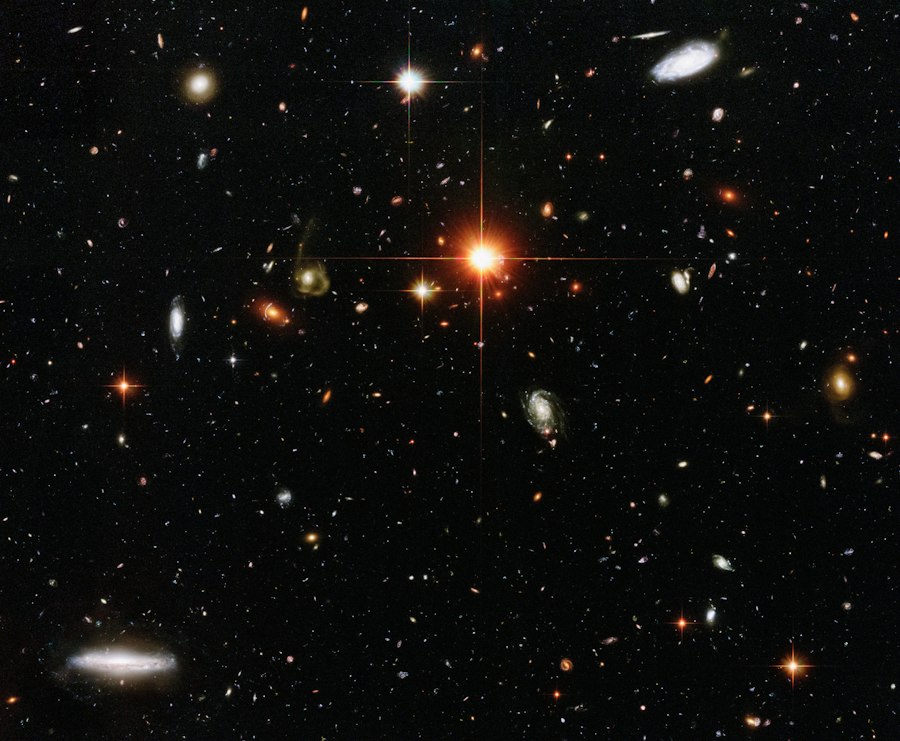
The existence of the CMB was not predicted by all early cosmological models, and its discovery was a testament to the power of serendipity in scientific exploration. While theoretical frameworks for a hot, dense beginning to the universe had been proposed, the specific prediction of a pervasive, uniform background radiation was not universally accepted or actively sought.
Penzias and Wilson’s Accidental Triumph
In 1964, Arno Penzias and Robert Wilson, two radio astronomers working at Bell Labs in New Jersey, were engaged in a project to develop a sensitive microwave antenna for satellite communication. Their goal was to measure radio waves emanating from the Milky Way, and to eliminate any background noise that might interfere with their measurements. Despite their meticulous efforts to account for all known sources of interference, including atmospheric effects and terrestrial radio transmissions, they consistently detected a persistent, low-level static hiss coming from all directions in the sky. This “excess antenna temperature” was frustratingly difficult to eliminate.
Their initial attempts to explain this persistent noise were varied and somewhat unusual. They considered everything from pigeon droppings in the antenna to echoes from the Big Bang itself, though the latter was considered a more speculative, and perhaps even fanciful, explanation at the time. After exhausting all conventional explanations, they learned of the theoretical work by Robert Dicke and his colleagues at Princeton University, who had been independently contemplating the possibility of a residual radiation from a hot, early universe.
The Confirmation of a Universe-Wide Echo
When Dicke and his team heard about Penzias and Wilson’s inexplicable signal, they immediately recognized its profound implications. The characteristics of the observed radiation – its uniformity across the sky and its spectral distribution – precisely matched the predictions for the afterglow of a Big Bang. Penzias and Wilson’s serendipitous discovery provided the first direct, empirical evidence for the Big Bang theory, solidifying its status as the leading cosmological model. Their work earned them the Nobel Prize in Physics in 1978, a testament to the monumental significance of their accidental observation. The CMB was no longer a theoretical curiosity; it was a tangible echo of the universe’s birth.
Mapping the Infant Universe: Precision Cosmology Takes Flight
The initial detection of the CMB by Penzias and Wilson was a groundbreaking achievement, but it provided only a broad-strokes view of this ancient light. To truly unlock its secrets, scientists needed to measure its properties with unprecedented precision. This led to a series of increasingly sophisticated space-based missions designed to map the tiny temperature fluctuations within the CMB.
COBE: The First Detailed Portrait
The Cosmic Background Explorer (COBE) satellite, launched in 1989, was a pivotal step in this endeavor. COBE’s primary objective was to measure the spectrum of the CMB and to search for anisotropies. Its instruments achieved a remarkable feat: they confirmed that the CMB spectrum is almost perfectly thermal, precisely as predicted by the Big Bang model. This further cemented the validity of the theory. More importantly, COBE’s Differential Microwave Radiometer (DMR) instrument provided the first definitive detection of these crucial temperature variations, or anisotropies, across the sky.
The COBE anisotropies, though subtle, were revolutionary. They showed that the early universe was not perfectly uniform; there were regions that were slightly hotter and slightly colder than average. These tiny differences, on the order of parts per 100,000, were precisely the seeds of structure formation. The warmer regions, being slightly less dense, would have been the sites where matter later coalesced to form galaxies and clusters, while the colder regions would have become the vast voids between them. The COBE results provided a stunning image of the universe as a baby, with the faint imprints of its future destiny already etched upon its surface.
WMAP and Planck: Refining the Cosmic Blueprint
Following COBE, the Wilkinson Microwave Anisotropy Probe (WMAP) mission, launched in 2001, provided an even more detailed and precise map of the CMB anisotropies. WMAP’s enhanced sensitivity and angular resolution allowed scientists to discern smaller-scale fluctuations, providing a richer dataset for cosmological analysis. WMAP’s observations confirmed and refined many of the parameters of the standard cosmological model, the Lambda-CDM model, which describes a universe dominated by dark energy and cold dark matter.
The most recent and arguably the most powerful mission to study the CMB was the Planck satellite, operated by the European Space Agency (ESA) and launched in 2009. Planck’s extraordinary sensitivity and its ability to observe the CMB across a wider range of frequencies allowed it to produce the most detailed and accurate map of the CMB to date. The Planck data revealed the subtlest temperature variations and polarization patterns within the CMB, providing unprecedented constraints on cosmological parameters. These observations have allowed scientists to refine our understanding of the universe’s age, composition, and expansion rate with remarkable accuracy, solidifying our confidence in the Lambda-CDM model while also hinting at potential areas for further investigation and theoretical refinement.
The quest to understand the origins of the universe often leads scientists to explore the concept of the oldest light, which is believed to be the cosmic microwave background radiation. This faint glow, a remnant from the Big Bang, provides invaluable insights into the early stages of the cosmos. For those interested in delving deeper into this fascinating topic, you can read a related article that discusses the implications of this ancient light on our understanding of the universe’s evolution. Check it out here.
Decoding the Imprinted Information: Insights into Cosmic Composition and Evolution
| Metric | Value | Description |
|---|---|---|
| Oldest Light | Cosmic Microwave Background (CMB) | The oldest light observable in the universe, remnant radiation from the Big Bang |
| Age | Approximately 13.8 billion years | Time since the CMB photons were emitted, about 380,000 years after the Big Bang |
| Temperature | 2.725 K | Current temperature of the CMB radiation |
| Wavelength | Approximately 1.9 mm (microwave range) | Peak wavelength of the CMB radiation due to redshift |
| Redshift (z) | ~1100 | Redshift corresponding to the time when the CMB was emitted |
| Discovery | 1965 | Year when Arno Penzias and Robert Wilson discovered the CMB |
The minute temperature fluctuations and polarization patterns observed in the CMB are far more than just a pretty picture of the early universe; they are a treasure trove of information about the fundamental constituents and evolutionary history of the cosmos. By meticulously analyzing these subtle variations, cosmologists can extract a wealth of data that informs our understanding of physics on the grandest scales.
The Baryon-to-Photon Ratio and the Abundance of Elements
The relative heights of the peaks and troughs in the CMB’s power spectrum, a statistical representation of the anisotropy data, provide crucial information about the composition of the early universe. Specifically, they allow scientists to determine the density of ordinary matter, known as baryons (protons and neutrons). This measurement, when compared with the predicted abundances of light elements (hydrogen, helium, and lithium) produced during Big Bang nucleosynthesis, provides a powerful consistency check for our cosmological model. The remarkable agreement between these independent measurements strongly supports the idea that the observed baryon density in the CMB is indeed the total amount of ordinary matter in the universe.
The Enigma of Dark Matter and Dark Energy
Perhaps one of the most significant contributions of CMB studies has been in revealing the dominant components of the universe. The patterns in the CMB anisotropies indicate that ordinary matter, the stuff we are made of, constitutes only about 4.9% of the total mass-energy content of the universe. The remaining 95.1% is comprised of two mysterious entities: dark matter and dark energy.
Dark matter, estimated to make up about 26.8% of the universe, does not interact with light and is therefore invisible to telescopes. Its presence is inferred through its gravitational effects on visible matter and light. The CMB provides strong evidence for the existence and abundance of dark matter, as its gravitational influence is crucial for the formation of the structures observed in the CMB anisotropies.
Dark energy, the most dominant component at approximately 68.3%, is even more enigmatic. It is thought to be responsible for the observed accelerated expansion of the universe. The subtle imprint of dark energy on the CMB, particularly its effect on the distance to the surface of last scattering, has been crucial in constraining its properties and confirming its role in cosmic evolution. The CMB, therefore, acts as a powerful diagnostic tool, illuminating the dark sectors of our universe that remain largely beyond direct observation.
Testing the Foundations: Inflation and Beyond
The precise characteristics of the CMB anisotropies also provide a stringent test for theoretical models of the very early universe, particularly the theory of cosmic inflation. Inflation proposes a period of extremely rapid expansion in the first fraction of a second after the Big Bang. This theory elegantly explains several puzzling features of the CMB, such as its remarkable uniformity across vast distances (the horizon problem) and its flatness (the flatness problem). The observed statistical properties of the CMB anisotropies, such as their nearly scale-invariant nature, are precisely what is predicted by inflationary models.
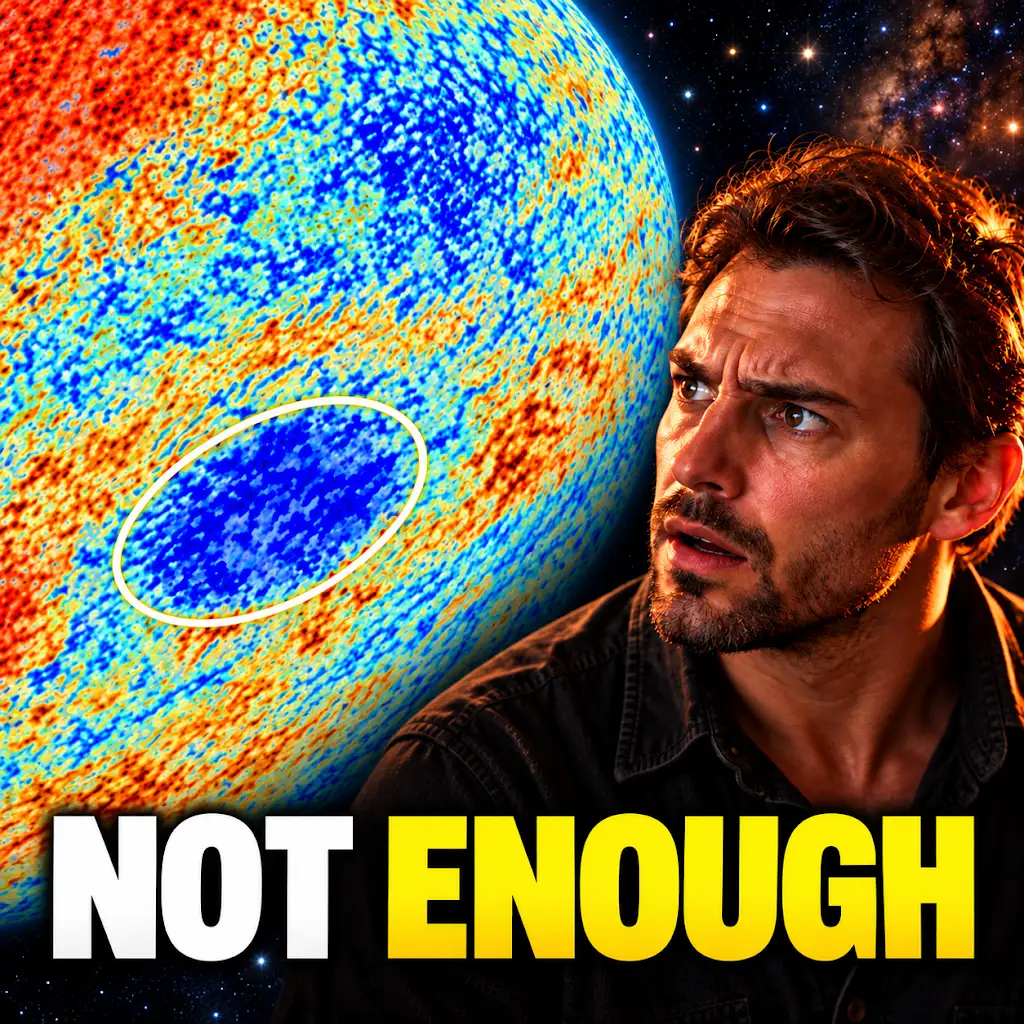
Furthermore, CMB observations allow cosmologists to search for subtle deviations from the standard Lambda-CDM model, potentially pointing towards new physics. These deviations could include unexpected correlations in the CMB, anomalies in its temperature distribution, or signatures of primordial gravitational waves. While the current data largely aligns with the standard model, ongoing and future observations, coupled with theoretical advancements, continue to push the boundaries of our understanding and explore avenues beyond the current paradigm. The CMB remains a vital laboratory for testing the fundamental principles of physics and searching for clues to the ultimate nature of reality.
The Future of CMB Research: Unveiling Deeper Cosmic Secrets
The study of the Cosmic Microwave Background is far from over. While missions like Planck have provided incredibly detailed maps, there are still many avenues of research that promise to unlock even deeper secrets about our universe. The quest to understand the CMB is an ongoing journey, driven by technological advancements and a relentless curiosity about our cosmic origins.
Searching for Primordial Gravitational Waves
One of the most exciting frontiers in CMB research is the search for primordial gravitational waves. These ripples in spacetime are predicted to have been generated during the inflationary epoch. Detecting these waves would provide direct observational evidence for inflation and offer a unique window into the physics of the universe at energies far beyond what can be achieved in terrestrial particle accelerators. Gravitational waves would leave a distinct signature in the polarization patterns of the CMB, known as B-modes. While several experiments have made progress in this area, the definitive detection of primordial B-modes remains a major goal for future CMB missions.
Probing the Dark Ages and the First Stars
While the CMB is the oldest light, it dates from the era of recombination. The period before recombination, the Cosmic Dark Ages, remains largely unexplored. Future telescopes and techniques might eventually allow us to probe this era by observing the subtle effects of the first stars and galaxies on the neutral hydrogen in the universe, or perhaps by detecting other forms of primordial radiation that have not yet been observed. Understanding the transition from the dark ages to the reionization epoch, when the first stars began to ionize the intergalactic medium, is crucial for a complete picture of cosmic evolution.
Precision Cosmology and the Quest for New Physics
The ongoing refinement of CMB observations will continue to improve the precision of our cosmological parameters, allowing us to test the Lambda-CDM model with even greater rigor. Any significant deviations from the model’s predictions could signal the need for new physics, such as modifications to gravity, the existence of additional fundamental particles, or alternative explanations for the accelerated expansion of the universe. The CMB serves as a constant benchmark, a cosmic Rosetta Stone that helps us decode the fundamental laws governing our universe. As our observational capabilities improve, we can expect the CMB to continue to challenge and refine our understanding, pushing the frontiers of cosmological inquiry and guiding us towards a more complete and profound comprehension of our place in the cosmos. The faint echo from the dawn of time continues to speak, and with each new observation, we learn to listen more intently.
The Universe’s Cold Spot Has an Explanation. It’s Not Enough.
FAQs
What is the oldest light in the universe?
The oldest light in the universe is known as the Cosmic Microwave Background (CMB) radiation.
How was the oldest light in the universe discovered?
The oldest light in the universe was discovered in 1965 by Arno Penzias and Robert Wilson, who were awarded the Nobel Prize in Physics for their discovery.
What does the oldest light in the universe tell us about the early universe?
The oldest light in the universe provides valuable information about the early universe, such as its age, composition, and the conditions that existed shortly after the Big Bang.
How old is the oldest light in the universe?
The oldest light in the universe is approximately 13.8 billion years old, which is roughly the age of the universe itself.
Why is studying the oldest light in the universe important?
Studying the oldest light in the universe helps scientists better understand the origins and evolution of the universe, as well as confirm theories such as the Big Bang theory.