
The vast, inky blackness of the ocean’s depths holds secrets that few humans will ever witness. Within this alien realm, where sunlight dares not penetrate, exists a creature of profound and unsettling beauty: the deep-sea anglerfish. These denizens of the abyss are not merely fish; they are living embodiments of adaptation, survival, and a stark, primordial beauty that captivates the imagination. Their world, a place of crushing pressure, perpetual darkness, and scarce resources, has sculpted them into beings unlike any found in the sunlit shallows. To understand the anglerfish is to delve into a mysterious world governed by an entirely different set of rules, a testament to the boundless ingenuity of evolution.
The deep-sea anglerfish call a region of the ocean home that is defined by its absence of light and extreme conditions. This is not a place for the faint of heart, nor for organisms that rely on vision as their primary sense.
The Midnight Zone: Where Light is a Memory
The anglerfish reside primarily in the bathyal and abyssal zones of the ocean, often referred to as the “midnight zone” and below. Here, sunlight is a distant memory, and the only illumination comes from the bioluminescence of its inhabitants. The depths can range from 1,000 to 4,000 meters (3,300 to 13,100 feet) and even deeper for some species. In these lightless realms, the concept of day and night becomes irrelevant, replaced by a constant, oppressive darkness. The pressure at these depths is immense, capable of crushing an unprotected human in an instant. Yet, the anglerfish, with their specialized physiology, thrive in this environment, a stark contrast to the vibrant, sun-drenched coral reefs many people associate with marine life.
Crushing Pressures and Freezing Temperatures
The physical challenges of the deep sea are formidable. The sheer weight of the water column above exerts enormous pressure, forcing organisms to develop unique adaptations to survive. Anglerfish, like many deep-sea dwellers, have bodies composed largely of water, which is incompressible, allowing them to withstand these forces. Their bones are often cartilaginous or poorly ossified, further aiding in their ability to endure the squeeze. Temperatures in the abyss are also consistently low, hovering just above freezing. This necessitates a slow metabolism and an energy-conserving lifestyle, which influences every aspect of the anglerfish’s existence, from its hunting strategies to its reproductive behaviors.
A Scarce Banquet: The Challenges of Finding Food
Food is a precious commodity in the deep sea. The primary source of energy originates from organic matter that slowly drifts down from the surface layers, a phenomenon known as “marine snow.” This sparse and uneven distribution of food means that predators must be incredibly efficient and opportunistic. The anglerfish’s unique hunting method is a direct consequence of this scarcity. Unlike surface predators that actively pursue prey over vast distances, the anglerfish employs a strategy of patient ambush, maximizing every potential encounter. This has led to the development of some of the most bizarre and fascinating adaptations found in the animal kingdom.
Deep sea anglerfish are fascinating creatures known for their unique adaptations to life in the dark depths of the ocean. For those interested in learning more about these remarkable fish and their intriguing hunting methods, you can read a related article that explores their bioluminescent lures and mating habits. Check it out here: Deep Sea Anglerfish Insights.
The Lure: A Beacon in the Darkness
Perhaps the most iconic feature of the deep-sea anglerfish is its bioluminescent lure, a biological marvel that has earned it its name and cemented its place in popular imagination. This specialized organ is a testament to the power of evolution in overcoming extreme environmental challenges.
The Escha and Illicium: Nature’s Fishing Rod
The lure, scientifically known as the esca, is a fleshy appendage that extends from a modified dorsal fin spine, called the illicium. This “fishing rod” can be short and stubby or incredibly long and slender, depending on the species. The esca itself is a marvel of biological engineering. It contains photophores, specialized light-producing organs that harbor symbiotic bioluminescent bacteria. These bacteria, living in a mutually beneficial relationship with the anglerfish, generate light through a chemical reaction. The anglerfish provides the bacteria with a safe environment and nutrients, and in return, it gains a powerful tool for survival.
The Art of Bioluminescence: A Mesmerizing Display
The light produced by the esca can vary in color, intensity, and pattern. While many anglerfish produce a blue or greenish glow, some can emit red or even yellow light. The ability to control the light is crucial. The anglerfish can pulse its lure, keep it steadily illuminated, or even make it flicker, mimicking the movements of small prey. This controlled display is not just about attracting food; it also plays a role in communication and even defense. The mesmerizing dance of light in the pitch-black abyss is a powerful lure for unsuspecting prey, drawing them closer to their inevitable fate.
Mimicry and Deception: The Deadly Dance
The light of the esca serves as a powerful attractant for a variety of smaller deep-sea creatures, including small fish, crustaceans, and even plankton. The anglerfish masterfully employs mimicry, manipulating the light to imitate the movements and appearance of potential food sources. Imagine a small, disoriented shrimp or a school of shimmering krill. The anglerfish’s lure pulses, wiggles, and shines, a tantalizing invitation to a fatal feast. The prey, driven by hunger or curiosity, ventures closer and closer, unaware of the gaping maw lurking just beyond the deceptive glow. This passive hunting strategy conserves energy and maximizes the chances of a successful catch in an environment where every calorie counts.
The Hunter: A Master of Ambush
The anglerfish’s hunting strategy is a remarkable example of passive predation, honed over millennia to exploit the limitations of its environment and the vulnerabilities of its prey.
The Wide, Hungry Maw: A Trap of Unfathomable Proportions
The most striking physical characteristic of many anglerfish, beyond their lure, is their enormous, gaping mouth. This vast maw is lined with sharp, needle-like teeth that are often angled inwards, preventing any captured prey from escaping. The jaws are incredibly distensible, allowing the anglerfish to swallow prey much larger than its own head. This remarkable ability is crucial in an environment where encounters with prey are infrequent. When an opportunity arises, the anglerfish must be able to capitalize on it, no matter how large the potential meal. The sheer size of the mouth, coupled with the inward-pointing teeth, creates a formidable trap from which there is little hope of escape.
The Patient Wait: Conserving Energy in the Abyss
In the deep sea, energy is a precious commodity. The anglerfish’s hunting strategy is designed to conserve as much energy as possible. They are not active hunters that chase down their prey. Instead, they are masters of patience and ambush. The anglerfish will often remain motionless for extended periods, sometimes for days, waiting for an unsuspecting meal to be drawn to its lure. Their slow metabolism further aids in this energy conservation. This patient approach allows them to survive in an environment where food is scarce and energy expenditure must be minimized. The darkness and stillness of their habitat are their greatest allies in this deadly game of patience.
The Sudden Snap: A Lightning-Fast Strike
When prey is within striking distance, the anglerfish unleashes a sudden, explosive movement. The jaws snap shut with incredible speed, engulfing the unfortunate victim. The combination of the alluring glow and the lightning-fast strike makes for a highly effective hunting strategy. The prey is drawn in by the deceptive light, and before it can react, it is swallowed whole. This swift and decisive action ensures that the anglerfish doesn’t miss its precious opportunity, maximizing the success rate of its infrequent hunts. The effectiveness of this strategy is evident in the sheer diversity of prey items found within the stomachs of anglerfish specimens.
The Peculiarities of Reproduction: A Struggle for Survival
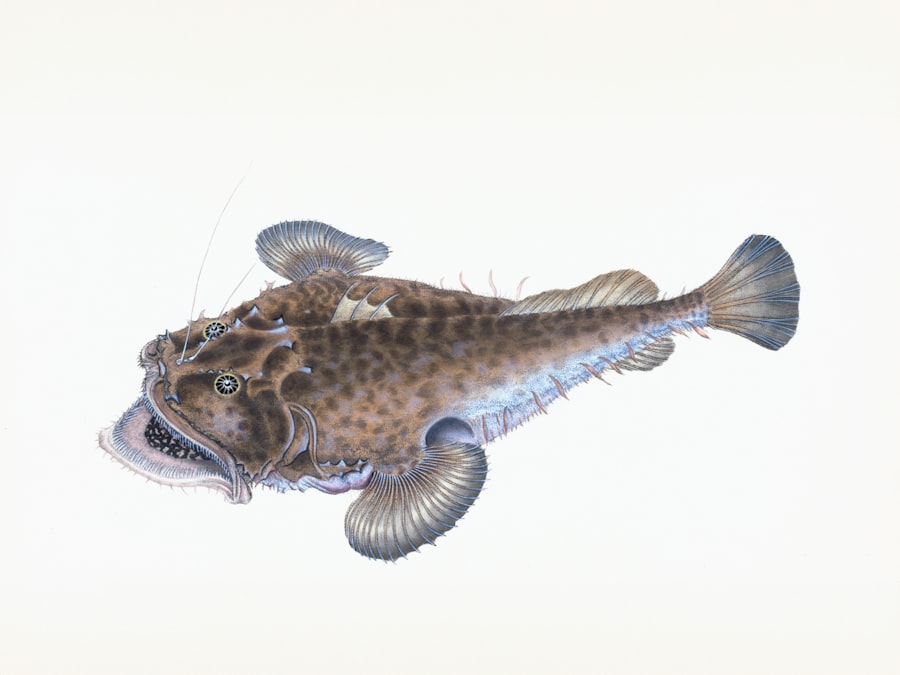
The reproductive strategies of deep-sea anglerfish are as bizarre and fascinating as their physical adaptations. In the vast emptiness of the abyss, finding a mate is a significant challenge, leading to some of the most extreme examples of sexual dimorphism and parasitic mating in the animal kingdom.
Extreme Sexual Dimorphism: The Midget Male
Perhaps the most astonishing aspect of anglerfish reproduction is the extreme sexual dimorphism observed in many species. The females are often significantly larger than the males, sometimes by a factor of 10 to 60 times in length and a thousand times in mass. The males, in stark contrast, are diminutive and often possess greatly enlarged olfactory organs, which they use to detect the pheromones released by females. Their entire existence seems dedicated to finding a female and reproducing. This size disparity is a direct adaptation to the challenges of finding a mate in the vast, dark ocean.
The Ultimate Sacrifice: Parasitic Mating
In many deep-sea anglerfish species, the male’s life revolves around finding a female. Once a male locates a female, he bites into her body, often on the belly or flank. His jaws fuse with her flesh, and his circulatory system connects with hers. He becomes a permanent parasite, feeding on her blood and nutrients. Over time, his eyes and internal organs degenerate, leaving him as little more than a pair of testes attached to the female. She then carries him, and potentially multiple such males, throughout her life, ensuring that when she is ready to spawn, a ready supply of sperm is available. This remarkable strategy ensures reproduction in an environment where finding a mate again would be virtually impossible.
Spawning in the Depths: A Risky Endeavor
When the female is ready to spawn, she releases her eggs, and the attached males fertilize them externally. The fertilized eggs are then released into the water column. The eggs themselves are often buoyant and float towards the surface, where the larvae develop in the richer upper layers of the ocean. After a period of development, the juvenile anglerfish descend back into the depths to begin their own solitary lives. The entire reproductive cycle is fraught with peril, from the initial struggle of the male to find a mate to the vulnerability of the eggs and larvae in the open ocean.
The deep sea anglerfish is a fascinating creature known for its unique method of attracting prey using a bioluminescent lure. This remarkable adaptation allows it to thrive in the dark depths of the ocean where light is scarce. If you’re interested in learning more about the incredible adaptations of various deep-sea creatures, you might want to check out this related article on Freaky Science, which explores the mysterious lives of organisms that inhabit the ocean’s depths.
Conservation and the Unknown Future
| Attribute | Value |
|---|---|
| Scientific Name | Melanocetus johnsonii |
| Depth Range | 200 to 2,000 meters |
| Size | Up to 3 feet in length |
| Diet | Small fish and crustaceans |
| Reproduction | Females are much larger than males and use bioluminescent lure to attract prey |
Despite their alien appearance and seemingly robust adaptations, deep-sea anglerfish, like many inhabitants of the deep ocean, face growing threats from human activities. The mysteries of their world are slowly being unveiled, but their future remains uncertain.
The Uncharted Territories: Limits of Our Knowledge
Our understanding of deep-sea anglerfish and their complex ecosystems is still remarkably limited. Much of the deep ocean remains unexplored, and the life forms that inhabit it are only glimpsed through the occasional trawl or deep-sea submersible. The sheer challenge of studying these creatures in their natural habitat means that vast amounts of information about their behavior, life cycles, and ecological roles are yet to be discovered. Each new discovery only highlights how much more there is to learn about these fascinating organisms and the intricate web of life in the abyss.
Threats from the Surface: Human Impact on the Abyss
Human activities, even those that occur far from the deep sea, can have a detrimental impact on these fragile environments. Pollution, including plastic waste and chemical runoff, can find its way to the deepest trenches. Overfishing in shallower waters can disrupt the food chain, potentially affecting the flow of nutrients to the abyss. Deep-sea mining, a burgeoning industry, poses a significant threat, with the potential to destroy habitats and disrupt the delicate balance of deep-sea ecosystems. The anglerfish, adapted to a stable, ancient environment, may be particularly vulnerable to rapid environmental changes.
The Importance of Protection: Safeguarding the Mysteries
The preservation of deep-sea ecosystems, including the habitats of anglerfish, is crucial for maintaining biodiversity and understanding the planet’s biological heritage. Efforts to explore and understand the deep ocean must be coupled with a strong commitment to conservation. Establishing marine protected areas and implementing sustainable fishing practices are vital steps. As we continue to unravel the mysteries of the deep-sea anglerfish and their world, we must also recognize our responsibility to protect these unique and extraordinary creatures and the alien realm they call home. The deep sea is not an empty void, but a vibrant, complex biosphere deserving of our respect and protection.

The Deeper You Go, the Less Life Looks Like Life
FAQs
What is a deep sea anglerfish?
A deep sea anglerfish is a type of fish that lives in the deep sea, typically at depths of 1,000 to 2,000 meters. They are known for their bioluminescent lure, which they use to attract prey in the dark depths of the ocean.
What does a deep sea anglerfish eat?
Deep sea anglerfish primarily feed on small fish, shrimp, and other crustaceans. They use their bioluminescent lure to attract prey, which they then capture with their large mouths and sharp teeth.
How do deep sea anglerfish reproduce?
Deep sea anglerfish have a unique reproductive strategy. In some species, the male anglerfish is much smaller than the female and will actually fuse to her body, becoming a permanent parasite. The male provides sperm to the female whenever she is ready to spawn.
Where can deep sea anglerfish be found?
Deep sea anglerfish are found in oceans around the world, typically at depths of 1,000 to 2,000 meters. They are most commonly found in the Atlantic and Antarctic oceans, as well as the Gulf of Mexico.
Are deep sea anglerfish dangerous to humans?
Deep sea anglerfish are not considered dangerous to humans. They live in the deep sea and are rarely encountered by humans. However, their sharp teeth and large mouths make them formidable predators in their deep sea habitat.