You stand at the precipice of a vast, uncharted territory, a realm that resides not in dusty tomes or illuminated screens, but deep within the quiet caverns of your own mind. This is the subconscious, a boundless ocean of knowledge, intuition, and untapped potential, often overlooked in the clamor of conscious thought. You might dismiss it as a fanciful notion, a mere playground for dreams and idle daydreams, but you’d be mistaken. Within this hidden landscape lies a reservoir of understanding so profound, so intricate, that it shapes your every perception, your every action, and your very sense of self. It’s a place where forgotten memories shimmer, where instinctive wisdom resides, and where the seeds of creativity are sown, all waiting for your gentle hand to explore and awaken them.
You may have experienced moments where a solution to a complex problem suddenly appears, fully formed, as if plucked from thin air. Or perhaps you’ve felt an undeniable gut feeling, a premonition that steers you away from danger or towards opportunity, even when logic offers no explanation. These are the subtle manifestations of your subconscious knowledge at play. It’s not a library in the conventional sense, meticulously cataloged and easily accessed. Instead, it’s a dynamic, interconnected network of experiences, emotions, beliefs, and learned behaviors that operate beneath the surface of your awareness.
The Foundation: Your Life’s Tapestry
Every interaction you’ve ever had, every sensation you’ve ever felt, every lesson you’ve ever absorbed – consciously or not – contributes to this immense tapestry. Think of it as a vast, ever-expanding database, but one that doesn’t rely on keywords and search bars. Your subconscious stores the nuances of your mother’s tone when she was worried, the scent of rain on dry earth from your childhood, the unspoken understanding between you and a dear friend. These are not mere fragments; they are woven into the very fabric of your being, influencing how you interpret the world around you.
The Power of Implicit Learning
You’ve learned countless things without actively trying. The way you walk, the rhythm of your breathing, the subtle cues you pick up in social interactions – these are all examples of implicit learning, a fundamental aspect of subconscious knowledge. You didn’t sit down with a manual to learn how to ride a bike or how to distinguish between a genuine smile and a polite one. Your brain absorbed these skills through repetition and experience, filing them away in the subconscious for effortless recall.
Emotional Echoes and Learned Responses
Your subconscious is a powerful repository of emotional experiences. Traumatic events, joyful celebrations, moments of profound connection – these leave indelible marks. These emotional echoes can trigger automatic responses in your present, even if the original trigger is long gone. You might find yourself reacting with anxiety in a situation that reminds you of a past fear, or feeling an inexplicable sense of comfort in a familiar environment. These are the subconscious’s way of informing you, based on its vast archive of emotional data.
The concept of implicit knowledge, or the information our brains hold without our conscious awareness, is fascinating and has been explored in various studies. For a deeper understanding of this phenomenon, you can read an insightful article that delves into the intricacies of how our brains process information without us realizing it. This article can be found at Freaky Science, where you can explore the mysteries of the mind and learn more about the hidden capabilities of our cognitive functions.
Decoding the Dreams: The Language of the Subconscious
Dreams, those fleeting nocturnal narratives, are often considered the most direct window into your subconscious. While the scientific understanding of dreams remains a subject of ongoing research, many theories suggest that they serve as a crucial outlet for processing information, resolving conflicts, and consolidating memories. Your dreams might seem chaotic, nonsensical, or even terrifying, but there’s often a deeper meaning embedded within their symbolic language.
The Symbolic Theater of the Mind
In the dreamscape, logic takes a backseat. Abstract concepts are represented by concrete images, and complex emotions are distilled into powerful metaphors. A falling sensation might represent a fear of losing control, while flying could symbolize freedom and aspiration. Understanding these symbols, though subjective, can offer profound insights into your inner landscape, revealing anxieties, desires, and unresolved issues that your conscious mind may be actively suppressing.
Recurring Themes and Personal Mythology
Pay attention to recurring themes or motifs in your dreams. Do you often find yourself being chased? Are you trying to find something you’ve lost? These recurring patterns are not random; they are the subconscious highlighting persistent concerns or unmet needs. By exploring these recurring narratives, you can begin to understand the underlying messages your subconscious is trying to convey, unraveling the personal mythology that shapes your waking life.
The Shadow Self in Dreams
Dreams can also bring to the forefront aspects of yourself that you tend to disown or reject – your “shadow self.” These might be traits you perceive as negative or undesirable, but which are an integral part of your whole being. Confronting these shadow aspects in the safe space of your dreams can be a crucial step towards self-acceptance and integration.
The Intuitive Compass: Navigating Life’s Uncertainties
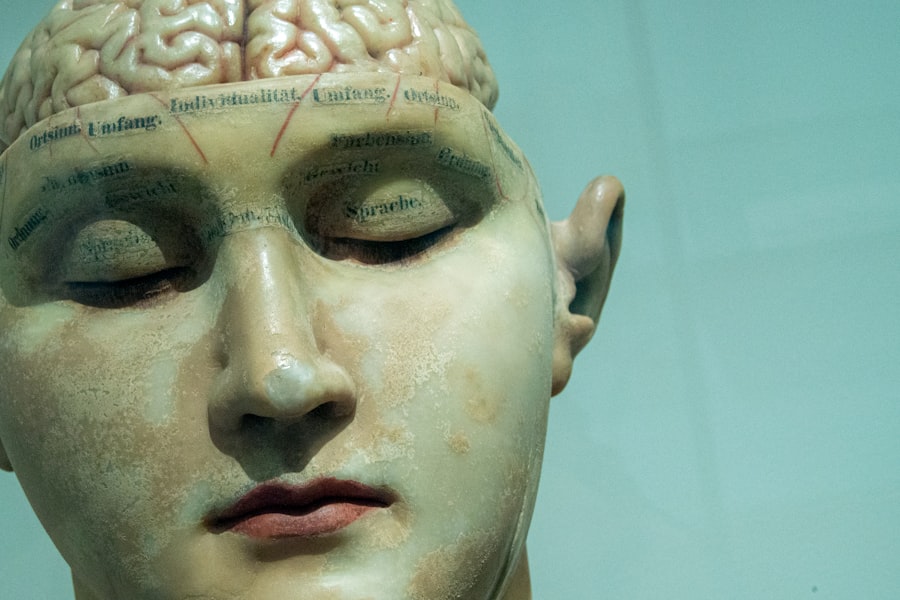
Your intuition, that inner knowing that guides you without explicit reasoning, is a direct manifestation of your subconscious knowledge. It’s the sum total of your accumulated experiences, observations, and learned patterns, processed at a speed far exceeding conscious thought. This intuitive compass is a powerful tool for making decisions, avoiding pitfalls, and seizing opportunities.
The Gut Feeling: A Subconscious Symphony
That “gut feeling” you experience isn’t just a random sensation. It’s your subconscious mind processing a multitude of subtle cues and past experiences, flagging a situation as either safe or risky. You might not be able to articulate why you feel a certain way, but your subconscious has already done the complex calculation. Trusting this inner voice, even when it contradicts logic, can often lead you down the most beneficial path.
Pattern Recognition at Lightning Speed
Your subconscious excels at pattern recognition. It can detect subtle shifts in body language, vocal tone, or environmental cues that your conscious mind might miss. This allows you to gauge the authenticity of a person, the potential success of a venture, or the subtle dangers lurking in a situation. This rapid pattern recognition is the engine behind many of your intuitive leaps.
The Art of Decision-Making Beyond Logic
While logic and reason are essential, they are not always sufficient for complex decisions, especially those involving human interaction or uncertain outcomes. Your subconscious, armed with a wealth of qualitative data, can offer a more nuanced perspective. Learning to integrate your intuition with your logical analysis can lead to more effective and fulfilling choices.
Unlocking Creativity: The Wellspring of Innovation
The most groundbreaking ideas, the most breathtaking works of art, the most revolutionary inventions – all often stem from the fertile ground of the subconscious. It’s in those quiet moments of contemplation, during a shower, or while gazing out a window, that your subconscious mind is free to play, to connect seemingly unrelated concepts, and to conjure novel solutions.
The Eureka Moment: Subconscious Synthesis
The famed “Eureka!” moments, where a brilliant idea suddenly dawns, are the result of your subconscious mind working diligently behind the scenes. It’s been mulling over a problem, drawing on diverse pieces of information, and finally making a connection that ignites your conscious awareness. This synthesis is the hallmark of true creativity.
Associative Thinking and Serendipity
Your subconscious operates on associative thinking, linking ideas and concepts based on resemblance, proximity, or shared emotional resonance. This ability to make unexpected connections is the bedrock of serendipity, allowing for the emergence of novel insights that wouldn’t arise from linear, logical thinking. It’s about allowing your mind to wander and explore the vast network of interconnected ideas.
The Power of Incubation and Letting Go
Sometimes, the best way to tap into your subconscious creativity is to consciously step away from a problem. This period of “incubation” allows your subconscious to work on it without the pressure of immediate intellectual scrutiny. Embracing this process of letting go, and trusting that your subconscious will eventually deliver, is a vital part of the creative journey.
Our brains are constantly processing information, even when we are not consciously aware of it, which can lead to fascinating insights about our behavior and decision-making. For a deeper understanding of this intriguing phenomenon, you might find it interesting to explore a related article that delves into the subconscious mind and its impact on our daily lives. You can read more about it in this informative piece that highlights various aspects of how our brains operate behind the scenes.
Cultivating the Inner Landscape: Practical Approaches to Subconscious Knowledge
| Category | Data/Metric |
|---|---|
| Memory | Ability to recall past events or information |
| Subconscious Processing | Automatic responses to stimuli without conscious awareness |
| Intuition | Ability to understand something instinctively without the need for conscious reasoning |
| Emotional Responses | Automatic emotional reactions to certain situations or stimuli |
| Pattern Recognition | Ability to recognize patterns and make connections without conscious effort |
The good news is that you are not simply a passive recipient of your subconscious knowledge. You can actively cultivate and engage with this inner realm, unlocking its potential and enriching your life in profound ways. It’s about creating a dialogue between your conscious and subconscious minds, fostering a deeper understanding of yourself.
Mindfulness and Meditation: Quieting the Conscious Noise
Practicing mindfulness and meditation are perhaps the most powerful tools for quieting the incessant chatter of your conscious mind, thereby creating space for the whispers of your subconscious to be heard. By focusing on the present moment, observing your thoughts without judgment, and cultivating a sense of inner stillness, you allow the deeper currents of your mind to surface.
Breathwork: A Gateway to Deeper Awareness
Your breath is a constant, rhythmic anchor to your inner world. Through controlled breathing exercises, you can directly influence your physiological state, inducing a sense of calm that opens the door to subconscious awareness. Breathwork can help release stored tension and create a more receptive state for intuitive insights and creative impulses.
Body Scan Meditations and Somatic Awareness
Your body holds a wealth of subconscious information. Through body scan meditations and cultivating somatic awareness, you learn to tune into the subtle sensations within your physical form. These sensations can offer clues about unresolved emotional issues, stress patterns, and even nascent ideas that haven’t yet formed into conscious thoughts.
Journaling and Creative Expression: Giving Voice to the Unseen
Writing in a journal, drawing, painting, or engaging in any form of creative expression can serve as a powerful conduit for your subconscious. Without the pressure of perfection, you can allow your thoughts, feelings, and images to flow onto the page or canvas, revealing hidden patterns, desires, and insights.
Automatic Writing: A Direct Dialogue
Automatic writing, where you allow your pen to move freely without conscious direction, can be a remarkable way to bypass the critical conscious mind and tap directly into your subconscious. What emerges may be surprising, fragmented, or deeply revealing, offering a direct dialogue with the hidden parts of yourself.
Stream-of-Consciousness Exploration
Allowing yourself to write or speak your thoughts without censorship, as in stream-of-consciousness techniques, can help uncover connections and themes that would otherwise remain buried. It’s about embracing the messy, nonlinear nature of your inner world and trusting that meaning will emerge.
Dream Analysis and Interpretation: Unraveling the Nocturnal Narratives
As mentioned earlier, dreams are a vital source of subconscious knowledge. Actively engaging with your dreams, by keeping a dream journal and dedicating time to their interpretation, can unlock a wealth of understanding.
The Practice of Dream Recall
The first step is to cultivate the habit of remembering your dreams. Keeping a notebook and pen by your bedside and making an effort to recall details upon waking, even fragments, can significantly improve your dream recall over time.
Seeking Patterns and Symbolism in Dreams
Once you have a collection of dream entries, begin to look for recurring symbols, themes, and emotional patterns. Consider what these might represent in your waking life, using reliable resources for dream interpretation as a guide, but always trusting your own intuition and personal associations.
Embracing Intuition and Inner Knowing
Ultimately, the most profound way to engage with your subconscious knowledge is to trust and cultivate your intuition. This isn’t about abandoning logic, but about integrating it with that deep, inner knowing that has guided humanity for millennia.
Practicing Self-Reflection and Inner Dialogue
Regular self-reflection, engaging in inner dialogues, and asking yourself probing questions can help you connect with your intuition. What does your inner voice tell you about a situation? What are the subtle nudges and feelings guiding you?
Honoring Your Gut Feelings and Instincts
Learn to honor your gut feelings, even when they seem inconvenient or illogical. These instinctive responses are often the most reliable indicators of what is truly right for you. Over time, by consistently listening to and acting upon your intuition, you strengthen that connection and deepen your trust in its wisdom.
You stand on the cusp of an extraordinary journey, a voyage into the deepest recesses of your own being. The subconscious knowledge that resides within you is not a passive entity, but a vibrant, dynamic force waiting to be understood and embraced. By quieting the noise of the conscious mind, by embracing the symbolic language of dreams, by trusting your intuitive compass, and by actively cultivating this inner landscape, you unlock a profound wellspring of wisdom, creativity, and self-understanding. The mysteries of the subconscious are not obstacles to be feared, but invitations to explore the most extraordinary territory you will ever encounter: yourself.

Your Brain May Sense Earth’s Magnetic Field Without You Knowing
FAQs
What is the concept of “implicit knowledge” in the brain?
Implicit knowledge refers to the information and skills that the brain has acquired without conscious awareness. This type of knowledge is often demonstrated through behaviors, habits, and automatic responses.
How does the brain acquire implicit knowledge?
The brain acquires implicit knowledge through repeated experiences, practice, and exposure to information. This type of learning occurs at a subconscious level and is often influenced by environmental factors and social interactions.
What are some examples of implicit knowledge in the brain?
Examples of implicit knowledge in the brain include motor skills such as riding a bike or typing on a keyboard, social cues and norms, language comprehension, and emotional responses to certain stimuli.
How does implicit knowledge impact decision-making and behavior?
Implicit knowledge can influence decision-making and behavior by shaping automatic responses and influencing perceptions and attitudes. It can also impact how individuals navigate social interactions and interpret the world around them.
Can implicit knowledge be unlearned or changed?
While implicit knowledge is deeply ingrained in the brain, it can be modified through conscious effort, retraining, and exposure to new experiences. However, unlearning implicit knowledge may require significant time and effort.