The common experience of slipping on ice, a phenomenon as old as winter itself, belies a surprisingly complex and fascinating world of molecular physics. Far from being a simple frozen block of water, ice, especially when it appears “slippery,” exhibits behaviors governed by intricate molecular interactions, surface phenomena, and temperature-dependent properties. Understanding the molecular physics of slippery ice requires delving into the very structure of water molecules, their arrangement in the solid state, and the subtle transitions that occur at the interface between ice and other materials.
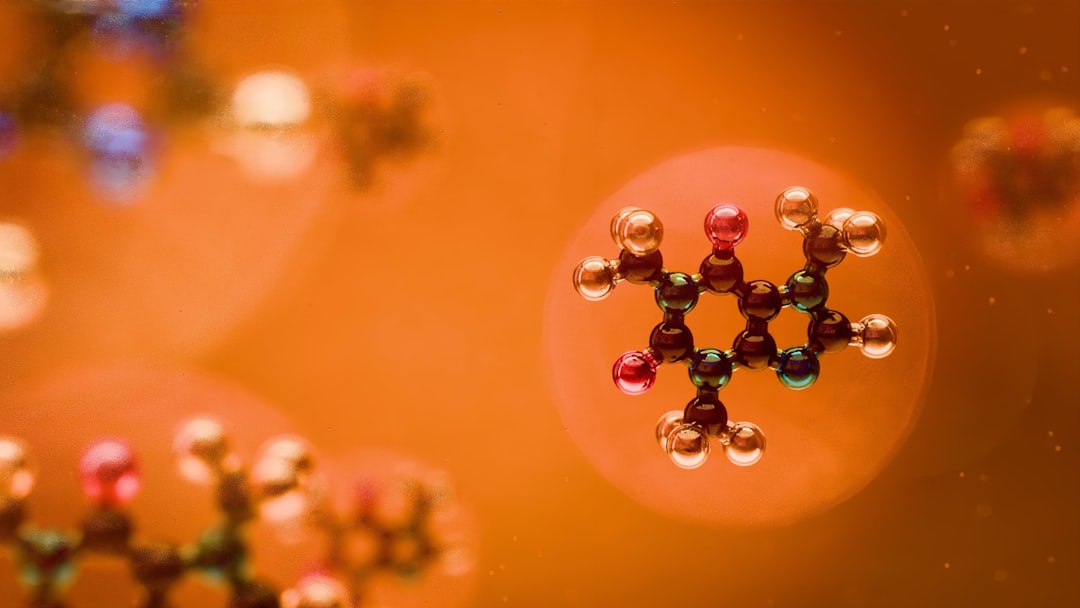
The journey into understanding slippery ice begins with the fundamental properties of water itself. A water molecule, H₂O, is inherently polar. The oxygen atom, being more electronegative than the hydrogen atoms, pulls the shared electrons closer, creating a partial negative charge on the oxygen and partial positive charges on the hydrogens. This polarity is the bedrock of water’s ability to form hydrogen bonds.
Hydrogen Bonding: The Architect of Ice
Hydrogen bonds are electrostatic attractions between the partially positive hydrogen atom of one water molecule and the partially negative oxygen atom of another. These bonds are weaker than covalent bonds (which hold the atoms within a single water molecule together) but are crucial for the macroscopic properties of water and ice. In liquid water, hydrogen bonds are constantly forming and breaking, allowing molecules to move past each other. However, as water cools, the molecules lose kinetic energy, and the hydrogen bonds become more stable and ordered.
The Crystal Structure of Ice
Upon freezing, water molecules arrange themselves into a specific crystalline lattice structure, primarily hexagonal, known as Ice Ih (Ice one h). This structure is open and tetrahedral, meaning each oxygen atom is bonded to four hydrogen atoms – two covalently and two via hydrogen bonds. This open structure is why ice is less dense than liquid water, causing it to float. The specific arrangement of these hydrogen bonds dictates the macroscopic properties of ice, including its hardness, its thermal conductivity, and, importantly for our discussion, its slipperiness. The strength and arrangement of these intermolecular forces are the primary determinants of ice’s initial state.
Recent studies in molecular physics have shed light on the intriguing properties of slippery ice, revealing how its unique molecular structure contributes to reduced friction. For a deeper understanding of this phenomenon, you can explore a related article that discusses the molecular interactions at play and their implications for various applications. To read more, visit this article on Freaky Science.
The Mystery of Slipperiness: Beyond the Solid Surface
The perception of “slipperiness” arises when the friction between an object and the ice surface is significantly reduced. While perfectly dry, solid ice might offer some resistance, the real culprit behind our frequent tumbles is a thin layer that forms at the ice-solid interface. This layer is not just a minor deviation; it’s a dynamic region whose existence and properties are dictated by a confluence of molecular processes.
Pressure Melting: The Classical Explanation
Historically, the phenomenon of pressure melting was proposed as the primary reason for ice’s slipperiness. The idea is that the pressure exerted by an object, such as the blade of a skate or the sole of a shoe, lowers the melting point of ice. According to the phase diagram of water, increasing pressure shifts the equilibrium between solid and liquid phases towards the liquid phase at lower temperatures. Therefore, under sufficient pressure, a thin layer of liquid water could form at the interface, lubricating the sliding motion.
- The Role of Pressure: The pressure required to significantly lower the melting point of ice is substantial. For example, to melt ice at 0°C, a pressure of approximately 13.5 MPa is needed. This is equivalent to the pressure exerted by a heavy person standing on very sharp ice skates. However, many everyday slipping incidents occur with less localized pressure, leading scientists to explore other explanations.
- Limitations of Pressure Melting: While pressure melting undoubtedly contributes to slipperiness in specific scenarios like ice skating, it doesn’t fully explain the ease with which we can slip on sidewalks or even during a gentle fall. The pressures involved in many common slipping situations are often insufficient to cause significant melting on their own. This realization spurred further investigation into other molecular mechanisms.
Friction-Induced Melting: A More Ubiquitous Factor
The inadequacy of pressure melting alone to explain widespread slipperiness led to the investigation of friction-induced melting. This theory posits that the kinetic energy generated by friction between a sliding object and the ice surface is converted into heat, which then melts a thin layer of ice.
- The Tribological Perspective: Friction is a complex phenomenon involving the interaction of surfaces at the molecular level. When two surfaces slide against each other, there are microscopic asperities (protrusions) on each surface that come into contact. The deformation and shearing of these asperities, as well as the breaking and reforming of intermolecular bonds at the interface, generate heat.
- Heat Generation at the Interface: The frictional heat generated at the ice-solid interface is particularly effective in melting ice due to its low melting point. Even a small amount of heat can be sufficient to create a lubricating film of water. The rate of heat generation is dependent on the coefficient of friction, the applied normal force, and the relative speed of sliding.
- The Thin Film of Water: The resulting meltwater forms a thin, continuous film between the sliding object and the ice. This film acts as a lubricant, drastically reducing the coefficient of friction and making the surface appear slippery. The thickness of this film is crucial; too thick and the object might sink, too thin and the friction remains high. This delicate balance is a testament to the sophisticated molecular interactions at play.
The Role of Surface Structure and Impurities

The molecular physics of slippery ice is not solely determined by bulk properties. The surface of the ice, often imperceptible to the naked eye, plays a critical role in its frictional behavior. Imperfections, irregularities, and even the presence of adsorbed substances can dramatically alter the slipperiness.
Surface Roughness and Asperities
Even seemingly smooth ice surfaces possess microscopic roughness. These asperities, or tiny peaks and valleys, influence the nature of contact with another surface. When an object slides, these asperities interlock to some extent, and their deformation and shearing contribute to friction. However, the presence of a lubricating meltwater layer can effectively fill these valleys, smoothing out the contact and reducing friction.
- Contact Area and Stress Concentration: The asperities on the ice surface and the opposing surface determine the real area of contact. High points on either surface will experience greater stress, potentially leading to localized melting even at lower ambient temperatures.
- The Impact of Ice Crystal Growth: The way ice crystals grow can also influence surface roughness. Crystal habits, which describe the characteristic shapes of crystals, can lead to varying surface textures. These variations can affect the initial interaction and the subsequent development of a lubricating layer.
Adsorbed Layers and Contaminants
The surface of ice is rarely pure water ice. It is often contaminated with atmospheric gases, dissolved substances from meltwater, and even organic material. These adsorbed layers can significantly alter the surface energy and, consequently, the frictional properties of the ice.
- Water Vapor Adsorption: Even at sub-zero temperatures, water vapor from the atmosphere can adsorb onto the ice surface, forming a quasi-liquid layer. This layer, though extremely thin, can contribute to slipperiness by providing a mobile medium for sliding. The thicker this layer, the more slippery the ice.
- Dissolved Solutes: When ice melts and refreezes, it can incorporate dissolved substances like salts. Salts, in particular, can depress the freezing point of water even further. This means that a salted ice surface will have a more substantial liquid layer at lower temperatures than pure ice, making it significantly more slippery. This is the principle behind salting roads in winter.
- Organic and Inorganic Contaminants: Dirt, dust, and other organic or inorganic particles on the ice surface can act as either abrasive agents (increasing friction) or lubricants (decreasing friction), depending on their nature and how they interact with the ice and the sliding object.
The Ice-Water Interface: A Dynamic Region
The interaction between ice and a sliding object is not a simple solid-on-solid contact. It involves a complex, dynamic interface where molecular forces are paramount. This interface is the battleground where adhesion, friction, and melting compete, ultimately determining the slipperiness.
Van der Waals Forces and Adhesion
Even without the formation of a liquid layer, there are attractive forces between the molecules of the ice surface and the molecules of the sliding object. These are primarily Van der Waals forces, which arise from temporary fluctuations in electron distribution within molecules, creating transient dipoles. These forces contribute to adhesion, the tendency of surfaces to stick together.
- Surface Energy and Intermolecular Attractions: The strength of Van der Waals forces depends on the nature of the materials in contact and their surface energies. A higher surface energy generally leads to stronger attractive forces.
- The Role of Adhesion in Friction: Adhesion is one of the components contributing to static friction (the force that must be overcome to initiate motion). When the ice surface is particularly adhesive to a sliding object, it can increase the initial resistance to sliding.
The Quasi-Liquid Layer (QLL)
The concept of a quasi-liquid layer (QLL) has gained significant traction in explaining ice slipperiness, especially at temperatures close to the melting point. This layer is not a bulk liquid but a disordered layer of water molecules at the surface of the ice, exhibiting some liquid-like properties while still being strongly influenced by the underlying ice lattice.
- Molecular Mobility within the QLL: Molecules within the QLL possess greater mobility than those in the solid ice. They can slide past each other more easily, contributing to reduced friction. The thickness of the QLL is temperature-dependent, increasing as the temperature approaches the melting point.
- Thickness and Slipperiness: The thickness of the QLL is crucial. A very thin QLL might offer some lubrication, while a thicker one provides more substantial slipperiness. As temperature rises, the QLL can thicken significantly, making even smooth ice feel very slippery.
- Influence of Surface Crystallography: The specific crystallographic plane exposed at the ice surface can influence the structure and properties of the QLL. Different crystal faces can exhibit varying degrees of order and molecular mobility in their surface layers, leading to anisotropic frictional behavior.
Recent advancements in the molecular physics of slippery ice have shed light on the unique properties that allow ice to become less frictional under certain conditions. This fascinating phenomenon has implications for various fields, including transportation and climate science. For a deeper understanding of these molecular interactions, you can explore a related article that discusses the intricate behaviors of water molecules at low temperatures. To read more about this topic, visit this article.
The Impact of Temperature: A Sensitive Balance
| Metrics | Data |
|---|---|
| Ice Friction Coefficient | 0.05 – 0.1 |
| Surface Roughness | 0.1 – 10 micrometers |
| Ice Melting Point | 0°C |
| Ice Crystal Structure | Hexagonal |
Temperature is arguably the most significant environmental factor influencing the slipperiness of ice. The molecular behavior of water at its solid-liquid interface is exquisitely sensitive to minute changes in temperature, dictating the interplay between solid ice and the lubricating meltwater layer.
Sub-Zero Temperatures and Reduced Slipperiness
At very low temperatures, far below freezing, the molecular motion in ice is significantly reduced. The formation of a lubricating liquid layer, whether through pressure melting or friction-induced melting, becomes much more difficult. The QLL, if it exists at all, is extremely thin, and the bulk of the ice remains solid. Consequently, ice at very low temperatures is generally much harder and less slippery.
- Molecular Kinematics at Low Temperatures: Reduced thermal energy means fewer molecules have enough kinetic energy to overcome the intermolecular forces holding them in the lattice. This inhibits melting and reduces the mobility of surface molecules.
- Limited Meltwater Formation: The energy required to initiate melting is higher at lower temperatures, making both pressure and friction less effective in generating a significant meltwater layer.
Near-Melting Point: The Height of Slipperiness
As the temperature of the ice approaches its melting point (0°C), the molecular dynamics at the surface change dramatically. The increased thermal energy promotes greater molecular vibrations and facilitates the formation and thickening of the quasi-liquid layer.
- Enhanced Molecular Mobility: At temperatures just below the melting point, water molecules at the ice surface have enough energy to break free from the rigid lattice structure and move more freely. This increased mobility is the direct cause of enhanced slipperiness.
- Thickening of the QLL and Meltwater: The QLL becomes more pronounced, and the combined effect of friction and pressure melting can readily generate a noticeable film of liquid water. This lubrication is what makes ice feel most slippery under typical ambient conditions.
- The Paradox of Ice Skating: The ability to ice skate so smoothly is a testament to this phenomenon. The sharp blades of skates create high localized pressure, and the friction from their movement generates heat, both contributing to a thin, highly effective lubricating layer of water.
The Transition at the Melting Point
At precisely the melting point, the ice is in equilibrium with liquid water. Any small addition of heat or pressure will cause melting, and any removal will cause freezing. This dynamic equilibrium is why ice can feel “wet” even when it’s technically solid. The constant interplay between solid and liquid phases at this temperature creates the conditions for maximum slipperiness.
Applications and Implications: Beyond the Slip
Understanding the molecular physics of slippery ice has far-reaching implications, extending beyond the simple annoyance of falling. This knowledge is crucial in fields ranging from sports and engineering to environmental science and climate research.
Sports and Recreation
The entire world of winter sports, from ice skating and hockey to curling and skiing, relies on a nuanced understanding of ice friction. Athletes train to exploit the subtle variations in ice conditions, which are directly related to the molecular physics at play.
- Ice Resurfacing and Blade Design: For ice hockey, the precise “grooming” of the ice surface by Zambonis is critical. This process aims to create an optimal surface that balances smoothness with enough texture to provide grip when needed. Similarly, the design of ice skate blades, including their edge sharpness and curvature, is engineered to manipulate pressure and friction for optimal performance.
- Snow Sports and Skiing: While snow is a collection of ice crystals, its frictional properties are also governed by molecular interactions. The way snow crystals are formed, their size, shape, and the presence of meltwater all influence the slipperiness experienced by skiers and snowboarders.
Engineering and Materials Science
The principles governing ice slipperiness are relevant in designing materials and structures that interact with icy environments.
- Anti-Icing and De-Icing Technologies: Developing effective anti-icing coatings for aircraft, bridges, and roadways is a major engineering challenge. These coatings aim to reduce ice adhesion and promote shedding, often by altering surface energy and minimizing the formation of a strong ice bond. Similarly, de-icing strategies, like the use of de-icing fluids, leverage the understanding of how substances can depress the freezing point of water and facilitate the removal of ice.
- Wear and Abrasion Resistance: In machinery operating in cold climates, understanding ice friction is crucial for predicting wear and tear on components. Designing materials with inherent slipperiness or with surfaces that resist ice adhesion can improve the longevity and efficiency of equipment.
Environmental Science and Climate Change
The behavior of ice and its interaction with the environment have significant implications for climate studies.
- Glacier and Ice Sheet Dynamics: The movement of glaciers and ice sheets is influenced by the friction between the ice and the bedrock beneath. Understanding the meltwater generation processes at the base of these massive ice formations is critical for modeling their flow and predicting sea-level rise.
- Permafrost Thaw: As global temperatures rise, permafrost, which is permanently frozen ground, is thawing. The molecular physics of the ice within permafrost influences its stability and the potential for ground subsidence, impacting infrastructure and ecosystems.
In conclusion, the seemingly simple act of slipping on ice is a profound demonstration of molecular physics in action. From the intricate web of hydrogen bonds that form the ice lattice to the dynamic interplay of pressure, friction, and temperature at the ice-solid interface, a complex array of molecular phenomena governs its slipperiness. The continuous exploration of these principles not only enriches our understanding of the natural world but also provides critical insights for technological advancements and environmental stewardship.

Why Ice Is Slippery Is Stranger Than You Think
FAQs
What is molecular physics of slippery ice?
The molecular physics of slippery ice refers to the study of the molecular interactions and properties that contribute to the slippery nature of ice, particularly at the interface between ice and other materials.
What causes ice to be slippery?
The slipperiness of ice is primarily due to a thin layer of liquid water that forms on the surface of the ice when pressure is applied. This liquid layer reduces the friction between the ice and other surfaces, making it slippery.
How does molecular physics explain the slipperiness of ice?
Molecular physics explains the slipperiness of ice by examining the interactions between water molecules and the surface of the ice. These interactions result in the formation of a thin layer of liquid water, which reduces friction and causes the ice to be slippery.
What are the practical implications of understanding the molecular physics of slippery ice?
Understanding the molecular physics of slippery ice has practical implications in various fields, including transportation, sports, and materials science. It can help in developing better anti-icing materials, improving winter sports equipment, and enhancing safety measures for icy conditions.
How can the study of molecular physics of slippery ice contribute to advancements in technology and materials?
By understanding the molecular physics of slippery ice, researchers can develop new materials and technologies that are better suited for icy conditions. This can lead to improved traction control systems in vehicles, more effective de-icing methods, and enhanced performance of equipment in cold environments.