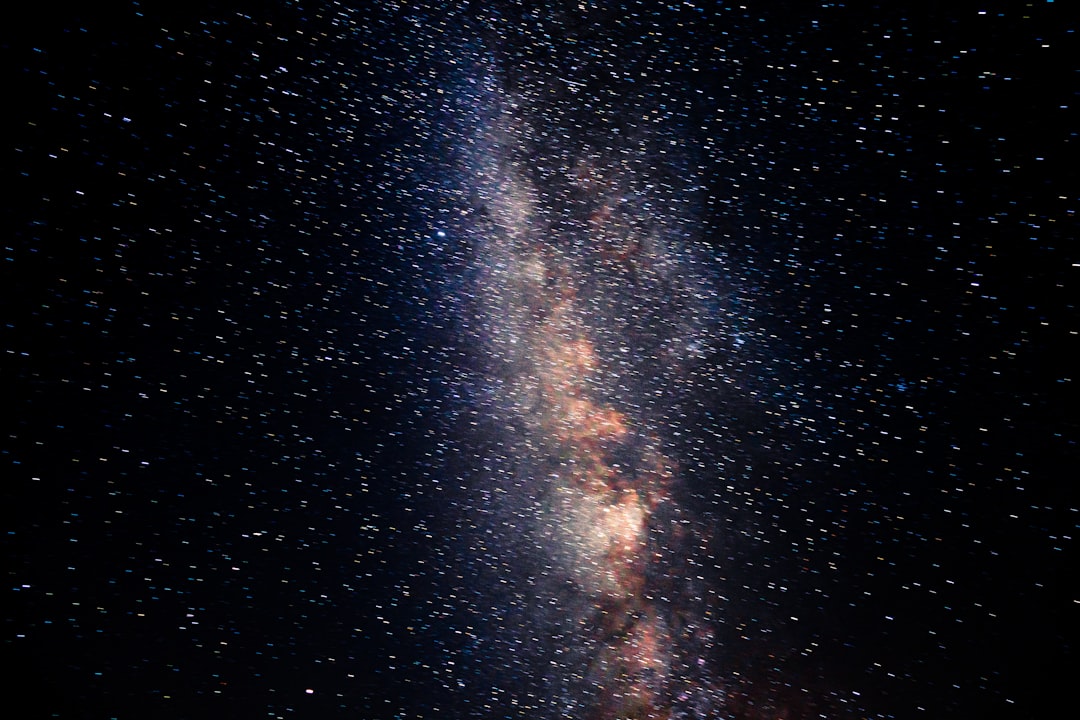
The Milky Way, our galactic home, is a dynamic and intricate system, far from a static entity in the vast cosmic ocean. Its intricate dance through space is a complex interplay of gravitational forces, cosmic collisions, and internal dynamics that have shaped its present form and will continue to dictate its future. Understanding the Milky Way’s movement is not merely an academic exercise; it provides crucial insights into the formation and evolution of galaxies, the distribution of matter in the universe, and ultimately, our place within the grand cosmic tapestry.
The most fundamental aspect of the Milky Way’s movement is its rotation. Like a colossal cosmic pinwheel, its stars, gas, and dust revolve around a central point, a supermassive black hole known as Sagittarius A (Sgr A). This rotation is not uniform, however, and exhibits distinct characteristics across different galactic components.
Differential Rotation
The Milky Way’s rotation is not a rigid-body rotation, as one might observe in a spinning disc. Instead, it undergoes differential rotation. This means that objects at different distances from the galactic center orbit at different speeds. Stars and gas closer to the galactic center generally orbit faster than those further out. This phenomenon is a direct consequence of Kepler’s laws of planetary motion, extended to a galactic scale. The gravitational pull from the concentrated mass at the center is stronger on closer objects, requiring them to move faster to maintain their orbits.
The Rotation Curve
Astronomers plot the orbital speed of stars and gas as a function of their distance from the galactic center, creating what is known as a galaxy’s rotation curve. For the Milky Way, this curve reveals a perplexing anomaly. While the inner regions show increasing orbital speeds with distance, indicating a concentration of mass, the outer regions maintain remarkably constant orbital velocities, even at distances where the visible matter significantly thins out. This observation led to one of the most profound discoveries in modern astrophysics: the existence of dark matter.
Dark Matter’s Influence
The discrepancy between the observed rotation curve and the curve predicted based on visible matter alone strongly suggests the presence of an unseen, gravitationally interacting substance – dark matter. This mysterious component is thought to constitute approximately 85% of the total mass of the universe and forms a vast, spherical halo enveloping the Milky Way. Its gravitational influence extends far beyond the visible disc, providing the additional gravitational pull necessary to keep the outer stars and gas in their observed rapid orbits. Without dark matter, the outer regions of the Milky Way would spin much slower, and potentially even fly apart.
The movement of the Milky Way galaxy is a fascinating topic that has intrigued astronomers for years. Recent studies suggest that our galaxy is not only moving through space but is also part of a larger cosmic dance influenced by the gravitational pull of nearby galaxies and dark matter. For a deeper understanding of this phenomenon, you can explore a related article that delves into the dynamics of the Milky Way and its interactions with other celestial bodies. Check it out here: Freaky Science.
Our Solar System’s Journey
While we often perceive the Earth orbiting the Sun as our primary celestial motion, it is crucial to remember that our entire solar system is embedded within the Milky Way and participates in its grand galactic dance. This journey is characterized by a specific speed and orbit around the galactic center.
Solar System’s Orbital Path
The Sun, along with its retinue of planets, moons, asteroids, and comets, orbits the galactic center at an average speed of approximately 220 kilometers per second (about 490,000 miles per hour). At this incredible velocity, it still takes an astonishing 230 million years to complete one full revolution around the galactic center. This period is known as a “galactic year.” To fully appreciate the vastness of this timescale, consider that during the last galactic year, dinosaurs still roamed the Earth.
Oscillations and Bobs
The Sun’s orbit around the galactic center is not a perfect, flat circle. Instead, it exhibits subtle oscillations both radially (moving slightly closer to and further from the center) and vertically (bobbing up and down through the galactic plane). These oscillations are caused by gravitational perturbations from other stars, gas clouds, and the broader galactic potential. The bobbing motion takes about 60 to 70 million years to complete one up-and-down cycle. These subtle movements can influence the frequency with which the solar system encounters dense regions of the galactic disc, potentially affecting stellar environments and even the flux of cosmic rays reaching Earth.
The Milky Way’s Global Motion
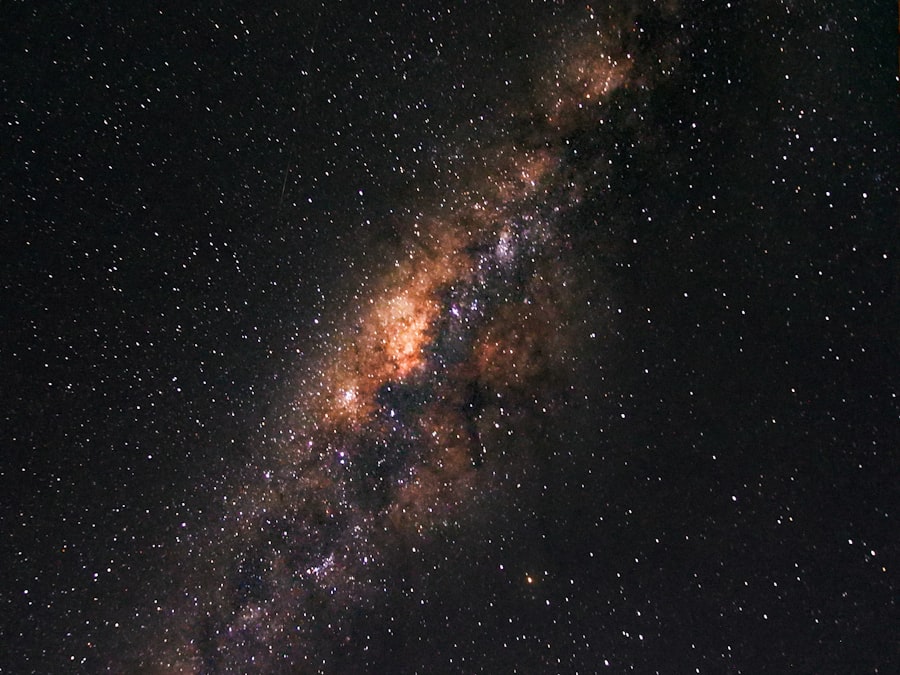
Beyond its internal rotation, the Milky Way itself is moving through space relative to other galaxies and galaxy clusters. This global motion is a result of the universe’s expansion and the gravitational influence of its larger cosmic neighbors.
Motion Relative to the Local Group
The Milky Way is a member of the Local Group, a modest collection of over 50 galaxies, primarily dominated by two large spiral galaxies: the Milky Way and the Andromeda Galaxy. These two galactic behemoths are gravitationally bound and are currently hurtling towards each other at an astonishing speed of approximately 110 kilometers per second. This inevitable collision, predicted to occur in about 4.5 billion years, is one of the most significant future events for our galaxy.
The Andromeda-Milky Way Collision
When the Andromeda and Milky Way galaxies collide, it will not be a head-on, star-crushing event as one might initially imagine. The vast distances between stars ensure that direct stellar collisions will be exceedingly rare. Instead, the gravitational interactions will cause both galaxies to distort, merge, and eventually coalesce into a larger, more elliptical galaxy, often referred to as “Milkomeda” or “Milkdromeda.” This process will involve a complex dance of gravitational tides, starbursts, and the eventual settling of stars into new orbits within the merged entity. Our solar system will likely be flung into a new, more distant, but still stable, orbit within this new galactic structure.
Motion Relative to the Cosmic Microwave Background
On a much larger scale, the Milky Way’s movement can be observed relative to the Cosmic Microwave Background (CMB), the faint afterglow of the Big Bang. The CMB acts as a universal reference frame, and observations have shown that the Local Group, including the Milky Way, is streaming through space at an impressive speed of approximately 600 kilometers per second towards a region of enhanced gravitational attraction. This “peculiar velocity” is attributed to the combined gravitational pull of vast structures like the Hydra-Centaurus Supercluster and the mysterious “Great Attractor.”
Galactic Interactions and Mergers
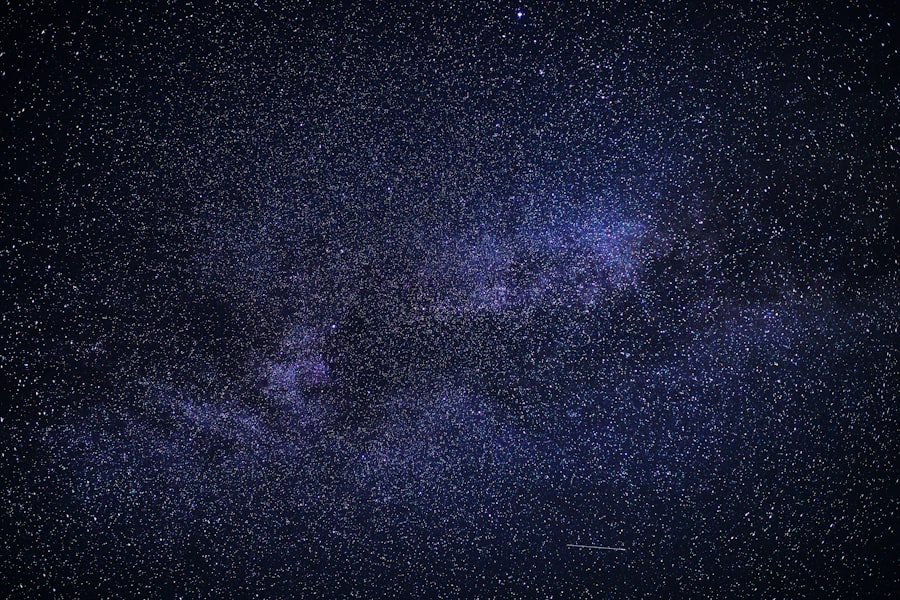
The history of the Milky Way, and indeed all galaxies, is punctuated by numerous interactions and mergers with smaller galaxies. These events are crucial drivers of galactic evolution, shaping their morphology, star formation rates, and distribution of matter.
Dwarf Galaxy Accretion
The Milky Way is not a solitary figure in its cosmic neighborhood. It is surrounded by a multitude of smaller dwarf galaxies, many of which are locked in gravitational embrace, slowly being torn apart and absorbed into our larger galaxy. Evidence for these ongoing mergers comes from stellar streams – long, thin filaments of stars that were once part of a smaller galaxy but have been gravitationally stretched and dispersed by the Milky Way’s tidal forces. Examples include the Sagittarius Dwarf Spheroidal Galaxy stream and the Gaia Enceladus/Sausage stream, which both speak to a violent galactic past.
Tidal Forces and Galactic Cannibalism
When a smaller galaxy approaches a larger one like the Milky Way, the larger galaxy’s immense gravitational field exerts differential forces across the smaller galaxy. The side of the dwarf galaxy closer to the Milky Way experiences a stronger gravitational pull than the side further away. This difference in gravitational force, known as tidal forces, acts to stretch and pull apart the smaller galaxy, much like the Moon’s gravity creates tides on Earth. Over time, these tidal forces can strip stars, gas, and dark matter from the dwarf galaxy, gradually incorporating them into the Milky Way. This process, often termed “galactic cannibalism,” is a fundamental mechanism of galactic growth.
Ram Pressure Stripping
Beyond tidal forces, another significant interaction mechanism is ram pressure stripping. When a galaxy moves through a medium, such as the hot gas in a galaxy cluster, the pressure of this medium can strip away the galaxy’s own gas. This is analogous to the wind stripping leaves from a tree. For the Milky Way, this effect is less pronounced compared to galaxies in dense clusters, but it still plays a role in the evolution of its gas halo and the accretion of matter from the intergalactic medium.
The movement of the Milky Way galaxy is a fascinating topic that has intrigued astronomers for years. Recent studies suggest that our galaxy is not only moving through space but is also part of a larger cosmic dance influenced by the gravitational pull of neighboring galaxies. For a deeper understanding of this phenomenon, you can explore a related article that delves into the dynamics of galactic motion and the forces at play in the universe. To read more about this captivating subject, check out this insightful piece on galactic movement.
Future Evolution of the Milky Way
| Metric | Value | Explanation |
|---|---|---|
| Velocity of Milky Way | 600 km/s | Speed at which the Milky Way is moving relative to the Cosmic Microwave Background |
| Direction of Movement | Approximately towards the constellation Leo | Direction of the Milky Way’s motion through space |
| Cause: Gravitational Attraction | Nearby galaxy clusters | Massive structures like the Virgo Cluster and the Great Attractor pull the Milky Way |
| Local Group Velocity | ~627 km/s | Velocity of the Local Group (including Milky Way) relative to the Cosmic Microwave Background |
| Dark Matter Influence | Significant | Dark matter’s gravitational effects contribute to the Milky Way’s motion |
| Expansion of Universe | Ongoing | Cosmic expansion affects large-scale motion but local gravitational forces dominate Milky Way’s movement |
The Milky Way’s movement is not just a story of its past and present; it also dictates its future. The culmination of all these dynamic processes will transform our galaxy over billions of years.
The Milkomeda Merger and Formation of an Elliptical Galaxy
As previously mentioned, the most dramatic future event for the Milky Way is its collision with the Andromeda Galaxy. This monumental merger will fundamentally alter the structure of both galaxies, eventually leading to the formation of a single, much larger elliptical galaxy. While the individual stars are unlikely to collide, their orbits will be drastically perturbed, and the gravitational turbulence will trigger intense bursts of star formation as gas clouds collide and condense. The two supermassive black holes at the centers of each galaxy will also eventually merge, releasing enormous amounts of energy in the process.
Continued Accretion and Growth
Even after the Andromeda merger, the newly formed elliptical galaxy will continue to grow through the accretion of smaller satellite galaxies. The cosmic web, a vast network of filaments containing galaxies and dark matter, ensures a steady supply of smaller systems that will be drawn into the gravitational embrace of the larger entity. This continuous process of minor mergers will contribute to the ongoing evolution of the galaxy, adding new stars, gas, and dark matter to its growing mass.
The Role of Dark Energy and the Expanding Universe
On the grandest scales, the ultimate fate of the Milky Way and its merged successor is tied to the expansion of the universe, driven by dark energy. As the universe continues to expand and accelerate, galaxies that are not gravitationally bound to each other will recede beyond our observable horizon. While the Local Group and its merged successor will remain a gravitationally bound entity, the vast cosmic ocean will become increasingly empty and isolated. Over truly immense timescales, even the stars within our galaxy will eventually exhaust their fuel, and the galaxy will become a dim collection of white dwarfs, neutron stars, and black holes, slowly cooling and fading into the cosmic night.
In conclusion, the Milky Way’s movement is a multifaceted phenomenon, encompassing everything from the frantic dance of stars around its supermassive black hole to its majestic drift through the expanding cosmos. By meticulously observing and analyzing these motions, astronomers piece together a grand narrative of galactic evolution, revealing the profound interconnectedness of all cosmic structures and offering a captivating glimpse into the past, present, and future of our galactic home. The journey of the Milky Way is a testament to the dynamic and ever-evolving nature of the universe, a constant reminder that even the most colossal structures are in a perpetual state of flux.

WATCH NOW ▶️ Our Galaxy Is Sliding Toward a Cosmic Drain
FAQs
1. Why is the Milky Way galaxy moving?
The Milky Way is moving due to the gravitational pull from other galaxies and large-scale structures in the universe. These gravitational forces cause our galaxy to move through space as part of the overall cosmic flow.
2. What is the Milky Way moving towards?
The Milky Way is moving towards a region known as the Great Attractor, a massive concentration of galaxies and dark matter that exerts a strong gravitational pull on our galaxy and others in the local universe.
3. How fast is the Milky Way moving?
The Milky Way is moving at an estimated speed of about 600 kilometers per second (approximately 1.3 million miles per hour) relative to the cosmic microwave background radiation.
4. Does the movement of the Milky Way affect our solar system?
While the Milky Way’s movement affects the galaxy as a whole, the solar system’s motion within the Milky Way is more relevant to our local environment. The solar system orbits the center of the Milky Way at about 828,000 kilometers per hour, but the galaxy’s overall movement does not have a direct impact on daily life on Earth.
5. How do scientists measure the Milky Way’s movement?
Scientists measure the Milky Way’s movement by observing the cosmic microwave background radiation and the redshift of distant galaxies. These observations help determine the velocity and direction of our galaxy’s motion through space.