
The immense tapestry of the cosmos, woven with the luminous threads of galaxies and nebulae, has long captivated human curiosity. For millennia, astronomers have strived to map its intricate patterns, to understand its grand architecture, and to unravel its deepest secrets. Yet, in this vast expanse, a profound enigma has emerged, a void so colossal it challenges our very comprehension of cosmic structure. This is not merely an empty patch of space; it is a region of astonishing scarcity, a cosmic desert that has left scientists searching for answers.
The Discovery of an Unprecedented Emptiness
The journey to understanding this vast void began with the meticulous mapping of the universe’s large-scale structure. Astronomers, using powerful telescopes and sophisticated instruments, have cataloged the positions of millions of galaxies. These galaxies are not randomly scattered; they tend to clump together, forming clusters and superclusters, which are then organized into filamentary structures, resembling a cosmic web. Interspersed within this web are regions of lower density, often referred to as voids. However, the void in question, officially designated the Boötes Void, stands in stark contrast to these more commonplace galactic vacancies.
The initial hints of this anomaly emerged in the late 1970s and early 1980s. As astronomical surveys grew in scope and precision, they began to reveal regions where galaxies were conspicuously absent. The Boötes Void, named after the constellation in which it appears to lie, was identified by astronomers Robert Kirshner and his colleagues. Their groundbreaking survey, using the 1.5-meter telescope at the Kitt Peak National Observatory, revealed a startling lack of galaxies within a specific, enormous region of space. The implication was staggering: a volume of the universe so vast that it should have contained thousands, if not millions, of galaxies, was found to be almost entirely devoid of them.
Quantifying the Cosmic Absence
To truly grasp the magnitude of the Boötes Void, one must consider its sheer scale. Estimates place its diameter at approximately 250 to 330 million light-years. To put this into perspective, our own Milky Way galaxy is about 100,000 light-years across. This means that the Boötes Void is roughly 2,500 to 3,300 times wider than our galaxy. Within this immense volume, astronomers have detected only a handful of galaxies, a minuscule number compared to what is expected in a region of such size based on our understanding of cosmic evolution. The density of matter within the void is significantly lower than the cosmic average, making it one of the largest known underdensities in the universe.
The initial surveys were crucial in establishing the existence and approximate size of the void. However, the quest to understand its precise boundaries and the nature of its emptiness continued with subsequent, more detailed observations. The Sloan Digital Sky Survey (SDSS), one of the most ambitious astronomical projects ever undertaken, has provided an unprecedentedly detailed map of a significant portion of the observable universe, further refining our understanding of the Boötes Void and its surroundings.
Recent discoveries in astrophysics have shed light on some of the most intriguing phenomena in the universe, including the largest void known to exist, often referred to as the “Great Void.” This vast region of space, which is remarkably empty compared to surrounding areas, raises questions about the formation of galaxies and the overall structure of the universe. For more insights into this fascinating topic, you can read a related article that explores the implications of such cosmic voids on our understanding of the universe at Freaky Science.
The Cosmic Web and the Structure of the Universe
Understanding the Boötes Void necessitates placing it within the broader context of the universe’s large-scale structure, often referred to as the “cosmic web.” This web is a vast, interconnected network of galaxies, galaxy clusters, and filaments of dark matter and gas, interspersed with the aforementioned voids. The prevailing cosmological model, known as the Lambda-CDM model, describes the universe as originating from a nearly uniform state of high density and temperature shortly after the Big Bang.
From Homogeneity to Structure
In the early universe, matter was distributed almost perfectly evenly. However, tiny quantum fluctuations, amplified by cosmic inflation, created slight variations in density. These denser regions, over billions of years, attracted more matter through gravity, eventually forming the stars, galaxies, and clusters we observe today. Conversely, less dense regions became even emptier, evolving into the cosmic voids. The cosmic web is therefore a direct consequence of gravity acting on these initial density fluctuations.
The Boötes Void, despite its exceptional size, is not an anomaly that completely contradicts this model. Instead, it represents an extreme, perhaps rare, outcome of the gravitational collapse and expansion processes. Imagine a vast, initial patch of space that was slightly less dense than average. Due to the expansion of the universe, this region would have expanded more rapidly than its surroundings, leading to an increasing deficit of matter over time. Its size suggests that it might have originated from a particularly large initial underdensity.
The Role of Dark Matter
Crucially, the cosmic web is not solely composed of visible matter. Dark matter, an invisible substance that interacts only through gravity, plays a dominant role in shaping the universe’s structure. Dark matter halos provide the gravitational scaffolding onto which ordinary matter, such as gas and stars, accretes to form galaxies. Therefore, the distribution of dark matter dictates the distribution of galaxies.
The formation of voids like Boötes is thought to be driven by the gravitational pull of surrounding dense regions. As matter congregates in filaments and clusters, it effectively drains the surrounding less dense areas, causing them to become emptier. The Boötes Void, in this context, is a region that has been significantly depleted of both dark matter and baryonic matter due to the gravitational influence of the denser structures that surround it.
Explaining the Anomaly: Theories and Hypotheses

The sheer scale of the Boötes Void has prompted a range of theoretical investigations and hypotheses aimed at explaining its existence. While the standard cosmological model provides a general framework, the specific characteristics of such a massive void suggest that it might be an extreme, but plausible, manifestation of known physical processes, or it might hint at subtle refinements to our current understanding.
The Gravitational Scavenging Mechanism
The most widely accepted explanation for the formation of cosmic voids, including the Boötes Void, relies on the process of gravitational scavenging. In the early universe, the slight inhomogeneities in matter distribution led to some regions being less dense than others. These underdense regions, subjected to the relentless expansion of the universe and the gravitational pull of denser neighboring regions, have effectively been “emptied out” of matter over billions of years. The matter that would have otherwise populated this region has been gravitationally drawn towards the filaments and clusters that surround the void.
This process is analogous to how a sponge, if dipped in water and then squeezed, will have drier areas where the water has been pushed out. The Boötes Void can be seen as a vast cosmic sponge that has been “squeezed” by the gravitational forces of the surrounding universe. The larger the initial underdensity, the larger the resulting void would be. The Boötes Void likely originated from an exceptionally large initial underdensity.
Alternative Cosmological Scenarios
While the gravitational scavenging mechanism is the leading explanation, the extreme nature of the Boötes Void has also led some scientists to consider more speculative hypotheses. These often involve questioning certain assumptions within the standard Lambda-CDM model or exploring alternative cosmological scenarios.
One such idea, though not widely supported, involves the possibility of exotic dark matter interactions or even the existence of sterile neutrinos that could influence the distribution of matter on large scales. Another, more theoretically grounded, avenue of investigation concerns the homogeneity of the universe. The standard model assumes that the universe is statistically homogeneous and isotropic on sufficiently large scales. However, if the universe were not perfectly homogeneous at the time of inflation, or if there were some fundamental asymmetry, it could lead to the formation of such vast, preferential underdensities.
The Influence of Early Universe Physics
The formation of the Boötes Void is intrinsically linked to the physics of the early universe. The precise nature of inflation, the rapid expansion phase that is thought to have occurred fractions of a second after the Big Bang, could have played a significant role. Variations in the inflationary field could have imprinted the initial density fluctuations that ultimately led to the formation of structures, including voids.
The potential existence of other “universes” or “bubble universes” in a multiverse scenario has also been vaguely linked to such cosmic anomalies, though this remains highly speculative. The idea is that our universe might have formed from a particularly underdense region within a larger multiverse. However, there is currently no observational evidence to support such grander cosmological frameworks.
The Boötes Void and the Quest for Understanding Dark Energy
The discovery and study of cosmic voids, including the Boötes Void, have become increasingly important in the ongoing quest to understand dark energy. Dark energy is the mysterious force that is currently accelerating the expansion of the universe, and its nature remains one of the biggest puzzles in modern cosmology.
Dark Energy’s Effect on Cosmic Structures
Dark energy affects the expansion rate of the universe, and this rate has changed over cosmic history. In the early universe, gravity dominated, and expansion was decelerating. As the universe aged and matter density decreased, dark energy’s influence became more significant, leading to the current accelerated expansion.
Cosmic voids are particularly sensitive to the effects of dark energy. As the universe expands, voids grow larger. The rate at which they grow is directly influenced by the expansion rate and the properties of dark energy. By studying how the size and number of voids evolve over cosmic time, astronomers can place constraints on the nature of dark energy.
Probing Dark Energy with Voids
The Boötes Void, with its immense size and relative emptiness, serves as a unique laboratory for probing dark energy. Scientists can observe the galaxies at the edges of the void and study the redshift of their light, which tells us how fast they are receding from us due to the expansion of the universe. By analyzing the distribution of these galaxies and the dynamics of any faint matter that might exist within the void, astronomers can infer the expansion history of this region.
Comparing the observed expansion rate of the Boötes Void with predictions from different dark energy models can help scientists determine which models best fit the data. While the Boötes Void itself may not be expanding faster than expected due to dark energy, its very existence as a large underdensity provides a context for studying the overall expansion and its drivers. The emptiness of the void means there are fewer gravitational sources to complicate the interpretation of the expansion.
Testing Cosmological Models
The study of voids like Boötes is crucial for testing the robustness of the Lambda-CDM model. If observations of these structures deviate significantly from the model’s predictions, it could indicate that our understanding of dark energy or other fundamental aspects of cosmology needs revision. The precise mapping of voids and their evolution offers a complementary approach to studying dark energy through methods like observing supernovae or the cosmic microwave background.
Recent discoveries in astrophysics have revealed fascinating insights about the largest void in the universe, known as the Giant Void, which stretches across billions of light-years and challenges our understanding of cosmic structure. For a deeper exploration of this phenomenon and its implications for the universe, you can read more in this related article on Freaky Science. Scientists continue to study these vast emptinesses to uncover the mysteries of dark matter and the formation of galaxies, making it an exciting time for researchers in the field.
The Ongoing Exploration and Future Prospects
| Metric | Value | Description |
|---|---|---|
| Name | Boötes Void | One of the largest known voids in the universe |
| Diameter | 330 million light-years | Approximate size across the void |
| Distance from Earth | 700 million light-years | Distance to the center of the Boötes Void |
| Volume | ~1.9 x 10^8 cubic megaparsecs | Estimated volume of the void |
| Galaxy Count | ~60 | Number of galaxies found inside the void (very sparse) |
| Discovery Year | 1981 | Year when the Boötes Void was discovered |
The Boötes Void, despite being discovered decades ago, continues to be a subject of intense scientific interest. Its immense scale and the mystery surrounding its almost complete emptiness continue to drive further research and technological advancements in astronomical observation.
Advanced Telescopes and Observational Techniques
Future generations of telescopes, such as the James Webb Space Telescope and planned ground-based observatories like the Extremely Large Telescope, will provide unprecedented capabilities for studying the Boötes Void and other cosmic voids in greater detail. These instruments will be able to detect fainter galaxies and probe deeper into the void, potentially revealing a more complete picture of its contents, if any.
Improved spectroscopic techniques will allow for more precise measurements of the redshifts of galaxies, providing a more accurate three-dimensional map of the void and its surrounding structures. The study of the intergalactic medium, the tenuous gas that exists between galaxies, within and around the void will also offer crucial insights into its formation and evolution.
Simulations and Computational Cosmology
Alongside observational advancements, sophisticated computer simulations are playing an increasingly vital role in understanding the Boötes Void. Cosmological simulations, based on the Lambda-CDM model and incorporating our understanding of gravity, dark matter, and dark energy, can recreate the formation of large-scale structures, including voids, over billions of years of cosmic evolution.
By running numerous simulations with varying parameters, scientists can compare the simulated voids with the observed Boötes Void to identify the most plausible formation scenarios. These simulations help researchers to refine their models and to predict what other large voids might exist in the universe and what their characteristics might be.
The Enduring Mystery and the Frontiers of Knowledge
The Boötes Void, in its profound emptiness, serves as a constant reminder of the vastness and complexity of the universe. It is a cosmic monument to the power of gravity and the enigmatic nature of dark energy. While current theories provide a framework for its existence, the sheer scale of this void suggests that our understanding of cosmic evolution may still have gaps to fill.
Each new observation, each refined simulation, brings us closer to unraveling the secrets of this cosmic anomaly. The Boötes Void is not just a void in space; it is a void in our knowledge, a frontier that beckons us to explore further, to push the boundaries of our understanding, and to continue our quest to comprehend the magnificent and often mysterious universe we inhabit. The ongoing exploration of this colossal emptiness promises to yield further insights into the fundamental workings of the cosmos, reminding us that even in the deepest voids, there are profound lessons to be learned.
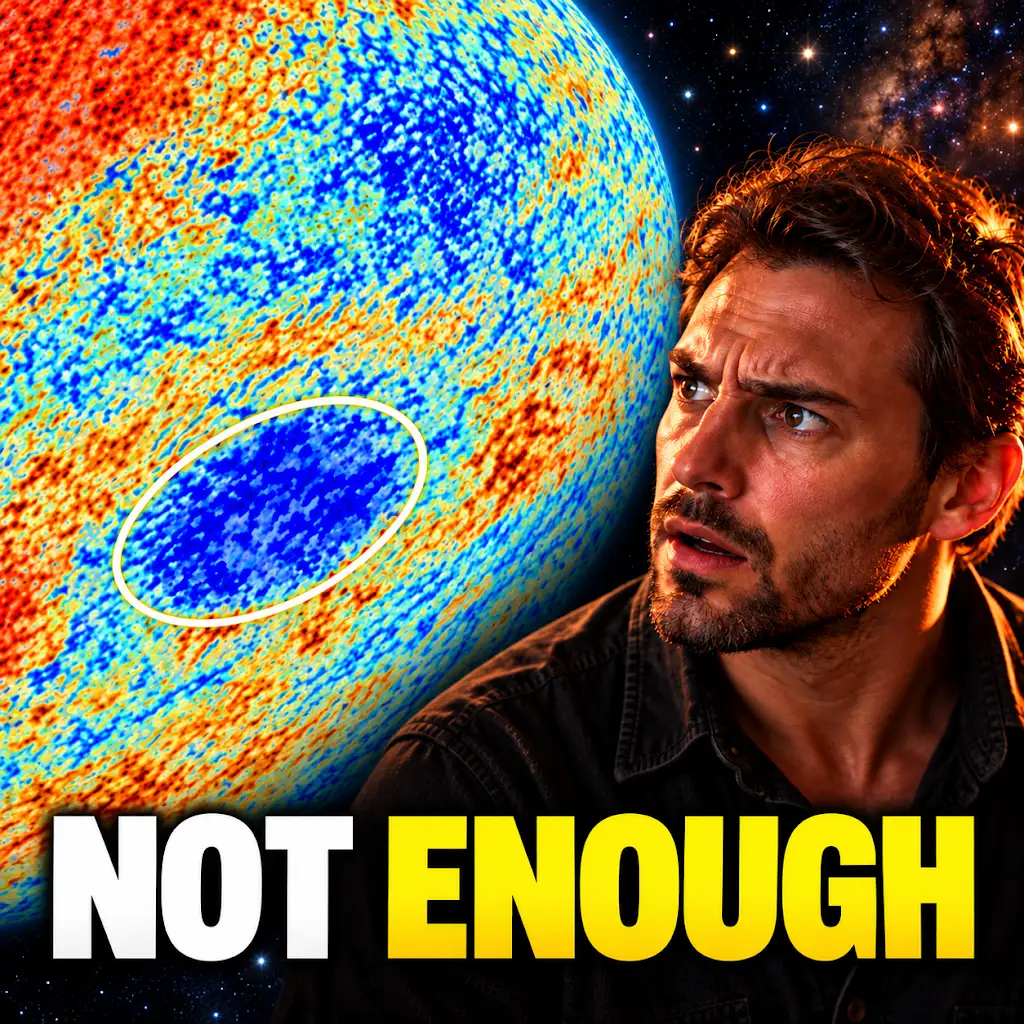
The Universe’s Cold Spot Has an Explanation. It’s Not Enough.
FAQs
What is the largest void in the universe?
The largest void in the universe is known as the Giant Void, which is a vast region of space that contains very few galaxies and other cosmic matter.
How big is the Giant Void?
The Giant Void is estimated to be about 1.3 billion light-years across, making it one of the largest known voids in the universe.
What causes the formation of voids in the universe?
Voids in the universe are formed due to the expansion of the universe, which leads to the stretching and thinning out of matter in certain regions, creating vast empty spaces.
What impact do voids have on the universe?
Voids play a crucial role in the large-scale structure of the universe, influencing the distribution of galaxies and clusters of galaxies. They also provide valuable insights into the nature of dark matter and dark energy.
How do scientists study voids in the universe?
Scientists study voids in the universe using telescopes and other observational tools to analyze the distribution of galaxies and cosmic microwave background radiation, as well as conducting simulations and theoretical models to understand the formation and evolution of voids.