You stand before your microwave, a familiar rectangle humming with latent power. With a flick of your wrist, you select a pre-programmed setting, or perhaps you’re feeling adventurous and choose a manual time. A few minutes later, a gentle beep signals your meal is ready – piping hot, perfectly reheated, or even cooked from scratch. It’s a mundane miracle, a convenience so ingrained in your daily life that you rarely pause to consider its origins. But this humble appliance, the microwave oven, is a testament to human ingenuity, a revolutionary invention born from a desire for speed and ease in the kitchen.
You might be surprised to learn that the microwave oven wasn’t born in a kitchen, but in the heart of a military research lab. The year was 1945, and the world was emerging from the shadow of World War II. Percy Spencer, an engineer at Raytheon, was working on magnetrons, the vacuum tubes that powered radar equipment. During one of these experiments, he noticed something peculiar. While standing near an active magnetron, a candy bar in his pocket began to melt. This accidental discovery, a seemingly insignificant anomaly, sparked a cascade of curiosity and experimentation that would ultimately change the way you cook forever.
A Fortuitous Discovery: The Melting Chocolate Bar
Imagine the scene: the hum of machinery, the glow of vacuum tubes, the scent of ozone in the air. Percy Spencer, a man known for his keen observational skills, was working diligently on a project vital to national defense. He wasn’t thinking about dinner or leftovers, but about the invisible waves that guided ships and planes. Then, that inexplicable warmth. A simple chocolate bar, nestled innocently in his pocket, was succumbing to an unseen force. This wasn’t just a melted treat; it was a profound observation. It demonstrated that electromagnetic waves could heat matter, and in doing so, held the potential to transform something as fundamental as food preparation.
The Principle of Dielectric Heating: Understanding the Magic
Spencer’s curiosity was piqued. He began to experiment, not with chocolate this time, but with other food items. He discovered that these same microwaves, the ones used for radar, could cook food remarkably quickly. The underlying principle at play is called dielectric heating. When you place food in a microwave oven, the magnetron generates electromagnetic waves that oscillate at a specific frequency. These waves penetrate the food and interact with water molecules, fats, and sugars within it. These molecules are polar, meaning they have a positive and a negative end. The oscillating microwaves cause these polar molecules to vibrate rapidly, attempting to align themselves with the changing electromagnetic field. This rapid vibration generates friction, and it’s this friction that creates heat, cooking the food from the inside out. It’s a fascinating dance of energy and matter, all happening within your kitchen.
Early Experiments and the First Microwave Oven
Spencer, driven by his discovery, began to meticulously document his findings. He placed popcorn kernels near a magnetron, and they popped. He even cooked an egg, which, as you might imagine, resulted in a rather spectacular explosion. These early experiments, while perhaps a bit messy, were crucial in understanding the capabilities and limitations of this new technology. The first “microwave oven” was a far cry from the sleek appliances you have today. It was a large, bulky apparatus, over five feet tall and weighing hundreds of pounds. It was dubbed the “Radarange” and was initially intended for commercial use, such as in restaurants and cafeterias, where its speed and efficiency could be put to good use.
Microwave ovens were invented as a result of a serendipitous discovery made by Percy Spencer while working with radar technology during World War II. The invention transformed cooking by providing a faster and more efficient way to heat food, revolutionizing meal preparation in households around the world. For a deeper understanding of the science behind microwave technology and its impact on modern cooking, you can read more in this related article at Freaky Science.
From Industrial Giant to Household Companion: The Evolution of the Microwave
The initial “Radarange” was a marvel of engineering, but its size and cost made it impractical for the average household. The journey from a colossal industrial machine to the compact appliance you use daily was a long and iterative process, driven by the desire to make this revolutionary technology accessible to everyone. Raytheon, along with other innovators, worked tirelessly to miniaturize the magnetron and develop safer, more user-friendly designs.
The “Radarange”: A Commercial Pioneer
Your microwave’s ancestor, the Radarange, was a significant achievement. It showcased the immense potential of microwave cooking, demonstrating how rapidly food could be prepared. Imagine the impact on busy kitchens in the post-war era. Instead of lengthy cooking times, chefs could prepare dishes in a fraction of the time, improving efficiency and customer service. However, the Radarange was incredibly expensive, costing thousands of dollars, placing it well out of reach for most individual consumers. Its primary audience was industrial and institutional kitchens, where the speed and convenience justified the significant investment.
The Drive for Miniaturization and Affordability
The true revolution, however, would only come when the microwave oven could find its way into your home. This meant tackling the significant challenges of size and cost. Engineers focused on developing smaller, more efficient magnetrons. They also worked on improving the insulation and shielding to ensure the microwaves were contained within the oven cavity, making them safe for use around people. The development of solid-state electronics played a crucial role in this miniaturization process, allowing for more compact and integrated circuits.
The Birth of the Countertop Model: A Kitchen Revolution
By the late 1960s and early 1970s, the first countertop microwave ovens began to appear. These were a revelation. Suddenly, the power of microwave cooking was available to you, the home cook. Early models were still relatively expensive compared to traditional ovens, but their speed and convenience were undeniable. You could now reheat leftovers in minutes, thaw frozen foods in a flash, and even cook simple meals without the long preheating times or the need for constant attention that conventional ovens demanded. This marked the true democratization of microwave technology.
The Science Behind the Speed: How Microwaves Work Their Magic
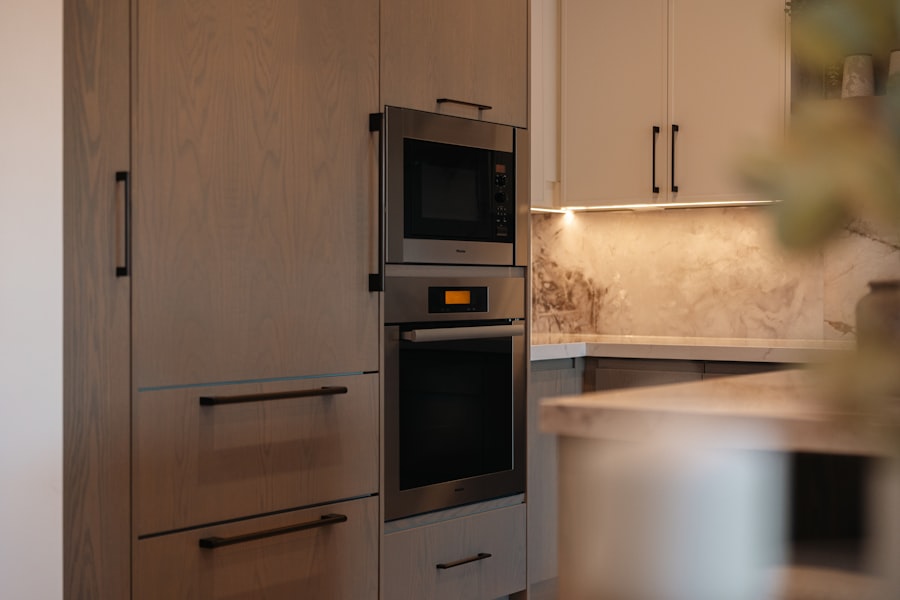
You’ve likely experienced the astonishing speed of your microwave, but have you ever wondered about the science that makes it possible? It’s not just magic; it’s a clever application of physics that rapidly heats food through the interaction of electromagnetic waves with water molecules.
Understanding Electromagnetic Waves and Food
The core of your microwave oven is the magnetron, a device that generates electromagnetic waves within a specific frequency range, typically around 2.45 gigahertz. These waves are non-ionizing, meaning they don’t have enough energy to damage the molecular structure of food. Instead, their power lies in their ability to interact with polar molecules, primarily water, which makes up a significant portion of most foods.
The Role of Water Molecules: The Key to Fast Cooking
Water molecules are dipole molecules, meaning they have a slight positive charge on one end and a slight negative charge on the other. When these molecules are exposed to the rapidly oscillating electromagnetic field produced by the magnetron, they attempt to align themselves with the changing field. This rapid rotation and vibration of water molecules generates heat through friction. The more water content a food has, the faster it will cook in a microwave. This is why foods like vegetables and soups heat up so quickly.
Penetration Depth and Even Cooking: The Limitations and Solutions
Microwaves penetrate food to a certain depth, typically about one to two centimeters. This means that the outer layers of your food will heat up faster than the inner core. This is why you often need to stir or rotate your food midway through the cooking process to ensure even heating. This also explains why larger, denser foods might not cook as evenly as smaller or thinner items. Manufacturers have implemented various features to address this, such as turntables that rotate the food and wave-guide designs that distribute the microwaves more evenly within the cavity.
Beyond Reheating: The Versatile Applications of Microwave Ovens

While reheating leftovers and thawing frozen meals are common uses, you might be surprised to discover the full range of culinary possibilities that your microwave oven unlocks. It’s not just a convenience appliance; it’s a versatile tool that can handle a surprising variety of cooking tasks.
Quick Cooking and Meal Preparation: Saving You Time and Effort
The most obvious benefit is speed. You can cook a baked potato in mere minutes, steam vegetables to tender perfection in a few short bursts, or even prepare a quick mug cake for a sweet craving. For busy individuals or families, the microwave can be a lifesaver, enabling you to prepare a nutritious meal even when time is scarce. No more waiting for the oven to preheat; your meal is ready in a fraction of the time.
Defrosting and Thawing: A Gentle Approach
Forget the days of leaving frozen meat out on the counter for hours, hoping it will thaw before it spoils. Your microwave offers a controlled and significantly faster way to defrost food. Most microwaves have specific defrost settings that use lower power levels and pulsing to gently thaw your food without cooking the outer edges. This not only saves time but also reduces the risk of bacterial growth.
Specialized Microwave Cooking: Expanding Your Culinary Horizons
You might not think of it, but your microwave can be used for more than just basic heating. You can use it to temper chocolate, a process that requires precise temperature control. You can steam fish and vegetables, retaining their nutrients and flavor. Some recipes even call for using the microwave to blanch ingredients or to partially cook them before finishing them in a conventional oven for a perfect crispy exterior. The culinary world is constantly discovering new ways to leverage the power of the microwave.
Microwave ovens were invented as a result of the quest for more efficient cooking methods, revolutionizing the way we prepare food. The technology was initially discovered accidentally when Percy Spencer, an engineer working with radar technology, noticed that a chocolate bar melted in his pocket while he was working on a magnetron. This serendipitous moment led to the development of the microwave oven, which quickly gained popularity for its speed and convenience. For a deeper understanding of the fascinating history behind this invention, you can read more in this related article here.
The Impact and Legacy: A Kitchen Essential for Generations
| Reason | Explanation |
|---|---|
| Efficient Cooking | Microwave ovens were invented to provide a faster and more efficient way of cooking food compared to traditional methods. |
| Convenience | They were designed to offer a convenient way to heat up and cook food, especially for busy individuals and families. |
| Technology Advancement | The invention of microwave ovens was a result of advancements in technology and the desire to innovate in the kitchen. |
| Food Preservation | They were also created to help preserve the nutritional value and flavor of food while cooking it quickly. |
The invention of the microwave oven has had a profound and lasting impact on how you cook, eat, and manage your time. It has become an indispensable appliance in millions of homes worldwide, transforming kitchens and lifestyles. Its legacy is one of convenience, speed, and accessibility, fundamentally changing the culinary landscape.
Transforming Busy Lifestyles: More Time for Life
In today’s fast-paced world, time is a precious commodity. The microwave oven has played a significant role in giving you back valuable minutes, even hours, each week. No longer are you tethered to the kitchen for extended periods. You can prepare meals quickly, reheat leftovers efficiently, and get on with your day. This newfound freedom has allowed for more leisure time, more time with family, and a less stressful approach to meal preparation.
Redefining Kitchen Design and Functionality
The advent of the microwave oven also influenced kitchen design. Its compact size allowed for integration into cabinets and countertops, freeing up valuable space previously occupied by bulkier appliances. The emphasis on speed and convenience has also led to the development of other time-saving kitchen gadgets, further streamlining the cooking process.
A Legacy of Innovation and Accessibility
The microwave oven is a prime example of how scientific discovery can translate into practical, everyday solutions that improve lives. From its military origins to its ubiquitous presence in your kitchen, it represents a remarkable journey of innovation. It has made cooking more accessible to a wider range of people, including those with limited time or cooking experience, and has become a staple for generations, a testament to its enduring utility and revolutionary impact. As you continue to rely on its efficiency, remember the curious engineer and the melting candy bar that started it all, a simple spark that ignited a culinary revolution.

Your Microwave Doesn’t Work the Way You Think
FAQs
1. When were microwave ovens invented?
Microwave ovens were invented in 1946 by Percy Spencer, an engineer at Raytheon Corporation.
2. What was the original purpose of inventing microwave ovens?
The original purpose of inventing microwave ovens was to create a more efficient way to heat food using microwave radiation.
3. How do microwave ovens work?
Microwave ovens work by emitting microwave radiation, which causes water molecules in food to vibrate and generate heat, thus heating the food quickly and efficiently.
4. What impact did the invention of microwave ovens have on society?
The invention of microwave ovens revolutionized the way people cook and heat food, providing a quick and convenient method for food preparation.
5. What are some common uses of microwave ovens today?
Common uses of microwave ovens today include reheating leftovers, cooking frozen meals, defrosting food, and quickly heating up beverages.