
The Genesis of a New Visual Language
The world of digital displays has long been dominated by emissive technologies – screens that generate their own light, like the glowing pixels of LCDs and OLEDs. While these technologies offer vibrant colors and deep blacks, they also come with inherent drawbacks: high power consumption, eye strain from direct illumination, and a distinct lack of the paper-like aesthetic that has been a cornerstone of human communication for millennia. The quest for a display technology that could emulate the readability and energy efficiency of printed paper was a persistent dream for many. This dream, however, remained largely theoretical until the late 20th century, when a confluence of scientific inquiry, technological innovation, and entrepreneurial vision began to coalesce, laying the groundwork for what would eventually become the revolutionary Electronic Ink, or E Ink.
The story of E Ink is not a singular eureka moment, but rather a journey of scientific exploration and iterative development. It began with foundational research into the physics of electrophoresis, a phenomenon where charged particles move in response to an electric field. For decades, scientists had explored the potential of using this principle to create visual displays. Early attempts, however, were often hampered by issues of speed, color reproduction, and longevity. The challenge was to harness electrophoresis in a way that was both practical and commercially viable, capable of producing sharp, stable images with minimal power. This intricate puzzle required a deep understanding of material science, chemistry, and electrical engineering, a multidisciplinary approach that would define the development of E Ink. The very notion of “digital paper” was a radical departure, aiming to bridge the gap between the tangible world of print and the dynamic, interconnected realm of digital information. The potential applications were vast, from e-readers that could hold thousands of books to dynamic signage that could be updated remotely without the need for printing presses. This ambition fueled the sustained research and development efforts that were crucial to realizing the E Ink vision.
The invention of E Ink technology revolutionized the way we read and interact with digital content, providing a paper-like experience that is easy on the eyes. For those interested in exploring the fascinating journey of how E Ink was developed, a related article can be found at Freaky Science, which delves into the innovative processes and breakthroughs that led to this remarkable advancement in display technology.
The Electrophoretic Foundation
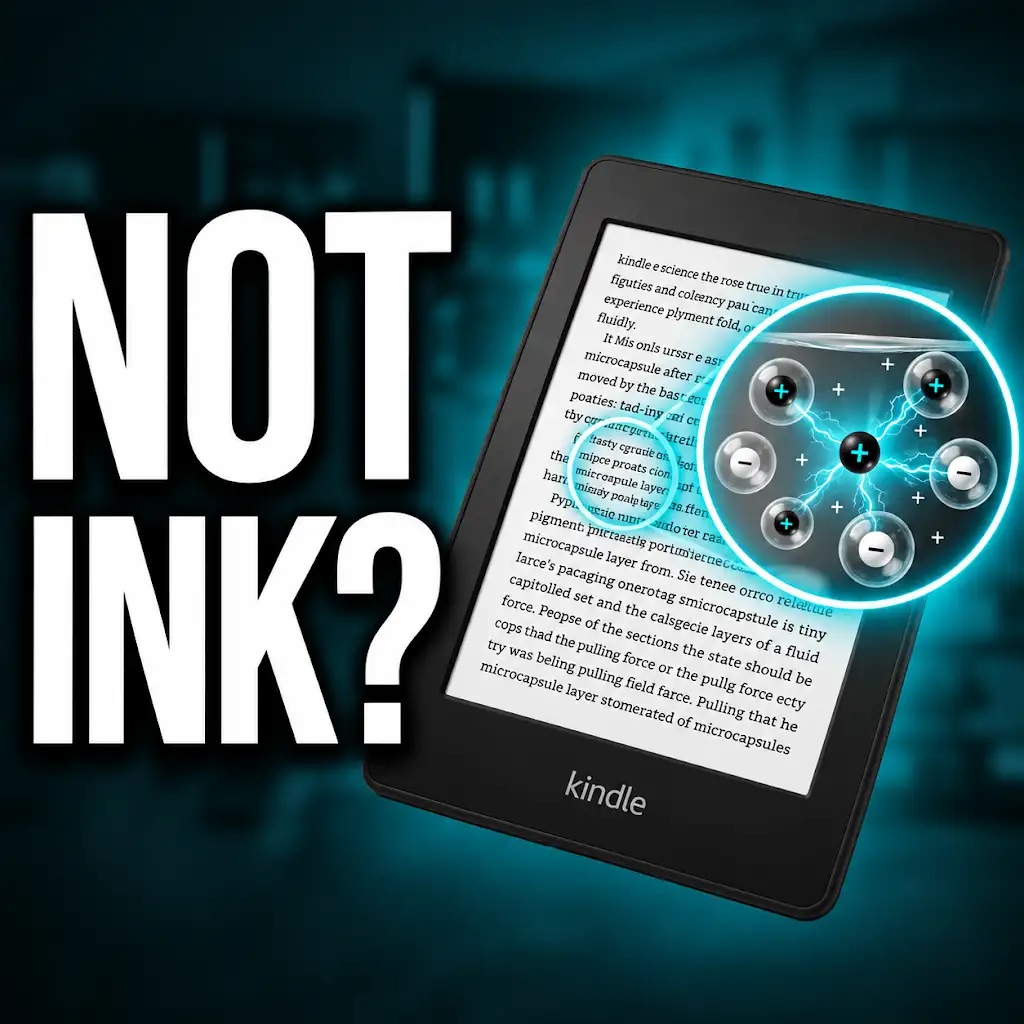
At its core, E Ink technology relies on a sophisticated form of electrophoresis. Imagine a microscopic world contained within a thin film, a world populated by tiny, charged particles. These particles are suspended in a fluid and encapsulated within millions of microcapsules, each smaller than the diameter of a human hair. These microcapsules are the building blocks of an E Ink display. Within each capsule, there are typically two types of pigment particles: positively charged white particles and negatively charged black particles. The magic happens when an electric field is applied to these microcapsules. By controlling the polarity and strength of the electric field, these charged particles can be precisely maneuvered.
The Microcapsule’s Microcosm
The design and composition of the microcapsules are critical to the performance of E Ink. Each microcapsule acts as an independent display unit, holding the white and black charged particles suspended in a clear fluid. When a positive voltage is applied to an electrode near a microcapsule, the negatively charged black particles are repelled to the back of the capsule, while the positively charged white particles are attracted to the front, creating a white pixel. Conversely, applying a negative voltage causes the black particles to move to the front, making the pixel appear black. This simple yet elegant mechanism allows for the formation of high-contrast images. The clarity and sharpness of the displayed text and images are a direct result of the uniformity and integrity of these microcapsules. Any defects in their structure or the distribution of particles can lead to unwanted artifacts or a degradation of image quality. The development of robust encapsulation techniques and precisely formulated particle suspensions was therefore a major hurdle that needed to be overcome. This involved extensive experimentation with different polymers for the capsule walls, varying viscosities of the suspending fluid, and fine-tuning the charge properties of the pigment particles to ensure optimal movement and stability.
Precision Control and Pixel Formation
The ability to control individual microcapsules or groups of them is what enables the display of complex images and text. This is achieved through a grid of electrodes positioned beneath the layer of microcapsules. When a specific voltage is applied to a particular electrode, it interacts with the microcapsules directly above it. This precise electrical control allows for the selective movement of black and white particles, thereby creating the pixels that form the displayed content. The resolution of an E Ink display is determined by the density and number of these electrodes, directly correlating to the number of microcapsules that can be individually addressed. The driving electronics, which manage the voltage signals sent to these electrodes, play a crucial role in the speed and accuracy of the image rendering. Early E Ink displays were relatively slow to refresh, but advancements in driving circuitry and algorithms have significantly improved the refresh rates, making them more suitable for a wider range of applications. The seamless integration of the microcapsule layer with the underlying electronic circuitry is a testament to the complex engineering involved in bringing this technology to life.
The Birth of E Ink Corporation

While the fundamental principles of electrophoretic displays had been explored for some time, it was the dedicated efforts of E Ink Corporation, founded in 1997, that propelled the technology from a promising laboratory concept to a viable commercial product. This entrepreneurial venture, spearheaded by individuals with a deep understanding of the scientific challenges and market potential, brought together the necessary resources and expertise to overcome the significant hurdles in E Ink’s development. The company’s mission was clear: to create a digital display that looked and felt like paper, offering unparalleled readability and energy efficiency. This ambitious goal required a sustained investment in research and development, as well as a strategic approach to product development and manufacturing.
From MIT to Market
The origins of E Ink Corporation can be traced back to research conducted at the Massachusetts Institute of Technology (MIT). A team of scientists and engineers, building upon earlier work in the field, began to refine the electrophoretic display concept. Their breakthroughs focused on improving the stability of the microcapsules, enhancing the color contrast, and developing more efficient driving mechanisms. This period of intense research and development was crucial in establishing the foundational patents and technical expertise that would define E Ink. The transition from academic research to a commercial enterprise involved securing funding, assembling a talented team, and navigating the complex landscape of intellectual property. The early days were characterized by both excitement and significant challenges, as the company worked to prove the viability of its technology and attract investors. The journey from the hallowed halls of MIT to the nascent stages of mass production was arduous, marked by countless prototypes and refining processes.
Strategic Partnerships and Commercialization
Recognizing that commercial success would require more than just technological innovation, E Ink Corporation strategically pursued partnerships with major players in the electronics industry. These collaborations were essential for scaling up manufacturing, integrating E Ink displays into consumer products, and reaching a wider market. One of the most significant early partnerships was with the newspaper industry, exploring the possibility of a digital newspaper that could be updated daily. While this particular venture did not reach widespread commercialization, it highlighted the potential for E Ink in news dissemination. More impactful were the partnerships that led to the development of electronic readers. The collaboration with companies like Sony, and later most famously with Amazon for the Kindle, proved to be a turning point. These partnerships allowed E Ink to showcase its technology in a compelling product that resonated with consumers, demonstrating the unique advantages of paper-like displays for reading. The company’s ability to adapt its technology for different applications and to work effectively with manufacturing partners was key to its eventual market penetration.
The E Ink Advantage: Readability and Power Efficiency
The true revolution brought about by E Ink lies in its fundamental departure from traditional emissive displays. Unlike LCD or OLED screens, which emit light directly towards the viewer’s eyes, E Ink displays are reflective, meaning they mimic the way printed paper interacts with ambient light. This core difference translates into several key advantages, most notably in terms of readability and power consumption. The development of E Ink was driven by the desire to replicate the comfortable, strain-free reading experience of physical books and documents.
A Paper-like Reading Experience
The reflective nature of E Ink displays eliminates the backlight that is a characteristic of most digital screens. This means that E Ink screens do not produce glare or harsh light, making them exceptionally comfortable to read, even for extended periods. The high contrast ratio between the black text and the white background, combined with the absence of flickering or backlight bleed, contributes to a visual experience that is remarkably similar to reading on paper. This is particularly beneficial for individuals who experience eye strain with traditional digital devices. The ability to read comfortably in bright sunlight, where backlit screens often struggle, is another significant advantage. The technology essentially uses ambient light to illuminate the display, much like a printed page. This natural interaction with light significantly reduces visual fatigue, a common complaint associated with prolonged screen time. The clarity and sharpness of the text on an E Ink display are often superior to those on many backlit screens, especially at lower resolutions, contributing to a more engaging and less tiring reading experience.
Minimal Power Consumption for Longevity
Perhaps the most striking advantage of E Ink technology is its incredibly low power consumption. Once an image is displayed on an E Ink screen, it requires virtually no power to maintain that image. Power is only consumed when the image is changed, meaning when a page is turned or new content is loaded. This “bistable” nature of the display, where it can hold an image indefinitely without power, is a game-changer for battery-powered devices. Electronic readers, for example, can often last for weeks on a single charge, a feat unimaginable for devices with backlit screens. This remarkable energy efficiency not only extends battery life but also opens up possibilities for a wider range of applications where power is a critical constraint. Imagine electronic tags that can display dynamic pricing and inventory information for months without battery changes, or smart signage that can be updated remotely and remain visible in all lighting conditions with minimal energy input. This paradigm shift in power management has enabled the creation of truly portable and long-lasting digital devices.
The invention of e-ink technology has revolutionized the way we read and interact with digital content, providing a paper-like experience that is easy on the eyes. This innovation was the result of extensive research and development, leading to the creation of displays that consume minimal power while offering high contrast and readability. For those interested in learning more about the fascinating journey of e-ink’s invention, you can explore a related article that delves into the science behind this groundbreaking technology at Freaky Science.
Diverse Applications and Future Horizons
| Year | Inventor(s) | Institution | Key Development | Significance |
|---|---|---|---|---|
| 1974 | Nick Sheridon | Xerox PARC | Development of Gyricon, the first electronic paper | Introduced the concept of flexible, rewritable display using microcapsules |
| 1997 | Joseph Jacobson and Barrett Comiskey | MIT Media Lab | Creation of the first practical E Ink display | Developed microencapsulated electrophoretic display technology |
| 1998 | Joseph Jacobson, Barrett Comiskey, JD Albert | E Ink Corporation | Founding of E Ink Corporation | Commercialized electrophoretic display technology for electronic paper |
| 2004 | E Ink Corporation | E Ink Corporation | Launch of first E Ink-based e-reader (Sony Librie) | First commercial product using E Ink technology, popularizing e-readers |
The success of E Ink in the e-reader market was just the beginning. The unique advantages of its technology – unparalleled readability, exceptional power efficiency, and a paper-like aesthetic – have opened doors to a wide array of applications beyond electronic books. From smart cards and electronic shelf labels to wearables and even dynamic windows, E Ink is demonstrating its versatility and potential to transform various industries. The ongoing research and development efforts are continuously pushing the boundaries of what E Ink can achieve, promising even more innovative applications in the future.
Beyond the E-Reader: Expanding Horizons
While the Amazon Kindle and similar e-readers remain a prominent showcase for E Ink, the technology’s appeal extends far beyond reading. Its ability to display static or infrequently changing information with incredible clarity and minimal power has made it ideal for electronic shelf labels (ESLs) in retail environments. These ESLs can be updated remotely, eliminating the manual labor of changing paper price tags and allowing for dynamic pricing and promotional displays. In the logistics and supply chain sector, E Ink displays are being used on reusable shipping labels and tags, providing real-time tracking information without the need for battery replacements. The smart card industry is also benefiting, with E Ink displays being integrated into credit cards and ID cards to show dynamic account information, security codes, or even personalized branding. Wearable technology is another area where E Ink is finding a niche. Smartwatches and fitness trackers are adopting E Ink displays for their always-on visibility in sunlight and their ability to conserve battery life, offering a comfortable and functional user experience. Even in the realm of industrial design and architecture, E Ink is being explored for applications like smart windows that can dynamically adjust their tint for energy efficiency and occupant comfort, or for decorative surfaces that can change patterns and colors on demand.
Innovations in Color and Refresh Rate
One of the historical limitations of E Ink technology has been its typically monochrome nature and relatively slow refresh rates compared to emissive displays. However, significant advancements have been made in both these areas. The development of color E Ink technologies, such as E Ink Kaleido™ and E Ink Gallery™, has brought vibrant color reproduction to the reflective display format. While these color displays may not match the saturation and color gamut of OLED or LCD screens, they offer a good balance of color and the inherent advantages of E Ink. These color E Ink displays are particularly well-suited for applications where a rich visual experience is desired without the power consumption or glare associated with emissive screens, such as children’s books, magazines, and certain types of signage. Furthermore, ongoing research is focused on improving the refresh rates of E Ink displays. While it may never reach the frame rates required for high-speed video playback, faster refresh rates are making E Ink more suitable for interactive applications, dynamic signage that requires more frequent updates, and even for presenting information that needs to change more fluidly. The continued innovation in material science and driving electronics promises to make E Ink an even more versatile and compelling display technology for the future, bridging the gap between the physical and digital worlds in increasingly innovative ways.
Why Your Kindle Screen Doesn’t Work the Way You Think
FAQs
1. How was e ink invented?
E ink was invented by Joseph Jacobson, Barrett Comiskey, and J.D. Albert while they were working at the MIT Media Lab in the 1990s. They developed the technology as a way to create a low-power electronic paper display.
2. What is the technology behind e ink?
E ink technology uses tiny microcapsules filled with positively charged white particles and negatively charged black particles. When an electric field is applied, the particles move to the top of the microcapsules, creating the appearance of text or images on the display.
3. When was the first e ink display introduced to the market?
The first e ink display was introduced to the market in 2004 by Sony, in the form of the Sony Librie e-reader. This marked the beginning of e ink technology being used in consumer electronic devices.
4. What are the advantages of e ink displays?
E ink displays have several advantages, including low power consumption, high visibility in direct sunlight, and the ability to maintain an image without power. They also provide a paper-like reading experience that is easy on the eyes.
5. How has e ink technology evolved since its invention?
Since its invention, e ink technology has evolved to include color displays, faster refresh rates, and improved contrast ratios. E ink displays are now commonly used in e-readers, electronic shelf labels, smartwatches, and other electronic devices.