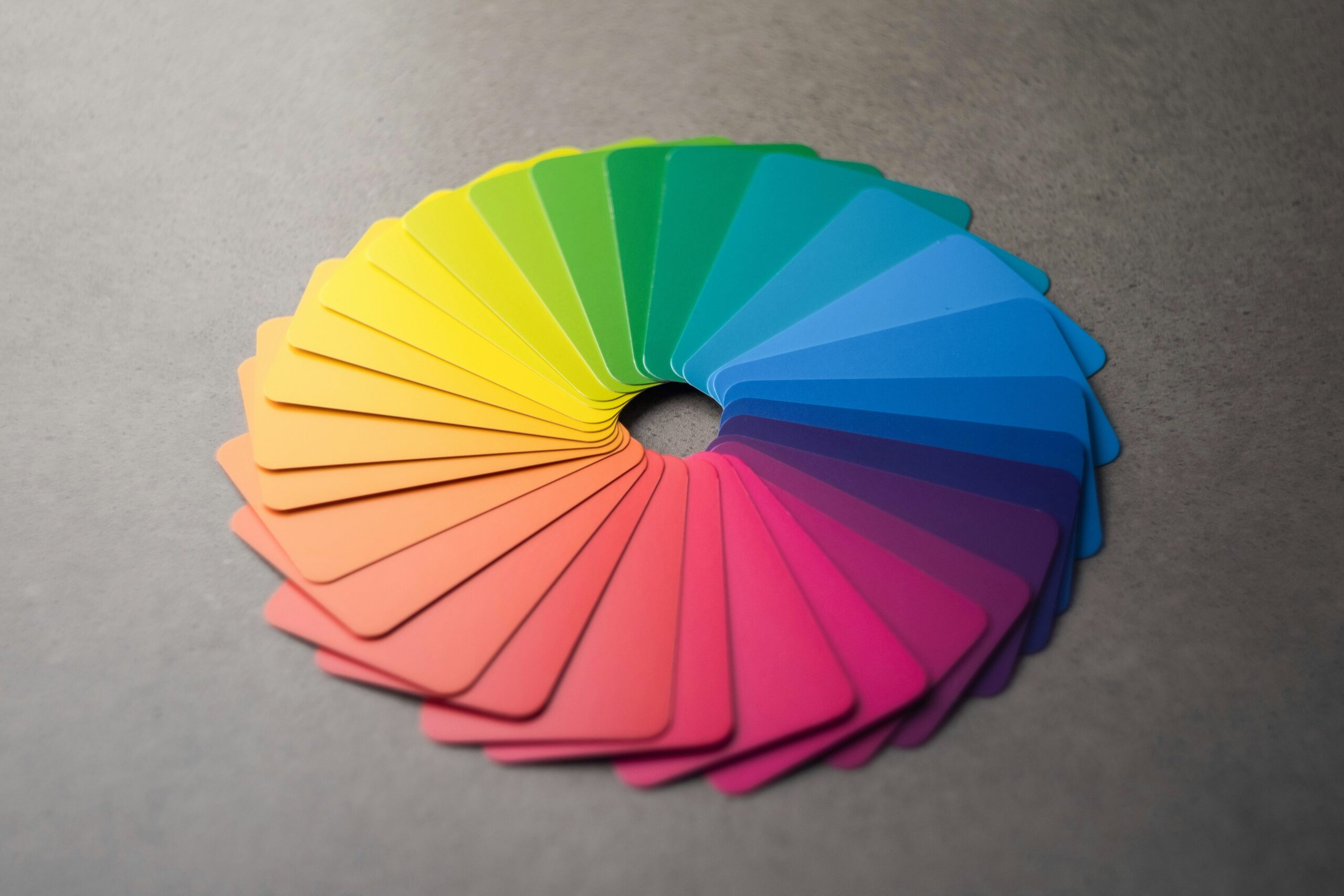
You experience the world through a kaleidoscope of color, but have you ever stopped to consider why you perceive certain hues the way you do? It’s easy to assume that color is an objective property of an object, like its weight or texture. However, you’re about to discover that your perception of color is a far more intricate dance, heavily influenced by the context in which you encounter it. This isn’t just about personal preference; it’s about the fundamental ways your brain interprets visual information.
You might point to a strawberry and declare, “That’s red.” And to you, in that moment, it is. But this apparent simplicity belies a complex reality. The redness you perceive isn’t solely a property residing within the strawberry itself. Instead, it’s the result of a sophisticated interplay between light, your eyes, and your brain. You’re not passively receiving color; you’re actively constructing it.
Light as the Raw Material
At its core, color perception begins with light. Objects don’t emit light (unless they are light sources themselves); rather, they absorb and reflect specific wavelengths of electromagnetic radiation. When you see a red apple, for instance, it’s because the apple’s surface absorbs most wavelengths of visible light and reflects the wavelengths we perceive as red. The quality and intensity of the light source – be it the harsh glare of midday sun or the soft glow of a bedside lamp – dramatically alter the wavelengths that reach your eyes. This fundamental fact alone means that the “true” color of an object is an elusive concept, dependent on the illumination it’s under.
Your Eyes: The Biological Receptors
Within your eyes, specialized cells called photoreceptors, specifically cones, are responsible for detecting color. You have three types of cones, each most sensitive to different ranges of wavelengths, broadly corresponding to red, green, and blue light. When light strikes these cones, they send electrical signals to your brain. The way these signals are processed and interpreted is where the magic, and the influence of context, truly begins. Your brain doesn’t just register “red light signal”; it integrates these signals with information from other senses and past experiences to create your subjective color experience.
The Brain’s Interpretation Engine
Your brain is the ultimate arbiter of color. It takes the raw data from your eyes and transforms it into the vibrant world you experience. This process is not a simple one-to-one mapping. Your brain actively makes assumptions, fills in gaps, and adjusts its interpretation based on a multitude of factors, with context being a paramount one. It’s like a sophisticated algorithm, constantly running to make sense of the visual stream.
Understanding how context influences color perception can be further explored in the article “The Science of Color Perception” found on Freaky Science. This article delves into the psychological and physiological factors that affect how we perceive colors in different environments. By examining various experiments and findings, it highlights the significance of surrounding colors and lighting conditions in shaping our visual experiences. For more insights, you can read the article here: The Science of Color Perception.
The Surrounding Scenery: How Neighboring Colors Sway Your Perception
One of the most profound ways context influences your color perception is through the immediate surroundings of an object. This phenomenon, known as simultaneous contrast, demonstrates how the color of one area can appear to change when placed next to another color. You might think this is just a trick of the eye, but it’s a fundamental aspect of how your visual system works.
Simultaneous Contrast: The Illusion of Hue Shift
Imagine a gray square placed on a vibrant red background. You will likely perceive the gray square as having a slightly greenish tint. Conversely, if that same gray square is placed on a green background, it will appear reddish. This isn’t because the gray square has magically changed its reflective properties. Instead, your brain is reacting to the contrast. It’s attempting to enhance the differences between the colors to make them more distinct. This allows you to better differentiate objects in a complex visual scene.
The Role of Opponent Processes
This effect can be explained, in part, by the opponent-process theory of color vision. This theory suggests that color perception is mediated by opposing color systems (red-green, blue-yellow, and black-white). When you stare at a red object for a prolonged period and then look away at a neutral surface, you often see a green afterimage. Similarly, simultaneous contrast can be understood as a form of this opponent processing. The surrounding color “fatigues” one part of the opponent system, causing the other part to become more dominant, thus shifting your perception of the target color.
Color Constancy: Maintaining a Stable World
Your brain is remarkably adept at maintaining a stable perception of color despite changes in illumination. This is called color constancy. If you look at a red apple under a fluorescent light (which often has a greenish cast) and then under incandescent light (which is more yellowish), you still perceive the apple as red. Without color constancy, the world would appear to be a riot of constantly shifting colors, making it incredibly difficult to navigate and recognize objects.
Illuminant Estimation
Color constancy is achieved by your brain’s ability to estimate the color of the light source (the illuminant) and then compensate for it. It’s like having a built-in white balance adjustment. Your brain infers the “color” of the light and then “subtracts” it from the incoming signals to arrive at what it perceives as the object’s inherent color. This estimation process is heavily influenced by the surrounding colors and the overall context of the scene. If the dominant colors in a scene suggest a certain type of light, your brain will adjust its interpretation accordingly.
Edge Effects and Spatial Frequency
The sharpness of the boundary between colors also plays a role. So-called “edge effects” can lead to color fringes or halos that aren’t actually present in the light reflecting off the surfaces. Furthermore, the spatial frequency of the color patterns – how quickly colors change across an area – can influence how we perceive them. Fine, detailed color patterns might be processed differently than broad, sweeping color fields.
Beyond the Immediate: Cultural and Learned Associations

Your perception of color isn’t just a physiological response to light and immediate surroundings; it’s also deeply embedded in your culture, experiences, and learned associations. What a color signifies, its emotional impact, and even how you name it can be profoundly influenced by the society in which you grew up.
The Language of Color: Naming and Categorization
The way you categorize and name colors is not universal. Different languages have different color lexicons, with some languages having fewer basic color terms than others. For example, some languages don’t have distinct words for blue and green, lumping them together under a single term. Studies have shown that having a specific word for a color can influence how quickly and accurately you can distinguish between shades of that color. If you have a word for “teal,” you might be more adept at spotting subtle variations within the teal spectrum than someone who doesn’t.
Cross-Cultural Differences
This linguistic influence extends to how you perceive colors. While the biological mechanisms for color vision are largely the same across humans, cultural differences in color naming can lead to variations in color perception and memory. What you consider a distinct “pink” might be perceived as a shade of “red” by someone from a culture with fewer terms for lighter hues. This highlights that while your eyes might be receiving similar optical information, your brain’s interpretation and categorization are shaped by the linguistic tools available to you.
Symbolism and Emotional Resonance
Colors carry immense symbolic weight across cultures. White might signify purity and weddings in Western cultures, but mourning and funerals in some Eastern cultures. Red can represent danger, passion, or good luck depending on the context. These learned associations create an emotional and symbolic layer to your color perception. When you see red, your brain might not just register a wavelength; it might also trigger a cascade of associated feelings, memories, or cultural meanings.
The Power of Priming
This symbolic and emotional connection can also be exploited through priming. If you’re shown a series of images associated with excitement and energy (like fast-paced action scenes), and then presented with a color like bright orange, you might perceive that orange as even more vibrant and energetic than you would otherwise. The preceding context has primed your brain to interpret the color through a specific lens.
Personal Experiences and Memory
Your own individual experiences also contribute to your color perception. Perhaps a particular shade of blue reminds you of a happy childhood memory, or a certain shade of green evokes a feeling of unease due to a negative past event. These personal associations can imbue colors with unique significance for you, influencing how you react to them on an emotional and perceptual level.
The Impact of Light Quality and Intensity

You’ve touched upon it already, but the nature of the light source itself is a critical contextual factor that dramatically influences color perception. It’s not just about the presence of light; it’s about the type of light.
Illuminant Color Temperature
Light sources vary in their color temperature, measured in Kelvin. A “warm” light, like that from an incandescent bulb, has a lower color temperature and appears more yellowish or reddish. A “cool” light, like that from a fluorescent bulb or daylight, has a higher color temperature and appears more bluish. When you view objects under these different lights, their colors will appear shifted. The same red apple will look slightly different under warm lamp light compared to cool daylight.
Adjusting for the Light
Your brain’s color constancy mechanism works to compensate for these shifts, but it’s not always perfect. In situations where the illuminant is highly unusual or difficult to discern, your color perception can be significantly distorted. For example, viewing objects under pure monochromatic light (light of a single wavelength) would make it impossible to perceive any color other than that single hue.
Light Intensity and Brightness
The intensity or brightness of the light also plays a role. In very dim light, your cone cells (responsible for color vision) become less effective, and your rod cells (which are more sensitive to light but don’t perceive color) take over. This leads to a phenomenon called scotopic vision, where colors become desaturated and appear more muted or even indistinguishable. Conversely, extremely bright light can also saturate your visual system, making it difficult to discern subtle color differences.
The Luminance-Chrominance Relationship
There’s also a complex relationship between luminance (brightness) and chrominance (colorfulness). As the brightness of an object increases, its perceived saturation can also increase. This means that a brightly lit object might appear more vividly colored than the same object under dimmer lighting, even if the wavelengths of light being reflected are objectively the same.
Recent studies have shown that the surrounding environment can significantly alter how we perceive colors, highlighting the fascinating interplay between context and color perception. For a deeper understanding of this phenomenon, you might find the article on the subject particularly enlightening, as it explores various experiments that illustrate how different backgrounds can influence our visual experiences. If you’re curious to learn more, check out this insightful piece on the topic here.
The Importance of Attention and Task Demands
| Context | Color Perception |
|---|---|
| Natural Lighting | Colors appear more vibrant and true to their actual shade |
| Artificial Lighting | Colors may appear slightly different due to the type and intensity of the light source |
| Surrounding Colors | Adjacent colors can influence how a specific color is perceived |
| Cultural Context | Color meanings and associations can vary across different cultures |
It’s not just about what’s “out there”; it’s also about what’s happening inside you. Your attention and the specific task you’re engaged in can significantly alter how you perceive color.
Focused Attention and Detail Perception
When you actively focus on a specific color or a detail within a larger image, your brain allocates more resources to processing that information. This focused attention can lead to a more nuanced and precise perception of color. If you’re trying to match paint swatches, for example, you’ll be paying much closer attention to subtle variations in hue, saturation, and brightness than you would if you were just casually browsing.
Selective Attention
Selective attention allows you to filter out irrelevant visual information and concentrate on what’s important. This means that if your goal is to identify all the green objects in a scene, your perception of green will be heightened, and you might be more attuned to shades of green that you might otherwise overlook.
Task Demands and Cognitive Load
The cognitive demands of a task can also influence color perception. If you’re performing a complex task that requires a lot of mental effort, your ability to accurately perceive and remember colors might be compromised. Your brain has limited processing power, and it needs to prioritize. In such situations, you might rely more on simpler color categories or be more susceptible to the influence of contextual cues.
Color as a Cue or Distractor
In some tasks, color is used as a crucial cue. Think of traffic lights or warning signs. Here, your brain is specifically trained to interpret these colors in a precise and urgent manner. In other situations, color can act as a distractor. If you’re trying to read text on a busy, multi-colored background, the colors themselves might interfere with your ability to process the words.
The Evolutionary Advantage of Contextual Color Perception
Why has your brain evolved to be so sensitive to context when it comes to color perception? The answer lies in the evolutionary advantages this provides. A stable and accurate understanding of the visual world is crucial for survival.
Object Recognition and Identification
The ability to consistently recognize objects, regardless of lighting conditions or surrounding colors, is fundamental for survival. Imagine trying to find ripe fruit if its color changed drastically every time you moved it into a different patch of light. Color constancy, powered by contextual cues, ensures that you can reliably identify food sources, potential mates, and dangers.
Navigating the Environment
Understanding the color of surfaces is essential for navigating your environment. The color of a path can indicate its texture or whether it’s wet or dry. The color of foliage can signal the presence of edible plants or poisonous berries. Your brain’s contextual processing of color helps you make quick and accurate decisions about how to interact with your surroundings.
Social Interaction and Communication
Color also plays a role in social cues. The flush of a cheek can indicate embarrassment or anger. The color of clothing can signal status or affiliation. While not as direct as physiological color changes, these socially learned color associations contribute to your understanding of human interaction and communication.
In conclusion, the next time you marvel at the vibrant colors of a sunset or choose an outfit, remember that what you are experiencing is not a simple, objective reality. You are engaged in a dynamic, complex process of perception, where the colors you see are sculpted by the light that bathes them, the colors that surround them, the culture that shapes you, and the very state of your own mind. Your perception of color is a testament to the incredible adaptive power of your brain, constantly working to make sense of the visually rich and ever-changing world you inhabit.

Why Your Brain Had to Invent Magenta
FAQs
What is color perception?
Color perception refers to the way in which the human brain interprets and processes the wavelengths of light that are received by the eyes, resulting in the perception of different colors.
How does context change color perception?
Context can change color perception through various factors such as lighting, surrounding colors, and the presence of other objects. These factors can influence how the brain processes and interprets the colors that are being observed.
Can the same color appear different in different contexts?
Yes, the same color can appear different in different contexts due to the influence of surrounding colors, lighting conditions, and the presence of other objects. This phenomenon is known as color constancy.
What role does the brain play in color perception?
The brain plays a crucial role in color perception as it processes the signals received from the eyes and interprets them to create the perception of different colors. The brain also takes into account contextual factors when perceiving colors.
How does understanding context change color perception impact daily life?
Understanding how context changes color perception can impact daily life by influencing decisions related to interior design, fashion, art, and other visual aspects. It can also help individuals better understand how their perception of colors may be influenced by different contextual factors.