The allure of the Earth’s interior has long captivated human imagination. From Jules Verne’s fantastical subterranean voyages to modern scientific endeavors probing the planet’s hidden depths, the quest to understand what lies beneath our feet is a persistent one. Among the most audacious and seemingly straightforward aspirations is the desire to drill to Earth’s core. Yet, despite our technological prowess and insatiable curiosity, this endeavor remains firmly in the realm of the impossible. The reasons are not merely a matter of engineering challenges; they are rooted in fundamental physics, immense geological pressures, and the sheer, unfathomable scale of our planet.
The most immediate and perhaps most formidable obstacle to reaching Earth’s core is its extreme temperature. As one descends into the planet, the mercury climbs with alarming rapidity. This geothermal gradient is not uniform, but it serves as a constant, escalating challenge.
The Geothermal Gradient: A Steadily Rising Temperature
The geothermal gradient is the rate at which temperature increases with depth in the Earth. While it varies geographically and is influenced by factors like radioactive decay and residual heat from planetary formation, a general trend holds true. Near the surface, the temperature increase might be a few tens of degrees Celsius per kilometer. However, as depth increases, so does the rate of temperature rise.
The Mantle’s Inferno: Beyond Our Current Material Capabilities
The Earth’s mantle, the thick layer between the crust and the core, is a region of immense heat. Temperatures in the lower mantle can reach thousands of degrees Celsius, exceeding the melting point of most known materials. Conventional drilling equipment, designed to withstand temperatures far below these extremes, would simply melt and vaporize long before reaching such depths. Even advanced alloys and ceramics would succumb to the relentless thermal assault. Specialized cooling systems, while theoretically possible, would require an unimaginable amount of energy and would themselves be vulnerable to the surrounding inferno.
The Core’s Fiery Embrace: A Liquid Metal Inferno
The Earth’s core itself is divided into two parts: the outer core and the inner core. The outer core is a swirling, turbulent ocean of liquid iron and nickel, maintained at temperatures estimated to be between 4,400 and 6,100 degrees Celsius. This is hotter than the surface of the sun. The inner core, while solid due to immense pressure, is still incredibly hot, believed to be around 5,200 degrees Celsius. No known material can withstand direct contact with such temperatures, let alone be used to bore through them. The very concept of a drill bit capable of functioning in this environment is currently beyond our scientific comprehension.
The idea of drilling to the center of the Earth has fascinated scientists and the public alike, but there are significant challenges that make it nearly impossible. For a deeper understanding of the scientific and technical limitations involved, you can explore the article on Freaky Science, which discusses the extreme temperatures, pressures, and geological complexities that hinder such endeavors. To read more about this intriguing topic, visit Freaky Science.
The Crushing Pressure: An Inescapable Force
Alongside the searing heat, the immense pressure exerted by the overlying rock and metal layers is another insurmountable barrier. This pressure is not just a consequence of gravity; it is a fundamental aspect of the Earth’s internal structure.
Lithostatic Pressure: The Weight of the World Above
As one descends, the sheer weight of the kilometers of rock and mantle above exerts an ever-increasing force. This lithostatic pressure, or rock pressure, is immense. At the base of the crust, pressures are already significant. As one progresses into the mantle, these pressures escalate dramatically.
The Mantle’s Squeeze: Deforming and Crushing
The pressures within the mantle are so great that they can cause even the most rigid materials to deform over geological timescales. While the mantle is often described as solid, it behaves like a very viscous fluid under these extreme conditions, a phenomenon known as plastic flow. For a drilling operation, this means the very walls of the borehole would be constantly squeezed inward, threatening to collapse the shaft and entrap any equipment. Conventional drilling techniques rely on the stability of the surrounding rock, a stability that simply does not exist at these depths.
The Core’s Tight Grip: A Million Atmospheres
The pressure at the boundary between the mantle and the outer core is estimated to be around 1.3 million atmospheres. To put this into perspective, this is equivalent to the pressure found at the bottom of an ocean over 1,000 kilometers deep, or roughly 100,000 times the atmospheric pressure at sea level. Any structure attempting to penetrate this zone would be instantly crushed, irrespective of its material strength. The forces involved are simply too great for any man-made object to withstand.
The Immense Scale: A Journey of Thousands of Kilometers
Beyond the immediate challenges of heat and pressure, the sheer distance to the Earth’s core presents a logistical and engineering hurdle of monumental proportions. The Earth is not a small sphere; it is a vast celestial body.
The Crust: A Thin Veneer
The Earth’s crust, the outermost solid shell, is relatively thin compared to the planet’s total radius. On average, it ranges from about 5 kilometers thick under the oceans to about 70 kilometers thick under continental mountain ranges. Even drilling through the thickest part of the crust is a significant undertaking, requiring sophisticated technology and considerable time. The Kola Superdeep Borehole in Russia, the deepest artificial point on Earth, reached a depth of just over 12 kilometers. This is a mere fraction of the distance to the core.
The Mantle: A Vast Subterranean Ocean
Beneath the crust lies the mantle, which extends for approximately 2,900 kilometers. This is the largest layer of the Earth by volume, and it is here that the true scale of the impossible quest becomes apparent. To drill through the entire mantle would require traversing a distance that dwarfs any human engineering feat to date. The energy and resources required would be astronomical.
Reaching the Core: A Journey to the Center of the Earth
The Earth’s outer core begins at a depth of approximately 2,900 kilometers, and the inner core lies at its center, about 6,371 kilometers from the surface. To reach the absolute center would require drilling through thousands of kilometers of superheated liquid metal and compressed solid matter. This is a distance comparable to traveling from London to New York, or even further, but through an environment far more hostile than any surface journey imaginable.
The Unseen Dynamics: Forces Beyond Our Control
Even if we could somehow overcome the heat, pressure, and scale, the dynamic nature of the Earth’s interior presents further complications. The planet is not a static entity; it is a constantly shifting and evolving system.
Convection Currents: A Turbulent Flow
The Earth’s mantle is in constant motion due to convection currents. Hotter, less dense material from deep within the Earth rises, while cooler, denser material sinks. This slow, churning movement is responsible for plate tectonics and volcanic activity on the surface. For a drilling operation, these currents would create unpredictable stresses and movements, making it impossible to maintain a stable borehole. Imagine trying to drill a straight line through a vat of boiling, churning mud.
The Outer Core’s Dynamo: A Magnetic Generator
The churning liquid iron in the outer core is responsible for generating Earth’s magnetic field. This complex, chaotic motion creates powerful electromagnetic forces. Any metallic drilling equipment would be subjected to these forces, potentially leading to unpredictable behavior, magnetic interference, and even catastrophic failure. The very act of drilling could disrupt these delicate processes, with unknown consequences.
Seismic Activity: Earth’s Tremors
The Earth’s crust and mantle are constantly subject to seismic activity, from minor tremors to major earthquakes. These events are caused by the release of stress built up within the Earth’s tectonic plates and deeper structures. A drilling operation, especially one of such immense depth, could potentially trigger or be severely impacted by seismic events, further jeopardizing the mission.
The idea of drilling to the center of the Earth has fascinated scientists and enthusiasts alike for years, but the challenges involved are immense. The extreme heat and pressure, along with the complex geological layers, make such an endeavor nearly impossible with current technology. For a deeper understanding of the scientific hurdles and the reasons behind our inability to reach the Earth’s core, you can explore a related article that delves into these fascinating topics. Check it out here.
The Technological Gap: A Chasm to Bridge
| Metric | Value/Description | Reason/Impact |
|---|---|---|
| Depth to Earth’s Center | Approximately 6,371 km (3,959 miles) | Extremely long distance to drill through |
| Deepest Drill Hole | 12.3 km (7.6 miles) – Kola Superdeep Borehole | Current technological limit far from center |
| Temperature at 12 km Depth | ~180°C (356°F) | High heat damages drilling equipment |
| Estimated Temperature at Core | ~5,000°C (9,032°F) | Extreme heat melts materials, impossible to drill |
| Pressure at Core | ~360 GPa (3.6 million atmospheres) | Crushes equipment, prevents drilling |
| Rock Hardness | Varies, extremely hard and dense at depth | Increases wear and tear on drill bits |
| Technological Limitations | Current materials and cooling systems insufficient | Cannot withstand heat and pressure at great depths |
| Cost and Time | Extremely high and impractical | Drilling to center would take decades and massive resources |
The fundamental reasons for our inability to drill to Earth’s core lie in a profound technological gap. Our current understanding of materials science, engineering, and energy generation is simply insufficient for such an undertaking.
Material Limitations: The Search for the Unobtainable
As previously discussed, the temperatures and pressures encountered deep within the Earth far exceed the capabilities of any known material. We lack the alloys, ceramics, or composites that could withstand such extremes. The development of materials that can remain stable and functional in a plasma-like environment under immense pressure is a futuristic dream, not a current reality.
Energy Requirements: An Unfathomable Thirst
The energy required to drill through thousands of kilometers of solid rock and molten metal, and to maintain a habitable and functional environment for equipment and personnel, would be staggering. Powering such an operation would necessitate energy sources far beyond our current capabilities, perhaps even requiring the harnessing of stellar energy.
Drilling Technologies: Limitations of Our Tools
Conventional drilling methods, whether rotary, percussive, or directional, are designed for the relatively benign conditions of the Earth’s crust. They rely on the stability of the surrounding rock and the ability to remove debris. These methods would be entirely ineffective in the fluid dynamics and extreme conditions of the mantle and core. Novel drilling technologies, such as plasma drilling or laser drilling, are still in their infancy and are not yet capable of operating at the required depths and conditions.
The Future of Exploration: Redefining the Quest
While drilling to the Earth’s core remains an impossible quest, this does not mean our exploration of the planet’s interior is over. Scientists are constantly developing and refining indirect methods to study the Earth’s depths.
Seismology: Listening to the Earth’s Inner Voice
Seismology, the study of earthquakes and seismic waves, is our primary tool for understanding the Earth’s interior. By analyzing how seismic waves generated by earthquakes travel through the planet, scientists can infer the density, composition, and structure of different layers, including the mantle and core. This “listening” approach has provided invaluable insights without ever breaching the surface.
Geochemistry and Petrology: Clues from the Surface
The study of rocks and minerals found on the Earth’s surface, particularly those brought up by volcanic activity, provides direct samples of material from deeper within the planet. Analyzing their chemical composition and mineral structures allows geologists to reconstruct the conditions under which they formed, offering clues about the mantle and even the core.
High-Pressure and High-Temperature Experiments: Recreating the Conditions
Laboratory experiments that replicate the extreme pressures and temperatures found deep within the Earth are crucial for understanding the behavior of materials under these conditions. These experiments, often using specialized diamond anvil cells, allow scientists to observe phase transitions and chemical reactions that occur deep inside the planet, validating and refining seismic models.
Computer Modeling and Simulation: Building Virtual Worlds
Advanced computer models and simulations are playing an increasingly vital role in understanding Earth’s interior. These models incorporate vast amounts of data from seismic observations, geochemical analyses, and experimental results to create virtual representations of the Earth’s structure and dynamics, allowing scientists to test hypotheses and explore scenarios that are impossible to observe directly.
The quest to drill to Earth’s core, while a captivating idea, is fundamentally a testament to the profound, almost alien, nature of our own planet’s interior. The relentless heat, crushing pressure, immense scale, and dynamic forces at play create a barrier that, for the foreseeable future, remains unbreachable. Instead of direct penetration, humanity’s pursuit of understanding the Earth’s heart continues through ingenious indirect methods, a testament to our enduring scientific curiosity and our ability to adapt and innovate in the face of seemingly insurmountable challenges. The true marvel lies not in the ability to drill through the Earth, but in our capacity to comprehend its hidden depths with the tools we possess.
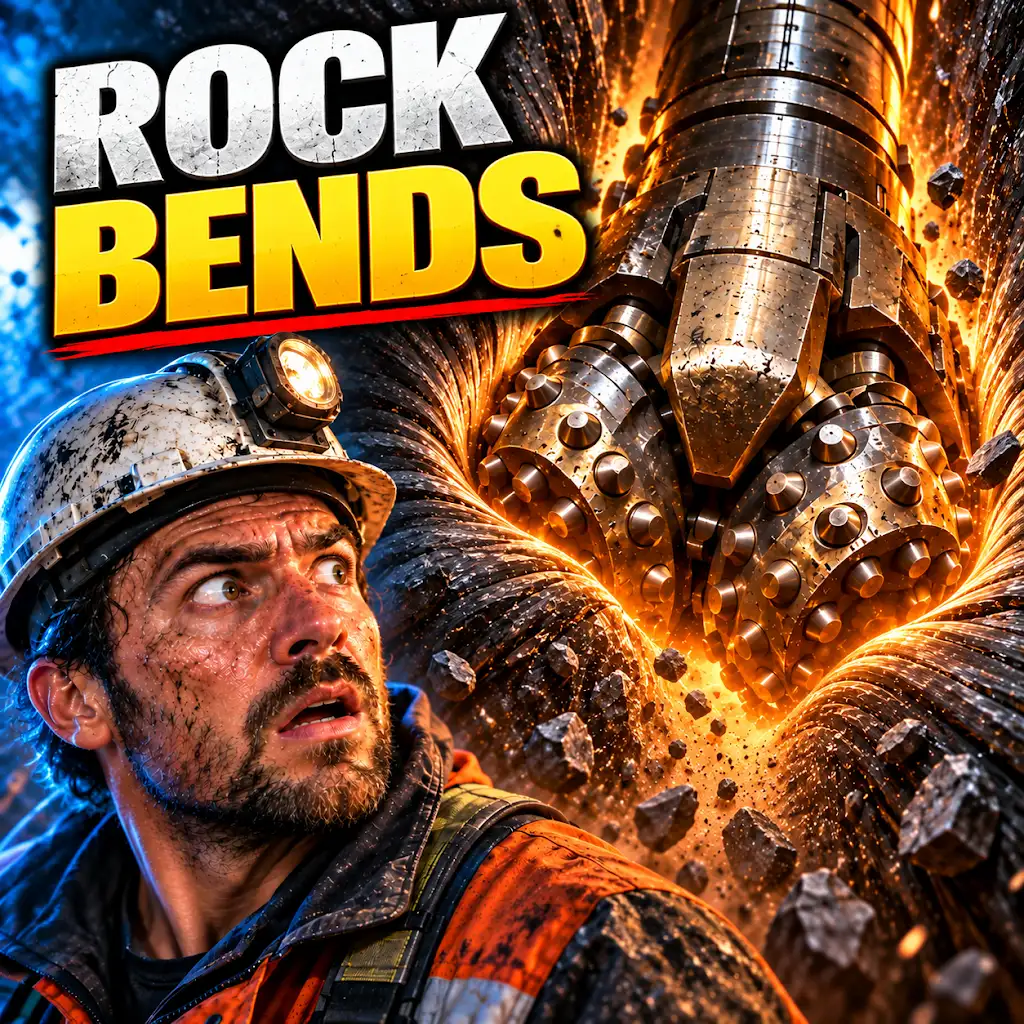
We Drilled 12 KM Into Earth—Then the Rock Started Bending
FAQs
1. Why can’t we drill to the center of the Earth?
Drilling to the center of the Earth is not possible due to extreme heat and pressure. The temperature at the Earth’s core is estimated to be around 5700 degrees Celsius, which would melt any drilling equipment.
2. How deep have we been able to drill into the Earth’s crust?
The deepest hole ever drilled into the Earth’s crust is the Kola Superdeep Borehole in Russia, which reached a depth of about 12 kilometers. This is only a fraction of the Earth’s total radius of approximately 6371 kilometers.
3. What challenges do we face when attempting to drill deeper into the Earth?
Some of the main challenges include extreme temperatures, high pressures, and the physical limitations of drilling equipment. As we go deeper into the Earth, the heat and pressure increase exponentially, making it difficult for any machinery to withstand these conditions.
4. What do we know about the Earth’s layers beneath the crust?
Beneath the Earth’s crust, there are several layers including the mantle, outer core, and inner core. These layers are composed of different materials and have distinct properties that contribute to the Earth’s structure and dynamics.
5. Are there any alternative methods being explored to study the Earth’s interior?
Scientists are exploring alternative methods such as seismic imaging, magnetotellurics, and studying volcanic eruptions to gather information about the Earth’s interior. These methods provide valuable insights into the composition and behavior of the Earth’s deep layers without the need for drilling to the center.