You’ve likely encountered the stern warnings: “Do not put metal in the microwave!” It’s a rule ingrained in us from a young age, often accompanied by images of sparking ovens and potential fires. But have you ever stopped to wonder why? It’s not just a quirky restriction; the shape of metal plays a critically important role in how microwaves interact with your food, and understanding this can revolutionize your microwave cooking. Forget bland, rubbery meals; by grasping these principles, you can unlock the microwave’s potential for speed, efficiency, and surprisingly delicious results.
Before delving into the specifics of metal, it’s essential to understand the fundamental mechanism of your microwave oven. Your microwave isn’t a conventional oven that heats from the outside in. Instead, it employs electromagnetic radiation, specifically microwaves, to excite water molecules within your food.
The Magic of Dielectric Heating
Water’s Polar Nature
Water molecules (H₂O) are not neutral; they possess a positive charge on the hydrogen side and a negative charge on the oxygen side. This makes them inherently polar. Think of them as tiny magnets, with a distinct positive and negative pole.
The Dance of Diatomic Molecules
Microwaves, being electromagnetic waves, have oscillating electric and magnetic fields. When these waves encounter polar molecules like water, the electric field exerts a force on the charged poles of the water molecules. This force causes the molecules to rapidly rotate, attempting to align themselves with the oscillating field. As they spin and jostle against each other, they generate friction, and it’s this friction that produces heat, cooking your food from the inside out. This process is known as dielectric heating.
Penetration Depth and Even Cooking
The depth to which microwaves penetrate food is crucial for even cooking. Thicker foods have outer layers that heat up quickly, while the inner core may remain cold. Microwave ovens are designed to optimize this penetration, though factors like food density and composition can influence it. Understanding this helps explain why some microwave recipes call for rotating or stirring food partway through the cooking process.
Understanding why the shape of metal matters in a microwave is crucial for safe and effective cooking. Different shapes can affect how microwaves interact with the metal, potentially leading to arcing or uneven heating. For a deeper exploration of this topic, you can read a related article that discusses the science behind microwave functionality and the implications of using metal objects of various shapes. To learn more, visit this article.
Why Metal is a Microwave Menace: The Reflection Phenomenon
Now, let’s address the elephant in the microwave: metal. When microwaves encounter metal, they behave very differently than they do with food. Instead of being absorbed and exciting water molecules, they are largely reflected. This reflection is the primary reason metal is generally forbidden.
The Mirror Effect
Imagine shining a flashlight onto a mirror. The light bounces off, right? Metal acts similarly with microwaves. The smooth, conductive surface of metal reflects the electromagnetic waves, sending them careening back into the microwave cavity. This reflection isn’t just an inconvenience; it can lead to a cascade of problems.
Standing Waves and Hot Spots
When microwaves are reflected, they can interfere with incoming waves, creating patterns of high and low energy called “standing waves.” These standing waves result in localized areas of intense microwave energy – “hot spots” – and other areas where the energy is significantly reduced – “cold spots.” This uneven distribution of energy leads to food that is cooked erratically, with some parts burnt and others still raw. You’ve likely experienced this uneven cooking even without metal, but metal exacerbates the issue dramatically.
Arc Flashing: The Dazzling Danger
Perhaps the most visually dramatic consequence of placing metal in a microwave is arc flashing, commonly known as sparking. This occurs when the electric field of the microwaves becomes concentrated at sharp edges or points on the metal object. If the electric field becomes sufficiently intense, it can ionize the air molecules around the metal, creating a plasma – essentially a miniature lightning bolt.
Sharp Edges and Pointed Surfaces
The sharper the edge or the more pointed the surface of the metal, the more likely arc flashing is to occur. Think of a fork with its tines, or the crinkled edges of aluminum foil. These are prime locations for electrical field concentration. The intense electrical discharge can damage the interior of your microwave, including the magnetron (the component that generates microwaves), and potentially cause a fire.
Thin Metal Foils and Wraps
While thicker, solid pieces of metal might simply reflect waves, thin metallic items like aluminum foil can be more prone to tearing and creating sharp edges. When torn, these thin pieces can develop very fine points that are ideal for initiating arc flashing. This is why even using a small piece of foil to cover a portion of food can be risky.
The Nuances of Metal Shape: When is Metal Not a Menace?
You might be thinking, “So, no metal, ever?” While the general rule is to err on the side of caution, the reality is a bit more nuanced, and understanding the shape of the metal is key to identifying exceptions. Not all metal objects behave the same way in a microwave.
Smooth, Rounded Surfaces and Even Distribution
The critical factor that differentiates a safe metal object from a hazardous one is its surface geometry. Metal objects with smooth, rounded surfaces and no sharp edges or points tend to distribute the reflected microwaves more evenly across the oven cavity.
Microwave-Safe Metal Racks
Some microwave ovens come equipped with metal racks or turntable supports. These are specifically designed to have smooth, rounded edges and are positioned in a way that minimizes interference with the microwave field. Their purpose is often to allow for multiple levels of cooking or to elevate food for better air circulation. However, even these should be used according to the manufacturer’s instructions.
Smooth Metal Bowls and Utensils (with caveats)
In certain controlled situations, and with very specific types of metal cookware, some smooth, rounded metal bowls or even utensils might be used. The key here is that the metal needs to be designed to avoid creating concentrated electric fields. For instance, some specialty microwave cookware might utilize materials with specific metallurgical properties that mitigate the risk of arc flashing. However, this is highly manufacturer-specific and not a general license to use any metal bowl.
Avoiding Edges and Protrusions
The presence of any sharp edges, points, or protrusions on a metal object significantly increases the risk of arc flashing. These features concentrate the electric field, acting like lightning rods for microwaves.
Forks and Spoons
Classic examples of problematic metal items include forks and spoons. Their tines and edges are precisely the kind of features that can lead to sparking. Even if you’re just trying to stir your food, these items should be removed before operating the microwave.
Metal Trim on Dishes
You’ve probably seen it on fancy dinnerware: a delicate band of metallic trim around the rim. This trim, even if it seems small and insignificant, is a prime candidate for arc flashing. The sharp edge of the metallic paint can concentrate the microwave energy, leading to sparks and potential damage. Always check your dishes for metallic accents.
The Art of Microwave Cooking: Leveraging Metal’s Properties Wisely
While the general rule of thumb is to avoid metal, understanding the physics behind it allows for some very specific, and often overlooked, applications of metal in microwave cooking. These are not everyday occurrences but are important for those looking to optimize their microwave use.
Microwave-Safe Bakeware and Accessories
The market for microwave-safe cookware is growing, and some innovative products utilize metal in their construction, but with careful design considerations.
Combination Materials
Some microwave-safe bakeware might incorporate metal elements for structural support or heat conductivity, but these are typically shielded or designed in a way that prevents direct interaction with the microwave field in a hazardous manner. They might have a non-metallic exterior that absorbs the microwaves, while the internal metal components are strategically placed and insulated.
Specialized Metal Grids
There are specialized metal grids or racks designed for microwave ovens that allow for browning or crisping food. These items are typically made of very specific alloys and have geometries that are engineered to dissipate microwave energy safely. They often work by absorbing microwave energy and then radiating heat to the food, mimicking the browning effect of a conventional oven. However, these are usually explicitly labeled as microwave-safe and should be used with caution.
The Role of Shielding and Insulation
In some cases, metal can be used to shield certain parts of food from microwave energy, allowing for more controlled cooking.
Covering and Protecting
If you have a particularly delicate or unevenly shaped item, you might consider using a small piece of aluminum foil to lightly tent over a specific area that is cooking too quickly. The key here is lightly and tenting, not wrapping tightly. The foil acts as a reflector, bouncing microwaves away from that area. However, this is a risky maneuver and requires a good understanding of your microwave’s behavior. It’s generally safer to simply reduce the power or cooking time.
Insulating and Preventing Overcooking
Conversely, in some experimental cooking techniques, a layer of metal might be used to insulate a portion of food from the microwave energy. This is a more advanced application and is not recommended for novice microwave users. The goal is to create a barrier that prevents the microwaves from reaching a specific area, allowing other parts of the food to cook more thoroughly.
When it comes to using metal in a microwave, understanding why the shape of the metal matters is crucial for safe cooking. For instance, sharp edges or pointed shapes can create electric arcs, leading to potential hazards. To delve deeper into this topic, you can explore a related article that discusses the science behind metal shapes in microwaves and their effects on cooking efficiency. This insightful piece can be found here, providing valuable information for anyone looking to use metal safely in their microwave.
Beyond the Spark: Other Considerations of Metal in the Microwave
| Metal Shape | Effect in Microwave |
|---|---|
| Flat and Smooth | Reflects microwaves evenly, promoting even heating of food |
| Irregular or Sharp | May cause sparks and uneven heating due to concentrated reflection of microwaves |
| Curved or Rounded | May scatter microwaves, leading to uneven heating and hot spots in food |
While arc flashing is the most immediate concern, the interaction of metal with microwaves has other implications that can affect the quality and safety of your food.
Interference with Cooking Efficiency
As mentioned earlier, the reflection of microwaves by metal can disrupt the even distribution of energy within the oven. This means that even if you don’t see sparks, the presence of metal can lead to longer cooking times and unevenly cooked food. The reflected waves can effectively “shield” parts of your food from the intended microwave energy.
Potential for Chemical Leaching
While not directly related to microwave energy, some metal containers, especially those that are not food-grade or are damaged, can potentially leach chemicals into your food when heated. This is a general concern with heating food in containers, but it’s worth remembering that not all metal is created equal when it comes to food safety. Always use food-grade, microwave-safe containers.
Impact on Browning and Texture
Metal, by reflecting microwaves, can prevent the browning and crisping that many people desire in their cooked food. The direct heating of water molecules in food is what leads to caramelization and the Maillard reaction, which contribute to browning and desirable textures. Metal’s reflective properties can interfere with these processes, resulting in pale, rubbery food.
Mastering the Microwave: Smart Strategies for Using Metal (When Appropriate)
Given the complexities, how can you navigate the world of metal in the microwave with confidence? It all boils down to understanding the intent behind the design and the consequences of its shape.
Always Read the Manual and Labels
The most crucial advice is to always refer to your microwave oven’s user manual and any labels on cookware. Manufacturers will clearly indicate what materials are safe and how they should be used. Don’t assume anything. If a dish or accessory isn’t explicitly marked as microwave-safe, err on the side of caution and keep it out.
Prioritize Non-Metallic Materials
For general microwave cooking, your best bet is to stick with non-metallic materials. Glass, ceramic, and microwave-safe plastics are generally excellent choices for containers, lids, and utensils. These materials absorb microwaves effectively, allowing for even and efficient cooking.
Embrace Microwave-Specific Cookware
If you’re serious about maximizing your microwave’s capabilities, invest in microwave-specific bakeware and accessories. These products are designed with safety and performance in mind, often incorporating metal in ways that are safe and beneficial. Look for items that are explicitly labeled as such and follow their usage instructions diligently.
Understand the “Why” Behind the Warning
Ultimately, the “no metal in the microwave” rule isn’t arbitrary. It’s rooted in a fundamental understanding of how microwaves interact with different materials. By understanding the physics of dielectric heating, reflection, and arc flashing, you can become a more informed and confident microwave user. The shape of metal isn’t just a geometric curiosity; it’s a critical factor that determines whether your microwave meal will be a culinary triumph or a sparking disaster. So, the next time you’re about to pop something metallic into your oven, take a moment to consider its shape, its purpose, and the potential consequences. Your microwave (and your kitchen) will thank you.
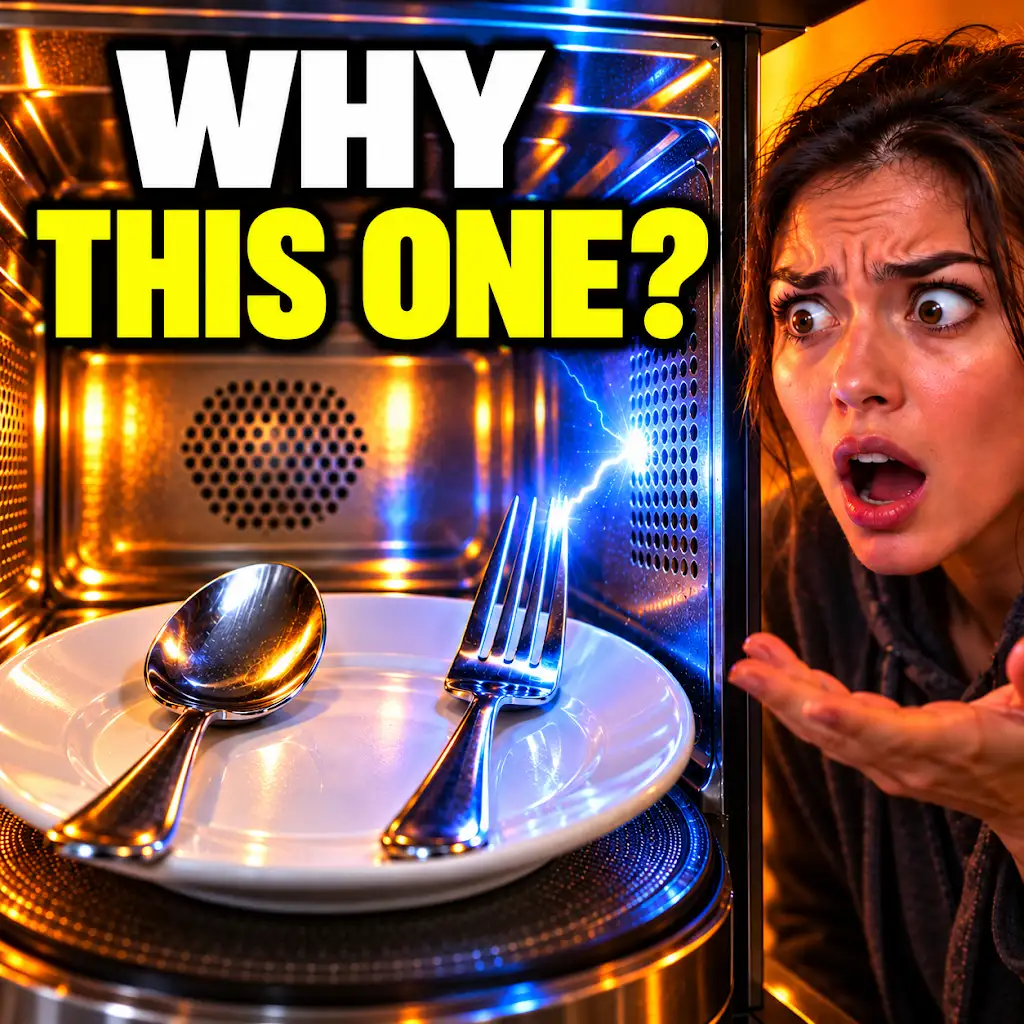
A Fork and a Spoon React Differently in a Microwave. Why?
FAQs
1. Why does the shape of metal matter in a microwave?
Metal shapes can cause sparks and arcing in a microwave, which can lead to damage to the appliance and potential fire hazards.
2. What types of metal shapes should be avoided in a microwave?
Sharp or pointed metal objects, as well as metal with thin edges or corners, should be avoided in a microwave as they can cause sparks and arcing.
3. Can any metal be used in a microwave?
It is generally recommended to avoid putting any metal in a microwave, as it can cause damage to the appliance and pose safety risks.
4. How does the shape of metal affect the distribution of microwaves?
The shape of metal can cause the microwaves to reflect and concentrate in certain areas, leading to uneven heating and potential damage to the appliance.
5. Are there any safe metal shapes that can be used in a microwave?
Flat, smooth metal surfaces, such as those found in microwave-safe cookware, can be used in a microwave without causing sparks or arcing. However, it is always best to refer to the manufacturer’s guidelines for specific recommendations.