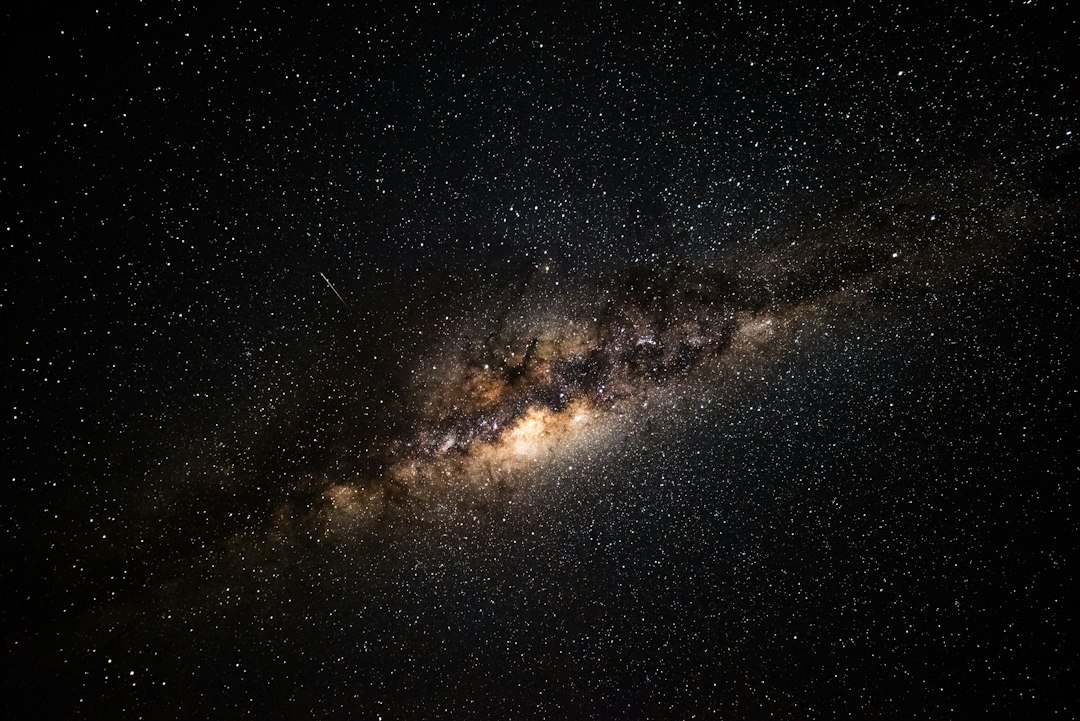
The vast canvas of space, a realm of breathtaking nebulae, distant galaxies, and celestial phenomena, presents humanity with images of unparalleled wonder. However, the journey from raw data captured by powerful telescopes to the stunning, awe-inspiring photographs that grace our screens and publications is a complex and crucial one, heavily reliant on the meticulous art of editing. Far from being a mere aesthetic enhancement, editing space photos is an essential scientific and communicative process that transforms raw astronomical observations into understandable and impactful visual narratives. Without this vital step, the profound beauty and scientific significance of the cosmos would remain largely inaccessible.
The universe, in its unadulterated form as captured by our most advanced instruments, often presents a spectacle that is vastly different from the vibrant, detailed images we have come to associate with space photography. Telescopes, whether ground-based or orbital, gather light across a spectrum of wavelengths, often far beyond what the human eye can perceive. This raw data, while scientifically invaluable, is typically monochromatic, noisy, and lacks the visual cues that allow for immediate interpretation.
The Nature of Astronomical Data
Astronomical observations are fundamentally about collecting photons – particles of light – that have traveled unimaginable distances. Telescopes are essentially sophisticated light buckets, designed to detect and record these photons. However, the light emitted or reflected by celestial objects is not always in the visible spectrum. Many astronomical phenomena, such as infrared radiation from cool stars or X-rays from black holes, are invisible to us. Telescopes equipped with specialized detectors can capture these wavelengths, but the resulting data is not a direct visual representation in the way a digital camera captures a scene.
Capturing Invisible Wavelengths
The ability to observe the universe in non-visible wavelengths is one of the most powerful aspects of modern astronomy. Infrared telescopes can peer through dust clouds that obscure visible light, revealing star-forming regions and the centers of galaxies. Ultraviolet observations can study hot, young stars and the energetic processes in their atmospheres. Radio telescopes can detect the faint radio waves emitted by distant galaxies and the cosmic microwave background radiation, a remnant of the Big Bang. Each of these wavelengths carries unique information about the physical conditions, composition, and evolution of celestial objects. However, the raw data from these instruments is not something that can be directly translated into a color image without significant processing.
The Presence of Noise and Artifacts
Even when observing in visible light, raw astronomical data is inherently susceptible to noise. This noise can arise from various sources, including the detectors themselves (readout noise), background light from Earth or the atmosphere, and cosmic rays that strike the detector. These unwanted signals can obscure faint details and introduce spurious features into the image. Furthermore, the intricate machinery of telescopes and the vastness of space can introduce artifacts, such as diffraction spikes from bright stars or uneven detector sensitivity. These imperfections must be addressed during the editing process to ensure that the final image accurately represents the celestial object.
The Limits of Human Perception
Our visual perception is a remarkable evolutionary adaptation, finely tuned to the terrestrial environment. However, it is inherently limited when it comes to the cosmic scale. The human eye can only perceive a narrow band of the electromagnetic spectrum – visible light. Furthermore, our eyes have a limited dynamic range, meaning we cannot simultaneously see extreme bright and dim details in the same image. Space, however, is a realm of vast contrasts, with the blinding light of stars existing alongside the deep darkness of interstellar space.
The Visible Spectrum Constraint
The fact that we can only see visible light is a fundamental limitation. While beautiful, it only offers a partial glimpse into the universe’s rich tapestry. Many of the most dynamic and informative processes in space occur at wavelengths outside this range. For instance, the intricate structures within nebulae often emit strongly in infrared or ultraviolet light, which are invisible to our eyes. Without capturing and processing these wavelengths, our understanding of these regions would be severely incomplete.
Dynamic Range Limitations
Imagine trying to capture a photograph of a nighttime cityscape with both the bright neon signs and the deep shadows of alleyways in perfect detail. A standard camera would struggle, either overexposing the signs or underexposing the shadows. The universe presents an even more extreme challenge. The difference in brightness between a brilliant star and the faint light from a distant galaxy can be millions or even billions of times. Without specialized techniques to extend the dynamic range, critical details would be lost.
Space photos are often edited to enhance their visual appeal and to provide clearer insights into celestial phenomena. This editing process can involve adjusting colors, contrast, and brightness to reveal details that may not be visible in raw images. For a deeper understanding of the reasons behind these edits and the techniques used, you can read a related article at Freaky Science, which explores the fascinating world of space photography and the importance of image processing in astronomy.
The Alchemist’s Touch: The Art and Science of Colorization
Perhaps the most striking aspect of edited space photos is their vibrant color. These hues, however, are rarely what a human would see if they were to visit these celestial locales. The colors in astronomical images are carefully assigned, translating data from different wavelengths into a visual language that our brains can comprehend and appreciate. This process is a delicate balance between scientific accuracy and artistic interpretation.
Translating Data into Color
The primary goal of colorization is to make the invisible visible and to highlight important scientific features. Astronomers assign specific colors to different wavelengths of light that have been captured by telescopes. This is not an arbitrary process; it is based on scientific understanding and the need to convey information.
False Color vs. True Color
It is crucial to distinguish between “true color” and “false color” images. True color images attempt to represent how a human eye might perceive the object if it were visible in those wavelengths, typically by combining data from red, green, and blue filters. However, even true color images often require enhancement to reveal faint details. False color images, on the other hand, deliberately assign colors to wavelengths that are not visible to the human eye. For example, infrared data might be mapped to red, visible light to green, and ultraviolet to blue. This allows scientists to visualize and study phenomena that would otherwise remain hidden.
The Purpose of Color Assignment
The choice of color assignment is driven by several factors. Often, colors are chosen to make distinct features stand out. For instance, if a particular gas emission is of scientific interest, it might be assigned a vivid color that contrasts with its surroundings, making its distribution and structure more apparent. In other cases, colors might be chosen to represent temperature. Hotter objects might be assigned bluer hues, while cooler objects appear redder, mirroring the way we perceive heat in everyday life. The goal is always to enhance understanding and to reveal the underlying science.
Enhancing Subtle Details
Beyond colorization, editing plays a vital role in bringing out the subtle details that are often lost in the raw data. Faint structures, delicate filaments of gas, and the fine textures of galactic arms can be easily obscured by noise and the limitations of dynamic range.
Contrast Adjustment and Stretching
One of the most fundamental editing techniques is contrast adjustment. This involves manipulating the range of brightness values in an image to make the differences between light and dark areas more pronounced. Without proper contrast stretching, a beautiful nebula might appear as a faint, uniform cloud of light. By carefully adjusting the contrast, editors can reveal the intricate structures within the nebula, such as shockwaves, stellar nurseries, and the remnants of exploded stars.
Noise Reduction Techniques
Noise is an omnipresent challenge in astronomical imaging. Editors employ sophisticated noise reduction algorithms to smooth out the grainy texture of raw data without sacrificing important astronomical details. These algorithms work by identifying and averaging out random fluctuations, effectively cleaning up the image and revealing the underlying signal. The challenge lies in finding the right balance – too much noise reduction can blur fine features, while too little leaves the image looking messy and difficult to interpret.
Revealing the Invisible: Scientific Insights Through Editing
The importance of editing space photos extends far beyond aesthetics. It is an indispensable tool for scientific discovery, allowing astronomers to extract crucial information from the data that would otherwise remain hidden. The process transforms raw observations into compelling visual evidence, facilitating research and communication.
Highlighting Specific Phenomena
Editing allows scientists to highlight specific astronomical phenomena of interest. By manipulating color and contrast, they can draw attention to features that might be faint or blended into the background in the raw data. This is particularly important for studying rare or elusive events, such as supernovae, gamma-ray bursts, or the interaction of galaxies.
Mapping Gas and Dust Distributions
The distribution of gas and dust in space is crucial for understanding star formation and galactic evolution. Different types of gas emit light at specific wavelengths, and editing allows scientists to map these emissions. For example, by assigning distinct colors to different atomic emissions (like hydrogen alpha, oxygen III, or sulfur II), editors can create images that clearly delineate the regions where different elements are abundant. This helps astronomers to understand the chemical composition and physical processes occurring within nebulae and galaxies.
Visualizing Magnetic Fields and Plasma
The universe is filled with invisible forces, such as magnetic fields, and dynamic phenomena like plasma. While we cannot directly see these, their effects can be imprinted on the light that reaches us. Through specialized imaging techniques and subsequent editing, astronomers can infer the presence and structure of these invisible elements. For instance, the polarization of light can reveal the orientation of magnetic fields, and editing can be used to visualize these patterns, offering insights into the dynamics of accretion disks around black holes or the interiors of stars.
Quantifying and Measuring Astronomical Objects
While visual presentation is a key outcome of editing, the underlying data manipulation also enables quantitative analysis. The process of transforming raw digital information into a visually interpretable image often involves precise calibration and measurement.
Accurate Brightness and Flux Measurements
The brightness of celestial objects, known as their flux, is a fundamental quantity in astronomy. Editing processes, including flat-field correction and background subtraction, ensure that the recorded brightness accurately reflects the object’s intrinsic luminosity, free from instrumental biases or terrestrial interference. These corrected brightness values are crucial for determining distances, temperatures, and masses of stars and galaxies.
Spatial Resolution and Detail Enhancement
Editing can also help to improve the apparent spatial resolution of an image, revealing finer details than might be immediately obvious. Techniques like deconvolution, which attempts to reverse the blurring effect of the atmosphere or the telescope’s optics, can sharpen images and reveal structures that were previously indistinguishable. This allows for more precise measurements of the size and shape of celestial objects, aiding in their classification and the study of their internal dynamics.
The Communicative Power: Sharing the Cosmos with the Public
The impact of edited space photos extends far beyond the scientific community. They serve as powerful tools for public engagement, igniting curiosity, fostering a sense of wonder, and educating people about the universe we inhabit. The transformation of complex scientific data into visually stunning images makes the cosmos accessible and relatable to a global audience.
Inspiring Future Generations
The iconic images of nebulae, galaxies, and planets have inspired countless individuals, sparking an interest in science, technology, engineering, and mathematics (STEM) fields. For many, these images are their first introduction to the wonders of space exploration, planting the seeds for future astronomers, engineers, and astronauts.
Fostering Scientific Literacy
By presenting accurate yet engaging visuals, edited space photos contribute significantly to scientific literacy. They demystify complex astronomical concepts, making them understandable and relatable. When people see the vibrant colors and intricate details of a distant galaxy, they are more likely to engage with the scientific explanations behind them, fostering a deeper appreciation for scientific inquiry.
Cultivating a Sense of Wonder and Exploration
The sheer beauty and scale of the universe, as captured and presented through edited photographs, evoke a profound sense of awe and wonder. These images remind us of our place in the vast cosmos and inspire a desire to explore and understand it further. They fuel our innate human drive for discovery and push the boundaries of our knowledge.
Facilitating Public Understanding of Space Missions
Space agencies like NASA and ESA rely heavily on edited images to communicate the results and achievements of their missions to the public. These images serve as tangible evidence of our exploration of space, showcasing the capabilities of our spacecraft and the discoveries they make.
Documenting Discoveries and Achievements
Every successful space mission generates a wealth of data, and editing plays a critical role in transforming this data into compelling visual narratives. Whether it’s the first images from a new telescope, the stunning panoramas from a rover on Mars, or the detailed observations of distant exoplanets, edited photos are essential for documenting these discoveries and sharing them with the world. They are the visual storytellers of our cosmic adventures.
Engaging a Global Audience
In an increasingly interconnected world, edited space photos have the power to unite people across borders and cultures. The beauty of the universe is a universal language, and these images transcend linguistic and geographical barriers, fostering a shared appreciation for scientific progress and the wonders of the cosmos. They are a powerful tool for building support for space exploration and scientific research on a global scale.
Space photos are often edited to enhance their visual appeal and to highlight specific features that may not be easily visible in raw images. This editing process can involve adjusting colors, contrast, and brightness to create a more striking representation of celestial bodies. For those interested in the intricacies of this practice, a related article can be found at Freaky Science, which delves into the reasons behind the editing of space imagery and its impact on public perception of the universe. Understanding these techniques helps us appreciate the beauty of space while recognizing the artistry involved in presenting it.
Ethical Considerations and Scientific Integrity
| Reasons for Editing Space Photos | Explanation |
|---|---|
| Enhance Details | Editing can bring out finer details in the photos that may not be visible in the original images. |
| Correct Color Balance | Adjusting the color balance can help to accurately represent the colors of celestial objects. |
| Remove Noise | Noise reduction techniques can improve the clarity of the photos by reducing unwanted visual artifacts. |
| Highlight Features | Editing can be used to highlight specific features or phenomena in the space photos. |
| Combine Multiple Exposures | Combining multiple exposures can create a more comprehensive and detailed image of a celestial object. |
While the artistic and communicative aspects of editing space photos are undeniable, it is crucial to maintain scientific integrity throughout the process. The goal is to enhance understanding and reveal scientific truth, not to mislead or distort reality for aesthetic purposes.
Maintaining Scientific Accuracy
The primary ethical imperative in editing space photos is to ensure that the final image accurately represents the scientific data. This means avoiding manipulation that distorts physical properties or introduces features that are not supported by the underlying observations.
The Line Between Enhancement and Fabrication
The line between acceptable enhancement and unacceptable fabrication can sometimes be blurry. Editors must be mindful of this distinction. Techniques like contrast stretching and noise reduction are considered enhancements as they make existing features more visible. However, artificially introducing colors or features that are not present in the data would constitute fabrication and undermine the scientific value of the image.
Transparency and Documentation
To maintain trust and scientific rigor, it is essential to be transparent about the editing process. This often involves providing information about the original data, the techniques used, and the reasoning behind color assignments. Documenting the steps involved in the editing process allows other scientists to verify the results and understand how the final image was produced.
The Role of Scientific Peer Review
The scientific community plays a vital role in ensuring the integrity of astronomical images. Peer review processes allow other experts to scrutinize images and their accompanying scientific interpretations, identifying any potential inaccuracies or misrepresentations.
Verification and Validation of Images
When astronomers publish scientific papers, the accompanying images are subject to peer review. This process involves other scientists in the field examining the data and the presentation of the findings. If an image appears to be manipulated in a way that misrepresents the data, it will be flagged and questioned during this review. This ensures that published images are scientifically sound.
The Importance of Archival Data
The availability of raw, unedited archival data from telescopes is crucial for maintaining scientific integrity. This allows researchers to re-examine observations, perform their own analyses, and verify the results presented in edited images. It provides a critical safeguard against misrepresentation and ensures that scientific findings are based on verifiable data.
Conclusion: A Bridge Between the Cosmos and Humanity
In conclusion, the editing of space photos is not merely an artistic endeavor; it is a fundamental scientific and communicative process that bridges the gap between the incomprehensible vastness of the cosmos and human understanding. From transforming raw, often invisible data into vibrant, interpretable visuals, to highlighting subtle scientific phenomena and inspiring public curiosity, editing is indispensable. It empowers scientists to extract deeper insights, enables educators to communicate complex concepts, and allows us all to share in the profound beauty and mystery of the universe. By adhering to principles of scientific integrity, we ensure that these breathtaking images serve not only to awe and inspire but also to illuminate the truths of the cosmos, fostering a deeper connection between humanity and the celestial wonders that surround us.

The Space Photos Are Real—But Your Eyes Would See This
FAQs
1. Why are space photos edited?
Space photos are edited to enhance the visibility of celestial objects, correct for distortions caused by the Earth’s atmosphere, and to bring out details that may not be visible in the original images.
2. What kind of editing is done on space photos?
Editing of space photos can include adjustments to brightness, contrast, color balance, and sharpness. Additionally, image stacking and processing techniques are used to reduce noise and improve overall image quality.
3. Are space photos edited to deceive the public?
No, space photos are not edited to deceive the public. The editing process is done to accurately represent the celestial objects and phenomena captured by telescopes and spacecraft. Scientists and researchers strive to present the most accurate and informative images possible.
4. How do scientists ensure the accuracy of edited space photos?
Scientists and researchers use calibration techniques, reference images, and comparison with data from other instruments to ensure the accuracy of edited space photos. Additionally, the raw data from telescopes and spacecraft are often made available to the public for independent analysis.
5. Can the public access the original, unedited space photos?
In many cases, the original, unedited data from space telescopes and spacecraft are made available to the public through archives and databases. This allows individuals to access and analyze the raw data for their own purposes.