
You’ve likely marveled at how certain images leap out at you, how lines become starkly defined against their backgrounds, or how subtle details emerge from a muddy expanse. This power, this immediate visual impact, is largely dictated by contrast. For you, the observer, contrast isn’t just an aesthetic choice; it’s a fundamental mechanism your visual system relies upon to perceive, interpret, and ultimately, make sense of the world around you. This article will delve into the intricate ways contrast influences your visual signal processing, from the initial capture of light by your photoreceptors to the sophisticated interpretation within your brain.
Your journey into understanding visual contrast begins at the very entrance of your visual pathway: the eye. Specifically, it’s within the retina, a light-sensitive tissue lining the back of your eye, where the initial processing of light signals occurs. Contrast, in its most basic form, is the difference in light intensity between adjacent areas.
Photoreceptor Response and Luminance Gradients
When light strikes your retina, it activates specialized cells called photoreceptors – rods and cones. Rods are highly sensitive to low light conditions and primarily responsible for monochromatic vision, while cones are less sensitive but provide color and fine detail perception in brighter light. The intensity of light hitting these photoreceptors directly influences their response. Places with more light cause greater activation, and areas with less light lead to diminished activation. This uneven activation across your retinal surface creates what we call luminance gradients.
The Role of the Rods and Cones in Detecting Differences
Crucially, your visual system is not designed to process absolute light levels. Instead, it excels at detecting differences. Imagine looking at a black and white photograph. You don’t perceive every single shade of gray as an independent entity; rather, you perceive the boundaries between the light and dark areas – the edges. This is because your photoreceptors are more sensitive to changes in luminance than to steady levels. A strong difference in light between two neighboring points will elicit a robust signal, allowing your brain to identify them as distinct. This is the very foundation of how you perceive contrast.
Chromatic Contrast: Beyond Brightness
While luminance contrast, the difference in brightness, is paramount, don’t forget about the role of color. Chromatic contrast refers to the differences in color between adjacent areas. Your cones, each sensitive to different wavelengths of light (red, green, and blue), contribute to this. A vivid red object against a blue background creates a strong chromatic contrast that your visual system can readily process, even if the luminance levels are similar. This allows for richer and more nuanced perception of your surroundings.
The impact of contrast on visual signal transduction is a fascinating topic that explores how varying levels of contrast can influence our perception and processing of visual information. A related article that delves deeper into this subject can be found at Freaky Science, where it discusses the mechanisms behind visual processing and the role of contrast in enhancing our ability to detect and interpret visual stimuli. This exploration sheds light on the intricate relationship between contrast and visual perception, highlighting its significance in both everyday experiences and scientific research.
Neuronal Mechanisms: Amplifying the Signal
The initial detection of luminance and chromatic differences in the retina is just the first step. To make these differences salient and useful, your nervous system employs a suite of sophisticated neuronal mechanisms that actively amplify and enhance contrast. Without these mechanisms, your visual world would likely appear a uniform, undifferentiated wash.
Lateral Inhibition: Sharpening the Boundaries
One of the most fundamental mechanisms at play is lateral inhibition. Within the retina, certain neurons, particularly horizontal and amacrine cells, exert an inhibitory influence on their neighbors. When a photoreceptor is strongly stimulated by light, it fires, sending signals to surrounding neurons. These surrounding neurons, in turn, inhibit their own neighbors and are also inhibited by the stimulated cell. This creates a “sharpening” effect. Areas that are brightly illuminated will suppress the activity of adjacent, less illuminated areas, and vice versa. This results in an exaggeration of the contrast at the boundaries between light and dark regions, making edges appear crisper and more defined. Think of it like a noise-canceling process, but for visual signals, allowing you to better discern where one object ends and another begins.
Receptive Fields: Building Complexity
The neurons in your visual pathway, starting from the bipolar cells in the retina and extending to the ganglion cells, possess receptive fields. These are the specific regions of the visual field that influence their firing rate. Many of these receptive fields have an antagonistic center-surround organization. For ex-ample, a neuron might be excited when light falls on its center and inhibited when light falls on its surrounding area, or vice versa. This structure is exquisitely designed to detect contrast. A spot of light illuminating the center of an “on-center” receptive field will cause the neuron to fire vigorously, while a larger patch of light that also covers the inhibitory surround will result in a weaker or even inhibited response compared to just the center being illuminated. This “difference detector” mechanism is fundamental to your ability to perceive edges and the variations in luminance that define them.
Adaptation: Tuning Your Sensitivity
Your visual system is remarkably adaptable. When you are exposed to a high-contrast environment for an extended period, your sensitivity to contrast can decrease. Conversely, in a low-contrast environment, your sensitivity can increase. This phenomenon, known as adaptation, allows your visual system to operate effectively across a wide range of lighting conditions. If your system didn’t adapt, you would be overwhelmed by strong contrasts or unable to discern any detail in dim environments. This adaptive tuning ensures that you are most sensitive to the contrasts that are most informative in your current visual field.
The Impact of Contrast on Visual Acuity and Detection
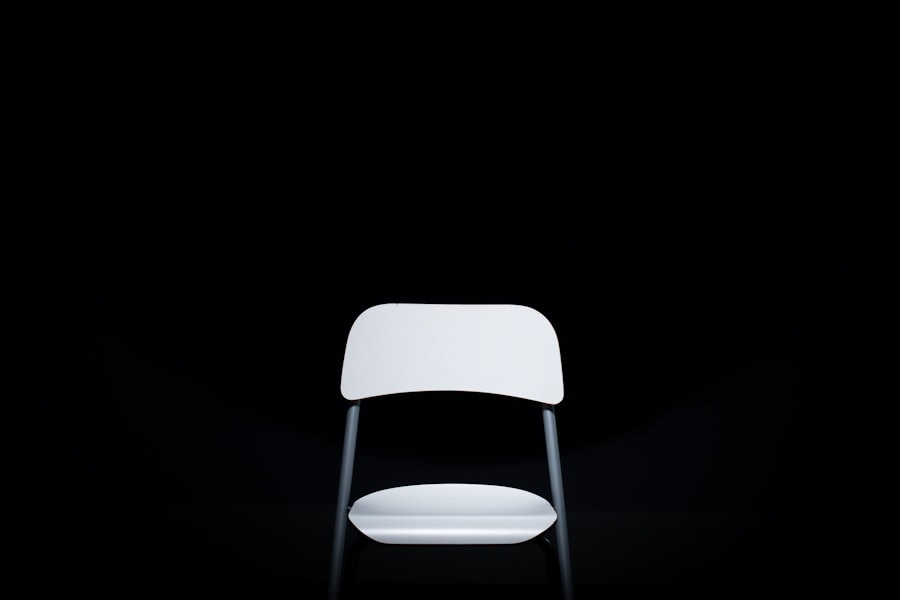
The presence and strength of contrast exert a profound influence on your ability to see fine details (visual acuity) and to detect the presence of objects in your visual field. Without sufficient contrast, even prominent objects can become invisible.
Contrast Threshold for Detection
There’s a minimum level of contrast, known as the contrast threshold, that is required for you to even detect that an object is present. If the difference in luminance or color between an object and its background falls below this threshold, the object essentially becomes blended into the surroundings, rendering it undetectable to your visual system. This threshold can vary depending on the size of the object, its location in your visual field, and your current state of adaptation.
Contrast and Visual Acuity
Visual acuity, your ability to discern fine details, is heavily dependent on contrast. When contrast is high, you can resolve smaller features and perceive finer patterns. As contrast decreases, your ability to resolve these details diminishes. This is why Snellen charts, used to measure visual acuity, rely on high contrast between the black letters and the white background. In real-world scenarios, this means that reading text on a poorly printed page, or seeing distant objects on a foggy day, becomes significantly more challenging when the contrast is low.
Text Readability and Legibility
For practical applications, the impact of contrast on text readability and legibility is crucial. Whether you’re reading a book, a website, or a street sign, the contrast between the text and its background directly affects how easily and quickly you can process the information. Sufficient contrast ensures that the glyphs of the characters are distinct from the surrounding area, allowing your visual system to efficiently distinguish between them and perceive the intended message. Low contrast can lead to visual fatigue, misreading, and a generally frustrating experience.
Disorders and Deficiencies: When Contrast Processing Fails

Disruptions in the mechanisms that process contrast can have significant consequences for your visual perception, leading to various visual impairments.
Reduced Contrast Sensitivity
Many ocular diseases and neurological conditions are characterized by a reduction in contrast sensitivity. This means that your ability to detect even moderate levels of contrast is impaired. For example, cataracts, which cloud the lens of your eye, scatter light and reduce the effective contrast of images reaching your retina. Glaucoma can damage the optic nerve, interfering with the transmission of visual signals, including those related to contrast. Retinal diseases like macular degeneration can also affect the photoreceptors and other retinal cells responsible for initial contrast detection.
Impact on Daily Living Activities
A deficiency in contrast processing can significantly impact your ability to perform everyday tasks. Navigating your environment can become hazardous, as you may struggle to distinguish steps, curbs, or uneven surfaces. Reading and writing can be challenging, affecting your ability to work and learn. Recognizing faces or distinguishing important details in your surroundings can also be compromised. This highlights the pervasive importance of contrast processing for functional vision.
Macular Degeneration and Diabetic Retinopathy
Specific conditions like age-related macular degeneration (AMD) and diabetic retinopathy directly affect the central part of your retina (the macula), which is responsible for sharp, detailed vision. These conditions often lead to a significant loss of contrast sensitivity, making it difficult for you to see fine details and recognize low-contrast objects. The blurry or distorted vision experienced by individuals with these conditions is often a direct consequence of their impaired ability to process contrast effectively.
Recent studies have highlighted the significant role that contrast plays in visual signal transduction, influencing how our brains interpret visual information. For a deeper understanding of this topic, you can explore a related article that delves into the mechanisms behind visual processing and the effects of contrast on perception. This insightful piece can be found at this link, where you will discover more about the intricate relationship between contrast and visual signals.
Applications and Implications: Leveraging Contrast for Clarity
| Contrast Level | Impact on Visual Signal Transduction |
|---|---|
| Low Contrast | Slower response of photoreceptor cells |
| High Contrast | Quicker response of photoreceptor cells |
| Increased Contrast Sensitivity | Enhanced ability to detect subtle differences in shades and colors |
A deep understanding of how contrast influences visual signal processing has led to numerous practical applications, all aimed at optimizing visual communication and perception.
Design Principles in User Interfaces and Signage
In graphic design and user interface (UI) development, contrast is a fundamental principle. Designers consciously manipulate contrast to guide your attention, create visual hierarchy, and ensure legibility. High contrast is essential for clear signage, especially in public spaces where rapid information processing is crucial. Websites, applications, and printed materials all benefit from thoughtful consideration of color and luminance contrast to improve user experience and information retention.
Medical Imaging and Diagnostics
The field of medical imaging relies heavily on contrast enhancement to visualize subtle anatomical structures and pathological changes. Techniques like contrast-enhanced MRI or CT scans involve introducing contrast agents into the body to increase the difference in signal intensity between different tissues. This allows radiologists to better identify tumors, blood clots, and other abnormalities that might otherwise be indistinguishable from surrounding healthy tissue.
Photography and Cinematography
For photographers and cinematographers, contrast is a powerful creative tool. They manipulate contrast to evoke mood, create drama, and draw the viewer’s eye to specific subjects. A high-contrast image can appear sharp and dramatic, while a low-contrast image might convey a sense of softness or subtlety. Understanding how contrast affects perception allows them to craft compelling visual narratives.
Accessibility and Inclusivity
Recognizing the importance of contrast for individuals with low vision or other visual impairments is crucial for creating accessible environments and materials. Designers and developers strive to adhere to contrast guidelines (e.g., from the Web Content Accessibility Guidelines – WCAG) to ensure that their work is perceivable by a wider range of users. This includes providing sufficient contrast in text, icons, and interactive elements to make them easily distinguishable.
In conclusion, the impact of contrast on your visual signal processing is multifaceted and deeply ingrained in the very way you perceive the world. From the initial detection of light differences in your retina, through the intricate neural amplification and enhancement, to the ultimate interpretation by your brain, contrast is the silent architect of visual clarity. Understanding these mechanisms not only demystifies your own visual experience but also empowers you to create and interact with visual information more effectively. It’s a testament to the elegant efficiency of your visual system, where the simple difference between light and dark, color and hue, becomes the very foundation of your rich and detailed perception.
FAQs
What is visual signal transduction?
Visual signal transduction is the process by which light is converted into electrical signals in the retina of the eye, which are then transmitted to the brain for visual perception.
How does contrast impact visual signal transduction?
Contrast refers to the difference in luminance and/or color that makes an object distinguishable. Higher contrast can lead to increased sensitivity and response of visual receptors, while lower contrast may result in reduced sensitivity and response.
What are the effects of high contrast on visual signal transduction?
High contrast can lead to increased activation of visual receptors, resulting in enhanced perception of details and improved visual acuity. This can be particularly beneficial in low-light conditions.
What are the effects of low contrast on visual signal transduction?
Low contrast can lead to reduced activation of visual receptors, resulting in decreased perception of details and reduced visual acuity. This can make it more challenging to distinguish objects, especially in low-light conditions.
How can understanding the impact of contrast on visual signal transduction be applied in real-world scenarios?
Understanding the impact of contrast on visual signal transduction can be applied in various fields such as photography, design, and vision science to optimize visual perception and enhance the effectiveness of visual communication.