
The nature of reality has been a central subject of inquiry for philosophers, scientists, and scholars throughout history. What individuals perceive as reality may not represent absolute truth; instead, it may be a complex phenomenon shaped by factors such as personal perception and the laws of physics. This question encourages examination of existence itself, raising inquiries about the universe’s fundamental structure and the principles that govern it.
As scientific knowledge expands regarding both the physical universe and human consciousness, the distinction between objective reality and subjective experience becomes less clear. A key aspect of this inquiry is the relationship between perception and reality. Human experience is inherently subjective, influenced by personal beliefs, cultural contexts, and the limitations of sensory perception.
As people experience their lives, they develop an understanding of reality that may differ substantially from others’ interpretations. This subjective dimension raises significant questions about existence: Does an objective reality exist independent of human observation, or is reality constructed through shared human experience? Investigating these questions requires examination of quantum physics, philosophy, and metaphysics, fields where the limits of human understanding continue to be explored.
One fascinating concept explored in modern science is simulation theory.
Key Takeaways
- Reality is heavily influenced by perception, challenging the notion of an objective world.
- Quantum physics reveals fundamental uncertainties and dualities, such as wave-particle duality and the observer effect.
- Phenomena like entanglement and non-locality suggest interconnectedness beyond classical space-time.
- The holographic principle and simulation hypothesis propose that reality may be a constructed or emergent phenomenon.
- These insights have profound implications for philosophy, metaphysics, and the quest for a unified theory of reality.
The Role of Perception in Shaping Reality
Perception plays a pivotal role in how individuals interpret their surroundings and experiences. The human brain processes sensory information to create a coherent picture of the world, but this process is inherently flawed and influenced by numerous factors. Cognitive biases, emotional states, and prior experiences can all distort perception, leading to a reality that is uniquely tailored to each individual.
For instance, two people witnessing the same event may recount entirely different versions based on their emotional responses and personal interpretations. This phenomenon highlights the subjective nature of reality and raises questions about the reliability of human perception. Moreover, cultural influences further complicate the landscape of perception.
Different societies may have distinct beliefs and values that shape how individuals interpret their experiences. For example, concepts such as time, space, and morality can vary significantly across cultures, leading to divergent understandings of reality. This cultural lens not only affects personal perceptions but also influences collective beliefs about existence itself.
As individuals engage with one another, they negotiate their realities through dialogue and shared experiences, ultimately contributing to a broader understanding of what it means to exist in a complex world.
Quantum Physics and the Uncertainty Principle
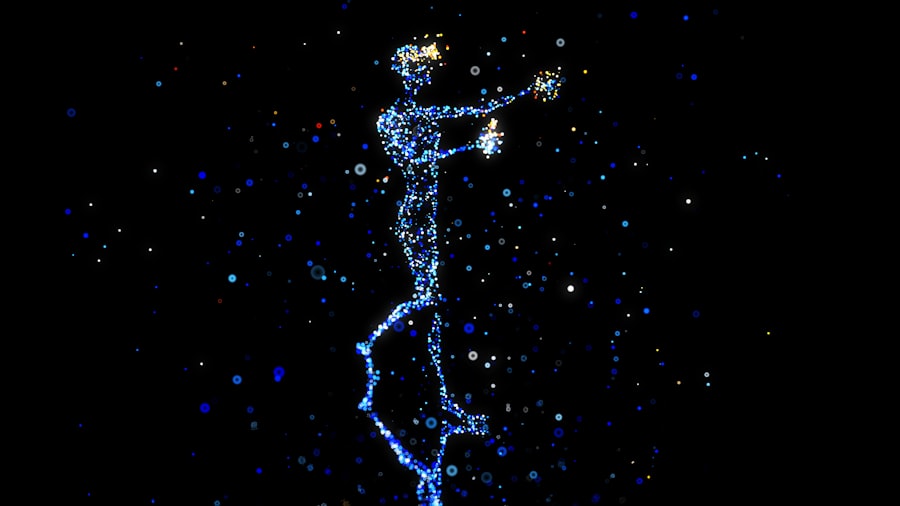
Quantum physics introduces a radical departure from classical physics, challenging long-held notions about determinism and predictability in the universe. At the heart of quantum mechanics lies the uncertainty principle, formulated by Werner Heisenberg in the 1920s. This principle posits that certain pairs of physical properties, such as position and momentum, cannot be simultaneously measured with arbitrary precision.
The more accurately one property is known, the less accurately the other can be determined. This inherent uncertainty suggests that at a fundamental level, reality is not as fixed as it may appear. The implications of the uncertainty principle extend beyond mere measurements; they challenge the very nature of reality itself.
If particles exist in a state of probability rather than certainty until observed, then what does it mean for something to be “real”? This question invites contemplation about the role of observation in shaping existence.
The Double-Slit Experiment and Wave-Particle Duality
One of the most famous experiments in quantum physics is the double-slit experiment, which vividly illustrates the concept of wave-particle duality. When particles such as electrons are fired at a barrier with two slits, they create an interference pattern on a screen behind the barrier when both slits are open. This pattern suggests that particles behave like waves, exhibiting properties of superposition—existing in multiple states simultaneously.
However, when an observer attempts to measure which slit a particle passes through, the interference pattern collapses into distinct particles behaving like classical objects. This paradox raises profound questions about the nature of reality and observation. The act of measurement appears to influence the behavior of particles, leading to different outcomes based on whether they are observed or not.
This phenomenon challenges traditional notions of causality and suggests that consciousness may play a role in shaping reality itself. The duality inherent in particles—existing as both waves and particles—serves as a metaphor for the complexities of existence, where multiple interpretations coexist simultaneously.
The Observer Effect and its Implications
| Metric | Description | Relevance to “Reality is Not Real” in Physics | Example/Experiment |
|---|---|---|---|
| Wave-Particle Duality | Particles exhibit both wave and particle properties depending on observation. | Suggests reality depends on measurement, challenging classical realism. | Double-slit experiment |
| Quantum Superposition | Particles exist in multiple states simultaneously until observed. | Implies reality is not definite until measured. | Schrödinger’s cat thought experiment |
| Quantum Entanglement | Particles remain connected so that the state of one instantly influences another. | Challenges local realism and suggests non-local connections in reality. | Bell’s inequality tests |
| Heisenberg Uncertainty Principle | Limits precision in simultaneously measuring position and momentum. | Indicates fundamental limits to knowledge about reality. | Electron position and momentum measurements |
| Delayed Choice Experiment | Measurement choice affects past behavior of particles. | Suggests reality is influenced by future measurement decisions. | Wheeler’s delayed choice experiment |
| Simulation Hypothesis Metrics | Search for computational limits or pixelation in spacetime. | Attempts to find evidence that reality is a simulation. | High-energy cosmic ray lattice structure tests |
The observer effect is closely related to the double-slit experiment and further emphasizes the role of observation in quantum mechanics. It posits that the act of observing a quantum system inevitably alters its state. This phenomenon raises significant philosophical questions about the nature of reality: if observation can change outcomes at a fundamental level, what does this imply about the relationship between consciousness and existence?
Are observers merely passive witnesses to reality, or do they actively participate in its creation? The implications extend beyond physics into broader philosophical discussions about free will and determinism. If consciousness can influence physical reality through observation, it suggests a more interconnected relationship between mind and matter than previously understood.
This perspective invites contemplation about the potential power of human intention and awareness in shaping not only personal experiences but also collective realities.
Entanglement and Non-Locality in Quantum Mechanics

Entanglement is another fascinating aspect of quantum mechanics that challenges conventional understandings of space and time. When two particles become entangled, their states become interdependent regardless of the distance separating them. A change in one particle’s state instantaneously affects its entangled partner, even if they are light-years apart.
This phenomenon defies classical notions of locality and suggests that information can be transmitted instantaneously across vast distances. The implications of entanglement extend into philosophical realms as well. It raises questions about the interconnectedness of all things in the universe and challenges traditional views on separateness.
If particles can remain connected regardless of distance, what does this mean for our understanding of individuality and isolation? The concept of non-locality invites contemplation about a more holistic view of existence—one where everything is interwoven in a complex tapestry that transcends conventional boundaries.
The Holographic Principle and the Nature of Space-Time
The holographic principle posits that all information contained within a volume of space can be represented as a two-dimensional surface at its boundary. This radical idea suggests that our three-dimensional perception of reality may be an illusion—a projection derived from information encoded on a distant surface. In essence, it implies that what we perceive as solid objects and space may be mere manifestations of deeper underlying information.
If reality is fundamentally holographic, it challenges traditional notions of dimensions and encourages exploration into alternative frameworks for understanding existence. It invites questions about the nature of consciousness: if our perceptions are projections rather than direct experiences, what does this mean for our understanding of self?
The holographic principle encourages a reevaluation of how individuals relate to their surroundings and each other within this intricate web of information.
The Simulation Hypothesis and the Nature of Reality
The simulation hypothesis posits that what humans perceive as reality may actually be an advanced simulation created by a more technologically advanced civilization. This idea has gained traction in recent years due to advancements in technology and virtual reality, prompting discussions about the nature of existence itself. If reality is indeed a simulation, it raises profound questions about free will, purpose, and the nature of consciousness.
The implications are staggering: if individuals are living within a simulated environment, what does this mean for their experiences and choices? Are they mere characters in a grand narrative crafted by unseen creators? This hypothesis challenges traditional philosophical views on existence and encourages exploration into concepts such as artificial intelligence and consciousness itself.
As humanity continues to push technological boundaries, the line between simulated experiences and “real” experiences becomes increasingly tenuous.
Experiments in Quantum Physics that Challenge our Perception of Reality
Numerous experiments in quantum physics have challenged conventional perceptions of reality, pushing the boundaries of human understanding further than ever before. One such experiment involves quantum teleportation—a process where information about a particle’s state is transmitted from one location to another without physically moving the particle itself. This phenomenon raises questions about the nature of information transfer and challenges traditional notions of space and time.
Another intriguing experiment involves delayed-choice quantum erasers, which demonstrate that decisions made after a particle has been detected can retroactively influence its behavior. These experiments suggest that time may not be as linear as previously thought; instead, it may be more fluid and interconnected with consciousness than conventional wisdom suggests. Such findings compel individuals to reconsider their understanding of causality and challenge deeply held beliefs about how reality operates.
Implications for Philosophy and Metaphysics
The revelations emerging from quantum physics have far-reaching implications for philosophy and metaphysics. As scientists uncover new layers of understanding regarding reality’s nature, philosophers grapple with questions surrounding existence itself: What does it mean to be conscious? How do individual perceptions shape collective realities?
The intersection between science and philosophy invites rich dialogue about fundamental truths that govern existence. Moreover, these discussions encourage exploration into concepts such as free will versus determinism—whether individuals possess agency within a universe governed by probabilistic laws or if their choices are predetermined by underlying structures. As humanity delves deeper into these inquiries, it becomes increasingly clear that understanding reality requires an interdisciplinary approach that bridges science with philosophy.
The Search for a Unified Theory of Reality
In conclusion, humanity’s quest for understanding reality remains an ongoing journey filled with complexities and paradoxes. From quantum physics to philosophical inquiries about perception and existence, each layer reveals new dimensions that challenge conventional wisdom. As individuals navigate this intricate landscape, they are invited to contemplate their place within it—how their perceptions shape their realities while recognizing that these realities may be mere reflections of deeper truths yet to be uncovered.
The search for a unified theory of reality continues to inspire curiosity and exploration across disciplines. As scientists push boundaries through experimentation while philosophers ponder existential questions, humanity stands at the precipice of discovery—an opportunity to redefine what it means to exist within an ever-evolving tapestry woven from threads of perception, consciousness, and fundamental truths governing existence itself.
In exploring the concept that reality may not be as it seems, one intriguing article discusses the philosophical implications of our understanding of physics and the nature of existence. This article delves into various theories that challenge our perception of reality, suggesting that what we perceive may be a mere illusion. For more insights on this topic, you can read the full article [here](https://www.freakyscience.com/sample-page/).
WATCH THIS! EXPOSED: This Quantum Physics Secret Proves Reality Is Not Real 🤯
FAQs
What does “proof reality is not real” mean in the context of physics?
In physics, the phrase “proof reality is not real” often refers to theories and experiments suggesting that our perception of reality may be an emergent phenomenon or a simulation, rather than an absolute, objective state. It explores ideas such as quantum mechanics, the holographic principle, and simulation hypotheses that challenge classical notions of reality.
Are there scientific theories that question the nature of reality?
Yes, several scientific theories question the nature of reality. Quantum mechanics, for example, shows that particles can exist in superpositions and that observation affects outcomes. The holographic principle suggests that the universe’s information might be encoded on a lower-dimensional boundary. These theories imply that what we perceive as reality may not be as concrete as it seems.
Does quantum physics prove that reality is an illusion?
Quantum physics does not prove that reality is an illusion, but it reveals that at microscopic scales, particles behave in ways that defy classical intuition. Phenomena like wave-particle duality and entanglement suggest that the fundamental nature of reality is probabilistic and interconnected, challenging traditional views but not conclusively proving reality is unreal.
What is the simulation hypothesis in relation to physics?
The simulation hypothesis proposes that our entire universe might be a computer-generated simulation created by an advanced civilization. While this idea is philosophical, some physicists consider it plausible based on computational limits and the nature of physical laws. However, it remains speculative without empirical proof.
Can physics experiments demonstrate that reality is not real?
Physics experiments can reveal surprising and counterintuitive aspects of reality, such as quantum entanglement and the observer effect, but they do not definitively demonstrate that reality is not real. These experiments challenge classical assumptions and encourage new interpretations but do not negate the existence of reality itself.
How do interpretations of quantum mechanics relate to the reality question?
Interpretations of quantum mechanics, such as the Copenhagen interpretation, Many-Worlds interpretation, and pilot-wave theory, offer different views on what quantum phenomena imply about reality. Some suggest reality is fundamentally probabilistic or that multiple realities exist simultaneously, influencing philosophical debates about the nature of existence.
Is the idea that reality is not real widely accepted in the scientific community?
The idea that reality is not real is not widely accepted as a scientific fact but is a topic of ongoing debate and research. While some physicists and philosophers explore these concepts seriously, most agree that more evidence and theoretical development are needed before drawing definitive conclusions about the nature of reality.