
You stand on the precipice of a culinary world, a landscape teeming with vibrant produce and the promise of sustenance for billions. But how did we arrive here, to this era of agricultural abundance? It wasn’t always so. Your journey through the history of industrial fertilizer is a tale of human ingenuity, scientific discovery, and a relentless drive to feed a growing planet. It’s a story that begins not in sterile laboratories, but in the very earth you till, in the practices of your ancestors.
Before the term “industrial fertilizer” even existed, humans understood, through generations of observation and trial-and-error, that certain additions to the soil could dramatically improve crop yields. You might think of your own garden, the way you’ve learned that a handful of compost makes a noticeable difference. This fundamental understanding is the bedrock upon which modern agriculture is built.
The Wisdom of Natural Cycles
Your earliest ancestors, likely hunter-gatherers, observed how animal droppings fertilized grasslands, leading to lusher growth. As they transitioned to settled agriculture, they intuitively began to harness these natural resources. This wasn’t a scientific endeavor in your modern sense, but a deeply practical one, driven by the immediate need for food security.
Manure as the First Fertilizer
Animal manure, readily available from livestock kept near settlements, became the primary fertilizer. You can imagine the back-breaking labor involved, collecting and spreading this precious resource across fields. Yet, the results were undeniable: crops grew taller, stronger, and produced more grain. This established a crucial link in your agricultural DNA – the understanding that returning organic matter to the soil was vital for its fertility.
The Value of Plant Residues
Beyond animal waste, you also recognized the benefits of returning plant matter to the soil. Crop residues, such as straw and stalks, were often tilled back into the land after harvest. This practice, known as “green manure” in its simplest form, prevented valuable nutrients from being lost and contributed to improved soil structure, a concept you might appreciate if you’ve ever dealt with compacted clay.
Early Civilizations and Their Fertilizing Practices
As civilizations rose, so too did the sophistication of their agricultural techniques. While not “industrial” by any stretch, these practices laid crucial groundwork for future advancements.
The Egyptians and the Nile’s Bounty
The ancient Egyptians, masters of irrigation and agriculture, understood the transformative power of silt deposited by the annual floods of the Nile River. This rich, nutrient-laden sediment acted as a natural fertilizer, rejuvenating the land and allowing for continuous cultivation. You can picture the annual spectacle, the life-giving floodwaters receding, leaving behind a fertile black soil that promised abundant harvests.
Roman Agriculturalists and Their Observations
Roman writers like Cato the Elder and Virgil documented various fertilizing practices. They discussed the use of animal manure, as well as crop rotation, which, while not directly fertilization, helped to maintain soil health by preventing nutrient depletion and the buildup of pests and diseases. You might recall learning about crop rotation in school, a concept that has roots stretching back to these ancient times.
The history of industrial fertilizer is a fascinating topic that highlights the evolution of agricultural practices and their impact on food production. For those interested in exploring this subject further, you can read a related article that delves into the development and significance of fertilizers in modern agriculture. Check it out here: Freaky Science. This resource provides valuable insights into how fertilizers have transformed farming techniques and contributed to the global food supply.
The Dawn of Scientific Inquiry: Unlocking the Secrets of Plant Nutrition
For millennia, your understanding of soil fertility was largely empirical. Then, the Enlightenment and the subsequent scientific revolution began to pry open the mysteries of plant life. It was a gradual process, moving from broad observations to specific chemical understandings, a journey that would ultimately lead to the creation of industrial fertilizers.
The Rise of Chemistry and Plant Physiology
The 18th and 19th centuries witnessed a burgeoning interest in understanding the fundamental components of life. Botanists and chemists began to dissect the needs of plants, moving beyond the simplistic idea of “food for the soil” to understanding specific nutrients plants required for growth.
Justus von Liebig and the Mineral Theory
A pivotal figure in this scientific awakening was German chemist Justus von Liebig. In the mid-19th century, his work on plant nutrition laid the foundation for modern agricultural chemistry. He proposed that plants absorb mineral nutrients from the soil, and that deficiencies in these minerals were the primary cause of poor growth. Your understanding of essential plant nutrients like nitrogen, phosphorus, and potassium owes a direct debt to Liebig’s groundbreaking research.
The Law of the Minimum
Liebig’s work also gave rise to the “Law of the Minimum,” which states that growth is limited by the nutrient that is present in the smallest amount. This concept is crucial for understanding fertilizer application – providing an abundance of one nutrient won’t help if another essential nutrient is scarce. You can visualize this as a chain, where the weakest link determines the overall strength.
Other Pioneers in Plant Nutrition
Beyond Liebig, other scientists contributed to the growing body of knowledge. You might encounter names like Jean-Baptiste Boussingault, who conducted early experiments on nitrogen fixation, and Sir John Bennet Lawes, who established the first experimental fertilizer factory. These individuals, through meticulous research and experimentation, chipped away at the unknown, revealing the complex chemical interactions that underpin plant life.
From Observation to Controlled Experimentation
The shift from anecdotal evidence to controlled experimentation was a watershed moment. Scientists began to isolate variables, precisely measure inputs and outputs, and draw scientifically valid conclusions. This rigorous approach was essential for developing the targeted solutions that would become industrial fertilizers.
Early Experiments with Mineral Salts
Researchers began experimenting with various mineral salts, applying them to crops and observing the effects. They discovered that certain salts, when applied in the right quantities, could dramatically boost yields. This was a radical departure from simply adding manure and marked the beginning of thinking about soil amendments in a more scientific and precise way.
The Importance of Nitrogen, Phosphorus, and Potassium
Through these experiments, the “big three” macronutrients – nitrogen (N), phosphorus (P), and potassium (K) – emerged as the most critical for plant growth. Understanding their roles and how to supply them efficiently became the central focus of fertilizer research. You rely on these elements every day, whether you realize it or not, to keep our food systems functioning.
The Industrial Revolution and the Birth of Synthetic Fertilizers
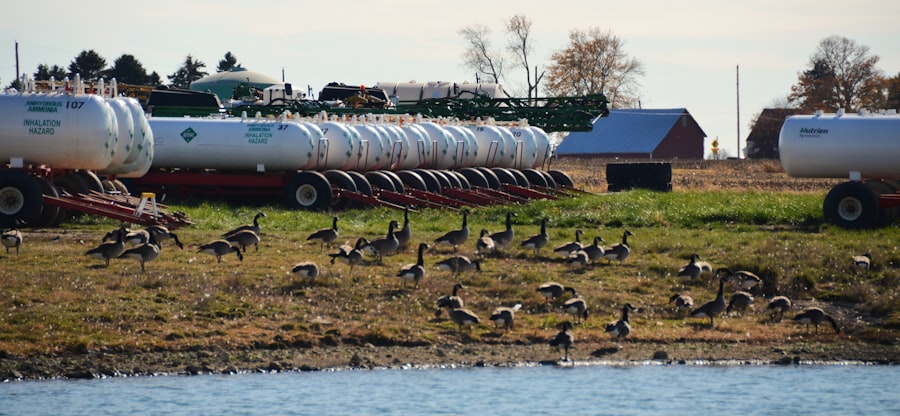
The 19th century was not just a time of scientific discovery; it was also an era of unprecedented industrialization. The merging of scientific understanding with the power of industrial processes would lead to the creation of fertilizers on a scale never before imagined.
Harnessing New Technologies and Processes
The technological advancements of the Industrial Revolution provided the means to produce fertilizers in large quantities. New machinery, chemical processes, and access to raw materials transformed agriculture from a largely localized endeavor to a globally interconnected industry.
The Haber-Bosch Process: A Nitrogen Revolution
Perhaps the single most significant invention in the history of industrial fertilizer is the Haber-Bosch process, developed in the early 20th century by Fritz Haber and Carl Bosch. This process allowed for the artificial synthesis of ammonia from atmospheric nitrogen and hydrogen. Ammonia is the key ingredient in most nitrogen-based fertilizers. You can appreciate the sheer genius of taking an element so abundant in the air and making it available for plant use.
The Impact on Food Production
The Haber-Bosch process revolutionized agriculture, allowing for the mass production of nitrogen fertilizers. This directly led to a dramatic increase in crop yields, effectively averting widespread famine and supporting a rapidly growing global population. It is, without exaggeration, one of the most important technological innovations of the 20th century for human survival.
Phosphate and Potash Production
While nitrogen had its breakthrough with Haber-Bosch, the production of phosphorus and potassium fertilizers also saw significant industrialization. Rock phosphate was mined and processed to create soluble phosphate fertilizers, and potash, mined from underground deposits, provided essential potassium. These developments ensured that all three primary macronutrients could be produced and applied at scale.
The Rise of Fertilizer Companies and Global Markets
The development of efficient production methods spurred the growth of dedicated fertilizer companies. These businesses played a crucial role in manufacturing, marketing, and distributing fertilizers to farmers worldwide, transforming agriculture into a global industry. You can see the legacy of these early companies in the agricultural supply chains that exist today.
From Local Needs to Global Supply Chains
Fertilizers moved from being a localized resource to a globally traded commodity. This allowed farmers in regions with limited natural resources to access essential nutrients, boosting agricultural productivity and influencing global food trade patterns. You are a participant in this global system, even if you don’t directly buy fertilizer.
The Mid-20th Century Boom: Fertilizers as a Cornerstone of Modern Agriculture

Following the widespread adoption of synthetic fertilizers after World War II, agriculture entered a new era, often referred to as the “Green Revolution.” This period saw dramatic increases in food production, largely driven by the synergistic effects of improved crop varieties, irrigation, and, of course, synthetic fertilizers.
The Green Revolution and Its Impact
The Green Revolution, which began in the 1940s and 1950s, focused on developing high-yielding crop varieties that were responsive to increased inputs of water and fertilizer. This was a deliberate strategy to combat hunger and malnutrition in developing nations.
High-Yielding Varieties and Fertilizer Synergy
The new crop varieties were genetically engineered to thrive with higher nutrient levels. When combined with synthetic fertilizers, these plants produced significantly more grain per acre than their traditional counterparts. You can visualize the difference: a field of stunted, struggling plants versus a field of robust, heavy-headed crops, all thanks to this technological synergy.
Increased Food Security and Population Growth
The success of the Green Revolution, heavily reliant on fertilizer use, is credited with saving hundreds of millions of lives from starvation. It also facilitated the unprecedented population growth of the latter half of the 20th century. It’s a complex legacy, one that balances immense benefits with significant environmental considerations.
Mechanization and Fertilizer Application
The increased productivity fostered by fertilizers also went hand-in-hand with the mechanization of agriculture. Tractors and specialized machinery allowed for the efficient application of fertilizers across vast fields, further streamlining the farming process. You can picture the transformation from manual labor to automated systems, a direct consequence of these advancements.
The Role of Government and Policy
Governments worldwide recognized the importance of fertilizers for national food security and economic development. Subsidies, research funding, and agricultural extension programs played a significant role in promoting the adoption and effective use of fertilizers. You might observe how agricultural policies today still shape fertilizer use and availability.
Promoting Fertilizer Use Through Extension Services
Agricultural extension services were established to educate farmers on the benefits of fertilizers and provide guidance on their proper application. This ensured that the technology was effectively transferred from research labs to the fields.
The history of industrial fertilizer is a fascinating topic that reveals how agricultural practices have evolved over time to meet the growing demands of food production. For those interested in exploring this subject further, an insightful article can be found at Freaky Science, which delves into the development and impact of synthetic fertilizers on modern farming. Understanding this evolution not only highlights the advancements in agricultural technology but also raises important questions about sustainability and environmental impact.
Modern Challenges and the Future of Fertilization
| Year | Event |
|---|---|
| 1840 | First commercial fertilizer, superphosphate, produced in England |
| 1909 | Haber-Bosch process for ammonia synthesis developed, leading to large-scale production of nitrogen-based fertilizers |
| 1928 | Discovery of the role of potassium in plant nutrition, leading to the development of potassium-based fertilizers |
| 1950s | Introduction of triple superphosphate and ammonium phosphates as popular phosphorus-based fertilizers |
| 1960s | Green Revolution: widespread adoption of synthetic fertilizers, leading to significant increases in agricultural productivity |
While industrial fertilizers have undeniably brought about immense benefits, you are now grappling with the environmental and economic consequences of their widespread use. The story of fertilizer is not over; it’s evolving as you seek more sustainable and efficient ways to nourish our planet.
Environmental Concerns and Sustainability
The intensive use of synthetic fertilizers has led to several environmental challenges, prompting a shift towards more sustainable practices. You are increasingly aware of the impact of your actions on the planet.
Nutrient Runoff and Eutrophication
Excess nitrogen and phosphorus from fertilizers can wash into waterways, leading to eutrophication – the excessive growth of algae that depletes oxygen and harms aquatic ecosystems. You’ve likely seen images of polluted lakes or rivers, a direct consequence of this nutrient imbalance.
Water Quality and Ecosystem Health
The degradation of water quality has far-reaching implications for both human and ecological health. Addressing nutrient runoff is a critical component of modern environmental stewardship.
Greenhouse Gas Emissions
The production of synthetic fertilizers, particularly through the Haber-Bosch process, is energy-intensive and contributes to greenhouse gas emissions. The agricultural sector is a significant contributor to climate change, and fertilizer production is a part of that equation.
Precision Agriculture and Nutrient Management
The future of fertilizer use lies in precision agriculture and sophisticated nutrient management strategies. This involves applying the right amount of fertilizer, at the right time, and in the right place, minimizing waste and environmental impact. You are moving towards a more intelligent and targeted approach.
Variable Rate Application and Sensor Technology
You are now employing technologies like GPS, sensors, and data analytics to tailor fertilizer applications to the specific needs of different parts of a field. This ensures that plants receive exactly what they need, when they need it.
Organic and Bio-fertilizers: A Growing Interest
There’s a renewed interest in organic fertilizers and bio-fertilizers, which utilize natural processes and materials to provide nutrients to crops. These alternatives offer a more environmentally friendly approach to soil enrichment. You are rediscovering and refining ancient wisdom with modern tools.
The Ongoing Quest for Food Security
As the global population continues to grow, the challenge of feeding everyone sustainably remains paramount. The history of industrial fertilizer is a testament to human innovation in meeting this challenge, and its future will undoubtedly involve a delicate balance between productivity, sustainability, and environmental responsibility. You are tasked with continuing this vital work, ensuring that the bounty of the earth can nourish generations to come.

We Figured Out How to Turn Air Into Food
FAQs
What is industrial fertilizer?
Industrial fertilizer refers to synthetic or man-made fertilizers that are produced through chemical processes. These fertilizers are used to provide essential nutrients to plants to promote growth and increase crop yields.
When was industrial fertilizer first developed?
The development of industrial fertilizer can be traced back to the early 20th century. The Haber-Bosch process, which allowed for the large-scale production of ammonia-based fertilizers, was invented in the early 1900s and revolutionized agricultural practices.
How has industrial fertilizer impacted agriculture?
Industrial fertilizer has significantly increased agricultural productivity by providing essential nutrients to crops, leading to higher yields and improved food security. However, overuse of industrial fertilizer can also lead to environmental issues such as water pollution and soil degradation.
What are the main components of industrial fertilizer?
The main components of industrial fertilizer are nitrogen, phosphorus, and potassium, which are essential nutrients for plant growth. These nutrients are often combined in various ratios to create different types of fertilizers tailored to specific crop needs.
What are the environmental concerns associated with industrial fertilizer use?
The overuse and improper application of industrial fertilizer can lead to environmental concerns such as water pollution from nutrient runoff, soil degradation, and greenhouse gas emissions. Efforts are being made to develop sustainable fertilizer practices to mitigate these issues.