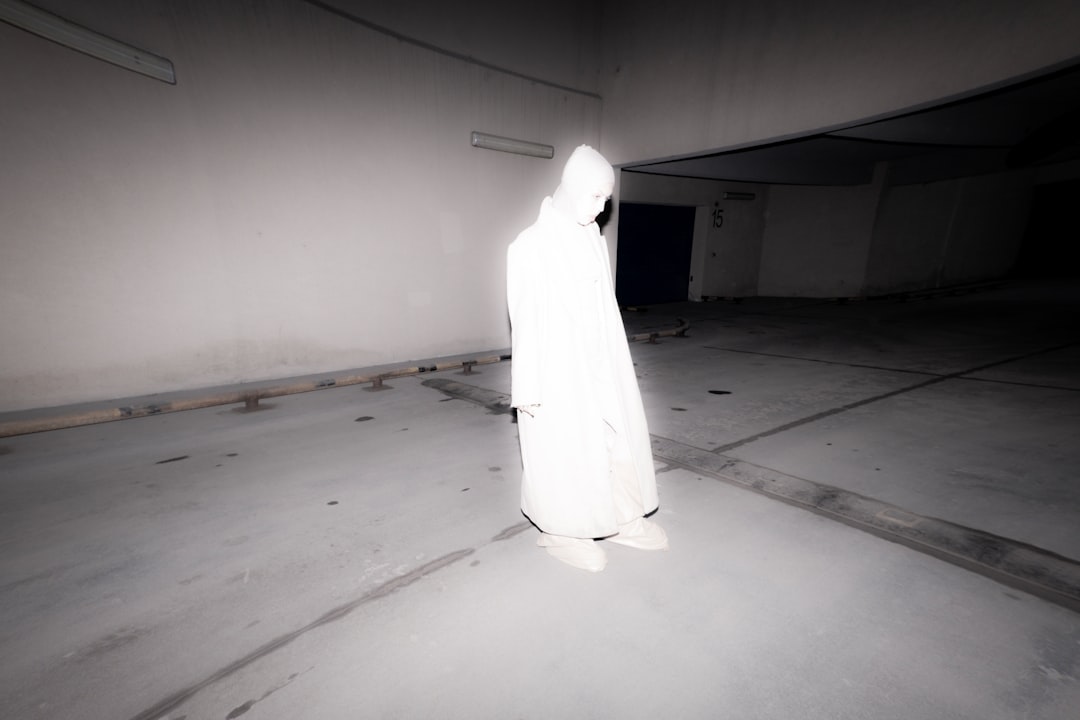
You’re standing in a dimly lit room, a hum of unseen machinery subtly vibrating through the floor. You’re here to witness something that blurs the lines between science and the uncanny: Vic Tandy’s “ghost in the machine” experiment. This isn’t a tale of sensationalized hauntings or spectral apparitions witnessed through flickering candles. Instead, you are about to explore a scientific endeavor, albeit one that treads a path less-traveled, seeking to understand if certain environmental conditions can, in fact, induce sensations of unease that might be perceived as paranormal.
Tandy, a scientist with a background in computer science and a keen interest in the unusual, embarked on a project that aimed to create an environment that, through specific infrasound frequencies, could purportedly elicit feelings of dread, anxiety, and even visual disturbances. The core idea was simple yet provocative: could sound waves, beyond the range of human hearing, manipulate our perceptions and create an atmosphere that feels haunted?
The Genesis of the Haunting Machine
The story begins with Tandy’s own experiences and observations. You might recall reading about or hearing about instances where certain environments, often old buildings or specific industrial sites, are reported to be haunted. While readily dismissed by many as superstition, Tandy, as a scientist, sought a more systematic explanation. He wasn’t looking for spirits in the traditional sense, but rather for a physical phenomenon that could manifest as the feeling of a presence.
Investigating Anomalous Experiences
- Tandy’s initial research wasn’t focused on fabricating ghosts, but on understanding reported ghostly experiences. He delved into case studies, folklore, and anecdotal evidence, searching for common threads.
- He noted recurring environmental factors in these reports: drafts, strange noises, feelings of being watched, and inexplicable dread. This suggested that the environment itself might be playing a role, rather than an external, supernatural entity.
The Role of Infrasound
- The concept of infrasound – sound waves with frequencies below the human hearing range (typically below 20 Hz) – became central to his hypothesis. Researchers had previously noted that exposure to certain infrasound frequencies could cause physical and psychological effects.
- These effects included feelings of unease, nausea, pressure in the chest, and even visual distortions. Tandy theorized that if these frequencies could be precisely controlled and amplified, they might be able to create an environment that felt haunted.
Vic Tandy’s ghost in the machine experiment has intrigued many, as it explores the intersection of science and the supernatural. For those interested in delving deeper into similar phenomena, a related article can be found at Freaky Science, which discusses various scientific explanations for ghostly encounters and the psychological effects of fear on perception. This exploration provides a fascinating context for understanding Tandy’s findings and their implications in the realm of paranormal studies.
Constructing the Experimental Apparatus
The creation of the “ghost machine” was a meticulous process. Tandy wasn’t building a prop for a Halloween attraction; he was designing a scientific instrument. The goal was to generate specific infrasonic frequencies, manipulate their intensity, and observe the subjective responses of those exposed to them.
The Core Components
- At the heart of the experiment were precisely tuned audio generators capable of producing low-frequency sound waves. These weren’t your typical speakers found in a home stereo system. They were designed for power and precision at these lower frequency ranges.
- Large, specially designed subwoofers or other low-frequency emitters were necessary to generate the infrasound at a level sufficient to potentially affect human physiology. The sheer physical displacement of air by these speakers was a crucial element.
The Enclosure and Environmental Controls
- The experiment was conducted in a controlled environment, typically a relatively soundproofed room. This was essential to isolate the effects of the generated infrasound from extraneous noise.
- Additional environmental factors were often manipulated. This could include subtle changes in air pressure, temperature fluctuations, and even specific lighting conditions, all designed to complement the intended psychoacoustic effects.
The Experiment in Practice: Subjective Sensations
The true measure of Tandy’s experiment lay in the subjective experiences of the participants. You, as an observer, are looking for patterns in their reports, not for the appearance of spectral figures. The experiment aimed to induce specific sensations that, in a less controlled environment, might be interpreted as supernatural.
Inducing Feelings of Dread and Unease
- When the infrasound generators were activated, participants often reported a subtle but pervasive sense of unease. This wasn’t necessarily overt fear, but a creeping feeling that something was not quite right.
- The sensation of being watched was frequently mentioned. This is a common reported symptom in paranormal investigations, and Tandy’s experiment sought to replicate it through physiological means rather than invoking a sentient observer.
Visual and Auditory Anomalies
- Beyond purely emotional responses, participants sometimes described visual anomalies. This could range from a fleeting perception of movement in their peripheral vision to a subtle distortion of their surroundings.
- While the primary focus was infrasound, the experiment might also have incorporated subtle auditory cues or resonant frequencies within the room itself that could contribute to a sense of disorientation or hallucination.
The “Ghost” in the Data
- Tandy meticulously recorded these subjective reports, looking for correlations between the intensity and frequency of the infrasound and the nature of the reported sensations.
- The “ghost” in this context was not a disembodied spirit, but the emergent phenomenon of altered perception and subjective experience caused by controlled environmental stimuli.
Scientific Scrutiny and Interpretation
Tandy’s work was not without its critics or those who sought to understand its implications within the broader scientific community. The experiment touched upon the complex interplay between our physical environment and our psychological state, a field ripe for investigation and debate.
The Placebo Effect and Skepticism
- A common critique of such experiments involves the potential influence of the placebo effect. If participants expect to feel something unusual, they might be more prone to interpreting mundane sensations as paranormal.
- Skeptics often point to the lack of objective, verifiable proof of a supernatural entity, arguing that the experiment merely demonstrates how easily human perception can be influenced.
Potential for Misinterpretation
- The inherent subjectivity of human experience makes it difficult to definitively prove or disprove claims. What one person perceives as a supernatural event, another might attribute to fatigue, suggestion, or subtle environmental factors.
- Tandy’s intention was not to prove ghosts exist, but to investigate a potential physical mechanism that could explain some reported paranormal experiences.
Bridging Science and the Unexplained
- Despite the skepticism, Tandy’s experiment opened a dialogue about the boundaries of scientific inquiry. It challenged the anthropocentric view that only perceptible phenomena are real.
- The work encouraged further research into the physiological effects of infrasound and other subtle environmental influences on human psychology.
Vic Tandy’s ghost in the machine experiment has sparked considerable interest in the field of parapsychology, particularly regarding the intersection of environmental factors and perceived paranormal experiences. For those intrigued by the science behind such phenomena, a related article on the subject can be found at Freaky Science, which delves into various experiments that explore the psychological and physiological responses to supposed hauntings. This connection highlights how our surroundings can influence our perceptions, blurring the lines between reality and the supernatural.
Legacy and Broader Implications
Vic Tandy’s “ghost in the machine” experiment continues to be a topic of discussion, not for definitive proof of spectral entities, but for its innovative approach to understanding subjective experience. It highlights how our perception of reality can be profoundly shaped by forces we may not consciously perceive.
The Phantom Vistor Phenomenon
- Tandy’s research has contributed to the broader understanding of phenomena like the “phantom visitor” experience, where individuals feel a disembodied presence in a room. His work suggests that infrasound and other environmental factors could be primary contributors.
- This understanding has implications for fields beyond paranormal investigation, including architectural acoustics, occupational health, and the design of sensory experiences.
Rethinking Paranormal Research
- The experiment serves as a cautionary tale in paranormal research. It demonstrates the importance of rigorous scientific methodology when investigating anomalous experiences, and the need to consider purely physical explanations before resorting to supernatural ones.
- It encourages a more empirical approach, seeking to replicate and quantify subjective experiences through controlled manipulation of environmental variables.
Continuing the Inquiry
- While Tandy’s specific apparatus may not be the definitive “ghost maker,” the questions it raised persist. The investigation into how subtle environmental factors can influence our mental state remains an active area of scientific interest.
- You leave the demonstration with a nuanced perspective. You haven’t witnessed a ghost, but you’ve seen a tangible attempt to scientifically explore the sensations that have long been attributed to them, reminding you that sometimes, the most unsettling phenomena have surprisingly earthly origins.
FAQs
What was the “ghost in the machine” experiment conducted by Vic Tandy?
Vic Tandy, a lecturer at Coventry University, conducted an experiment in the 1980s where he experienced strange sensations and feelings of being watched in his laboratory. He discovered that a vibrating fan in the room was producing infrasound at a frequency of 18.98 Hz, which is close to the resonant frequency of the human eye. This led him to hypothesize that the infrasound was causing the eerie sensations and hallucinations.
What were the findings of Vic Tandy’s experiment?
Vic Tandy’s experiment suggested that exposure to infrasound at certain frequencies can cause feelings of unease, anxiety, and even hallucinations in humans. He also found that the presence of infrasound at these frequencies can lead to a sense of being watched or a feeling of a presence in the room, which may be interpreted as a ghostly presence.
What is infrasound and how does it affect humans?
Infrasound refers to sound waves with frequencies below the lower limit of human audibility, typically below 20 Hz. While infrasound is not consciously heard by humans, it can still affect the body and mind. Exposure to infrasound at certain frequencies has been linked to feelings of unease, anxiety, and even hallucinations in some individuals.
What are the implications of Vic Tandy’s experiment?
Vic Tandy’s experiment raised awareness about the potential effects of infrasound on human perception and well-being. It also highlighted the importance of considering environmental factors, such as infrasound, when investigating reports of paranormal experiences or ghostly phenomena.
How has Vic Tandy’s experiment influenced the study of paranormal experiences?
Vic Tandy’s experiment has prompted researchers to consider the role of infrasound and other environmental factors in shaping people’s perceptions of paranormal experiences. It has also led to further investigation into the potential effects of infrasound on human psychology and the interpretation of supernatural phenomena.