The Milky Way, our cosmic home, is not an isolated island in the vast ocean of space. It is a dynamic entity, subject to a multitude of gravitational forces that shape its destiny. For decades, astronomers have observed a peculiar motion – a cosmic drift that cannot be fully explained by the gravitational influence of known galaxies and galaxy clusters in our immediate vicinity. This unseen force, often referred to as “The Galactic Tug,” hints at the existence of massive, hidden structures that exert a profound pull on our galaxy. Understanding this cosmic dance requires delving into the intricate web of galactic dynamics, dark matter, and the large-scale structure of the universe.
The journey to comprehending the Galactic Tug begins with precisely measuring our galaxy’s movement. While it might seem intuitive to consider our galaxy stationary, the reality is far more complex. The Milky Way, along with its galactic neighbors, is hurtling through space at astounding velocities.
Local Group Kinematics
The Milky Way is a prominent member of the Local Group, a collection of over 50 galaxies gravitationally bound together. The Andromeda galaxy, our largest neighbor, is on a collision course with the Milky Way, a testament to the powerful gravitational forces at play even within our local galactic neighborhood. However, the motion of the Local Group itself, relative to the cosmic microwave background (CMB) – the afterglow of the Big Bang – reveals a deeper story.
The Cosmic Microwave Background Reference Frame
The CMB provides an almost perfect universal reference frame. By measuring the slight variations in its temperature across the sky, scientists can determine the Local Group’s velocity relative to this primordial radiation. Observations indicate that the Local Group, and thus the Milky Way within it, is moving at approximately 600 kilometers per second (about 1.3 million miles per hour) towards a specific region of the sky. This “bulk flow” cannot be explained solely by the gravitational influence of known galaxies in our immediate cosmic vicinity, thereby highlighting the existence of a more distant pull.
Anisotropies and Dipole Moments
The CMB itself exhibits a dipole anisotropy, a slight temperature difference between opposite directions in the sky. This dipole is interpreted as a Doppler shift caused by the motion of the solar system, and consequently the Milky Way, relative to the CMB. Correcting for our sun’s motion within the galaxy and the Milky Way’s motion within the Local Group, astronomers can pinpoint the velocity and direction of the Local Group’s overall motion. This analysis further solidifies the evidence for a significant external gravitational influence.
Recent studies have shed light on the mysterious forces that are pulling our galaxy, the Milky Way, towards the Andromeda Galaxy and other neighboring celestial bodies. This gravitational interaction is part of a larger cosmic dance influenced by dark matter and the expansion of the universe. For a deeper understanding of these phenomena, you can read more in the related article found here: Freaky Science.
The Mystery of the Great Attractor
For many years, a specific region in space was considered the primary suspect behind the Galactic Tug, known as the Great Attractor. This conceptual entity represented the culmination of gravitational forces from a vast, unseen concentration of matter.
Early Discoveries and Observations
The initial evidence for the Great Attractor emerged in the 1980s from surveys of galaxy velocities within the Local Group and its surroundings. Astronomers observed that numerous galaxies in a particular region were being pulled towards a common point in the direction of the Centaurus constellation. This indicated a substantial overdensity of matter.
Mapping the Cosmic Web
The universe is not uniformly distributed; instead, it resembles a vast cosmic web of interconnected filaments, voids, and superclusters. The Great Attractor was believed to be a central node within this web, a gravitational well pulling in galaxies from a wide area. However, the region of the Great Attractor is obscured by the Milky Way’s disk, making it difficult to directly observe. This “zone of avoidance” acts like a cosmic curtain, hindering our view of the very structures that might be influencing us.
The Problem of Mass Estimation
Estimating the mass of the Great Attractor proved challenging due to the obscuration and the diffuse nature of its gravitational influence. Early estimations suggested a mass equivalent to tens of thousands of Milky Ways. Yet, even with these substantial figures, the Great Attractor alone could not fully account for the observed bulk flow of the Local Group. This discrepancy suggested that larger, more distant structures were also contributing to the Galactic Tug.
Beyond the Great Attractor: Larger Structures in Play
As observational techniques improved and more of the universe became accessible, astronomers began to identify even larger structures, revealing a more intricate gravitational landscape beyond the Great Attractor.
The Shapley Supercluster
Located far beyond the Great Attractor, the Shapley Supercluster has emerged as a much more massive and distant player in the Galactic Tug. It is one of the largest concentrations of matter in the nearby universe, containing thousands of galaxies. Its sheer size and density make it a powerful gravitational force.
Discovery and Characteristics
The Shapley Supercluster, named after Harlow Shapley who first identified its central concentration of galaxies, is a truly colossal structure. Its discovery provided a compelling alternative, or at least a significant addition, to the Great Attractor hypothesis. Its gravitational influence extends over vast cosmic distances, and its sheer mass provides a more robust explanation for the observed velocities of galaxies in our cosmic neighborhood.
Gravitational Dominance
The gravitational dominance of the Shapley Supercluster lies in its extraordinary density of galaxies and galaxy clusters. It is essentially a super-supercluster, a truly massive knot in the cosmic web. Imagine a vast, undulating tapestry: the Shapley Supercluster is a particularly dense, heavy knot that pulls on the threads around it, including the thread upon which our local galactic neighborhood resides.
The Laniakea Supercluster
Our own Local Group is not an isolated entity but is embedded within an even larger structure known as the Laniakea Supercluster. This immense galactic continent, meaning “immense heaven” in Hawaiian, represents the gravitational basin within which the Milky Way and thousands of other galaxies are flowing.
Defining Our Cosmic Home
The Laniakea Supercluster was identified using a novel technique that mapped the peculiar velocities of galaxies – their motions relative to the Hubble flow, the general expansion of the universe. This method allowed astronomers to delineate the boundaries of this vast supercluster, demonstrating how galaxies within it flow towards common gravitational centers. In essence, Laniakea is defined by the gravitational flows of its constituent galaxies.
The “Watershed” of Galaxies
Think of Laniakea as a cosmic watershed. Just as rain falling on a continent flows down rivers and streams towards a common sea, galaxies within Laniakea are gravitationally flowing towards a specific region. This “downhill” flow is what defines the supercluster. The Milky Way, therefore, is not merely being pulled by individual massive objects, but is itself part of a larger stream of galaxies flowing towards a collective gravitational minimum within Laniakea.
The Role of Dark Matter
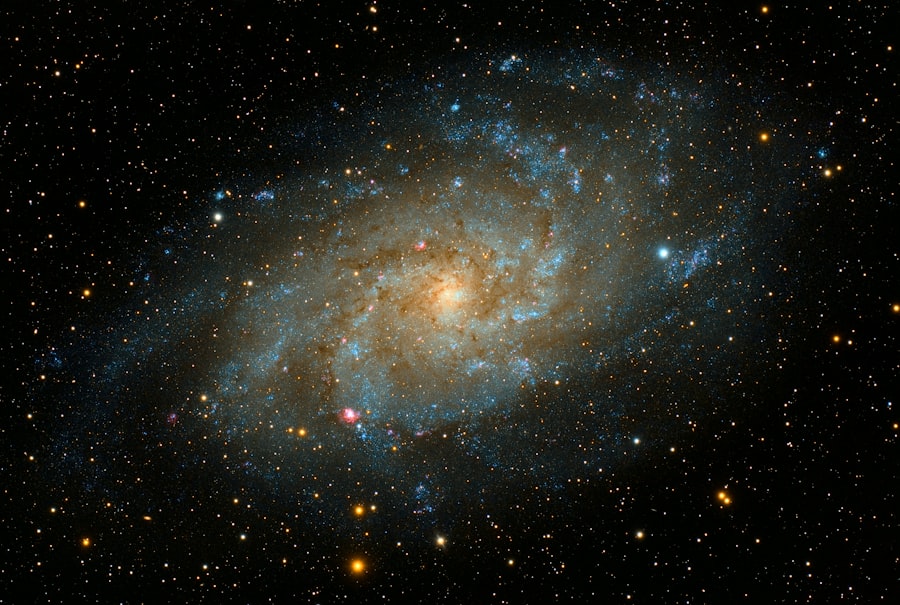
No discussion of large-scale gravitational phenomena can be complete without acknowledging the profound, yet enigmatic, role of dark matter. This invisible component of the universe is the architect of structure, providing the gravitational scaffolding upon which galaxies and galaxy clusters form.
The Invisible Architect of Gravity
Dark matter does not interact with light or other electromagnetic radiation, making it undetectable by conventional means. However, its gravitational influence is undeniable. It constitutes approximately 27% of the universe’s mass-energy budget, dwarfing visible matter which makes up only about 5%. Without dark matter, the universe as we know it simply would not exist; galaxies would fly apart, and the cosmic web would unravel.
Dark Matter Halos and Cosmic Structures
Galaxies and galaxy clusters are embedded within vast halos of dark matter. These halos provide the gravitational potential wells that hold visible matter together. The Great Attractor, the Shapley Supercluster, and even the Laniakea Supercluster are all manifestations of enormous concentrations of both visible matter and, more significantly, dark matter. It is the dark matter component that provides the bulk of the gravitational pull.
Explaining the Unaccounted Pull
The “unaccounted” pull that constitutes the Galactic Tug can largely be attributed to the clumping of dark matter on vast scales. While we can observe the visible galaxies that populate these superclusters, it is the invisible dark matter that truly dictates their immense gravitational influence. The dark matter acts as the heavy skeleton around which the luminous galaxies are draped, creating the gravitational gradients that drive the flow of galaxies, including our own.
Recent studies have suggested that our galaxy, the Milky Way, is being pulled by a mysterious force known as dark matter, which remains largely invisible and elusive to scientists. This intriguing phenomenon has led researchers to explore various theories about the structure of the universe and the gravitational influences at play. For a deeper understanding of these cosmic forces, you can read more in this related article on the topic of dark matter and its effects on galaxies at Freaky Science.
Future Prospects and Unanswered Questions
| Factor | Description | Estimated Influence |
|---|---|---|
| Local Group Gravity | Gravitational pull from nearby galaxies including Andromeda and smaller satellite galaxies. | ~600 km/s towards the Local Group center |
| Virgo Cluster | Massive galaxy cluster exerting gravitational attraction on the Milky Way. | ~200 km/s towards Virgo Cluster |
| Great Attractor | A region of space with a high concentration of mass pulling galaxies including the Milky Way. | ~600 km/s towards the Great Attractor |
| Dark Matter | Invisible mass that contributes to the overall gravitational pull affecting galaxy motion. | Significant but not directly measurable |
| Cosmic Expansion | Expansion of the universe influencing galaxy movement on large scales. | ~70 km/s per megaparsec (Hubble constant) |
The Galactic Tug remains an active area of research, with ongoing efforts to refine our understanding of the universe’s large-scale structure and the forces that shape galactic evolution.
Mapping the Cosmic Flows with Greater Precision
Upcoming astronomical surveys, such as the Square Kilometre Array (SKA) and the Vera C. Rubin Observatory (LSST), will provide unprecedented detail in mapping the distribution of galaxies and their velocities across vast volumes of space. These observations will offer a clearer picture of cosmic flows and help to pinpoint the precise location and mass of the dominant gravitational attractors. Imagine filling in the blanks on our cosmic map, transforming vague outlines into sharply defined landscapes.
The Challenge of Cosmic Voids
While much attention is given to cosmic overdensities, the vast empty regions known as cosmic voids also play a role in galactic motion. Galaxies tend to be pulled out of these underdense regions and towards the surrounding filaments and clusters. Understanding the interaction between voids and overdensities is crucial for a complete picture of large-scale structure and the dynamics of the Galactic Tug.
The Implications for Cosmology
Understanding the Galactic Tug has profound implications for cosmology. It can help validate or refine models of structure formation in the early universe, test theories of gravity on cosmic scales, and potentially shed light on the very nature of dark matter. The precise measurement of our galaxy’s motion, and the forces influencing it, serves as a powerful probe into the fundamental workings of the cosmos.
Is There an “Ultimate Attractor”?
The quest for the Galactic Tug, therefore, is a journey of discovery that continually expands our understanding of our place in the universe. It moves us from a local perspective to an increasingly grander cosmic scale, revealing that the Milky Way is not merely adrift, but is part of a magnificent, intricate dance, a gravitational ballet orchestrated by the invisible hand of dark matter and the colossal structures it helps to form. The question of an “ultimate attractor” may always lead to an even grander gravitational influence, pushing our comprehension of the cosmic web ever further. As scientists continue to peel back the layers of cosmic mystery, the story of what is pulling our galaxy will undoubtedly continue to evolve, offering new insights into the universe we inhabit.

WATCH NOW ▶️ Our Galaxy Is Sliding Toward a Cosmic Drain
FAQs
What forces are responsible for pulling our galaxy?
The primary forces pulling our galaxy, the Milky Way, are gravitational attractions from nearby galaxies and large-scale structures in the universe, such as the Andromeda Galaxy and the Great Attractor.
What is the Great Attractor?
The Great Attractor is a gravitational anomaly in intergalactic space that appears to be pulling our galaxy and many others toward it due to its immense mass, although it is partially obscured by the Milky Way’s plane.
How does the Andromeda Galaxy affect the Milky Way?
The Andromeda Galaxy, the closest large galaxy to the Milky Way, exerts a strong gravitational pull, and the two galaxies are moving toward each other, expected to collide in about 4 billion years.
Are there other galaxies influencing the Milky Way’s movement?
Yes, besides Andromeda and the Great Attractor, other nearby galaxies and galaxy clusters, such as the Virgo Cluster, also exert gravitational forces that influence the Milky Way’s trajectory.
How do scientists measure the forces pulling our galaxy?
Scientists use observations of galaxy velocities, redshifts, and cosmic microwave background radiation, along with computer simulations, to map gravitational influences and understand the forces acting on the Milky Way.