Understanding Your Cooling Companion: The Air Conditioner Cycle
You’ve likely experienced it many times. The oppressive heat of a summer day presses in, and then, with a hum and a gentle sigh, your air conditioner begins to work its magic. A wave of cool, dry air washes over you, offering sweet relief. But have you ever stopped to wonder how it does this? It’s not simply magic; it’s a sophisticated dance of thermodynamics, a continuous cycle that transforms your home from a sauna into a sanctuary. Understanding these fundamental stages can demystify the operation of this essential appliance and perhaps even help you appreciate its intricate engineering. Let’s embark on a journey into the heart of your air conditioner, exploring the four key stages that orchestrate its cooling prowess.
Understanding the four stages of the air conditioner cycle is essential for maintaining optimal cooling efficiency in your home. For a deeper dive into this topic, you can refer to an informative article that breaks down each stage in detail, explaining how the compressor, condenser, expansion valve, and evaporator work together to regulate temperature. To learn more about the air conditioning process and its importance, visit this article.
The Refrigerant’s Journey Begins: Evaporation and Absorption
The magic of cooling starts with a substance called refrigerant. Think of it as the lifeblood of your air conditioner, tirelessly circulating through a closed loop, changing its state from liquid to gas and back again. The first crucial stage of this cycle, where the cooling actually happens, is evaporation. This takes place within the evaporator coil, which is typically located indoors, often within your air handler unit.
Inside the Indoor Unit: The Evaporator’s Role
When your thermostat calls for cooling, a series of events is set in motion. The compressor, the powerful heart of the system, begins to pump low-pressure refrigerant vapor to the outdoor unit. However, before it gets there, the refrigerant needs to perform its primary cooling task. Inside the evaporator coil, the refrigerant is in a low-pressure, liquid state. As warm, humid air from your home is drawn across these coils by the indoor fan, a fascinating exchange occurs. The warm air transfers its heat to the cooler refrigerant within the coils. This heat energy causes the liquid refrigerant to absorb it and, in doing so, it begins to transform into a low-pressure gas. This process is akin to how water evaporates when heated, absorbing energy from its surroundings. In the case of your air conditioner, the refrigerant is specifically designed to evaporate at a very low temperature, making it incredibly efficient at drawing heat from the ambient air.
Capturing Heat and Humidity: The Science of Evaporation
The key to this stage is the refrigerant’s ability to absorb a significant amount of heat as it changes from a liquid to a gas. This is known as the latent heat of vaporization. As the refrigerant evaporates, it effectively “drinks up” the heat from the air passing over the evaporator coils. This is why the coils feel cold to the touch and why the air being blown back into your room is significantly cooler. Furthermore, as the warm, humid air comes into contact with the cold evaporator coils, a secondary, but equally important, cooling function occurs: dehumidification. The moisture in the air condenses on the cold surface of the coils, just as dew forms on a cold glass on a humid day. This condensed water then drips into a collection pan and is typically channeled away through a drain line. This removal of moisture is vital for your comfort, as humid air feels much warmer and can contribute to mold and mildew growth. So, in this first stage, your air conditioner is not only cooling the air but also making it drier. You can often see this process in action if you look at the outdoor unit – sometimes there’s a small stream of water trickling from it, which is the condensed moisture being expelled.
The Heart of the Operation: Compression and Pressure Increase
Once the refrigerant has absorbed heat and transformed into a low-pressure gas within the evaporator coil, it’s ready for its next crucial transformation. This happens in the compressor, which is the powerful engine of your air conditioning system, located in the outdoor unit. The compressor’s job is to take this low-pressure refrigerant vapor and dramatically increase its pressure and temperature.
Inside the Outdoor Unit: The Compressor’s Mighty Task
The low-pressure refrigerant vapor, now carrying the heat it absorbed from your indoor air, flows from the evaporator coil to the compressor. Inside the compressor, a mechanical process occurs that squeezes this vapor. Think of it like a piston in an engine or a pump. As the refrigerant gas is compressed, its molecules are forced closer together, significantly raising its pressure. According to the laws of thermodynamics, when a gas is compressed, its temperature also rises dramatically. So, the refrigerant leaves the compressor as a high-pressure, high-temperature gas. This is a critical step, as it prepares the refrigerant to release the heat it has collected. Without this compression, the refrigerant wouldn’t be able to shed its absorbed heat effectively in the next stage. You can often hear the compressor running as a distinct hum or whirring sound coming from your outdoor unit. It’s the sound of the system working hard to move the refrigerant and drive the cooling cycle.
Preparing to Shed Heat: The Thermodynamics of Compression
The temperature increase in the compressor is not an accident; it’s a deliberate and essential part of the process. By raising the refrigerant’s temperature well above the temperature of the outdoor air, the system creates a temperature gradient that allows for efficient heat transfer. Imagine trying to move heat from a lukewarm object to an even warmer object – it’s not going to happen. The refrigerant needs to be significantly hotter than the outside air so that heat can naturally flow from the hot refrigerant to the cooler outside environment. This high-pressure, high-temperature gaseous refrigerant is now primed to release its collected heat and move on to the next phase of its journey. The efficiency of the compressor directly impacts the overall performance of your air conditioner. A well-functioning compressor ensures that the refrigerant is adequately pressurized and heated, enabling the system to effectively remove heat from your home.
Releasing the Captured Heat: Condensation Outdoors
Now that the refrigerant has been compressed and its temperature has risen significantly, it’s ready to release the heat it absorbed from your home. This happens in the condenser coil, also located in the outdoor unit. This is where the high-pressure, high-temperature refrigerant gas gives up its heat to the surrounding atmosphere.
In the Outdoor Unit’s Embrace: The Condenser’s Function
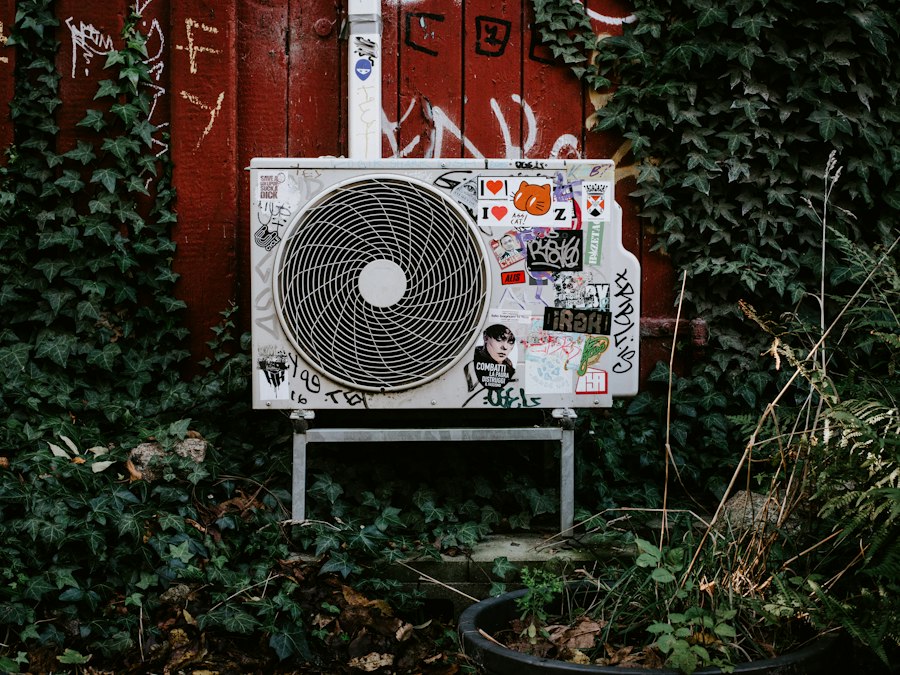
The hot, high-pressure refrigerant gas flows from the compressor into the condenser coils. These coils are essentially a network of tubes, often finned to increase their surface area, that are exposed to the outside air. A large fan in the outdoor unit blows ambient air across these coils. Because the refrigerant inside the coils is significantly hotter than the outdoor air, heat naturally transfers from the refrigerant to the air. As the refrigerant loses heat, its temperature begins to drop. This cooling effect causes the refrigerant to change its state once again, condensing from a gas back into a high-pressure liquid. This process is the reverse of what happened in the evaporator coil. Think of steam cooling and turning back into water. Here, the hot refrigerant gas cools down and transforms into a liquid. This is why you often feel warm air being blown out of the top or sides of your outdoor unit – that’s the heat being expelled from your home into the environment.
The Role of the Outdoor Fan: Facilitating Heat Exchange
The outdoor fan plays a critical role in the condenser’s operation. Its constant airflow across the condenser coils ensures that the heat absorbed by the refrigerant is efficiently carried away. Without this fan, the hot air would simply build up around the outdoor unit, reducing its ability to release heat and diminishing the cooling capacity of the entire system. The speed and efficiency of this fan are important for optimal performance. A clean condenser coil is also crucial; if the fins are clogged with dirt and debris, airflow is restricted, and the heat transfer process becomes less effective. This is why regular maintenance, including cleaning your outdoor unit, is so important. The successful completion of this condensation stage means that the refrigerant has successfully offloaded the heat from your home, and it is now a high-pressure liquid, ready to be cooled further and sent back indoors to repeat the cycle.
Understanding the four stages of the air conditioner cycle is essential for maintaining optimal efficiency and comfort in your home. Each stage plays a crucial role in how the system cools the air, from the compression of refrigerant to the expansion process. For a deeper dive into this topic, you can explore a related article that breaks down these stages in detail and offers insights on how to improve your air conditioner’s performance. Check it out here for more information.
The Final Cool Down: Expansion and the Return
| Stage | Description | Temperature Range (°F) | Pressure Range (psi) | Key Components Active |
|---|---|---|---|---|
| 1. Compression | Refrigerant gas is compressed, increasing pressure and temperature. | 120 – 160 (discharge gas) | 150 – 300 (high side) | Compressor |
| 2. Condensation | Hot compressed gas releases heat and condenses into liquid. | 90 – 110 (condensing coil) | 150 – 300 (high side) | Condenser Coil, Fan |
| 3. Expansion | Liquid refrigerant passes through expansion valve, pressure drops. | 40 – 50 (post-expansion) | 30 – 50 (low side) | Expansion Valve or Capillary Tube |
| 4. Evaporation | Low-pressure liquid absorbs heat and evaporates, cooling air. | 40 – 55 (evaporator coil) | 30 – 50 (low side) | Evaporator Coil, Blower Fan |
The cycle is nearing its completion, but one more vital step is required before the refrigerant can begin its cooling work anew. This happens in the expansion valve (also known as a metering device), which controls the flow of refrigerant and dramatically reduces its pressure and temperature.
Back Indoors, Ready to Cool: The Expansion Valve’s Precision
After leaving the condenser coil as a high-pressure liquid, the refrigerant travels through the refrigerant lines back to the indoor unit. Before it reaches the evaporator coil, it passes through the expansion valve. This device is a precisely engineered component that acts like a restrictor. As the high-pressure liquid refrigerant is forced through this narrow opening, its pressure drops sharply. This sudden decrease in pressure causes the refrigerant to cool down significantly, becoming a very cold, low-pressure mixture of liquid and vapor. This super-cooled refrigerant is now perfectly primed to absorb heat from your indoor air once again. The expansion valve’s role is critical; it ensures that the refrigerant entering the evaporator coil is at the correct temperature and pressure to efficiently absorb heat.
Preparing for the Next Round: A Continuous Loop
The low-pressure, cold refrigerant mixture then enters the evaporator coil, and the entire cycle begins again. The warm, humid air from your home is drawn across these cold coils, and the refrigerant absorbs the heat and moisture, evaporating and becoming a low-pressure gas. This gas then travels to the compressor, where its pressure and temperature are increased, and the process continues indefinitely as long as your thermostat calls for cooling. This continuous loop is the essence of air conditioning. Each stage is interdependent; a malfunction in one stage will affect the performance of the entire system. Understanding these four stages – evaporation, compression, condensation, and expansion – allows you to appreciate the complex yet elegant engineering that keeps you comfortable on even the hottest days. Regular maintenance, ensuring clean filters, and keeping the outdoor unit free of debris will help ensure that each of these stages functions optimally, providing you with reliable and efficient cooling year after year.

Your AC Blows Hot Air Outside. Is That Heat From Your Room?
FAQs
What are the four stages of the air conditioner cycle?
The four stages of the air conditioner cycle are compression, condensation, expansion, and evaporation.
What happens during the compression stage of the air conditioner cycle?
During the compression stage, the refrigerant gas is compressed by the compressor, which increases its temperature and pressure.
What occurs during the condensation stage of the air conditioner cycle?
In the condensation stage, the hot, high-pressure refrigerant gas releases heat as it flows through the condenser coils, causing it to condense into a high-pressure liquid.
What takes place during the expansion stage of the air conditioner cycle?
During the expansion stage, the high-pressure liquid refrigerant passes through the expansion valve, where it rapidly expands and cools down.
What happens during the evaporation stage of the air conditioner cycle?
In the evaporation stage, the cool, low-pressure refrigerant absorbs heat from the indoor air as it evaporates into a gas in the evaporator coils, cooling the air that is then circulated back into the room.