Physical constants are fundamental quantities that determine the behavior of the universe. These include the speed of light (approximately 299,792,458 meters per second), the gravitational constant (6.674 × 10^-11 m³/kg·s²), and Planck’s constant (6.626 × 10^-34 joule-seconds). These constants form the mathematical foundation for the laws of physics and define the properties of matter, energy, and space-time.
The cosmological constant represents the energy density of empty space, also known as vacuum energy. Albert Einstein introduced this constant in 1917 as part of his field equations in general relativity to model a static universe. When Edwin Hubble discovered in 1929 that the universe is expanding, the original purpose of the cosmological constant became obsolete.
The cosmological constant regained importance in 1998 when observations of distant supernovae revealed that the universe’s expansion is accelerating. Scientists now associate this constant with dark energy, which comprises approximately 68% of the total energy density of the universe. Dark energy appears to act as a repulsive force, counteracting gravitational attraction on cosmic scales.
Current measurements indicate that the cosmological constant has a positive but extremely small value, approximately 1.1 × 10^-52 per square meter. This value significantly influences models of cosmic evolution, including predictions about the universe’s ultimate fate, such as continued expansion leading to a “heat death” scenario.
Key Takeaways
- Physical constants, including the cosmological constant, are fundamental parameters that shape the universe’s structure and behavior.
- The anthropic principle suggests that the universe’s physical constants appear fine-tuned to allow the existence of life.
- The cosmological constant is closely linked to dark energy, influencing the universe’s accelerated expansion.
- Fine-tuning has led to hypotheses like the multiverse, proposing multiple universes with varying constants.
- Research into fine-tuning spans theoretical, observational, and philosophical domains, aiming to unify physics and understand the universe’s origins.
The Anthropic Principle and Fine-Tuning
As you navigate through the complexities of cosmology, you may encounter the anthropic principle—a philosophical consideration that suggests the universe’s physical constants are finely tuned for the emergence of life. This principle posits that the universe must have properties that allow for life because you are here to observe it. In essence, if the constants were even slightly different, life as you know it might not exist.
This notion raises profound questions about the nature of reality and your place within it. Fine-tuning refers to the precise adjustments of these constants that enable a stable universe conducive to life. For instance, if the strength of gravity were altered by even a fraction, stars might not form, and consequently, planets capable of supporting life would never arise.
The anthropic principle invites you to reflect on whether your existence is merely a product of random chance or if there is a deeper significance to the universe’s design. One fascinating concept explored in modern science is simulation theory.
The Role of Physical Constants in the Universe

Physical constants serve as the essential parameters that dictate how forces interact and how matter behaves across vast scales. You might think of them as the rules of a cosmic game, where each constant plays a specific role in shaping the universe’s dynamics. For example, the gravitational constant determines how objects attract one another, while the fine-structure constant governs electromagnetic interactions.
These constants are not arbitrary; they are interwoven into the very fabric of reality. As you explore further, you’ll discover that variations in these constants could lead to drastically different universes. Imagine a universe where electromagnetic forces were significantly weaker; atoms might not hold together, rendering chemistry—and thus life—impossible.
The delicate balance maintained by these constants is what allows galaxies to form, stars to shine, and planets to sustain life. This intricate interplay highlights not only their importance but also your unique position as an observer in a universe finely tuned for existence.
The Cosmological Constant and Dark Energy
The cosmological constant is often associated with dark energy, a mysterious force that constitutes about 68% of the universe’s total energy density. As you contemplate this enigmatic component, consider how it influences cosmic expansion. Observations indicate that galaxies are moving away from each other at an accelerating rate, a phenomenon attributed to dark energy’s repulsive effect.
This realization has profound implications for your understanding of cosmic evolution and the ultimate fate of the universe. The cosmological constant provides a framework for understanding this acceleration. It suggests that even in a vacuum—where one might expect nothingness—there exists an energy density that exerts a force on cosmic scales.
This revelation challenges traditional notions of gravity and invites you to reconsider how energy interacts with space-time. As you engage with these ideas, you may find yourself pondering the nature of dark energy itself: Is it a fundamental aspect of reality or merely an artifact of our current understanding?
Fine-Tuning and the Multiverse Hypothesis
| Parameter | Symbol | Typical Value | Fine-Tuning Range | Significance in Cosmology |
|---|---|---|---|---|
| Cosmological Constant | Λ | ~1.1 × 10⁻⁵² m⁻² | Within ~1 part in 10¹²⁰ of Planck scale | Determines the rate of accelerated expansion of the universe |
| Gravitational Constant | G | 6.67430 × 10⁻¹¹ m³ kg⁻¹ s⁻² | Fine-tuned to allow stable star formation | Controls strength of gravity, affecting structure formation |
| Speed of Light | c | 299,792,458 m/s | Fixed by definition; variations would alter causality and physics laws | Sets universal speed limit and affects cosmological horizons |
| Planck Constant | h | 6.62607015 × 10⁻³⁴ J·s | Determines quantum scale; fine-tuning affects particle physics | Influences quantum effects relevant to early universe physics |
| Dark Energy Density | ρ_Λ | ~7 × 10⁻²⁷ kg/m³ | Fine-tuned to allow galaxy formation and cosmic structure | Energy density associated with cosmological constant driving expansion |
As you delve deeper into fine-tuning, you may encounter the multiverse hypothesis—a compelling idea suggesting that our universe is just one among many.
If this hypothesis holds true, it could provide an explanation for why our universe appears so finely tuned for life; we simply happen to reside in one of the few universes where conditions are favorable for existence.
The multiverse concept challenges traditional views of cosmology by introducing an element of randomness into the equation. If countless universes exist with varying constants, then it becomes less surprising that at least one would support life. As you reflect on this idea, consider its implications for your understanding of existence and reality itself.
The multiverse hypothesis not only expands your perspective on fine-tuning but also raises questions about determinism and chance in a seemingly chaotic cosmos.
Theoretical Explanations for Fine-Tuning
In your exploration of fine-tuning, you may encounter various theoretical explanations that attempt to account for the precise values of physical constants. One prominent approach is known as “naturalness,” which posits that fundamental parameters should not be excessively fine-tuned but rather arise from deeper underlying principles or symmetries in nature. This perspective encourages physicists to seek unifying theories that could explain why constants take on their specific values.
Another explanation involves invoking mechanisms such as inflationary cosmology or string theory. Inflation suggests that rapid expansion in the early universe could lead to regions with different physical properties, potentially giving rise to diverse constants across different regions of space-time. String theory posits that fundamental particles are not point-like but rather one-dimensional strings vibrating at different frequencies; this framework could also yield multiple solutions for physical constants.
As you engage with these theories, consider how they shape your understanding of reality and whether they provide satisfactory answers to the fine-tuning dilemma.
Observational Evidence for Fine-Tuning
As you investigate fine-tuning further, you’ll encounter observational evidence that supports its existence. For instance, studies examining the conditions necessary for star formation reveal that certain physical constants must fall within narrow ranges for stars to ignite and sustain nuclear fusion. Similarly, research into galaxy formation indicates that specific gravitational strengths are required to create structures capable of hosting life-supporting planets.
These observations underscore the delicate balance maintained by physical constants throughout cosmic history. You may find it fascinating that even slight deviations from these values could lead to vastly different outcomes in terms of cosmic structure and evolution. As you reflect on this evidence, consider how it reinforces the notion that our universe is uniquely suited for life—a realization that invites both awe and contemplation about your place within this grand cosmic tapestry.
Implications for Cosmology and Astrophysics
The implications of fine-tuning extend far beyond theoretical musings; they have profound consequences for cosmology and astrophysics as fields of study. Understanding why physical constants take on their specific values can inform your approach to fundamental questions about the universe’s origin and evolution. It challenges researchers to rethink established paradigms and explore new avenues of inquiry that may lead to groundbreaking discoveries.
Moreover, fine-tuning has implications for future research directions in astrophysics. As scientists continue to gather observational data from telescopes and space missions, they will refine their models and theories regarding cosmic evolution. You may find it exciting to consider how advancements in technology could unveil new insights into dark energy, gravitational waves, or even potential signatures of other universes—each discovery contributing to a more comprehensive understanding of our own.
The Search for a Unified Theory
In your quest for knowledge about fine-tuning and physical constants, you may become aware of the ongoing search for a unified theory—a framework that reconciles general relativity with quantum mechanics. Such a theory would provide a comprehensive understanding of all fundamental forces and particles in nature while potentially explaining why physical constants have their specific values. The pursuit of unification has led physicists to explore various avenues, including loop quantum gravity and string theory.
These approaches aim to bridge gaps between established theories while offering insights into fundamental questions about existence itself. As you engage with these ideas, consider how they reflect humanity’s enduring quest for knowledge and understanding—a journey that continues to unfold as new discoveries reshape your perspective on reality.
Philosophical and Theological Implications
The exploration of fine-tuning inevitably leads you into philosophical and theological territory. Questions arise about purpose, design, and whether there is an underlying intelligence guiding the cosmos. The anthropic principle suggests that your existence is not merely coincidental but rather indicative of a deeper significance within the universe’s structure.
Philosophically, fine-tuning challenges notions of randomness and determinism while inviting contemplation about free will and destiny. The theological implications are equally profound; various religious traditions grapple with reconciling scientific discoveries with spiritual beliefs about creation and existence. As you reflect on these intersections between science and philosophy or theology, consider how they shape your understanding of life’s meaning within an intricately designed cosmos.
Future Directions in Fine-Tuning Research
As you look ahead to future directions in fine-tuning research, it’s clear that this field remains vibrant and dynamic. Ongoing advancements in observational technology will continue to refine our understanding of physical constants while potentially uncovering new phenomena related to dark energy or cosmic inflation. You may find it exciting to anticipate how upcoming missions—such as those exploring exoplanets or probing deeper into cosmic history—could yield insights into fine-tuning.
Moreover, interdisciplinary collaboration between physicists, astronomers, philosophers, and theologians will likely enrich discussions surrounding fine-tuning and its implications for humanity’s understanding of existence. As researchers grapple with unanswered questions about why our universe is so uniquely suited for life, your engagement with these ideas can contribute to a broader dialogue about humanity’s place within this vast cosmos—a conversation that transcends disciplinary boundaries and invites exploration into both scientific inquiry and existential reflection.
In the quest to understand the universe, fine-tuning physical constants, particularly the cosmological constant, has become a pivotal topic in cosmology. The delicate balance of these constants raises questions about the nature of our universe and its fundamental laws. For a deeper exploration of this subject, you can read more in the article available at Freaky Science, which delves into the implications of fine-tuning and its significance in our understanding of cosmic phenomena.
WATCH THIS!🤯 SHOCKING: The Simulation Theory Proof They Don’t Want You To See
FAQs
What is the cosmological constant?
The cosmological constant is a term introduced by Albert Einstein in his equations of General Relativity. It represents a constant energy density filling space homogeneously, often associated with dark energy, which is responsible for the accelerated expansion of the universe.
What does fine-tuning of physical constants mean?
Fine-tuning refers to the observation that certain physical constants in the universe appear to have very precise values that allow for the existence of life and the structure of the cosmos. Small changes in these constants could result in a universe where stars, galaxies, or life as we know it could not exist.
Why is the cosmological constant considered fine-tuned?
The cosmological constant is considered fine-tuned because its observed value is extremely small but nonzero. Theoretical predictions from quantum field theory suggest it should be much larger, so the fact that it is small enough to allow galaxies and life to form is seen as a remarkable coincidence requiring explanation.
How does the cosmological constant affect the universe?
The cosmological constant contributes to the overall energy density of the universe and drives its accelerated expansion. A positive cosmological constant causes space to expand at an increasing rate, influencing the fate and large-scale structure of the cosmos.
Are there theories explaining the fine-tuning of the cosmological constant?
Several theories attempt to explain the fine-tuning, including the anthropic principle, which suggests that we observe this value because only universes with such constants can support observers. Other approaches involve multiverse theories, modifications of gravity, or new physics beyond the Standard Model.
What role does the cosmological constant play in cosmology?
In cosmology, the cosmological constant is a key component of the Lambda-CDM model, the standard model of cosmology. It accounts for about 70% of the total energy density of the universe and explains the observed acceleration in cosmic expansion.
Can the value of the cosmological constant change over time?
In the standard cosmological model, the cosmological constant is constant in time and space. However, some alternative theories propose a dynamic form of dark energy, such as quintessence, where the energy density can vary over time.
How is the cosmological constant measured?
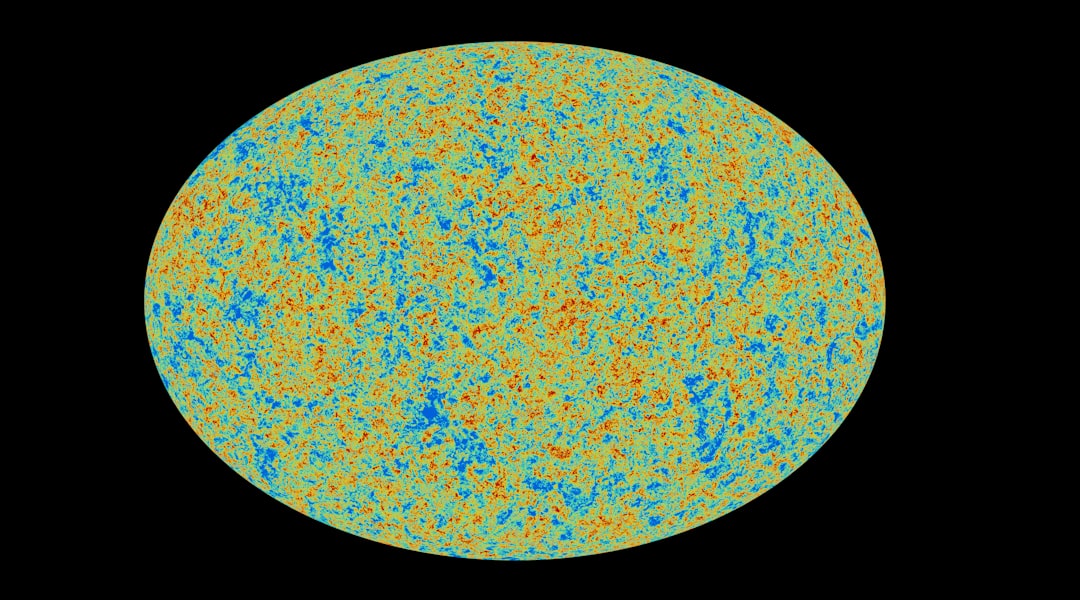
The cosmological constant is inferred from astronomical observations, including measurements of distant supernovae, the cosmic microwave background radiation, and large-scale structure surveys. These observations help determine the rate of expansion and the energy content of the universe.
What is the significance of fine-tuning in physics?
Fine-tuning challenges physicists to understand why the fundamental constants have the values they do. It raises questions about the underlying principles of the universe and whether these values are determined by deeper physical laws, chance, or selection effects.
Is the fine-tuning of the cosmological constant unique among physical constants?
While many physical constants appear fine-tuned to some degree, the cosmological constant is often highlighted because its observed value is many orders of magnitude smaller than theoretical expectations, making its fine-tuning particularly striking and puzzling.