Physical constants in the universe exhibit values that appear precisely calibrated to permit the existence of complex structures and life. This observation, known as fine-tuning, encompasses fundamental constants including the gravitational constant, the speed of light, and the electromagnetic coupling constant. These values determine the basic properties of matter, energy, and spacetime interactions throughout the universe.
Research indicates that relatively small changes to these constants would produce dramatically different cosmic conditions. Alterations to the gravitational constant would affect stellar formation and evolution, potentially preventing the nuclear fusion processes that create heavier elements necessary for planetary formation. Similarly, changes to the electromagnetic force would alter atomic structure and chemical bonding, fundamentally changing the properties of matter.
The fine-tuning observation has generated multiple scientific and philosophical explanations. The anthropic principle suggests that we observe these particular values because only universes with life-permitting constants can contain observers. Multiverse theories propose that numerous universes exist with varying constants, making our life-supporting universe one among many possibilities.
Alternative explanations include undiscovered physical principles that constrain these values or the possibility that the constants are not truly independent variables but emerge from deeper underlying physics.
Key Takeaways
- Physical constants are crucial parameters that govern the behavior and structure of the universe.
- The cosmological constant plays a key role in the universe’s expansion and its fine-tuned value is essential for life.
- Fine-tuning suggests that slight variations in constants could make the universe inhospitable to life.
- The multiverse hypothesis offers a possible explanation for fine-tuning by proposing many universes with varying constants.
- Ongoing research aims to better understand fine-tuning’s implications for cosmology, physics, and philosophy.
The Role of Physical Constants in the Universe
Physical constants serve as the foundational building blocks of our understanding of the universe. They govern the laws of physics and dictate how matter and energy interact. For you, grasping their significance is crucial for comprehending everything from the behavior of subatomic particles to the dynamics of galaxies.
Constants like Planck’s constant, which relates energy to frequency, and the fine-structure constant, which characterizes the strength of electromagnetic interactions, play pivotal roles in shaping the cosmos. These constants are not arbitrary; they are deeply embedded in the equations that describe physical phenomena. For example, the speed of light in a vacuum is not just a number; it is a fundamental limit that influences how we perceive time and space.
As you explore these relationships, you may begin to appreciate how interconnected everything is within the universe. The precise values of these constants ensure that complex structures can emerge from simple beginnings, allowing for the rich diversity of life and matter that you observe today. One fascinating concept explored in modern science is simulation theory.
Understanding the Cosmological Constant
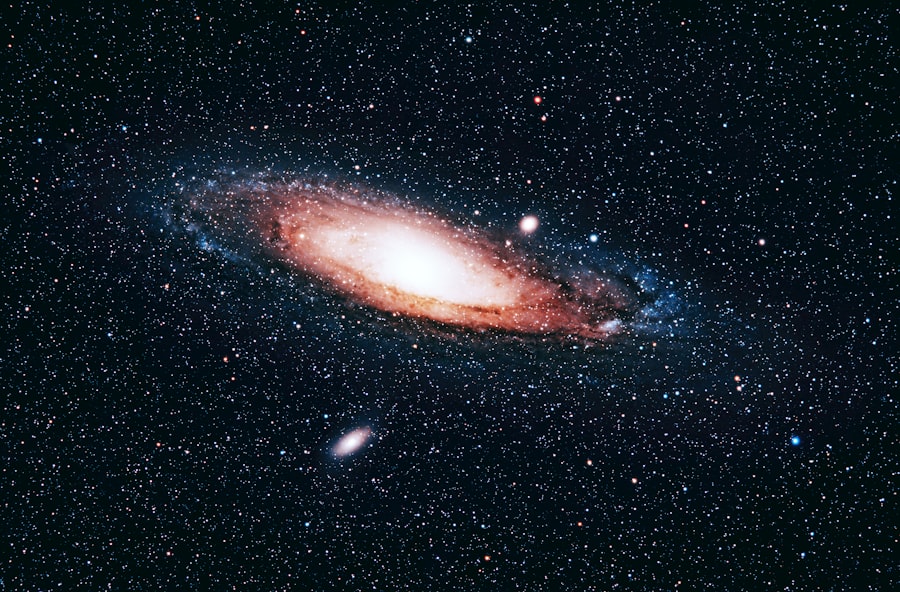
One of the most intriguing aspects of fine-tuning is encapsulated in the cosmological constant, a term introduced by Albert Einstein in his equations of general relativity. Initially conceived as a means to achieve a static universe, it has since evolved into a critical component in our understanding of cosmic expansion. The cosmological constant represents dark energy, a mysterious force driving the accelerated expansion of the universe.
As you consider its implications, you may find yourself grappling with questions about its value and origin. The cosmological constant is astonishingly small yet profoundly influential. If its value were even slightly different, the fate of the universe could be drastically altered.
A larger cosmological constant might lead to a universe that expands too quickly for galaxies to form, while a smaller one could result in a gravitational collapse. This delicate balance highlights the fine-tuning inherent in our universe and invites you to ponder why such a specific value exists. Is it merely a coincidence, or does it point to deeper underlying principles governing cosmic evolution?
The Significance of Fine-Tuning in the Universe
The significance of fine-tuning extends beyond mere curiosity; it touches upon fundamental questions about existence and our place in the cosmos. As you contemplate this phenomenon, you may realize that it challenges your understanding of chance and necessity. The precise values of physical constants suggest that our universe is not just one among many possibilities but rather a unique environment conducive to life.
This realization can evoke a sense of awe and responsibility as you consider your role within this finely-tuned framework. Moreover, fine-tuning has implications for scientific inquiry itself. It raises questions about the limits of our understanding and whether current theories can adequately explain why these constants are set as they are.
As you engage with this topic, you may find yourself drawn into discussions about the nature of scientific explanation and whether we can ever fully comprehend the reasons behind such precision. The quest for answers may lead you down paths that intertwine science with philosophy, prompting you to reflect on what it means to exist in a universe so delicately balanced.
Theoretical Explanations for the Fine-Tuning of Physical Constants
| Parameter | Value | Unit | Description | Fine-Tuning Sensitivity |
|---|---|---|---|---|
| Cosmological Constant (Λ) | 1.1 x 10^-52 | m^-2 | Energy density of vacuum driving accelerated expansion | Highly sensitive; small deviations prevent galaxy formation |
| Gravitational Constant (G) | 6.67430 x 10^-11 | m^3 kg^-1 s^-2 | Strength of gravitational interaction | Moderate sensitivity; large changes disrupt star and planet formation |
| Fine-Structure Constant (α) | 1/137.035999 | Dimensionless | Strength of electromagnetic interaction | High sensitivity; affects atomic structure and chemistry |
| Proton-to-Electron Mass Ratio (μ) | 1836.152673 | Dimensionless | Ratio of proton mass to electron mass | Moderate sensitivity; influences molecular stability |
| Dark Energy Density Parameter (ΩΛ) | 0.69 | Dimensionless | Fraction of total energy density from dark energy | Highly sensitive; determines universe expansion rate |
In your exploration of fine-tuning, you will encounter various theoretical explanations that attempt to account for this phenomenon. One prominent idea is that physical constants are not fixed but rather arise from deeper principles or symmetries within fundamental physics. For instance, some physicists propose that these constants could be determined by underlying theories such as string theory or quantum gravity.
These frameworks suggest that what we perceive as constants may emerge from more fundamental entities or interactions. Another intriguing perspective is the anthropic principle, which posits that we observe a finely-tuned universe because only such a universe can support observers like us. In this view, if there were many universes with varying physical constants, we would naturally find ourselves in one where conditions are just right for life to flourish.
This idea challenges your intuition about randomness and selection, inviting you to consider whether our existence is merely a product of chance or if there is something more profound at play.
Observational Evidence for the Fine-Tuning of Physical Constants
As you delve deeper into fine-tuning, you may seek observational evidence that supports this concept. Astronomical observations reveal an astonishing array of phenomena that align with predictions based on finely-tuned physical constants. For example, studies of cosmic microwave background radiation provide insights into the early universe’s conditions and support models that rely on specific values for constants like the density parameter and curvature.
Additionally, your exploration may lead you to consider how variations in physical constants could impact observable phenomena. For instance, if the strength of gravity were altered, it would affect star formation rates and galaxy structures. By examining these relationships through simulations and observational data, scientists can test hypotheses about fine-tuning and its implications for cosmic evolution.
This empirical approach allows you to engage with fine-tuning not just as an abstract concept but as a tangible aspect of our understanding of the universe.
Implications of the Fine-Tuning for Cosmology and Astrophysics
The implications of fine-tuning extend far beyond theoretical musings; they have profound consequences for cosmology and astrophysics. As you consider these fields, you may recognize that understanding fine-tuning can reshape your perspective on cosmic evolution and structure formation. For instance, if physical constants were not finely tuned, the processes that led to galaxy formation and star development would be fundamentally different.
Moreover, fine-tuning challenges existing models and theories within cosmology. It prompts researchers to refine their approaches and consider alternative frameworks that can accommodate this precision. As you engage with these discussions, you may find yourself contemplating how fine-tuning influences our understanding of dark matter, dark energy, and other enigmatic components of the universe.
The quest for answers in this domain drives scientific inquiry forward and encourages collaboration across disciplines.
The Debate Surrounding the Fine-Tuning of Physical Constants
The topic of fine-tuning is not without controversy; it has sparked intense debates among scientists and philosophers alike. As you navigate this discourse, you may encounter differing viewpoints on whether fine-tuning necessitates an explanation beyond naturalistic frameworks or if it can be adequately addressed within existing scientific paradigms. Some argue that invoking fine-tuning implies a designer or creator, while others contend that it can be understood through natural processes yet to be fully elucidated.
Are we merely observers in a finely-tuned universe, or do we have agency in shaping our understanding? Engaging with these questions can deepen your appreciation for both scientific inquiry and philosophical reflection as you grapple with the complexities surrounding fine-tuning.
The Multiverse Hypothesis and its Relation to Fine-Tuning
One compelling explanation for fine-tuning is the multiverse hypothesis, which posits that our universe is just one among an infinite number of universes with varying physical constants and laws. As you explore this idea, you may find it both exhilarating and perplexing. If there are countless universes with different configurations, then it becomes less surprising that we find ourselves in one that supports life; after all, we would naturally inhabit a universe where conditions are favorable.
However, this hypothesis raises its own set of challenges and questions. How do we test or observe other universes? Can science truly accommodate such an expansive notion?
As you ponder these issues, you may come to appreciate how the multiverse hypothesis intertwines with philosophical inquiries about existence and reality itself. It invites you to consider whether our understanding of fine-tuning can be reconciled with a broader view of cosmic diversity.
Future Research Directions in Understanding Fine-Tuning
As scientific inquiry continues to evolve, future research directions will undoubtedly focus on unraveling the mysteries surrounding fine-tuning. You may anticipate advancements in theoretical physics that seek to unify disparate frameworks or propose new models capable of explaining why physical constants take on their specific values. Collaborations across disciplines will likely yield fresh insights into this complex issue.
Moreover, observational advancements will play a crucial role in refining our understanding of fine-tuning. As telescopes become more sophisticated and data collection methods improve, researchers will have access to more precise measurements that could either support or challenge existing theories about physical constants. Engaging with these developments will allow you to stay at the forefront of scientific discovery while grappling with profound questions about existence.
The Philosophical and Scientific Implications of Fine-Tuning
In conclusion, your exploration of fine-tuning reveals a rich interplay between science and philosophy that invites deep reflection on existence itself. The precise calibration of physical constants raises fundamental questions about why our universe is structured as it is and whether there are underlying principles governing this precision. As you engage with these ideas, you may find yourself contemplating your place within this finely-tuned cosmos.
The implications extend beyond mere curiosity; they challenge your understanding of chance, necessity, and agency in shaping reality. Whether through theoretical frameworks like string theory or philosophical inquiries into the nature of existence, fine-tuning serves as a gateway into profound discussions about what it means to be part of a universe so delicately balanced. As you continue your journey through science and philosophy, may your curiosity lead you to new insights and deeper understandings about the nature of reality itself.
In the quest to understand the fundamental aspects of our universe, fine-tuning physical constants, particularly the cosmological constant, has garnered significant attention. A related article that delves into this topic can be found at Freaky Science, where the implications of these constants on the fabric of spacetime are explored in detail. This examination not only highlights the delicate balance required for a stable universe but also raises intriguing questions about the nature of reality itself.
WATCH THIS!🤯 SHOCKING: The Simulation Theory Proof They Don’t Want You To See
FAQs
What is the cosmological constant?
The cosmological constant is a term introduced by Albert Einstein in his equations of General Relativity. It represents a constant energy density filling space homogeneously, often associated with dark energy, which is responsible for the accelerated expansion of the universe.
What does fine-tuning of physical constants mean?
Fine-tuning refers to the observation that certain physical constants in the universe appear to have very precise values that allow for the existence of life and the structure of the cosmos. Small changes in these constants could result in a universe where stars, galaxies, or life as we know it could not exist.
Why is the cosmological constant considered fine-tuned?
The cosmological constant is considered fine-tuned because its observed value is extremely small but nonzero. Theoretical predictions from quantum field theory suggest it should be much larger, so the fact that it is finely balanced to allow the universe to expand at the observed rate is puzzling and suggests some form of fine-tuning.
How does fine-tuning of the cosmological constant affect the universe?
If the cosmological constant were significantly larger, the universe would expand too rapidly for galaxies and stars to form. If it were negative or too small, the universe might collapse back on itself. The precise value allows for a stable, expanding universe conducive to the development of complex structures.
Are there any theories explaining the fine-tuning of the cosmological constant?
Several theories attempt to explain the fine-tuning, including the anthropic principle, which suggests that we observe this value because only universes with such constants can support observers. Other approaches involve multiverse theories, modifications to gravity, or unknown physical mechanisms that set the constant’s value.
Is the fine-tuning of the cosmological constant universally accepted?
While the fine-tuning problem is widely recognized, interpretations vary. Some physicists see it as a profound mystery requiring new physics, while others consider it a natural outcome of deeper principles or selection effects. It remains an active area of research in cosmology and theoretical physics.
How is the cosmological constant measured?
The cosmological constant is inferred from observations of the universe’s expansion rate, including measurements of distant supernovae, the cosmic microwave background radiation, and large-scale structure surveys. These data help determine the energy density associated with dark energy, which is linked to the cosmological constant.
What role does the cosmological constant play in modern cosmology?
The cosmological constant is a key component of the standard model of cosmology, known as the Lambda Cold Dark Matter (ΛCDM) model. It accounts for about 70% of the total energy density of the universe and explains the observed accelerated expansion.