
The Universe: A Cosmic Tapestry and Its Uncertain Future
The human impulse to peer beyond the veil of the immediate, to understand the grand narrative of existence, is as old as consciousness itself. Theoretical physics, with its relentless pursuit of fundamental laws, has become the modern-day oracle, offering glimpses into the birth, life, and potential demise of the cosmos. While speculative, these theories are built upon rigorous mathematical frameworks and observational data, providing fertile ground for contemplation on the ultimate fate of our universe. This exploration delves into the prominent theoretical trajectories for the universe’s end, acknowledging that our current understanding is a single snapshot in an ongoing cosmic drama.
Before contemplating the end, it is crucial to acknowledge the genesis. The prevailing cosmological model, the Lambda-CDM model, describes a universe born in an explosive event – the Big Bang – approximately 13.8 billion years ago. Since then, it has been in a state of continuous expansion.
The Expanding Canvas of Spacetime
The observation that distant galaxies are receding from us, and at an accelerating rate, is a cornerstone of modern cosmology. This expansion is not an explosion into space, but rather an expansion of space itself. Imagine a loaf of raisin bread rising in an oven; as the dough expands, the raisins, representative of galaxies, move further apart from each other.
Hubble’s Law and Redshift
Edwin Hubble’s pioneering work in the 1920s established a relationship between the distance of a galaxy and its recessional velocity, known as Hubble’s Law. This velocity is measured through the phenomenon of redshift, where the light from receding objects is stretched towards longer, redder wavelengths. The further away a galaxy, the greater its redshift, and the faster it is moving away.
The Accelerating Universe: A Cosmic Surprise
Perhaps the most significant discovery of recent decades was the realization that this expansion is not merely ongoing but is, in fact, accelerating. This acceleration is attributed to a mysterious entity known as dark energy, a force that appears to permeate all of space and exert a repulsive gravitational effect.
The Cosmic Inventory: Matter, Energy, and the Unseen
Our understanding of the universe’s composition is essential for comprehending its evolutionary path. The visible universe, comprised of stars, planets, and gas clouds, represents a mere fraction of the total cosmic mass-energy.
Dark Matter: The Invisible Scaffold
Dark matter, as its name suggests, does not interact with electromagnetic radiation and is thus invisible to our telescopes. Its presence is inferred through its gravitational influence on visible matter, such as the rotation speeds of galaxies and the gravitational lensing of light from distant objects. It acts as a gravitational glue, holding galaxies and galaxy clusters together.
Dark Energy: The Enigmatic Driver
Dark energy remains one of the greatest mysteries in physics. While its existence is inferred from the accelerated expansion of the universe, its nature and origin are unknown. It is thought to be a form of energy inherent to spacetime itself, possessing a negative pressure that drives expansion.
In the realm of theoretical physics, the fate of the universe has been a subject of intense study and speculation. A related article that delves into this fascinating topic is available at Freaky Science, where various theories, including the Big Freeze, Big Crunch, and Big Rip, are explored in detail. This article provides insights into how cosmic expansion and dark energy might shape the ultimate destiny of our universe, making it a compelling read for anyone interested in the mysteries of cosmology.
Scenarios for Cosmic Demise: The Divergent Pathways
The ultimate fate of the universe hinges on the interplay between gravity (pulling matter together) and dark energy (pushing space apart). Theoretical physics has devised several plausible scenarios for the universe’s end, each with profound implications.
The Big Crunch: A Universe Rebounding
One of the earliest proposed scenarios, the Big Crunch, posits a universe where gravity eventually overcomes the outward expansion. This would occur if the average density of matter and energy in the universe were sufficiently high.
Decelerating Expansion to Collapse
If the expansion slows down and eventually halts, gravity would begin to pull everything back inwards. Galaxies would recede from each other, then slow their retreat, and finally begin to converge. The process would be a reversal of the Big Bang, with space contracting rather than expanding.
The Ultimate Singularity
The Big Crunch would culminate in a final state of extreme density and temperature, a singularity from which no further observation is possible. Some speculative theories suggest this singularity could be the seed for a new Big Bang, initiating a cyclical universe. However, current observational evidence, particularly the accelerating expansion, makes this scenario less likely than others.
The Big Freeze (Heat Death): A Slow Fade to Black
The most widely considered and currently favored scenario, based on observational data, is the Big Freeze, also known as the Heat Death of the Universe. This outcome stems from the continued acceleration of cosmic expansion driven by dark energy.
Endless Expansion and Dilution
In this scenario, the universe continues to expand indefinitely, with galaxies moving further and further apart. As space expands, it stretches electromagnetic radiation to longer wavelengths, effectively cooling the universe over immense timescales.
The Depletion of Free Energy
The concept of “heat death” refers to the thermodynamic state where the universe reaches a maximum entropy. All available energy becomes uniformly distributed and no further work can be done. Stars will eventually exhaust their fuel, black holes will evaporate through Hawking radiation over unfathomable durations, and the universe will become a cold, dark, and almost empty expanse.
The Fading of Galaxies and the Silence of Space
Imagine a grand cosmic bonfire, brightly burning billions of years ago. The Big Freeze is like that bonfire slowly sputtering out, the embers fading, and the warmth dissipating until only the cold ashes remain. Galaxies, once vibrant islands of light, would become isolated and dim specks, eventually receding beyond the observable horizon of any remaining observers. The universe would become a vast and silent void, devoid of the structures and activities that characterize it today.
The Big Rip: A Violent Unraveling
A more extreme and terrifying possibility is the Big Rip, a scenario that arises if the repulsive force of dark energy is not constant but actually increases over time.
Dark Energy’s Unchecked Dominion
If dark energy’s density grows, its repulsive force would eventually overwhelm all other forces, including gravity and even the strong nuclear force that binds atoms. This would lead to a catastrophic tearing apart of cosmic structures at every level.
The Cascading Destruction
First, galaxy clusters would be torn asunder, followed by individual galaxies. Stars and planets within these galaxies would be ripped apart. Eventually, even atoms themselves would be stretched and disintegrated, leaving a universe composed of fundamental particles moving further and further apart at ever-increasing speeds.
The Ultimate Dissolution
The Big Rip heralds a complete and violent dissolution of all structure within the universe. It represents a chaotic end, where the very fabric of reality is torn asunder. Unlike the gradual cooling of the Big Freeze, the Big Rip is a sudden and cataclysmic event that would obliterate all known forms of matter and energy.
The Role of Dark Energy: The Ultimate Arbiter
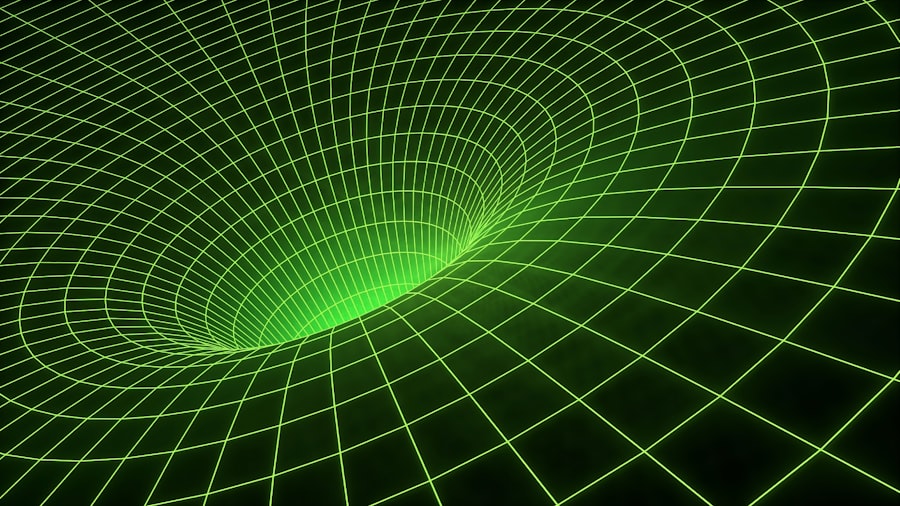
The precise nature and behavior of dark energy are the critical factors determining the universe’s ultimate fate. Its influence is like a cosmic tug-of-war, with gravity on one side and dark energy on the other.
Cosmological Constant versus Dynamic Dark Energy
The simplest explanation for dark energy is Einstein’s cosmological constant, a term he once introduced and later called his “greatest blunder.” If dark energy is a constant property of spacetime, it leads to the Big Freeze. However, if dark energy is dynamic, varying in density and pressure over time, other fates like the Big Rip become possible.
The Equation of State: A Key Indicator
Physicists use the “equation of state parameter” (w) to describe the relationship between the pressure and energy density of dark energy. If w = -1, it corresponds to a cosmological constant, favoring the Big Freeze. If w < -1, it implies a phantom dark energy, leading to the Big Rip. If w > -1, the expansion would slow down, potentially leading to a Big Crunch. Current observations suggest w is very close to -1.
Probing the Evolving Universe: Observational Challenges
Directly observing the behavior of dark energy across cosmic history is a significant challenge. Its influence is subtle and requires precise measurements of cosmic expansion rates over vast distances and timescales.
Supernovae as Cosmic Lighthlights
Type Ia supernovae, which have a known intrinsic brightness, serve as “cosmic lighthlights” allowing astronomers to measure distances to galaxies. By studying the redshift and apparent brightness of these supernovae, scientists can map the expansion history of the universe and infer the properties of dark energy.
Large-Scale Structure and Microwave Background Radiation
The distribution of galaxies across the universe (large-scale structure) and the faint afterglow of the Big Bang (cosmic microwave background radiation) also provide crucial clues about the universe’s composition and expansion history, helping to constrain models of dark energy.
Multiverses and Cyclical Universes: Alternative Fates

While the Big Freeze, Big Crunch, and Big Rip describe the end of our observable universe, some theoretical frameworks propose alternative cosmological narratives that question our singular cosmic destiny.
The Multiverse Hypothesis: An Infinite Possibility
The multiverse hypothesis suggests that our universe is not the only one but rather one among many, perhaps an infinite number, of separate universes. These universes could have different physical laws, constants, and even different numbers of dimensions.
Inflationary Cosmology and Bubble Universes
Some models of cosmic inflation, a period of rapid expansion in the early universe, suggest that inflation might be eternal, constantly spawning new “bubble universes.” Each bubble could pinch off from the inflating background, forming its own distinct spacetime.
The Search for Evidence
Detecting other universes is currently beyond our technological capabilities. However, some speculative ideas propose indirect evidence, such as “bruises” on the cosmic microwave background radiation caused by collisions with other universes in the distant past.
Cyclical Cosmologies: The Universe Reborn
Cyclical or oscillating universe models propose that the universe undergoes repeated cycles of expansion and contraction.
The Big Bounce
Instead of ending in a singularity like the Big Crunch, a Big Bounce scenario suggests that the universe contracts to a certain point and then “bounces” back into another period of expansion. This could involve exotic physics at very high densities, such as quantum gravity effects, that prevent a complete collapse.
Challenging the Arrow of Time
These models often grapple with the arrow of time and the second law of thermodynamics, as each cycle would seemingly increase entropy. Finding mechanisms to reset or mitigate this entropy increase remains a theoretical challenge.
The fate of the universe is a captivating topic in theoretical physics, and many researchers are exploring various scenarios that could unfold in the distant future. One intriguing perspective is presented in an article that discusses the potential outcomes based on current cosmological models. For those interested in delving deeper into this subject, you can read more about it in this insightful piece on the implications of dark energy and cosmic expansion. Understanding these concepts can provide a clearer picture of how our universe might evolve over billions of years. Check out the article here: Freaky Science.
Our Place in the Cosmic Chronicle: The Futility and the Foundation
| Concept | Description | Key Metric/Parameter | Estimated Value/Range | Implication for Fate of Universe |
|---|---|---|---|---|
| Dark Energy Density (ΩΛ) | Energy density driving accelerated expansion | ΩΛ (Omega Lambda) | ~0.68 (68%) | Causes accelerated expansion, leading to possible Big Freeze or Heat Death |
| Dark Matter Density (Ωm) | Non-luminous matter affecting gravitational dynamics | Ωm (Omega Matter) | ~0.32 (32%) | Influences structure formation and expansion rate |
| Hubble Constant (H0) | Current expansion rate of the universe | H0 | 67 – 74 km/s/Mpc (varies by measurement method) | Determines expansion speed and age of universe |
| Curvature Parameter (Ωk) | Spatial curvature of the universe | Ωk | ~0 (flat universe) | Flat geometry supports infinite expansion scenarios |
| Equation of State Parameter (w) | Ratio of pressure to energy density of dark energy | w | Approximately -1 | Determines if dark energy is cosmological constant or dynamic |
| Big Freeze | Scenario where universe expands forever, cooling down | Time scale | Trillions of years | Stars burn out, universe approaches absolute zero temperature |
| Big Crunch | Hypothetical scenario where expansion reverses | Depends on total density (Ωtotal > 1) | Not supported by current data | Universe collapses back to high density state |
| Big Rip | Universe expansion accelerates to tear apart all matter | w | Uncertain, hypothetical | All structures, down to atoms, are eventually ripped apart |
| Heat Death | Maximum entropy state with no thermodynamic free energy | Entropy (S) | Approaches maximum over very long timescales | Universe reaches thermodynamic equilibrium, no usable energy |
Contemplating the end of the universe can evoke a sense of profound insignificance. If all that exists is destined to fade into cold emptiness, what is the meaning of our brief, luminous existence?
The Value of the Present Moment
While philosophical, the scientific pursuit of these questions is not solely about the destination but also about understanding the journey. The very act of theoretical physics, of grappling with these immense concepts, is a testament to the human capacity for curiosity and our drive to comprehend our place in the grand cosmic tapestry.
The Unfolding Story of Discovery
Our understanding of the universe is a dynamic and evolving narrative. Each new observation, each refined theory, adds another chapter to this ongoing story. The fate of the universe, while seemingly predetermined by current models, remains an open question, a cosmic mystery waiting to be further unraveled. The pursuit of knowledge, even in the face of an ultimate end, is a fundamental aspect of the human experience. The universe may have an end, but our quest for understanding is, in some ways, eternal.
WATCH NOW ▶️ The Universe Is A False State: Is Reality a Simulation?
FAQs
What is meant by the “fate of the universe” in theoretical physics?
The “fate of the universe” refers to the ultimate long-term outcome of the cosmos based on current understanding of physics, cosmology, and the behavior of matter and energy. It involves predictions about how the universe will evolve, expand, contract, or change over billions or trillions of years.
What are the main theories about the fate of the universe?
The main theories include the Big Freeze (heat death), the Big Crunch, the Big Rip, and the possibility of a cyclic universe. These scenarios depend on factors such as the universe’s rate of expansion, dark energy, and the total amount of matter and energy.
How does dark energy influence the fate of the universe?
Dark energy is believed to be responsible for the accelerated expansion of the universe. Its properties and behavior significantly affect predictions about the universe’s fate, potentially leading to scenarios like the Big Freeze or Big Rip, where the universe continues expanding indefinitely or tears apart.
Can the universe stop expanding and start contracting?
If the density of matter and energy in the universe were sufficient to overcome the expansion, gravity could cause the universe to stop expanding and begin contracting, leading to a Big Crunch. However, current observations suggest the expansion is accelerating, making this scenario less likely.
Is it possible to know the exact fate of the universe?
While theoretical physics provides models and predictions, the exact fate of the universe remains uncertain due to incomplete knowledge about dark energy, dark matter, and other fundamental aspects. Ongoing observations and research aim to refine these predictions.