You’re standing in your kitchen, perhaps a little bleary-eyed in the morning, reaching for your coffee mug. Or maybe it’s late at night, and a craving hits, prompting you to snag a forgotten leftover from the fridge. In either scenario, a familiar hum and a soft glow soon follow. You’ve just engaged with a remarkable piece of technology: the microwave oven. It’s so ubiquitous, so integrated into your daily life, that you might not often stop to think about its journey. But this unassuming appliance, the undisputed champion of speedy reheating and quick cooking, has a surprisingly rich and fascinating evolutionary tale to tell.
It’s hard to imagine a world without the microwave oven, but its origins are rooted in the urgency of wartime technology. You see, the microwave’s ancestor wasn’t designed to warm your pizza; it was built to detect enemy aircraft.
The Genesis in Magnetron Research
The story truly begins in the 1940s, during the height of World War II. You might find it surprising, but the development of radar technology was paramount. One of the key components that enabled powerful radar systems was the magnetron, a vacuum tube that generated microwave radiation. Dr. Percy Spencer, a self-taught engineer working for the Raytheon Manufacturing Company in Massachusetts, was deeply involved in magnetron development. His work involved experimenting with these powerful devices, often while standing in front of an active magnetron.
A Pocketful of Meltdown
It’s here that the truly serendipitous discovery occurred. The legend – and it’s a delightful one – tells of Dr. Spencer munching on a peanut cluster bar in his pocket while working near a magnetron. He noticed something peculiar: the candy bar began to melt. Intrigued by this unexpected phenomenon, Spencer, a man of keen observation and scientific curiosity, decided to conduct a more controlled experiment. He placed a few kernels of popcorn near the magnetron. Within minutes, the kernels burst into fluffy popcorn. This was the first inkling that microwave radiation, far from being just a tool for detection, had the potential to cook food.
The Power of Microwaves
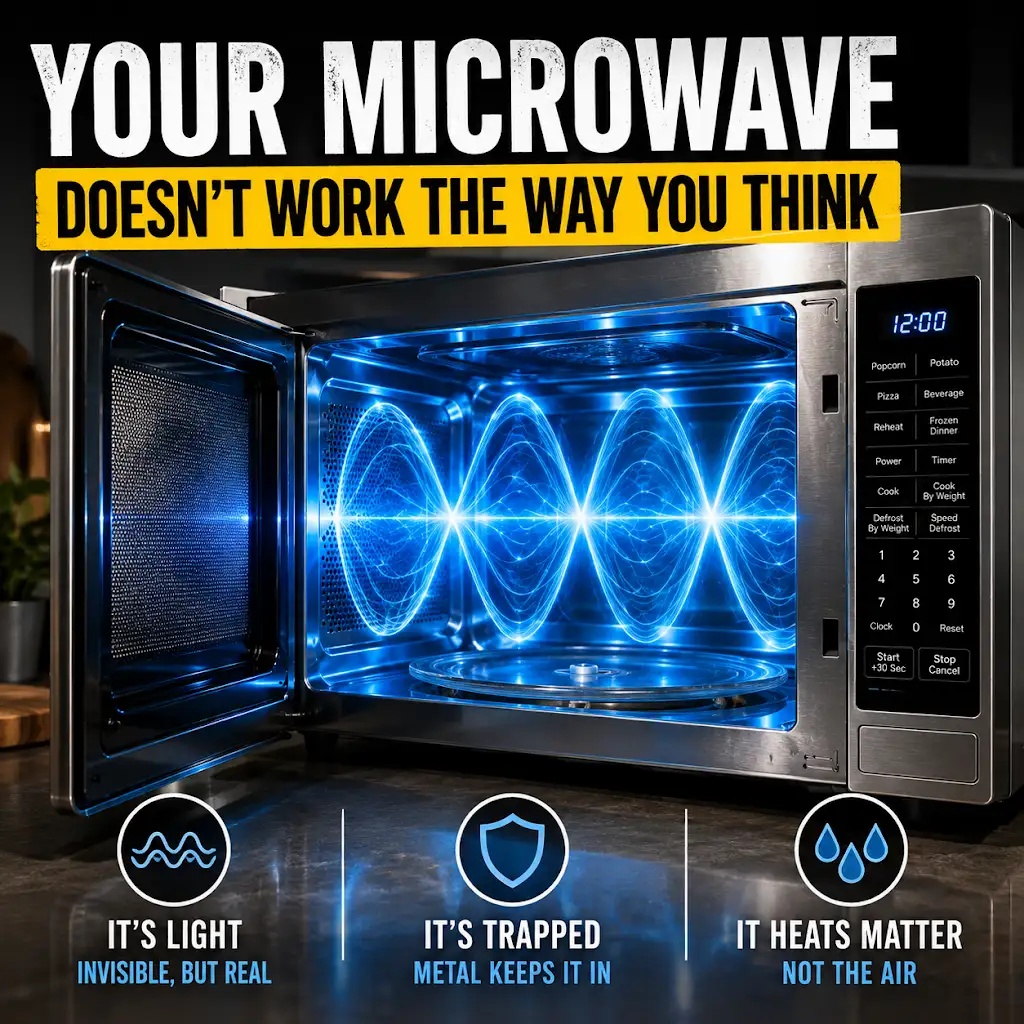
What Dr. Spencer observed was the fundamental principle behind microwave cooking. Microwaves are a form of electromagnetic radiation, similar to radio waves and visible light. However, their specific frequency (typically around 2.45 GHz) is particularly effective at interacting with water molecules, fats, and sugars – the primary components of food. When these molecules absorb microwave energy, they vibrate rapidly, generating heat from within. This is a stark contrast to conventional ovens, which heat food from the outside in through conduction and convection. You understand this difference intuitively; a conventional oven bakes, while a microwave irradiates.
Early Experiments and Patents
Following his popcorn revelation, Dr. Spencer continued his investigations, moving beyond candy bars and popcorn to explore how microwaves could cook other food items. He experimented with eggs, rapidly cooking them within their shells, and other simple foods. Raytheon, recognizing the potential of this discovery, quickly filed patents for a microwave cooking apparatus. The initial intention was not for a household appliance, but for large-scale industrial or commercial cooking. The idea of a compact, user-friendly oven for the average home was still a distant dream. You might imagine the engineers of the time, accustomed to bulky radar equipment, trying to conceptualize how this powerful energy could be safely and efficiently contained for domestic use.
The history of the microwave oven is a fascinating journey that highlights the intersection of innovation and everyday convenience. For a deeper understanding of how this revolutionary kitchen appliance came to be and its impact on modern cooking, you can explore a related article that delves into the science and evolution of microwave technology. Check it out here: Freaky Science.
From Industrial Giants to Kitchen Companion: The Birth of the First Microwaves
The journey from a military-grade magnetron to a counter-top appliance was not an immediate one. It involved considerable engineering challenges and a shift in perspective from industrial applications to consumer convenience.
The “Radarange”: A Giant Step
The first commercially available microwave oven was developed by Raytheon, building on Dr. Spencer’s foundational work. Introduced in 1947, it was called the “Radarange.” However, you would have been hard-pressed to fit this behemoth into your kitchen. The Radarange was massive, standing nearly six feet tall and weighing around 750 pounds. It was primarily designed for industrial and commercial use, such as in galleys of ships, railway dining cars, and large restaurants.
A Costly Convenience
Beyond its imposing size, the Radarange was also incredibly expensive, costing several thousand dollars – a prohibitive sum for the average household in the post-war era. Its power consumption was also significant, making it an impractical choice for home use. You can picture the early advertising: a rugged, industrial-looking machine, a far cry from the sleek designs you see today, promising faster cooking for large quantities of food. The idea of a family using it to heat up a single plate of leftovers would have been absurd.
Early Adopters and Limited Appeal
The Radarange’s primary customers were businesses that could justify the cost and space due to the efficiency gains it offered in preparing food for a large number of people. While it demonstrated the potential of microwave cooking, it did little to bring the technology into the mainstream home. The concept of quick, efficient cooking was intriguing, but the practicalities remained out of reach for most. You might have heard tales from older relatives, if they were in the food service industry, about these early, unwieldy machines.
The “Tappan” Revolution: A Glimpse of Home
It wasn’t until the 1950s that significant steps were made towards miniaturization and affordability. The Tappan Stove Company, an established appliance manufacturer, collaborated with Raytheon to develop a more compact and somewhat more affordable microwave oven for domestic kitchens. In 1955, Tappan introduced the “Dial-a-Matic,” which was still a significant investment but offered a more manageable size and a slightly more accessible price point, though still in the hundreds of dollars.
Integrated into the Kitchen
The Dial-a-Matic was a step towards integrating the microwave into the existing kitchen infrastructure. It was often designed to be mounted above a range or built into cabinetry, attempting to make it a more seamless part of the kitchen environment. This was a crucial development, as it began to normalize the idea of having a microwave in the home, even if it wasn’t yet a standard appliance. You might find older homes with remnants of these built-in units, a testament to this early push for integration.
Still a Luxury Item
Despite these advancements, the Dial-a-Matic remained a luxury item. Its high cost, coupled with a learning curve for operating the new technology and concerns about its safety (which we’ll explore later), limited its widespread adoption. Most households still relied on traditional ovens and stovetops. The idea of a microwave as an everyday necessity was still decades away.
Overcoming Hesitations: Safety and User Experience

As the microwave oven began to make its tentative way into homes, it faced considerable apprehension and skepticism. These weren’t just minor concerns; they were deeply held fears that needed to be addressed for the technology to truly take hold.
Radiation Fears: The Invisible Threat
Perhaps the most significant hurdle was the fear of radiation. In the post-war era, the term “radiation” was often associated with the destructive power of atomic bombs and the unseen dangers of nuclear fallout. The very idea of an appliance emitting invisible energy within your home was unsettling for many. You might recall conversations with grandparents or parents who expressed these initial worries about the “rays” from the microwave.
Government Regulation and Safety Standards
To combat these fears, government agencies and manufacturers worked to establish and enforce safety standards. The Food and Drug Administration (FDA) in the United States played a crucial role in setting regulations for microwave oven design and performance, ensuring that the leakage of microwave radiation was well below harmful levels. Manufacturers invested heavily in shielding technologies, using metal enclosures and door seals to contain the microwaves within the oven cavity. You can see these safety features yourself: the metal mesh in the door window and the interlocking mechanisms that prevent operation when the door is ajar.
Education and Reassurance
Beyond regulations, a significant effort was made to educate the public about the safety of microwave ovens. Manufacturers and consumer groups published information explaining how microwaves worked and reassuring people that, when used as directed, they were safe. This gradual process of education and demonstrated safety was vital in shifting public perception from one of fear to one of acceptance. You can see the results of this effort all around you, in every kitchen equipped with a microwave.
User-Friendliness: From Complex Controls to Intuitive Design
The early microwave ovens, while functional, were not always the most intuitive to use. The controls could be clunky, and the cooking times required careful estimation. This was another area where evolution was necessary.
The Rise of Digital Controls
The transition from mechanical knobs and dials to digital displays and push-button controls marked a significant improvement in user experience. Digital interfaces allowed for more precise time settings and offered features like programmable cooking cycles. You likely own a microwave with a digital display and a keypad, appreciating the ease with which you can select power levels and cooking durations.
Pre-programmed Settings and Smart Features
As technology advanced, manufacturers introduced pre-programmed settings for common foods like popcorn, baked potatoes, and defrosting. This eliminated the guesswork for many users and made the microwave even more convenient. More recently, you’ve seen the emergence of “smart” microwaves that can connect to Wi-Fi, offer recipe suggestions, and even scan barcodes on food packaging to automatically set the correct cooking time and power. This represents a remarkable leap from the basic heating capabilities of early models.
The Modern Microwave: Refinement and Versatility
Today’s microwave oven is a far cry from its early, clunky predecessors. It’s a sophisticated appliance that has evolved to become an indispensable tool in most kitchens, offering a range of features and functionalities that cater to diverse cooking needs.
Beyond Reheating: Expanding Culinary Horizons
While reheating leftovers remains a primary function, modern microwaves are capable of much more. You can now use them for tasks that were once exclusive to conventional ovens.
Baking and Roasting Capabilities
Many contemporary microwaves come equipped with convection features. This means they have a heating element and a fan that circulates hot air, allowing you to bake cakes, cookies, and even roast meats with a degree of browning and crispness that was previously impossible in a microwave. You might have a combination microwave-convection oven yourself, experiencing this dual functionality.
Grilling and Steaming Functions
Some advanced models also incorporate grilling elements, allowing you to achieve a grilled finish on foods, or steaming functions that utilize water to cook food gently and healthily. This versatility means that a single appliance can now perform multiple cooking roles, saving space and energy in your kitchen. You’ve likely seen these features advertised, perhaps even tempted to explore them for your own cooking.
Aesthetic and Ergonomic Enhancements
The evolution of the microwave hasn’t just been about functionality; it’s also about how it looks and feels in your home.
Sleek Designs and Material Innovations
You’ve probably noticed the shift in design. Microwaves are no longer just utilitarian boxes. They come in a variety of sleek designs, with stainless steel finishes, tempered glass doors, and minimalist control panels that complement modern kitchen aesthetics. The materials used have also evolved, with improvements in durability and ease of cleaning.
Countertop, Over-the-Range, and Built-in Options
The placement options have also expanded. You can choose between classic countertop models, over-the-range microwaves that free up counter space and often include ventilation and lighting, and sophisticated built-in units that integrate seamlessly into your cabinetry. This variety allows you to select the microwave that best fits your kitchen layout and lifestyle. You’ve likely made this choice yourself, prioritizing counter space or a specific aesthetic.
The history of the microwave oven is a fascinating journey that highlights the intersection of technology and everyday life. For those interested in exploring this topic further, a related article provides an in-depth look at the evolution of this kitchen appliance and its impact on cooking practices. You can read more about it in this informative piece on Freaky Science, which delves into the innovations that led to the microwave’s invention and its subsequent popularity in households around the world.
The Future of Microwave Cooking: Smart and Sustainable
| Decade | Event |
|---|---|
| 1940s | The microwave oven was invented by Percy Spencer. |
| 1950s | The first commercial microwave oven was introduced. |
| 1960s | Microwave ovens became more popular in households. |
| 1970s | Microwave ovens were more affordable and widely used. |
| 1980s | Microwave ovens became a common kitchen appliance. |
| 1990s | Advancements in microwave technology improved cooking capabilities. |
| 2000s | Microwave ovens continued to be a staple in kitchens worldwide. |
The evolution of the microwave oven is far from over. As technology continues to advance, you can expect to see even more innovative features that will further enhance its convenience, efficiency, and sustainability.
The Rise of “Smart” Appliances
The integration of the Internet of Things (IoT) is transforming the microwave into a “smart” appliance.
Connectivity and Voice Control
Future microwaves will likely offer even more seamless connectivity. Imagine being able to preheat your microwave remotely using a smartphone app, or controlling it with voice commands through smart home assistants. This level of integration will make cooking more convenient and accessible than ever before. You might already be experiencing this with other smart devices in your home, and the microwave is set to join that ecosystem.
AI-Powered Cooking and Recipe Integration
Artificial intelligence (AI) is poised to play a significant role. AI-powered sensors could automatically detect the type and quantity of food placed in the microwave, optimizing cooking times and power levels for perfect results. You could also see advanced recipe integration, where the microwave guides you through complex dishes, adjusting settings automatically as needed. This moves the appliance beyond a simple heating device to a culinary assistant.
Sustainability and Energy Efficiency
As environmental consciousness grows, so too will the demand for sustainable appliances.
Reduced Energy Consumption
Manufacturers are continually striving to improve the energy efficiency of microwaves. This includes developing more efficient magnetrons and optimizing the insulation and sealing of the oven cavity to minimize heat loss. You can expect to see microwaves with lower power consumption, contributing to reduced electricity bills and a smaller environmental footprint.
Eco-Friendly Materials and Extended Lifespan
The use of recycled and eco-friendly materials in manufacturing will become more prevalent. Furthermore, advancements in durability and repairability will aim to extend the lifespan of microwave ovens, reducing waste and promoting a more circular economy in appliance production. You’ll likely see more focus on the lifecycle of the appliance, from its creation to its eventual disposal.
The microwave oven, born from the necessity of war and nurtured by a blend of scientific ingenuity and consumer demand, has undergone a remarkable transformation. From its imposing, expensive beginnings to the sleek, feature-rich appliance you use today, its journey is a testament to human innovation. As you continue to rely on its speed and convenience, remember the rich history behind that hum and glow. You are, in essence, part of an ongoing culinary revolution, all thanks to a melting candy bar and the relentless pursuit of making your life just a little bit easier.
Your Microwave Doesn’t Work the Way You Think
FAQs
1. When was the microwave oven invented?
The microwave oven was invented in 1946 by Percy Spencer, an engineer at Raytheon Corporation.
2. How does a microwave oven work?
Microwave ovens work by using microwave radiation to heat food. The microwaves cause the water molecules in the food to vibrate, generating heat and cooking the food from the inside out.
3. When did microwave ovens become popular in households?
Microwave ovens became popular in households during the 1970s, as they became more affordable and smaller in size.
4. What impact did the microwave oven have on cooking and food preparation?
The microwave oven revolutionized cooking and food preparation by providing a quick and convenient way to heat and cook food. It also led to the development of microwave-safe packaging and convenience foods.
5. Are there any safety concerns associated with using a microwave oven?
While microwave ovens are generally safe to use, it is important to follow the manufacturer’s instructions and avoid using metal or certain types of plastic containers in the microwave. It is also recommended to avoid standing directly in front of the microwave while it is in use.