The journey of light, a fundamental aspect of our universe, is often perceived as instantaneous and immutable. When a light bulb flickers on, we expect illumination. When sunlight streams through a window, we anticipate warmth and visibility. However, this seamless experience belies a more complex reality. Light, as it travels and interacts with its surroundings, is not a perfectly conserved entity. It experiences energy loss, a phenomenon that, while often subtle, plays a crucial role in everything from the efficiency of our technologies to the intricate processes within living organisms. Understanding this energy loss is not merely an academic exercise; it’s essential for advancements in fields like solar energy, optical communication, and even our comprehension of cosmic events.
The Fundamental Nature of Light and Energy
To grasp the nuances of light’s energy loss, one must first appreciate its dual nature. Light, a form of electromagnetic radiation, exhibits characteristics of both waves and particles. As a wave, it possesses properties like frequency and wavelength, which are directly related to its energy. Higher frequency (and shorter wavelength) light, such as ultraviolet or X-rays, carries more energy than lower frequency light, like infrared or radio waves. As a particle, light exists as discrete packets of energy called photons. Each photon carries a specific amount of energy, quantized by its frequency according to Planck’s equation: E = hf, where E is energy, h is Planck’s constant, and f is frequency.
When light encounters matter, it can interact in several ways, each leading to potential energy transformations. These interactions are governed by the fundamental principles of conservation of energy, meaning energy is neither created nor destroyed, but rather converted from one form to another. In the context of light, this conversion often results in the energy of the photons being transferred to the matter they interact with, manifesting as heat, chemical changes, or even re-emitted light at a different energy level. The “loss” of light’s energy is, therefore, not a disappearance but a transformation into other forms of energy, often less useful for its original purpose of carrying information or illuminating a space.
Wave-Particle Duality Explained
The concept of wave-particle duality, first articulated by pioneers like Albert Einstein and Niels Bohr, is central to understanding how light behaves. It’s not that light is sometimes a wave and sometimes a particle, but rather that it possesses properties of both simultaneously, and which aspect is observed depends on the experimental setup or interaction. Imagine a coin: it has two sides, heads and tails. You can observe one side at a time, but the coin is always both heads and tails in essence. Similarly, light, when interacting with a prism to create a spectrum, behaves as a wave, showing its wavelength-dependent properties. However, when it strikes a photosensitive surface, like in a solar cell, it behaves as discrete particles (photons) that transfer their energy to electrons. This duality is critical because different types of interactions involve different aspects of light. For instance, scattering, a common cause of energy loss, can be understood through the interaction of photons with particles.
Planck’s Quantum Hypothesis
Max Planck’s groundbreaking work in the early 20th century revolutionized physics by introducing the idea that energy is not continuous but comes in discrete packets, or “quanta.” This was initially conceived to explain the spectrum of blackbody radiation but laid the foundation for quantum mechanics. For light, this means photons are the fundamental carriers of energy. The energy contained within a single photon is directly proportional to its frequency. Therefore, when light interacts with matter, the energy exchange happens in discrete photon-sized packets. This quantum nature is key to understanding phenomena like the photoelectric effect, where photons with sufficient energy can eject electrons from a metal surface, and also contributes to the mechanisms by which light energy is absorbed and dissipated.
Light loses energy through various processes, such as scattering and absorption, which can significantly affect its intensity and color. For a deeper understanding of these phenomena and their implications in different contexts, you can refer to a related article that explores the intricate details of light energy loss. To learn more, visit this link: Freaky Science.
Mechanisms of Energy Dissipation
The energy carried by light can be lost through various mechanisms as it propagates through a medium or interacts with surfaces. These losses are not uniform and depend heavily on the properties of the light itself (its wavelength and intensity) and the nature of the medium it encounters. The most common forms of energy loss involve absorption, scattering, and diffraction. Each of these processes leads to the photon’s energy being converted into forms other than the original propagating electromagnetic wave.
Absorption and Its Consequences
Absorption is perhaps the most direct way light loses energy. When a photon strikes an atom or molecule, its energy can be absorbed if it matches an energy difference between electronic or vibrational states within that atom or molecule. This absorbed energy typically excites the atom or molecule to a higher energy state. The fate of this absorbed energy can vary. It might be re-emitted as another photon, but often at a lower energy (longer wavelength) – a process known as fluorescence or phosphorescence, which is itself a form of energy loss from the original beam. More commonly, the absorbed energy is converted into thermal energy, increasing the kinetic energy of the atoms or molecules in the material. This is why surfaces exposed to sunlight get warm. The energy of the absorbed photons is transferred to the material as heat, effectively removing that portion of the light’s energy from the propagating beam.
The Phenomenon of Scattering
Scattering occurs when light interacts with particles or inhomogeneities in a medium, causing it to deviate from its original path. This deviation can be elastic (Rayleigh scattering, where photon energy is largely conserved but direction changes) or inelastic (Raman scattering, where energy is exchanged between the photon and the molecule). While Rayleigh scattering might not always represent a direct loss of energy in terms of reduced photon energy, it diverts the light, making it unavailable for its intended purpose, effectively reducing the intensity of the beam in the original direction. In atmospheric science, Rayleigh scattering is responsible for the blue color of the sky; shorter wavelengths of sunlight are scattered more effectively by air molecules. In denser media, Mie scattering, which affects larger particles, can also occur, redirecting light in various directions. Fresnel reflection, which is the bouncing of light off surfaces, can also be considered a form of scattering, where light is reflected back from interfaces.
Diffraction: Bending and Spreading Light
Diffraction is the phenomenon where light waves bend and spread out as they pass through an opening or around an obstacle. While not a direct conversion of energy into heat or another form, diffraction can lead to a loss of intensity in specific directions. The intricate patterns formed by diffraction are a consequence of constructive and destructive interference of light waves. In practical applications like optical fibers, diffraction can lead to signal degradation if not managed properly, as the light beam spreads and loses focus over distance. The energy associated with the light is still present, but its distribution changes, and some of it may propagate away from the intended path, leading to a perceived energy loss for the directed signal.
Energy Loss in Optical Materials and Systems
The materials through which light travels and the components that manipulate it are never perfectly transparent or reflective. Every optical element, from a simple lens to a complex optical fiber, introduces some degree of energy loss. This loss is crucial for the performance and efficiency of any optical system, be it for communication, imaging, or energy generation.
Imperfections in Transmission Media
In transparent materials like glass or plastics, energy loss primarily occurs through absorption and scattering. Microscopic impurities, structural defects, and molecular vibrations within the material can absorb photons, converting their energy into heat. Scattering can arise from variations in the refractive index at the microscopic level, causing light to deviate from its straight path. In optical fibers, this loss is quantified by attenuation, typically measured in decibels per kilometer. Different types of optical fibers are designed to minimize these losses, with silica-based fibers being the standard for telecommunications due to their low attenuation in the infrared spectrum. However, even the purest silica absorbs some light, especially at very short or very long wavelengths.
Reflective Surfaces and Their Deficiencies
When light encounters a reflective surface, such as a mirror, a portion of it is reflected, but a small amount is usually absorbed or scattered. The reflectivity of a surface is never 100%. Even the highly polished mirrors used in telescopes absorb a small fraction of the incident light, which can be significant over long observational periods or with faint objects. The quality of the surface finish plays a critical role; microscopic imperfections can lead to diffuse scattering rather than specular reflection, redirecting light away from the intended path. Anti-reflective coatings are often applied to lenses and other optical components to minimize reflection losses by exploiting destructive interference of light waves. However, these coatings themselves can introduce very minor absorption or scattering.
Losses in Active Optical Components
Active optical components, such as lasers, light-emitting diodes (LEDs), and photodiodes, are designed to generate or detect light. In these devices, energy conversion processes are inherently inefficient, leading to significant energy losses. In LEDs, for example, only a fraction of the electrical energy supplied is converted into light; the rest is lost as heat due to various electrical and optical inefficiencies. Lasers, while highly efficient at producing coherent light, still experience losses in their gain medium and optical cavities. Photodiodes convert light into electrical signals, but the quantum efficiency – the ratio of generated electrons to incident photons – is rarely 100%, meaning some light energy passes through or is otherwise not converted.
The Impact of Energy Loss on Technology
The energy loss of light is a critical factor that engineers and scientists must contend with when designing and optimizing various technologies. From ensuring clear communication signals to maximizing the efficiency of solar panels, understanding and mitigating these losses is paramount.
Optical Communication Systems
In telecommunications, light is used to transmit vast amounts of data through optical fibers. The speed and capacity of these networks are directly influenced by the attenuation of light signals over distance. As light travels through the fiber, energy is lost due to absorption and scattering, weakening the signal. Without repeaters or optical amplifiers, which are devices that boost the signal strength, data transmission would be severely limited. Research is continuously focused on developing fibers with lower attenuation and more efficient amplification techniques to extend the reach and bandwidth of optical networks. The choice of wavelength is also crucial, as attenuation varies significantly across the electromagnetic spectrum.
Solar Energy Conversion
Solar panels, designed to convert sunlight into electricity, are fundamentally impacted by energy losses in light. When sunlight strikes a solar cell, several processes contribute to energy loss. Firstly, not all photons have sufficient energy to overcome the band gap of the semiconductor material and generate an electron-hole pair; these photons are either transmitted or absorbed as heat. Secondly, reflections from the surface of the solar cell reduce the amount of light that enters the semiconductor. Thirdly, recombination of charge carriers within the semiconductor before they can be collected as electricity represents another loss mechanism. Finally, parasitic resistances within the cell and associated circuitry also contribute to energy dissipation. Maximizing the efficiency of solar cells involves minimizing these various energy losses.
Imaging and Sensing Technologies
In cameras, telescopes, and various sensing devices, the quality of the image or the sensitivity of the detection is directly related to how much light reaches the sensor or film. Energy losses due to reflection, scattering, and absorption within lenses, mirrors, and other optical components can degrade image quality, reduce resolution, and limit the ability to detect faint signals. For instance, in microscopy, even small amounts of light loss can make it difficult to observe very small or weakly absorbing specimens. Similarly, astronomical observations of distant galaxies rely on capturing every available photon, making even minuscule energy losses in telescopes significant.
Light loses energy as it travels through different mediums, a phenomenon that can be observed in various contexts, such as the scattering of light in the atmosphere or its absorption by materials. This energy loss can lead to effects like the redshift observed in distant galaxies, where light stretches and shifts towards the red end of the spectrum. For a deeper understanding of the principles behind light and energy, you can explore a related article on this topic at Freaky Science.
The Significance in Natural Phenomena
| Mechanism | Description | Effect on Light Energy | Example |
|---|---|---|---|
| Redshift (Cosmological) | Expansion of the universe stretches light waves, increasing their wavelength. | Light loses energy as wavelength increases (energy inversely proportional to wavelength). | Cosmic Microwave Background radiation redshifted over billions of years. |
| Scattering | Light interacts with particles, changing direction and sometimes wavelength. | Energy can be redistributed; some energy lost to other forms like heat. | Rayleigh scattering causing blue sky and red sunsets. |
| Absorption | Light is absorbed by matter, transferring energy to atoms or molecules. | Light energy decreases as it is converted to other energy forms. | Solar panels absorbing sunlight to generate electricity. |
| Compton Scattering | Photon collides with a charged particle, losing energy and increasing wavelength. | Photon energy decreases after collision. | X-rays scattering off electrons in matter. |
| Inverse Square Law | Light intensity decreases with the square of the distance from the source. | Apparent energy per unit area decreases, but photon energy remains constant. | Sunlight intensity decreases as distance from the Sun increases. |
The energy loss of light is not confined to technological applications; it plays a vital role in shaping numerous natural phenomena across the universe. From the atmospheric colors we observe daily to the way life on Earth is powered, these energy transformations are fundamental to our world.
Atmospheric Optics and Perception
The vibrant colors of our sky, the shimmering hues of a sunset, and the ethereal beauty of a rainbow are all manifestations of light interacting with atmospheric particles. Rayleigh scattering, as mentioned, is responsible for the blue color of the daytime sky, with shorter, higher-energy blue and violet wavelengths being scattered more effectively than longer red wavelengths. During sunrise and sunset, sunlight travels through a much thicker layer of atmosphere. By the time it reaches our eyes, most of the blue light has been scattered away, leaving the longer, lower-energy red and orange wavelengths to dominate, creating spectacular displays. Clouds appear white because water droplets are larger than air molecules and scatter all wavelengths of visible light more or less equally, a phenomenon known as Mie scattering.
Photosynthesis and Biological Processes
Life on Earth is fundamentally powered by the energy of sunlight, primarily through the process of photosynthesis. Plants, algae, and some bacteria capture light energy and convert it into chemical energy in the form of glucose. However, this process is not perfectly efficient. Pigments like chlorophyll absorb specific wavelengths of light, while others are reflected (which is why plants appear green). Even the absorbed light energy doesn’t all end up as chemical energy. A significant portion is converted into heat, and some is lost through fluorescence. Nevertheless, the net conversion of light energy into chemical energy by photosynthesis is the foundation of most food chains on our planet.
Cosmic Light and Astronomical Observations
The light that travels across the vast expanse of the cosmos carries information about distant stars, galaxies, and other celestial objects. However, this light also experiences energy loss as it journeys through interstellar and intergalactic space. Dust and gas clouds can absorb and scatter starlight, a phenomenon known as interstellar extinction. This makes distant objects appear dimmer and redder than they actually are. Astronomers must carefully account for these losses when studying the universe. Furthermore, the expansion of the universe itself leads to a redshift of light, where the wavelength of light is stretched, effectively reducing its energy. This cosmological redshift is a crucial piece of evidence for the expanding universe and a key tool for measuring cosmic distances.
The energy loss of light, therefore, is not a failure of physics but rather a fundamental aspect of how energy is transferred and transformed in the universe. From the microscopic interactions of photons with atoms to the grand scale of cosmic expansion, these energy losses shape our perceptions, drive our technologies, and underpin the very existence of life. Understanding these processes allows us to harness light more effectively, to interpret the universe more accurately, and to appreciate the intricate dance of energy that governs our reality.
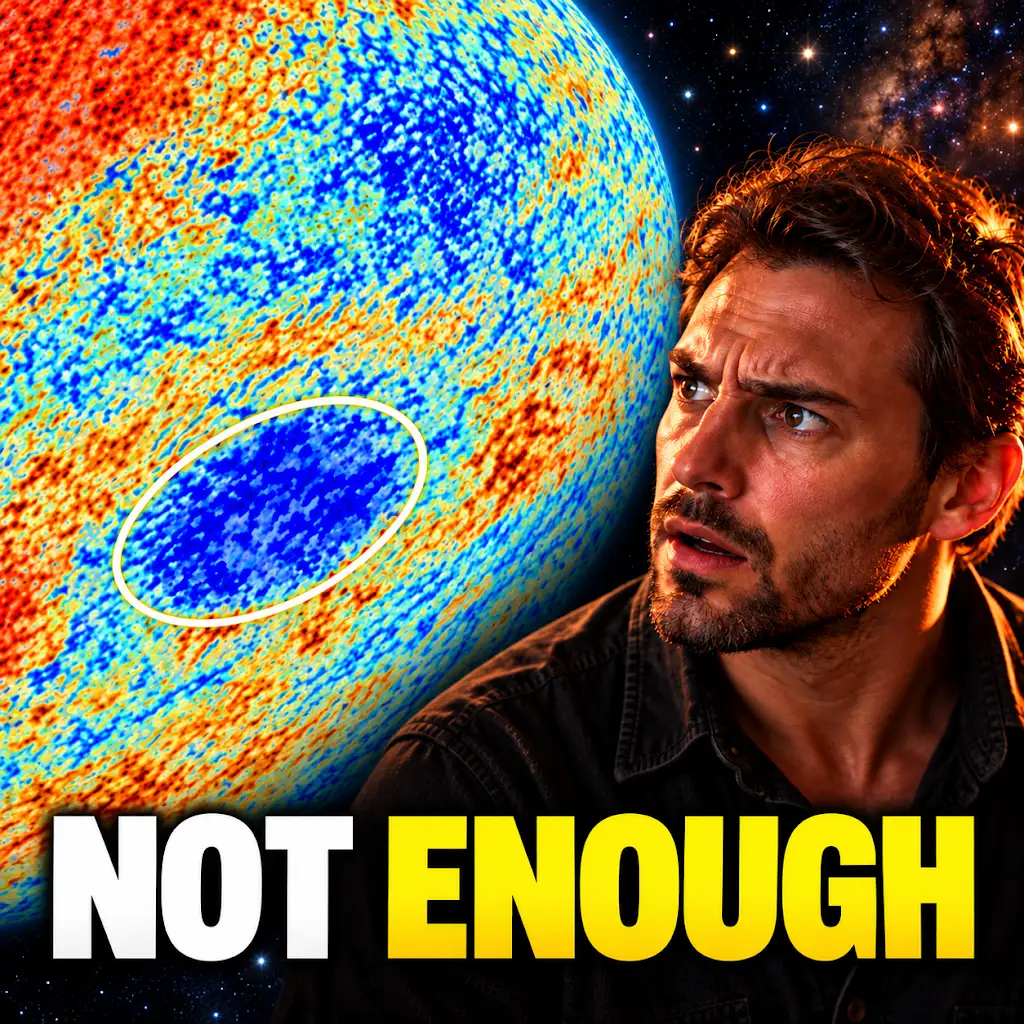
The Universe’s Cold Spot Has an Explanation. It’s Not Enough.
FAQs
What is light energy?
Light energy is a form of electromagnetic radiation that is visible to the human eye. It is made up of particles called photons that travel in waves.
How does light lose energy?
Light can lose energy through a process called absorption, where it is absorbed by a material and converted into other forms of energy such as heat. Light can also lose energy through scattering, where it is deflected in different directions.
What factors affect how light loses energy?
The type of material that light interacts with, the wavelength of the light, and the intensity of the light all play a role in how light loses energy. Different materials absorb and scatter light in different ways.
Can light lose energy in a vacuum?
In a vacuum, light does not lose energy through absorption or scattering because there are no particles for it to interact with. However, light can still lose energy over vast distances through a process called redshift, where the wavelength of light is stretched as the universe expands.
Why is it important to understand how light loses energy?
Understanding how light loses energy is important in various fields such as physics, astronomy, and engineering. It helps scientists and researchers develop new technologies, study the behavior of light in different environments, and make advancements in areas like renewable energy and telecommunications.