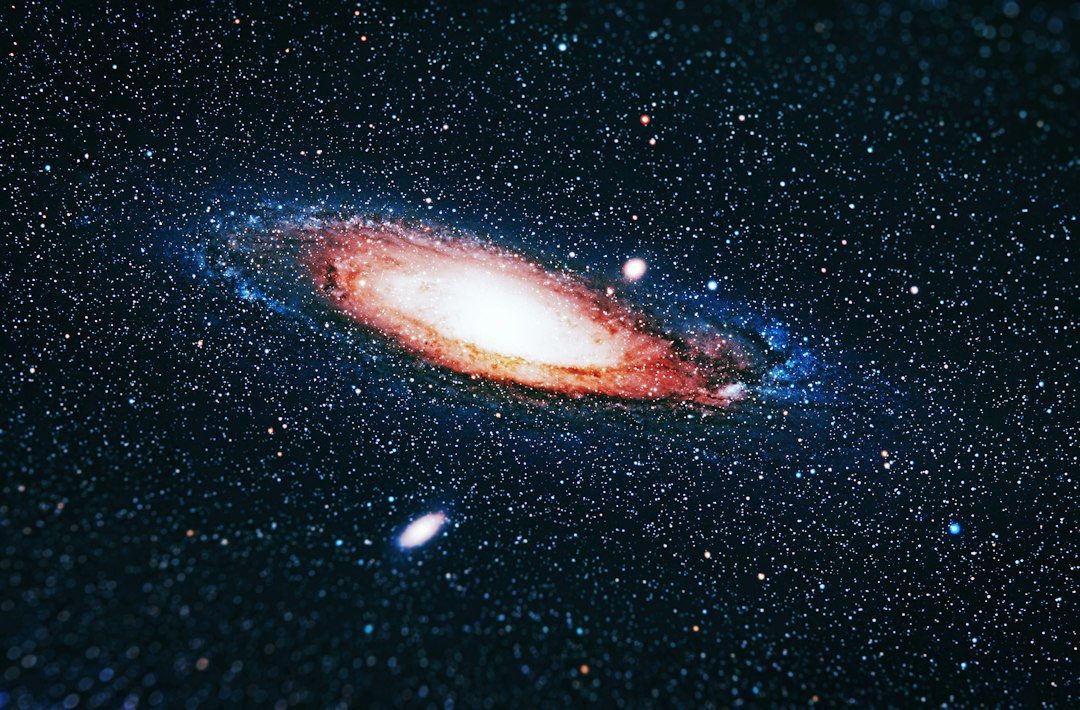
The universe, in its unfathomable vastness and intricate dance of celestial bodies, holds secrets that have captivated humanity for millennia. Among the most profound discoveries in modern cosmology is the Cosmic Microwave Background (CMB) radiation, a faint glow that permeates all of space. This relic of the early universe is not merely a curious phenomenon; it is a cornerstone of our understanding of cosmic origins, providing compelling evidence for the Big Bang theory and offering invaluable insights into the evolution and ultimate fate of the cosmos. The CMB, in conjunction with the observed expansion of the universe, paints a picture of a dynamic and evolving cosmos, a stark contrast to the static, eternal universe once envisioned by many.
Echoes from the Dawn of Time
The journey to understanding the CMB began not with a deliberate search, but with a serendipitous discovery. In 1964, Arno Penzias and Robert Wilson, engineers at Bell Telephone Laboratories, were working with a sensitive microwave antenna. They were trying to eliminate a persistent, uniform hiss that interfered with their radio astronomy experiments. Despite their best efforts, this “excess antenna temperature” remained, seemingly coming from every direction in the sky. They explored every conceivable terrestrial source of interference – from pigeon droppings inside the antenna to misguided radio waves from Earth-bound transmitters – but the noise persisted. It was only when they learned of the theoretical work by Robert Dicke and his colleagues at Princeton University, who were actively searching for the very radiation Penzias and Wilson had stumbled upon, that the true significance of their discovery became apparent. Dicke’s team had predicted that if the universe had indeed begun in a hot, dense state (the Big Bang), then residual heat from that primordial epoch should still be detectable as faint microwave radiation. Penzias and Wilson’s unexplained hiss was precisely this predicted afterglow, the fossil radiation of the Big Bang. This monumental discovery earned them the Nobel Prize in Physics in 1978. The CMB, therefore, is not just a faint radio signal; it is a direct observational testament to the universe’s fiery birth.
The Genesis of the Afterglow
The very existence of the CMB is inextricably linked to a pivotal moment in cosmic history: the epoch of recombination. In the early universe, approximately 380,000 years after the Big Bang, the cosmos was a searingly hot, opaque plasma. Protons, electrons, and photons were constantly interacting, preventing light from traveling freely. As the universe expanded, it cooled. When the temperature dropped to around 3,000 Kelvin, electrons and protons began to combine to form neutral hydrogen atoms. This process, known as recombination, dramatically reduced the number of free electrons. Consequently, photons were no longer constantly scattered and could travel unimpeded through space. The CMB is the light that was released at this precise moment, a snapshot of the universe when it transitioned from an opaque fog to a transparent expanse. This released radiation has been traveling across the cosmos ever since, stretching and redshifting as the universe continues to expand, to reach us today as microwaves.
Unveiling the Universe’s Fingerprint
The CMB is remarkably uniform, with a blackbody spectrum corresponding to a temperature of approximately 2.725 Kelvin above absolute zero. This uniformity is a powerful piece of evidence for the Big Bang model, suggesting a universe that was incredibly homogeneous in its early stages. However, upon closer examination, particularly with highly sensitive instruments like the COBE (Cosmic Background Explorer), WMAP (Wilkinson Microwave Anisotropy Probe), and Planck satellites, tiny temperature fluctuations, or anisotropies, were discovered in the CMB. These anisotropies are incredibly small, on the order of parts per hundred thousand, yet they are profoundly significant. They represent slight variations in density in the early universe, the seeds from which all the large-scale structures we observe today – galaxies, clusters of galaxies, and superclusters – eventually grew through gravitational attraction. Studying the pattern and amplitude of these anisotropies allows cosmologists to probe the fundamental parameters of the universe, such as its age, composition, and geometry.
The expansion of the universe and the Cosmic Microwave Background (CMB) radiation are pivotal topics in modern cosmology, shedding light on the origins and evolution of our universe. For a deeper understanding of these concepts, you can explore a related article that discusses the implications of CMB measurements on our knowledge of cosmic expansion. This article provides insights into how the CMB serves as a relic of the early universe, helping scientists to unravel the mysteries of cosmic inflation and the rate of expansion. To read more, visit this article.
The Expanding Tapestry of Spacetime
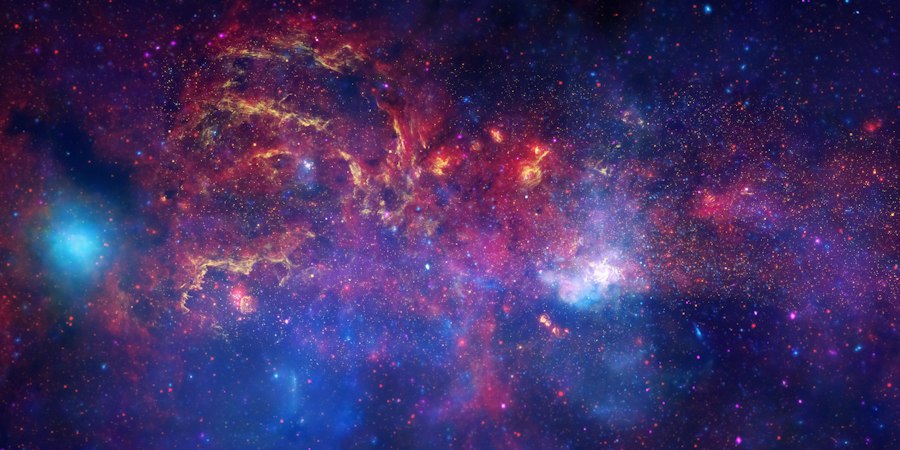
The observation that the universe is not static, but rather expanding, is another fundamental pillar of modern cosmology. This notion, initially a theoretical prediction, has been robustly confirmed by a wealth of observational evidence, with the CMB playing a crucial role in solidifying this understanding. The redshifting of light from distant galaxies, a phenomenon known as the Doppler effect applied to light, is the most direct evidence for cosmic expansion. As galaxies move away from us, the wavelengths of the light they emit are stretched, shifting towards the red end of the spectrum. The farther away a galaxy is, the faster it appears to be receding, a relationship famously quantified by Edwin Hubble’s Law. The CMB, too, bears the imprint of this expansion. The very fact that we observe this ancient light as microwaves, rather than visible light or higher-energy photons, is a consequence of the expansion of spacetime stretching the original, hotter photons to longer, lower-energy wavelengths.
Hubble’s Revelation and Redshift
In the late 1920s, Edwin Hubble, building on the work of Vesto Slipher and Georges Lemaître, made a groundbreaking discovery by analyzing the spectra of light from distant nebulae, which he correctly identified as galaxies. He observed that almost all galaxies were moving away from our own Milky Way, and crucially, that the farther away a galaxy was, the greater its recession velocity. This observation, known as Hubble’s Law, provided the first direct empirical evidence that the universe is expanding. The redshift of light from these galaxies served as the key indicator of their motion. The greater the redshift, the greater the speed at which the galaxy was moving away. This expanding universe model was a radical departure from the prevailing view of a static, unchanging cosmos.
The CMB as a Cosmic Yardstick
The CMB acts as a unique cosmic yardstick. Because it originated from a specific epoch in the universe’s history, its redshifting directly reflects the extent of cosmic expansion since that time. By measuring the temperature of the CMB, cosmologists can infer the redshift it has undergone. This, in turn, allows them to estimate the distance to the “surface of last scattering” from which the CMB photons originated. Furthermore, the distribution of anisotropies within the CMB provides information about the expansion rate at different stages of cosmic history. The characteristic scales of these temperature fluctuations are sensitive to the geometry and expansion rate of the universe, allowing cosmologists to precisely determine parameters like the Hubble constant, which quantifies the current rate of expansion.
The Interplay: CMB and the Expanding Universe
The relationship between the Cosmic Microwave Background and the expanding universe is not merely one of correlation; it is one of mutual reinforcement and deep interdependence. The CMB is both a consequence of and a critical piece of evidence for cosmic expansion. Without the concept of an expanding universe, the CMB as we observe it – redshifted and cooled from its initial hot state – would be inexplicable. Conversely, the existence and properties of the CMB provide some of the strongest evidence supporting the Big Bang model, which inherently describes an expanding universe.
Evidence for a Dynamic Cosmos
The Big Bang theory, the prevailing cosmological model, posits that the universe began in an extremely hot and dense state and has been expanding and cooling ever since. The CMB is a direct prediction of this theory. If the universe had a hot, dense beginning, then a pervasive afterglow of that initial heat should still be observable today, albeit significantly cooled by expansion. The discovery and subsequent detailed mapping of the CMB, with its characteristic blackbody spectrum and tiny temperature fluctuations, have provided overwhelming support for the Big Bang. The redshifting of the CMB photons, a direct observable, is a clear indication that the space between us and the surface of last scattering has expanded significantly over billions of years, carrying the photons along with it and stretching their wavelengths.
Cosmic Evolution and Structure Formation
The tiny temperature fluctuations in the CMB are not merely random noise; they are the primordial seeds of all the structures we see in the universe today. In the early, nearly uniform universe, slightly denser regions possessed more gravitational pull. Over vast stretches of time, gravity amplified these density fluctuations, drawing in surrounding matter. This process led to the formation of the first stars, then galaxies, and eventually the vast cosmic web of galaxy clusters and superclusters that characterize the universe today. The statistical properties of these CMB anisotropies, meticulously measured by missions like Planck, are crucial for understanding the processes of structure formation and the evolution of the universe from its nearly featureless beginnings to its current complex state. The rate at which these structures have grown is directly tied to the expansion rate of the universe, further linking the CMB to cosmic dynamics.
Probing the Universe’s Composition and Geometry
The exquisite precision with which the CMB has been mapped has transformed cosmology into a precision science. The patterns of temperature fluctuations, particularly their angular power spectrum (a statistical description of the size and magnitude of these fluctuations), contain a wealth of information about the fundamental properties of the universe. By analyzing these patterns, cosmologists can determine the relative proportions of different components that make up the cosmos, such as ordinary matter, dark matter, and dark energy, and also constrain the overall geometry of spacetime.
The Cosmic Recipe: Baryons, Dark Matter, and Dark Energy
The peaks and troughs in the CMB’s angular power spectrum are directly sensitive to the composition of the early universe. The relative heights and positions of these peaks reveal the baryon-to-photon ratio, which helps determine the amount of ordinary matter (protons and neutrons). The CMB also provides strong evidence for the existence of dark matter, an invisible form of matter that interacts gravitationally but not electromagnetically. Its presence is inferred from its gravitational influence on the formation of structures in the early universe, as imprinted in the CMB anisotropies. Perhaps most significantly, the CMB, in conjunction with other cosmological observations, has provided compelling evidence for dark energy, a mysterious force driving the accelerated expansion of the universe. The precise measurements of the CMB power spectrum, particularly the location of the third acoustic peak, are key to determining the relative amounts of these constituents.
The Shape of the Cosmos: Flat, Open, or Closed?
The geometry of the universe – whether it is flat, open (negatively curved), or closed (positively curved) – is another fundamental parameter that can be constrained by CMB observations. The characteristic angular scale of the largest fluctuations in the CMB, known as the “sound horizon” at the time of recombination, acts as a standard ruler. By measuring the apparent angular size of this sound horizon on the sky today, cosmologists can infer the geometry of the universe. Current CMB data, especially from the Planck satellite, indicate that the universe is remarkably flat, consistent with predictions from inflationary cosmology. This flatness has profound implications for the ultimate fate of the universe, suggesting that it will continue to expand indefinitely, albeit at a decelerating rate if dark energy’s influence is dominant.
The study of the universe’s expansion and the cosmic microwave background (CMB) has led to fascinating insights into the origins of our cosmos. Recent research highlights how the CMB serves as a relic from the early universe, providing crucial evidence for the Big Bang theory. For a deeper understanding of these concepts, you can explore a related article that delves into the implications of cosmic inflation and the role of dark energy in shaping the universe’s fate. Check it out here to learn more about these intriguing topics.
The Future of CMB Cosmology
| Metric | Value | Unit | Description |
|---|---|---|---|
| Hubble Constant (H₀) | 67.4 ± 0.5 | km/s/Mpc | Rate of universe expansion measured from CMB data (Planck 2018) |
| Age of the Universe | 13.8 | billion years | Estimated age based on CMB observations |
| Temperature of CMB | 2.725 | K | Average temperature of the Cosmic Microwave Background radiation |
| Density Parameter (Ωtotal) | 1.00 ± 0.005 | dimensionless | Indicates a flat universe geometry from CMB measurements |
| Dark Energy Density (ΩΛ) | 0.685 ± 0.007 | dimensionless | Fraction of total energy density attributed to dark energy |
| Dark Matter Density (Ωc) | 0.265 ± 0.006 | dimensionless | Fraction of total energy density attributed to cold dark matter |
| Baryon Density (Ωb) | 0.049 ± 0.0005 | dimensionless | Fraction of total energy density in ordinary matter |
| Scalar Spectral Index (ns) | 0.965 ± 0.004 | dimensionless | Describes the scale dependence of primordial fluctuations |
| Optical Depth (τ) | 0.054 ± 0.007 | dimensionless | Measure of reionization effect on CMB photons |
The study of the Cosmic Microwave Background is far from complete. While missions like Planck have delivered unprecedentedly precise data, there are still many avenues for future exploration and discovery. Future experiments aim to probe even fainter signals, search for subtle polarization patterns within the CMB, and potentially detect gravitational waves from the very earliest moments of the universe. These endeavors promise to refine our understanding of fundamental cosmological parameters, test the limits of our current models, and perhaps even reveal new physics beyond the Standard Model.
Searching for Primordial Gravitational Waves
One of the holy grails of CMB cosmology is the detection of primordial gravitational waves. These ripples in spacetime are predicted to have been generated during the inflationary epoch, a period of extremely rapid expansion in the universe’s first fraction of a second. Detecting these gravitational waves would provide direct evidence for inflation and offer a unique window into the physics of the very early universe, a realm far more energetic and extreme than anything accessible through particle accelerators. The signature of these primordial gravitational waves would be imprinted on the CMB as a specific pattern of polarization, known as B-modes. Current and future experiments are designed to search for this elusive signal.
Refining Cosmic Parameters and Unveiling New Physics
As observational capabilities improve, cosmologists are able to refine the values of fundamental cosmological parameters with ever-increasing accuracy. This precision allows them to test the predictions of the standard Lambda-CDM model (which includes dark energy and cold dark matter) with greater stringency. Any deviations from these predictions could point towards new physics, such as modifications to gravity, the existence of additional relativistic particles, or exotic forms of dark matter or dark energy. The CMB, with its detailed map of the early universe, remains an unparalleled tool for exploring these profound questions about the nature of reality and the ultimate fate of our cosmos. The ongoing investigation of this faint cosmic echo continues to illuminate the grand narrative of our universe, from its fiery genesis to its expansive, evolving future.
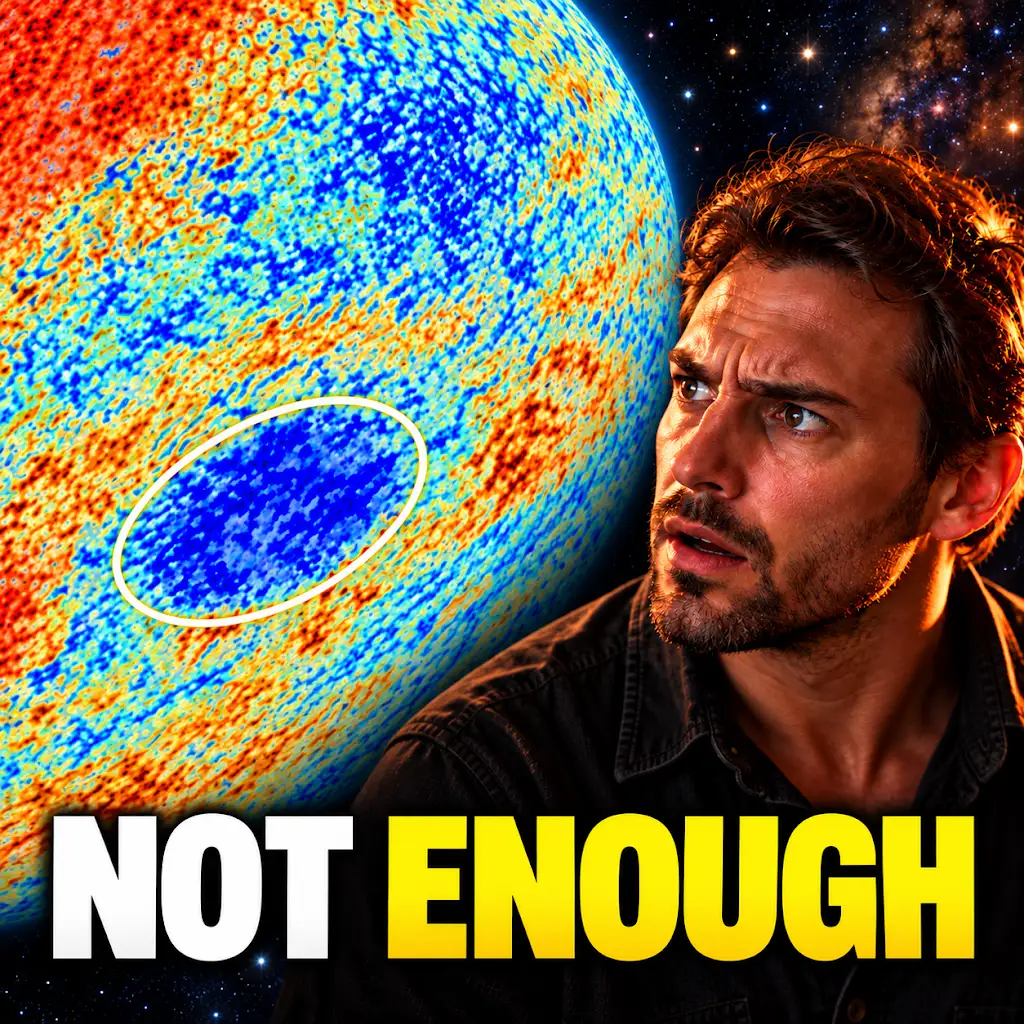
The Universe’s Cold Spot Has an Explanation. It’s Not Enough.
FAQs
What is universe expansion?
Universe expansion refers to the increase in the distance between galaxies and other celestial objects in the universe. This phenomenon suggests that the universe is continuously growing and spreading out.
What is CMB?
CMB stands for Cosmic Microwave Background radiation. It is the afterglow of the Big Bang, which is the oldest light in the universe. CMB provides crucial information about the early universe and helps scientists understand its evolution.
How does universe expansion relate to CMB?
As the universe expands, the wavelengths of CMB photons also stretch out, causing them to shift towards longer wavelengths. This phenomenon is known as cosmic redshift and is a key piece of evidence supporting the theory of universe expansion.
What is the significance of studying universe expansion and CMB?
Studying universe expansion and CMB helps scientists understand the origins and evolution of the universe. It provides insights into the fundamental properties of the cosmos, such as its age, composition, and structure.
How do scientists measure universe expansion and CMB?
Scientists use various methods to measure universe expansion, such as observing the redshift of distant galaxies and analyzing the fluctuations in the CMB. Advanced telescopes and satellites, like the Planck satellite, play a crucial role in collecting data for these studies.