
The Cosmic Microwave Background (CMB) is a faint afterglow of the Big Bang, a relic radiation that permeates all of space. It is a window into the early universe, offering invaluable insights into its composition, age, and evolution. This pervasive radiation, discovered serendipitously in 1964 by Arno Penzias and Robert Wilson, is remarkably uniform, yet subtle variations within it hold the key to understanding the grandest cosmological questions. At its heart, the CMB is a triumph of observational cosmology, a testament to our ability to detect the faintest whispers from the universe’s infancy, and it maintains a temperature that is astonishingly cold: a mere 2.73 Kelvin. This seemingly insignificant temperature, just a few degrees above absolute zero, is a profound indicator of the immense expansion and cooling that the universe has undergone since its fiery genesis.
The Genesis of Light: From Primordial Plasma to Cosmic Revelation
The story of the Cosmic Microwave Background begins in the very first moments after the Big Bang. In this nascent epoch, the universe was an extraordinarily hot and dense plasma, a churning soup of fundamental particles and radiation. Protons, neutrons, electrons, and photons were in constant, energetic interaction. Photons, the carriers of light, were so energetic that they were constantly being scattered by free electrons, preventing the formation of stable atoms and rendering the universe opaque, much like fog obscures vision. This state of affairs persisted for approximately 380,000 years after the Big Bang.
The Epoch of Recombination: A Universe Unveiled
As the universe expanded, it cooled. Eventually, the temperature dropped to a point where the kinetic energy of the electrons was no longer sufficient to overcome the electromagnetic attraction of atomic nuclei. This crucial juncture is known as the epoch of recombination. During this period, electrons began to combine with protons and helium nuclei to form neutral atoms. This seemingly simple event had a monumental consequence: it dramatically reduced the density of free electrons in the universe. With fewer free electrons to scatter them, photons were finally able to travel unimpeded through space. This moment, when the universe transitioned from an opaque plasma to a transparent gas, is when the CMB was essentially “released” into the cosmos. The light that was no longer being scattered is what we observe today as the Cosmic Microwave Background radiation.
The Redshift to Microwaves: An Expanding Legacy
The photons released at the time of recombination were significantly more energetic than those we detect today. They were in the visible and ultraviolet spectrum. However, over the intervening billions of years, the universe has continued to expand, stretching the fabric of spacetime itself. This expansion has also stretched the wavelengths of these ancient photons. This phenomenon, known as cosmological redshift, has shifted the original high-energy photons down into the microwave portion of the electromagnetic spectrum. The energy of these photons has been diluted by the ever-increasing volume of the universe. The fact that we detect them as microwaves is direct evidence of this cosmic expansion and the immense timescale over which it has operated. The 2.73 Kelvin temperature directly corresponds to the blackbody spectrum of this redshifted radiation, indicating it originated from a state of thermal equilibrium in the early universe.
The temperature of the Cosmic Microwave Background (CMB) is a crucial aspect of understanding the early universe and its evolution. For those interested in delving deeper into this fascinating topic, you can explore a related article that discusses the significance of the CMB and its implications for cosmology. To read more, visit this article for an engaging overview of the subject.
Detecting the Echo: Accidental Discovery and Scientific Significance
The discovery of the CMB was not the result of a targeted search but rather a fortunate accident. In 1964, Arno Penzias and Robert Wilson, engineers at Bell Telephone Laboratories in Holmdel, New Jersey, were working on a new type of microwave receiver for radio astronomy. They were experiencing a persistent, low-level background noise that they could not eliminate, no matter how carefully they calibrated their equipment. This noise seemed to be coming from all directions in the sky, and it stubbornly persisted through all their troubleshooting efforts. They considered various mundane sources, from atmospheric interference to pigeon droppings in their antenna, but none explained the ubiquitous nature of the signal.
The Holmdel Horn and the Persistent Hiss
Penzias and Wilson’s antenna, affectionately nicknamed the “Holmdel Horn,” was a large, horn-shaped metal structure designed to be highly directional and sensitive. It was their primary instrument for detecting faint radio signals from space. The persistent hiss they detected was unlike anything they had encountered before. It was isotropic, meaning it came equally from all directions, and its intensity was remarkably constant. They meticulously ruled out terrestrial sources, including interference from their own equipment and even the Earth’s atmosphere. The noise remained, a cosmic enigma in their meticulously designed experiment.
The Cosmic Connection: Gamow’s Prediction and the Big Bang Model
Meanwhile, on the other side of the country, at Princeton University, a team of physicists led by Robert Dicke was actively thinking about the implications of the Big Bang theory. George Gamow, a theoretical physicist, had, in the 1940s, predicted that the Big Bang should have left behind a detectable afterglow of radiation, a relic from the universe’s early, hot, and dense phase. This radiation, he theorized, would have cooled over time due to cosmic expansion and should now be observable as low-frequency microwaves. When Penzias and Wilson learned of the Princeton group’s theoretical work and their own accidental discovery, the pieces of the puzzle clicked into place. The persistent hiss from the Holmdel Horn was precisely the cosmic background radiation predicted by the Big Bang model. This discovery provided powerful observational evidence for the Big Bang theory, solidifying its status as the leading cosmological model.
A Cornerstone of Cosmology: Unlocking Universal Secrets
The CMB is far more than just a scientific curiosity; it is a cornerstone of modern cosmology. Its nearly uniform temperature of 2.73 Kelvin is a testament to the Big Bang. However, the true treasure lies in the tiny temperature fluctuations, or anisotropies, within this background radiation. These subtle variations, on the order of one part in 100,000, represent slight differences in the density of matter in the early universe. These minute density variations were the seeds from which all the large-scale structures we observe today – galaxies, galaxy clusters, and superclusters – eventually grew. By studying the pattern and amplitude of these anisotropies, cosmologists can determine fundamental parameters of the universe, such as its age, its expansion rate, its overall composition (including the proportions of ordinary matter, dark matter, and dark energy), and even the geometry of spacetime.
The Temperature of the Afterglow: Understanding 2.73 Kelvin

The value of 2.73 Kelvin for the CMB might seem extraordinarily cold, but it is precisely this low temperature that is so significant. It is a direct consequence of the universe’s immense age and its continuous expansion. Understanding why the CMB is this particular temperature requires delving into the physics of blackbody radiation and the history of the universe’s thermal evolution.
Blackbody Radiation: A Universal Thermometer
The CMB exhibits a near-perfect blackbody spectrum. A blackbody is an idealized object that absorbs all incident electromagnetic radiation and emits radiation based solely on its temperature. The spectrum of a blackbody describes the intensity of radiation emitted at different wavelengths. The fact that the CMB follows a blackbody curve indicates that it originated from a state of thermal equilibrium in the early universe. The peak of this blackbody spectrum, and thus its overall temperature, is determined by the energy density of the photons. As the universe expanded, the energy density of photons decreased, leading to a decrease in temperature. The 2.73 Kelvin temperature is the specific value that corresponds to the blackbody spectrum of the CMB today, reflecting the integrated cooling over billions of years.
From Fiery Birth to Cosmic Chill: The Cooling Universe
In its earliest moments, the universe was extraordinarily hot, far exceeding the temperature of the CMB today. As mentioned earlier, it was a plasma in thermal equilibrium. The Big Bang theory posits that the universe began in an extremely hot and dense state and has been expanding and cooling ever since. This expansion is not like an explosion into pre-existing space; rather, spacetime itself is expanding, carrying matter and energy along with it. This expansion causes the wavelengths of photons to stretch, reducing their energy and thus the overall temperature of the universe. The 2.73 Kelvin represents the thermal state of the universe today, a far cry from its initial fiery origins. It is a direct measurement of how much the universe has cooled.
The Significance of Near Absolute Zero: What it Tells Us
The fact that the CMB is only a few degrees above absolute zero (-273.15 degrees Celsius or -459.67 degrees Fahrenheit) is a powerful indicator of the universe’s vast age and its immense expansion. If the universe were much younger or had expanded much less, the CMB would be significantly hotter. Conversely, a hotter CMB would suggest a younger universe or a different expansion history. The precise measurement of the CMB temperature, and its slight variations, allows cosmologists to constrain various cosmological models and refine our understanding of the universe’s fundamental properties. The 2.73 Kelvin is not an arbitrary number; it is a precisely measured physical quantity that encodes the history of the cosmos.
Peering into the Past: Anisotropies and the Cosmic Web
While the CMB is remarkably uniform, the subtle temperature variations, known as anisotropies, are where the real scientific gold lies. These tiny differences in temperature, on the order of tens to hundreds of microkelvins, are the imprints of density fluctuations in the early universe. They are the seeds of the large-scale structures we see today, the cosmic web of galaxies and voids.
The Seeds of Structure: Quantum Fluctuations Amplified
In the very early universe, during the inflationary epoch (a period of extremely rapid expansion thought to have occurred fractions of a second after the Big Bang), tiny quantum fluctuations were stretched to macroscopic scales. These fluctuations represented slight variations in the density of energy and matter. Regions that were slightly denser than average began to attract more matter, while less dense regions expanded more rapidly. These initial density differences, amplified by gravity over billions of years, eventually led to the formation of galaxies, galaxy clusters, and the vast cosmic web. The CMB anisotropies are the direct fossilized remnants of these primordial seeds.
Cosmic Lenses: Gravitational Lensing and Structure Formation
The distribution of these anisotropies is not random. It is influenced by the interplay of gravity and radiation pressure in the early universe. As light from the CMB travels towards us, it can be gravitationally lensed by intervening matter, such as galaxy clusters. This gravitational lensing can distort the patterns of the CMB anisotropies, providing further information about the distribution of matter in the universe. By studying these lensing effects, cosmologists can map out the distribution of dark matter, which is invisible but exerts gravitational influence. The patterns observed in the CMB anisotropies are remarkably consistent with theoretical predictions of how large-scale structures should form and evolve under the influence of gravity and dark energy.
Unraveling the Cosmic Pie: Composition and Parameters
The statistical properties of the CMB anisotropies – their angular power spectrum, which describes the strength of fluctuations at different angular scales – allow cosmologists to determine precise values for fundamental cosmological parameters. These include the density of baryonic matter (ordinary matter), the density of dark matter, the density of dark energy, the Hubble constant (the rate of cosmic expansion), and the curvature of the universe. The CMB has been instrumental in establishing the “standard cosmological model,” also known as Lambda-CDM, which posits that the universe is composed of about 5% ordinary matter, 27% dark matter, and 68% dark energy. The 2.73 Kelvin temperature is the baseline from which these detailed analyses are performed, providing the essential context for understanding these variations.
The temperature of the cosmic microwave background (CMB) is a crucial aspect of understanding the early universe and its evolution. Recent studies have provided insights into how this temperature can influence various cosmological models. For a deeper exploration of this topic, you can read a related article that discusses the implications of CMB temperature fluctuations on our understanding of dark matter and dark energy. This article can be found here.
Modern Probes and Future Frontiers: Refining Our Cosmic View
| Metric | Value | Unit | Description |
|---|---|---|---|
| Average Temperature | 2.725 | K | Mean temperature of the Cosmic Microwave Background radiation |
| Temperature Anisotropy | ±0.0002 | K | Fluctuations in temperature across the sky |
| Peak Frequency | 160.2 | GHz | Frequency at which the CMB spectrum peaks |
| Blackbody Spectrum | 2.725 ± 0.001 | K | Temperature fit to a near-perfect blackbody spectrum |
| Dipole Temperature Variation | 3.355 | mK | Temperature difference due to Earth’s motion relative to the CMB |
Since its initial discovery, the CMB has been the subject of increasingly sophisticated observational missions. These missions have provided ever more precise measurements of its temperature and anisotropies, leading to profound advancements in our understanding of cosmology. The quest to further refine our knowledge of the universe, and the role the CMB plays in it, continues with ambitious future experiments.
Satellites of Insight: COBE, WMAP, and Planck
The Cosmic Background Explorer (COBE) satellite, launched in 1989, was the first mission to map the CMB with unprecedented detail, confirming its blackbody spectrum and discovering the first statistically significant anisotropies. Following COBE, the Wilkinson Microwave Anisotropy Probe (WMAP) was launched in 2001. WMAP provided a more detailed map of the CMB anisotropies, significantly reducing the uncertainties in cosmological parameters and solidifying the standard cosmological model. The Planck satellite, operated by the European Space Agency and launched in 2009, delivered the most precise and comprehensive maps of the CMB to date, revealing even finer details of the early universe and pushing the boundaries of our knowledge. These missions have consistently measured the CMB temperature to be around 2.725 Kelvin, with 2.73 Kelvin being a commonly used rounded value.
Ground-Based Observatories: Complementary Investigations
In addition to space-based missions, several ground-based observatories are dedicated to studying the CMB. These include the Atacama Cosmology Telescope (ACT) and the South Pole Telescope (SPT). These observatories, situated in high-altitude, dry locations with minimal atmospheric interference, are capable of making detailed measurements of CMB anisotropies at smaller angular scales than were previously possible. They also play a crucial role in studying the effects of gravitational lensing on the CMB and searching for subtle signatures of phenomena like cosmic inflation. The synergy between space-based and ground-based observations is essential for achieving a comprehensive understanding of the CMB.
The Next Chapter: Polarization and Beyond
Future research on the CMB is focusing on even more subtle aspects of this ancient radiation, particularly its polarization. The polarization of the CMB can provide information about the very earliest moments of the universe, potentially revealing evidence of gravitational waves generated during inflation. Experiments like the Simons Observatory and the Vera C. Rubin Observatory are poised to make significant contributions in this area. The ongoing study of the CMB, with its persistently cold 2.73 Kelvin temperature serving as a constant reminder of its cosmic origin, continues to be one of the most powerful tools in our quest to understand the universe and our place within it. Each new measurement, each refined analysis, brings us closer to a complete picture of our cosmic history and destiny.
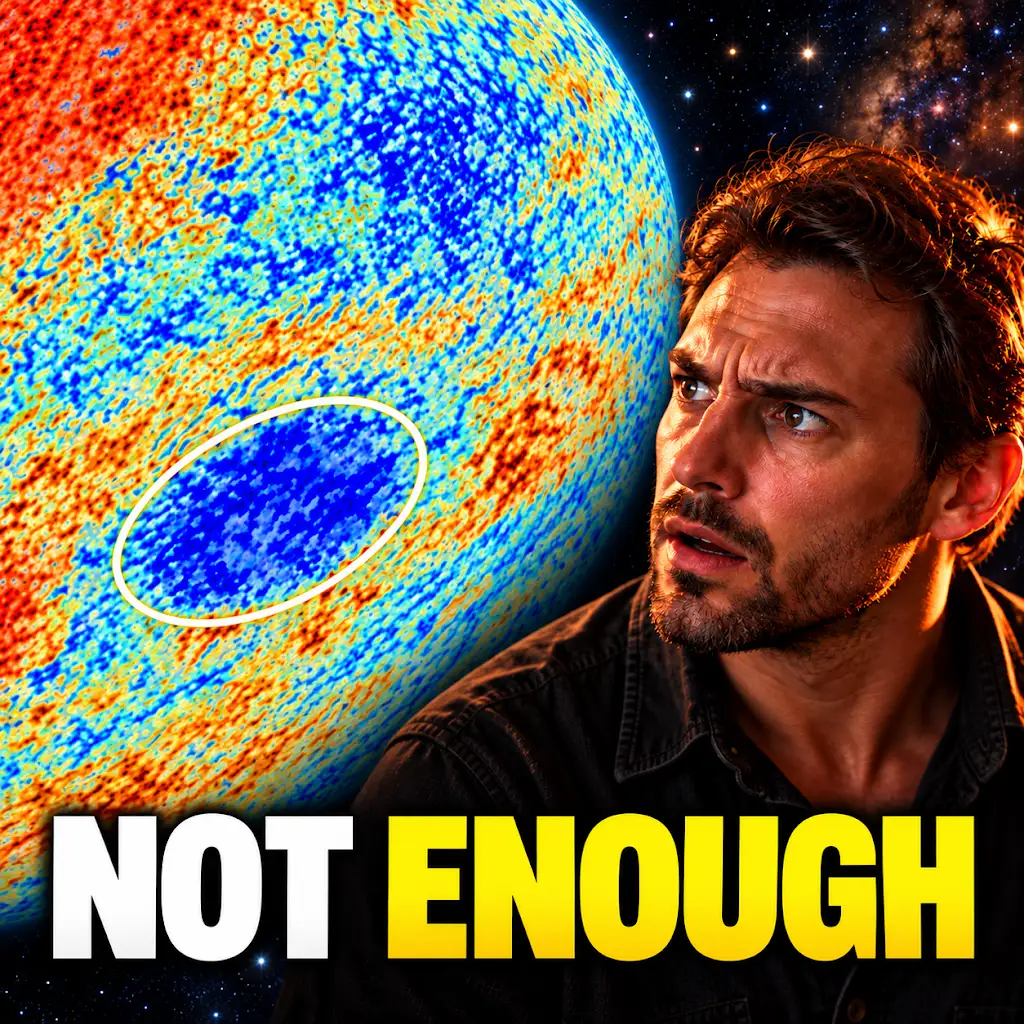
The Universe’s Cold Spot Has an Explanation. It’s Not Enough.
FAQs
What is the CMB?
The CMB, or Cosmic Microwave Background, is the faint glow of radiation that fills the universe, leftover from the Big Bang.
What is the temperature of the CMB?
The temperature of the CMB is approximately 2.73 Kelvin, which is equivalent to -270.42 degrees Celsius or -454.76 degrees Fahrenheit.
How was the temperature of the CMB measured?
The temperature of the CMB was measured using instruments on satellites such as the Planck satellite, which detected the slight variations in temperature across the sky.
Why is the temperature of the CMB important to cosmology?
The temperature of the CMB provides crucial information about the early universe, helping scientists understand the Big Bang theory and the evolution of the cosmos.
How does the temperature of the CMB support the Big Bang theory?
The uniform temperature of the CMB across the sky supports the idea that the universe underwent a period of rapid expansion from a hot, dense state, as predicted by the Big Bang theory.