
The Colorful Universe: Why Telescopes See More Than Humans
Humanity has long gazed at the night sky, captivated by the distant gleam of stars and the ethereal glow of nebulae. For millennia, this visual spectacle was all that could be perceived, a canvas painted in shades of black and white, punctuated by pinpricks of light. Yet, the advent of the telescope revolutionized our understanding of the cosmos, transforming it from a dimly lit tapestry into a vibrant, dynamic, and astonishingly colorful universe. This incredible leap in perception stems from a fundamental difference in how our eyes and telescopes detect light, and the remarkable technology that allows us to see far beyond the limitations of human vision.
The universe, it turns out, is broadcasting an immense amount of information, but much of it is hidden from our naked eyes. What we perceive as visible light is merely a tiny sliver of the electromagnetic spectrum, a vast continuum of energy waves that range from the extremely low-energy radio waves to the incredibly high-energy gamma rays. Our eyes are exquisitely tuned to detect photons within a specific range of wavelengths, roughly between 400 and 700 nanometers, which we interpret as the colors red, orange, yellow, green, blue, indigo, and violet. However, the universe is awash in radiation outside this narrow band.
The Symphony of Electromagnetic Waves
To comprehend why telescopes see more than humans, it is crucial to understand the electromagnetic spectrum in its entirety. This spectrum is not just a theoretical concept; it’s the fundamental language of the universe. Stars, galaxies, gas clouds, and even the faint whispers of the Big Bang all emit and absorb radiation across this spectrum.
Radio Waves: The Cosmic Whisperers
At the longest wavelengths and lowest energies are radio waves. These waves are generated by a variety of celestial phenomena, from the turbulent motion of gas in galaxies to the cooling remnants of the Big Bang. While invisible to our eyes, radio telescopes can detect these faint signals, revealing structures and processes that would otherwise remain hidden. The famous image of the black hole at the center of the M87 galaxy, for instance, was made possible by radio telescopes observing the emitted radio waves from the superheated gas swirling around it.
Microwaves: Echoes of Creation
Microwaves, with wavelengths shorter than radio waves, carry even more potent information. The most significant example is the Cosmic Microwave Background (CMB) radiation, a faint afterglow from the Big Bang that permeates the entire universe. This radiation, detectable only by specialized instruments, provides a snapshot of the universe just a few hundred thousand years after its birth, revealing crucial details about its composition, age, and geometry.
Infrared Radiation: The Universe’s Heat Signature
Moving towards shorter wavelengths, we encounter infrared radiation. This is essentially heat radiation, emitted by objects that are cooler than stars but still possess thermal energy. Planets, asteroids, dust clouds, and even cooler stars emit infrared light. By observing in the infrared, astronomers can peer through the obscuring dust that often shrouds star-forming regions, revealing nascent stars and planetary systems. It’s akin to seeing the heat signature of objects, allowing us to detect things that are physically present but not luminous enough in visible light.
Visible Light: Our Familiar Window
This is the narrow band of the electromagnetic spectrum that our eyes can perceive. While familiar and beautiful, it represents only a fraction of the universe’s emissive power. Visible light is primarily emitted by stars and hot gas, giving us the iconic images of galaxies and nebulae.
Ultraviolet Radiation: Energetic Births and Explosions
Just beyond visible light lies ultraviolet (UV) radiation. This is emitted by very hot objects, such as young, massive stars and the energetic processes occurring in the centers of galaxies. UV observations are crucial for studying the birth of stars and the dynamics of interstellar gas.
X-rays and Gamma Rays: Cosmic Fury
At the shortest wavelengths and highest energies are X-rays and gamma rays. These are produced by the most extreme phenomena in the universe, including supernovas, neutron stars, black holes, and active galactic nuclei. Detecting these high-energy photons requires highly specialized telescopes, often placed in space to avoid absorption by Earth’s atmosphere. They reveal the universe’s most violent and energetic events.
Telescopes are equipped with advanced technology that allows them to detect a wider spectrum of light than the human eye can perceive, which is why they can see more colors. This capability is crucial for astronomers as it enables them to study celestial objects in greater detail. For a deeper understanding of this phenomenon, you can read the article titled “Why Telescopes See More Color Than Humans” available at this link.
The Limitations of Human Vision
Our eyes are remarkable evolutionary marvels, perfectly adapted for survival on Earth. However, they are fundamentally limited in their ability to gather and interpret light from the cosmos. Several factors contribute to these limitations.
Sensitivity: The Dimness of Distant Objects
The sheer vastness of space means that even the brightest celestial objects appear incredibly dim from our perspective. Our eyes have a limited capacity to gather photons. While they can adapt to darkness to some extent, there’s a threshold below which we simply cannot detect faint light. Stars millions of light-years away, while intrinsically luminous, have their light spread out over immense distances, rendering them barely visible or completely invisible to the naked eye. Telescopes, with their larger apertures, are essentially light buckets. The bigger the mirror or lens, the more photons they can collect, allowing them to gather enough light to see objects far fainter than our eyes can detect.
Resolution: The Blurring of Detail
Human vision has a finite resolution, meaning we can only distinguish fine details when objects are sufficiently close and large. Distant celestial objects, even through a powerful telescope, can appear as small points of light or fuzzy blobs. To resolve details like the rings of Saturn or the spiral arms of a galaxy, one needs a telescope with a much higher resolution than the human eye. This is achieved through larger apertures and advanced optical designs.
Spectral Blindness: Missing the Colors of the Cosmos
Perhaps the most significant limitation is our spectral blindness. As mentioned, our eyes are only sensitive to a narrow band of wavelengths. This means we miss out on the vast majority of information the universe is conveying through radio waves, infrared, ultraviolet, X-rays, and gamma rays. These invisible forms of light carry crucial clues about the temperature, composition, motion, and history of celestial objects.
The Telescope: An Extended Sense
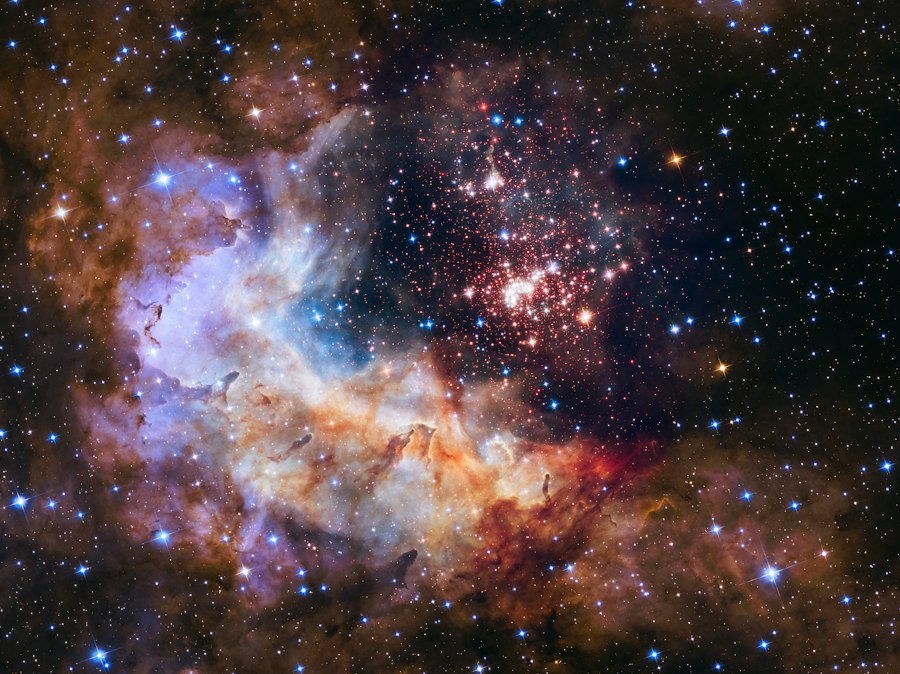
Telescopes are not just magnified viewfinders; they are sophisticated instruments that act as extensions of our senses, allowing us to perceive the universe in ways that were unimaginable to our ancestors. They achieve this by overcoming the limitations of human vision through various technological advancements.
Gathering More Light: The Power of Aperture
The primary function of a telescope is to gather light. The larger the diameter of the primary mirror or lens (the aperture), the more light the telescope can collect. This increased light-gathering power is directly proportional to the area of the aperture. A telescope with a 10-inch aperture collects significantly more light than a telescope with a 4-inch aperture, enabling it to see fainter and more distant objects. This is the fundamental reason why astronomers build increasingly larger telescopes, both on Earth and in space.
Enhancing Resolution: Seeing Finer Details
Beyond light-gathering, telescopes are designed to achieve higher resolution than the human eye. This means they can distinguish between two objects that are very close together or reveal fine details on the surface of celestial bodies. The resolving power of a telescope is also directly related to its aperture – larger telescopes can resolve finer details. Furthermore, advanced optical designs, including adaptive optics and interferometry, further push the boundaries of resolution, allowing astronomers to see incredibly sharp images of the cosmos.
Exploring the Invisible Spectrum: Beyond Visible Light
The most profound way telescopes extend our senses is by detecting radiation outside the visible spectrum. This is achieved through the development of specialized detectors sensitive to different wavelengths of the electromagnetic spectrum.
Radio Telescopes: Listening to the Universe
Radio telescopes, often characterized by their large dish antennas, are designed to capture radio waves. These dishes focus incoming radio waves onto sensitive receivers that convert them into electrical signals. These signals are then processed and translated into images or data that astronomers can analyze. Different types of radio receivers are used to detect specific frequencies within the radio spectrum, revealing phenomena like the emission from cold gas clouds, pulsars, and the remnants of supernovae.
Infrared Telescopes: Peering Through the Dust
Infrared telescopes, such as the James Webb Space Telescope (JWST), are equipped with detectors sensitive to infrared radiation. These telescopes are often cooled to extremely low temperatures to minimize their own infrared emissions, which could otherwise interfere with the faint signals from celestial objects. By observing in infrared, JWST can penetrate the dense dust clouds that obscure visible light, allowing us to witness the birth of stars and planets in unprecedented detail.
Ultraviolet, X-ray, and Gamma-ray Telescopes: Capturing Cosmic Violence
Telescopes designed to detect ultraviolet, X-ray, and gamma-ray radiation are highly specialized. Because these high-energy photons are absorbed by Earth’s atmosphere, these telescopes are almost exclusively space-based. They employ unique mirror designs and detector technologies to capture and analyze these energetic emissions. For example, X-ray telescopes use grazing incidence mirrors to reflect X-rays, which would otherwise pass straight through conventional mirrors. These instruments provide insights into the most energetic and violent processes in the universe, such as the accretion of matter onto black holes and the explosion of stars.
Translating Invisible Light into Color

The concept of “seeing” invisible light might seem paradoxical. How can we see colors that our eyes cannot detect? The answer lies in the process of data translation and visualization. Astronomers take the raw data collected by telescopes operating in different parts of the electromagnetic spectrum and convert it into a form that humans can understand and interpret, often as visible-light images.
False Colors: Representing Invisible Phenomena
When we see a stunning image of a nebula in vibrant colors that seem unrealistically bright or saturated, it’s important to understand that these colors are often “false colors.” This means that the colors assigned to different wavelengths of invisible light are chosen by scientists for aesthetic or informative purposes. For example, in an infrared image, a region emitting strongly at one infrared wavelength might be assigned the color red, while a region emitting at a different infrared wavelength might be assigned blue or green. This allows astronomers to highlight subtle differences in temperature, composition, or activity within the celestial object.
Mapping Intensity to Brightness and Hue
The intensity of the detected radiation at a particular wavelength is mapped to the brightness and hue of the assigned color. Brighter regions in the false-color image generally correspond to more intense radiation. The specific colors used are often chosen to reveal important scientific information. For instance, different elements emit or absorb light at specific wavelengths. By assigning distinct colors to these characteristic wavelengths, astronomers can map out the distribution of different elements within a nebula or galaxy.
Revealing Hidden Structures and Processes
The true power of false-color imaging lies in its ability to reveal structures and processes that would be completely invisible in a standard visible-light photograph. For example, a region that appears dark and featureless in visible light might be ablaze with activity in ultraviolet or infrared wavelengths, indicating the presence of young, hot stars or the remnants of a recent explosion. False-color images allow us to perceive the full symphony of the universe’s light, not just the limited melody that our eyes can hear.
Telescopes have the remarkable ability to capture a wider spectrum of light than the human eye, allowing them to reveal colors and details that we cannot perceive. This phenomenon is largely due to the advanced technology used in telescopes, which can detect infrared and ultraviolet wavelengths, expanding our understanding of the universe. For a deeper exploration of how these instruments enhance our vision of the cosmos, you can read more in this related article on Freaky Science. By utilizing specialized filters and sensors, telescopes provide insights into celestial bodies that are otherwise hidden from our sight, showcasing the beauty and complexity of the universe.
The Expanding Palette of Cosmic Understanding
| Reason | Explanation |
|---|---|
| Wavelength Range | Telescopes can detect a wider range of wavelengths, including infrared and ultraviolet, which are beyond the visible spectrum for humans. |
| Sensitivity | Telescopes are more sensitive to faint light and can detect colors that are too dim for the human eye to perceive. |
| Integration Time | Telescopes can accumulate light over longer periods, allowing them to capture more color information from distant objects. |
| Filters | Telescopes can use specialized filters to isolate specific wavelengths, enhancing their ability to see different colors in space. |
The ability of telescopes to see beyond the visible spectrum has fundamentally transformed our understanding of the universe. It has opened up entirely new fields of astronomical study and revealed the existence of phenomena previously unimagined.
The Birth and Death of Stars: A Multi-Wavelength Spectacle
The lifecycle of stars is a complex process that unfolds across the entire electromagnetic spectrum. Young, hot stars that are still forming are often shrouded in dust, making them invisible in visible light but prominent in infrared. Massive stars nearing the end of their lives emit powerful X-rays and gamma rays as they prepare to explode as supernovae. Observing these events in different wavelengths provides a complete picture of stellar evolution, from conception to cataclysmic demise.
Galaxies: Energetic Engines and Hidden Depths
Galaxies, the grand collections of stars, gas, and dust, are also multi-wavelength marvels. The bright centers of active galaxies, powered by supermassive black holes, emit intense X-rays and radio waves. The vast reservoirs of cold gas within galaxies, the fuel for future star formation, are best observed in radio and far-infrared wavelengths. By combining observations across the spectrum, astronomers can unravel the intricate processes that shape galaxies and drive their evolution.
The Early Universe: Echoes of the Big Bang
The universe’s infancy, a period of rapid expansion and cooling after the Big Bang, is primarily studied through the Cosmic Microwave Background radiation. This faint afterglow, invisible to our eyes, carries crucial information about the universe’s initial conditions, its composition, and the seeds of future cosmic structures. Telescopes like the Planck satellite have mapped this radiation with extraordinary precision, providing a cornerstone for our understanding of cosmology.
The Search for Life: Biosignatures in Alien Atmospheres
The quest for life beyond Earth also relies on the power of multi-wavelength astronomy. Future telescopes, equipped with advanced spectrographs, will analyze the atmospheres of exoplanets for “biosignatures” – chemical compounds that could indicate the presence of life. These biosignatures might be detectable in various parts of the electromagnetic spectrum, from the absorption of visible light by plant pigments to the emission of infrared radiation by gases produced by biological processes.
In conclusion, the universe is a far more vibrant and complex place than our limited human vision can perceive. Telescopes, by extending our senses into the invisible realms of the electromagnetic spectrum and by gathering vast amounts of light, have unveiled a universe painted in a dazzling array of colors, each representing a different facet of cosmic phenomena. This ongoing exploration continues to push the boundaries of our knowledge, revealing the intricate beauty and profound mysteries of the cosmos.

The Space Photos Are Real—But Your Eyes Would See This
FAQs
1. How do telescopes see more color than humans?
Telescopes are equipped with sensors that can detect a wider range of wavelengths of light than the human eye. This allows them to capture and display a broader spectrum of colors, including those that are not visible to the human eye.
2. What is the advantage of telescopes seeing more color than humans?
The ability of telescopes to see more color than humans allows scientists to gather more detailed information about celestial objects. By capturing a wider range of colors, telescopes can reveal important clues about the composition, temperature, and other characteristics of distant stars, galaxies, and other astronomical phenomena.
3. How do telescopes capture and display the additional colors?
Telescopes use specialized sensors, such as charge-coupled devices (CCDs) or other detectors, to capture light across a broad spectrum of wavelengths. This data is then processed and translated into images that can be displayed in a way that represents the full range of colors detected.
4. Can humans perceive the additional colors captured by telescopes?
While telescopes can capture a wider range of colors than the human eye, the additional colors are often represented in images using false color techniques. These images may not accurately reflect what the human eye would see, but they can provide valuable scientific information about the objects being observed.
5. How does the ability of telescopes to see more color benefit scientific research?
The ability of telescopes to see more color than humans is crucial for scientific research in astronomy and astrophysics. By capturing a broader spectrum of colors, telescopes can provide insights into the physical properties and chemical composition of celestial objects, leading to a deeper understanding of the universe.