
The ambition to return to the Moon, once a benchmark of human ingenuity, now presents a complex tapestry of challenges. Decades have passed since the Apollo missions, and while advancements in technology are undeniable, the path to lunar boots on the surface is far from a simple rehash of past endeavors. The intervening years have seen shifts in geopolitical landscapes, economic priorities, and the very nature of space exploration, all contributing to a formidable set of hurdles that must be overcome. This article will explore the multifaceted difficulties associated with achieving this ambitious goal in the contemporary era.
The context in which a lunar return is envisioned today is vastly different from the Cold War crucible that fueled the Apollo program. The initial space race was driven by a potent mix of national prestige, technological one-upmanship, and a perceived existential threat. The objectives were starkly defined: plant a flag, demonstrate superiority, and return safely. Today, the motivations are more nuanced, encompassing scientific inquiry, resource utilization, potential commercial opportunities, and the establishment of a sustained human presence. This broadened scope introduces new complexities in planning, funding, and international cooperation.
Shifting Geopolitical Motivations
The singular, driving force of the Cold War space race has been replaced by a more fragmented geopolitical scene. While national pride remains a factor, the urgency and singular focus are less pronounced. Multiple nations and private entities now possess or are developing space capabilities, leading to a more competitive, yet potentially collaborative, environment. The absence of a clear, overarching “threat” to galvanize resources on the scale of Apollo means that lunar missions must justify themselves on a wider range of merits, from scientific return to economic viability. This requires a more robust and consistent justification for sustained investment, which can be difficult to maintain in the face of shifting government priorities and economic fluctuations.
The Rise of Commercial Spaceflight
The emergence of private companies like SpaceX, Blue Origin, and others has fundamentally altered the space exploration paradigm. These entities bring innovation, agility, and a focus on cost reduction. However, their involvement also introduces complexities. Integrating commercial capabilities with national space programs requires careful management of contracts, intellectual property, and mission objectives. Furthermore, while commercial ambitions can drive down costs for certain aspects of spaceflight, the establishment of a sustainable, long-term lunar presence with significant logistical demands will likely still necessitate substantial public investment. Balancing the profit motives of commercial entities with the broader goals of scientific exploration and national interest presents an ongoing challenge.
International Collaboration and Competition
The grand vision of lunar bases and extensive exploration often necessitates international collaboration. Partnerships can share costs, pool expertise, and foster global goodwill. However, international projects are inherently more complex. Coordinating diverse national agencies, each with its own bureaucratic structures, funding cycles, and political considerations, is a significant undertaking. Disagreements over mission priorities, technology sharing, and the division of labor can slow progress and introduce friction. Conversely, the desire for national leadership and the potential for strategic advantage can also foster competition, which, while potentially spurring innovation, can also lead to duplication of efforts and fragmented approaches.
In recent discussions about lunar exploration, it’s become evident that reaching the moon has become increasingly challenging due to various factors, including budget constraints and technological hurdles. For a deeper understanding of these complexities, you can read a related article that explores the current state of space missions and the obstacles they face. Check it out here: Freaky Science.
The Enormous Financial Burden
The cost of human spaceflight, particularly to another celestial body, remains extraordinarily high. Despite advancements, the fundamental physics of escaping Earth’s gravity and sustaining life in the vacuum of space are unforgiving. The Apollo program, adjusted for inflation, represented a colossal investment. Replicating or expanding upon that with current technologies, accounting for new safety requirements and more ambitious objectives, presents a daunting financial challenge.
Sustaining Long-Term Funding Commitments
Unlike the Apollo era, where a clear political mandate and national urgency allowed for sustained, massive funding, contemporary lunar ambitions face a more precarious funding landscape. Governments operate on multi-year budgets that are susceptible to political shifts, economic downturns, and competing domestic priorities. Securing and maintaining the consistent, multi-decade funding necessary for a robust lunar program – encompassing research, development, manufacturing, launch infrastructure, and operational costs – is a significant hurdle. The temptation to prioritize immediate societal needs over long-term, aspirational space projects is a constant pressure.
The Economics of Lunar Infrastructure
Establishing a sustainable presence on the Moon requires significant infrastructure. This includes landing and ascent vehicles, habitat modules, power generation systems, life support equipment, and potentially in-situ resource utilization (ISRU) facilities. Each of these components represents a substantial development and manufacturing cost. Furthermore, the logistics of transporting materials and personnel to the Moon, even with reusable rockets, remains a significant expense. The concept of “living off the land” through ISRU is promising but technologically complex and requires substantial upfront investment in research and development. The economic feasibility of such endeavors before a critical mass of lunar activity is established is a major concern.
Justifying the Return on Investment
For a lunar program to garner consistent public and political support, it must demonstrate a clear return on investment. This return can be measured in various ways: scientific discoveries, technological spin-offs that benefit terrestrial industries, educational outreach, and the inspiration of future generations. However, quantifying these benefits, especially in the short to medium term, can be challenging. The tangible, immediate benefits that often sway public opinion and secure government funding may not always align with the long-term scientific and exploratory objectives of a lunar mission.
Technical Hurdles and Engineering Complexities
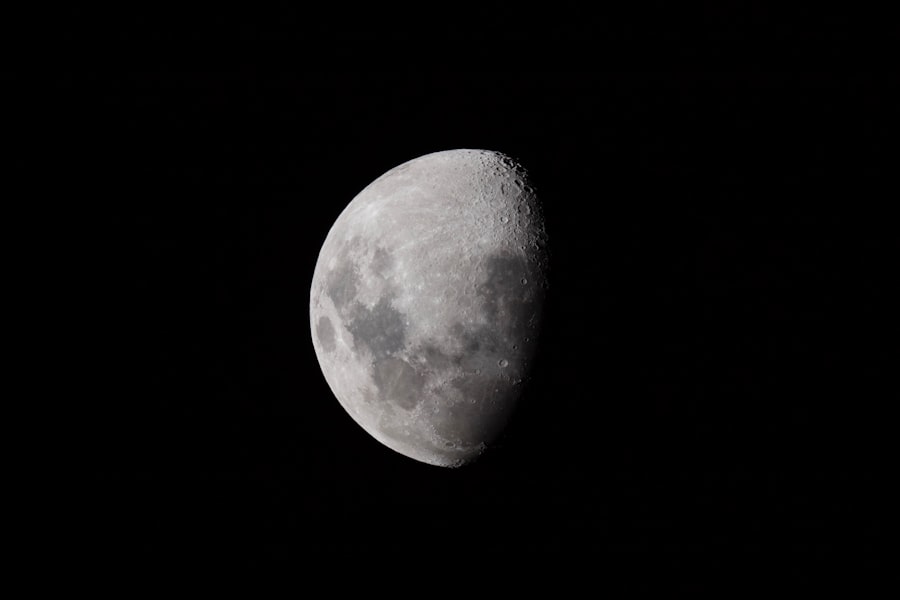
While technology has advanced, the fundamental challenges of sending humans to the Moon and keeping them alive there remain. These are not insurmountable, but they demand sophisticated engineering, rigorous testing, and a commitment to overcoming unforeseen problems.
The Challenge of Deep Space Propulsion and Navigation
Achieving lunar orbit and landing requires precise control of powerful rocket engines. Developing and refining reliable propulsion systems capable of multiple burns, course corrections, and safe landing maneuvers is crucial. Navigation in deep space, far from terrestrial reference points, demands highly accurate guidance systems and robust communication protocols. The time delays in communication with Earth also necessitate a high degree of autonomy for lunar spacecraft.
Radiation and Life Support Systems
The Moon lacks a significant atmosphere and a magnetosphere, leaving the surface exposed to intense solar and cosmic radiation. Protecting astronauts from these harmful effects requires advanced shielding technologies for both transit and surface habitats. Life support systems, responsible for providing breathable air, potable water, and temperature regulation, must be highly reliable, efficient, and ideally, capable of being replenished or recycled to minimize reliance on resupply from Earth. Developing closed-loop life support systems that can function for extended periods with minimal waste is a significant engineering feat.
Lunar Dust: A Pervasive Problem
Lunar dust, also known as regolith, is a fine, abrasive, and electrostatically charged material that covers the lunar surface. It poses a significant threat to equipment and human health. The sharp, glassy particles can wear down seals, clog mechanisms, damage suit fabrics, and be inhaled, causing respiratory problems. Developing effective dust mitigation strategies for spacesuits, habitat seals, equipment, and even the lunar surface itself is a critical engineering challenge that impacts every aspect of a lunar mission.
Landing and Ascent Technology
Safely landing a heavy spacecraft on the uneven lunar terrain and then launching it back into orbit for return to Earth requires sophisticated descent engines, guidance systems, and robust structural integrity. The Apollo lunar modules, while successful, were single-use and specifically designed for that mission. Developing modern landers that are more cost-effective, potentially reusable, and capable of supporting a larger payload of astronauts and equipment is an ongoing area of development.
The Psychological and Physiological Toll on Astronauts

The human element of lunar exploration is not merely about engineering marvels; it is also about the resilience and well-being of the astronauts themselves. The extended isolation, confinement, and the inherent risks of spaceflight place considerable demands on the human mind and body.
Long-Duration Isolation and Confinement
Astronauts venturing to the Moon will face extended periods of isolation, far from family, friends, and familiar surroundings. Living in confined spaces with a small crew for months or even years can lead to psychological stress, inter-crew friction, and performance degradation. Maintaining crew morale, managing interpersonal dynamics, and providing adequate psychological support are critical for mission success.
The Effects of Microgravity and Lunar Gravity
While the immediate danger of microgravity is well-understood from ISS missions, sustained exposure to reduced gravity environments can have significant physiological consequences. Bone density loss, muscle atrophy, cardiovascular deconditioning, and vision changes are all documented effects. While lunar gravity (one-sixth that of Earth’s) is stronger than microgravity, its long-term effects over extended missions are still not fully understood and require further research and countermeasures.
Radiation Exposure Risks
As previously mentioned, the Moon’s surface lacks atmospheric and magnetic field protection, meaning astronauts will be exposed to higher levels of radiation than on Earth or even the ISS. Understanding the cumulative effects of this exposure on long-term health, including increased cancer risk and potential neurological damage, is essential. Developing effective shielding and monitoring strategies is paramount.
The “Moon Sickness” Phenomenon
While not a widely used scientific term, the concept of “Moon sickness” alludes to the potential for astronauts to experience a form of culture shock or disorientation upon returning to Earth after extended lunar stays. The return to familiar gravity and environment after a prolonged period in a drastically different setting can be disorienting and require a readjustment period, both physically and psychologically.
Reaching the moon has become increasingly challenging due to various factors, including advancements in technology and the growing complexity of space missions. A related article discusses these obstacles in detail, highlighting how the evolving landscape of space exploration has led to stricter regulations and higher costs. For more insights on this topic, you can read the article here. As nations and private companies aim for lunar missions, understanding these challenges is crucial for future endeavors.
The Regulatory and Ethical Considerations
| Reasons | Explanation |
|---|---|
| Distance | The moon is approximately 238,855 miles away from Earth, making it a challenging distance to travel. |
| Cost | Developing and launching spacecrafts capable of reaching the moon requires significant financial investment. |
| Technology | Advancements in space technology are necessary to overcome the challenges of reaching the moon. |
| Risk | Space missions to the moon involve inherent risks to the safety of astronauts and the success of the mission. |
Beyond the technical and financial aspects, re-establishing a human presence on the Moon raises a complex web of legal, ethical, and governance issues that must be addressed. The principles that guided early space exploration are not directly applicable to the realities of sustained human activity and potential resource utilization.
Space Law and Resource Ownership
The Outer Space Treaty of 1967, a foundational document in space law, prohibits national appropriation of celestial bodies. However, it does not explicitly address the ownership or extraction of resources. As nations and commercial entities explore the potential for lunar mining and resource utilization, the question of who owns these resources and on what terms becomes a contentious issue. Developing clear international frameworks and agreements is crucial to prevent disputes and ensure equitable access.
Environmental Protection of the Lunar Surface
The Moon, while seemingly barren, is a unique and pristine environment. The potential for extensive human activity raises concerns about lunar environmental protection. Avoiding contamination, preserving scientifically significant sites, and establishing guidelines for waste disposal are important considerations for ensuring the long-term integrity of the lunar environment. The ethical implications of altering a celestial body for human purposes must be carefully weighed.
The Role of the United Nations and International Governance
Establishing a framework for international cooperation and dispute resolution is vital. The United Nations Committee on the Peaceful Uses of Outer Space (COPUOS) plays a role, but the evolving nature of space exploration, with an increasing number of actors, demands more robust and adaptable governance structures. Ensuring that lunar activities are conducted in a peaceful and beneficial manner for all of humanity requires strong international leadership and consistent dialogue.
Future Implications for Space Exploration and Colonization
The challenges of reaching the Moon today are not merely about a single mission; they are about setting precedents for future human endeavors in space. The decisions made regarding resource utilization, governance, and environmental protection on the Moon will have significant implications for the development of Mars missions, asteroid mining, and eventual off-world colonization. A flawed or uncoordinated approach to these foundational issues could impede or complicate future expansion into the solar system.
In conclusion, the endeavor to return humans to the Moon is a monumentally complex undertaking. It is a challenge that tests the limits of our financial resources, our engineering prowess, our physiological and psychological resilience, and our ability to cooperate and govern ourselves on a cosmic scale. While the allure of lunar exploration remains strong, the contemporary landscape demands a sophisticated, strategic, and collaborative approach to overcome the multifaceted challenges that lie ahead. The success of these efforts will not only determine our return to the Moon but will also shape the trajectory of humanity’s future in space.
FAQs
1. Why is the moon harder to reach now?
The moon is harder to reach now due to the lack of funding and political will for space exploration. Additionally, the technology and infrastructure required for moon missions have become outdated and need significant updates.
2. What are the challenges in reaching the moon today?
Challenges in reaching the moon today include the high cost of space missions, the need for advanced technology and equipment, and the potential risks involved in sending astronauts on long-duration missions.
3. How has the difficulty of reaching the moon changed over time?
The difficulty of reaching the moon has increased over time due to the shifting priorities of space agencies, the aging of existing space infrastructure, and the emergence of new challenges in space exploration.
4. What are the implications of the moon being harder to reach now?
The implications of the moon being harder to reach now include limited opportunities for scientific research, potential setbacks in space exploration efforts, and a delay in the development of technologies for future lunar missions.
5. What are potential solutions to the challenges of reaching the moon?
Potential solutions to the challenges of reaching the moon include increased funding for space exploration, collaboration between international space agencies, and the development of advanced propulsion systems and spacecraft technologies.