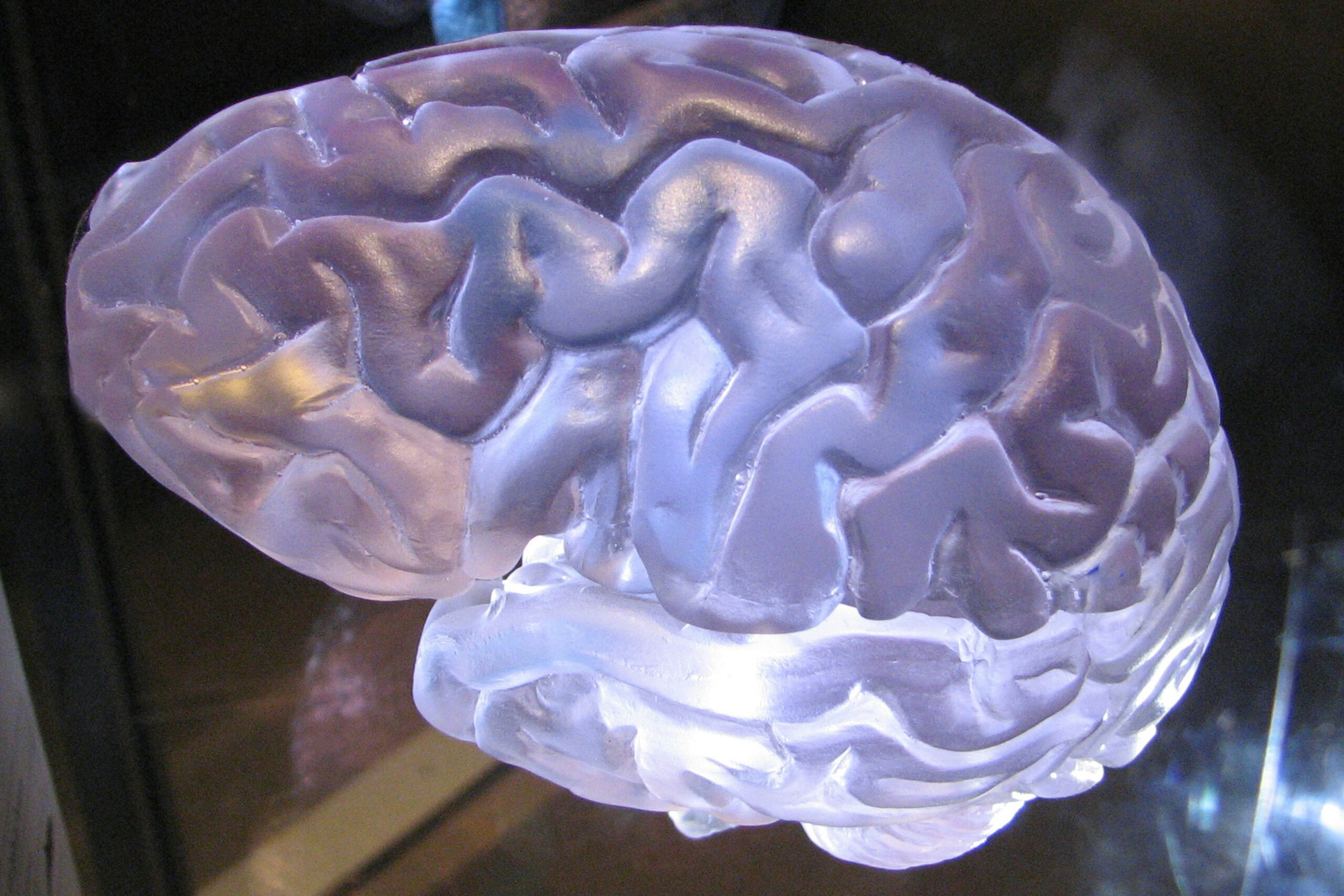
Your world is a stage for action, a constant stream of movements orchestrated by a silent conductor. You might believe your conscious decision is the spark, the initial impulse that sets your body in motion. However, the reality is far more intricate, and often, your brain has already begun the ballet of action before you’ve even formulated the thought. This article delves into the profound role your brain plays in initiating movement, exploring the subconscious processes that precede your conscious awareness.
The notion that your conscious mind is the sole architect of your movements is a persistent, yet largely inaccurate, perception. Beneath the surface of your awareness, a complex network of neural activity is diligently at work, preparing your body for impending actions. This intricate choreography begins long before you feel the urge to, say, reach for a cup or take a step. It’s a testament to the efficiency and evolutionary advantage of a brain that can anticipate and prepare, ensuring a seamless transition from thought to deed.
The Readiness Potential: A Pre-Movement Signal
One of the most compelling pieces of evidence for this pre-decisional brain activity comes from electroencephalography (EEG) studies. These studies have identified a phenomenon known as the readiness potential (RP), a gradual increase in electrical activity in the brain’s motor cortex that precedes voluntary movement. This RP occurs not just milliseconds but often several seconds before you report making a conscious decision to move.
Understanding the Readiness Potential
The readiness potential is not a monolithic signal. It’s a complex waveform that evolves over time, reflecting the brain’s preparatory processes. Researchers have meticulously mapped out the stages of the RP, observing distinct patterns of neural firing that appear to be linked to different aspects of movement preparation.
Early and Late Components of the RP
The RP can be broadly divided into an early component and a late component. The early component, which emerges further in advance of the movement, is thought to reflect more general preparation and the accumulation of evidence for a decision. The late component, occurring closer to the actual motor output, is believed to be more directly involved in the specific planning and execution of the intended action.
The Role of Specific Brain Regions
While the motor cortex is central to the RP, other brain regions also contribute to this pre-movement signaling. The supplementary motor area (SMA) and the premotor cortex (PMC) are particularly implicated, working in concert with the primary motor cortex to fine-tune motor commands and prepare the appropriate muscle groups.
Recent research has shown that our brains often initiate movement before we consciously decide to act, a phenomenon that challenges our understanding of free will. This intriguing concept is explored in detail in an article on Freaky Science, which delves into the neurological processes that occur in the milliseconds leading up to our actions. The article discusses how brain activity can predict movements even before we are aware of our intentions, shedding light on the complex interplay between decision-making and motor control. For more insights on this fascinating topic, you can read the full article here: Freaky Science.
Libet’s Experiments and Their Implications
The seminal work of Benjamin Libet in the early 1980s brought the concept of pre-decisional brain activity into sharp focus. His experiments, while controversial and subject to numerous interpretations, provided crucial empirical data that challenged the conventional understanding of free will and conscious intention.
The Libet Paradigm: Measuring Intent and Action
Libet’s experiments involved participants observing a clock with a rapidly rotating dot. They were instructed to flex their wrist whenever they felt the urge to do so and to note the exact position of the clock’s dot at the moment they first felt that urge – their “conscious intention” point. Simultaneously, EEG was used to record brain activity, specifically the readiness potential.
The Temporal Discrepancy
The results were striking. Libet found that the readiness potential began to build up approximately 550 milliseconds before the actual muscle movement. However, the participants reported their conscious intention to move only about 200 milliseconds before the movement. This suggests a significant gap of roughly 350 milliseconds, during which the brain activity preceding movement was already underway, before any conscious awareness of the decision to move.
The “Free Won’t” and Conscious Veto
Libet himself suggested that while conscious intention might not initiate movement, it could still play a crucial role in vetoing or inhibiting an action that has already been unconsciously initiated. This “free won’t” provides a potential avenue for conscious control, even if it’s not the initial driver of action.
Beyond the Conscious Command: Predictive Coding and Anticipation
The brain’s proactive nature in initiating movement extends beyond simply responding to a conscious decision. It’s a master of prediction and anticipation, constantly modeling the world and preparing for future events. This predictive coding framework offers a powerful explanation for why movement initiation can occur before conscious awareness.
The Predictive Brain
Your brain doesn’t simply wait for sensory input to react. Instead, it constantly generates internal predictions about what sensory information it expects to receive. When incoming sensory data matches these predictions, the brain can efficiently process information. When there’s a mismatch, it signals an “error” that helps update the internal model.
Movement as Prediction Fulfillment
In the context of movement, the brain can be seen as predicting the sensory consequences of an intended action. For instance, if you intend to pick up a cup, your brain predicts the visual feedback of your hand approaching the cup, the tactile sensation of grasping it, and the proprioceptive feedback of your arm’s position. This predictive process can begin before you consciously register the desire to drink.
The Role of Motor Programs
The brain utilizes pre-programmed motor sequences, often referred to as motor programs, for common actions like walking, reaching, and grasping. These programs are refined through practice and experience. When an action is planned, the brain can activate relevant motor programs, generating efference copies (internal copies of motor commands) that inform other brain regions about the intended movement. This internal simulation allows for rapid preparation.
The Importance of Sensory Inference
Sensory information is not passively received; it’s actively interpreted and inferred by the brain. This inference process is heavily influenced by prior expectations and predictions. When you move, your brain doesn’t just process the raw sensory data. It uses this data to confirm or refine its existing predictions about the world and your actions within it.
Unconscious Motor Planning
Before you consciously “decide” to move, your brain is already engaged in unconscious motor planning. This involves selecting appropriate motor commands, sequencing them, and preparing the neural pathways that will carry these commands to your muscles. This planning phase is a crucial precursor to actual movement.
The Feedback Loop Between Motor and Sensory Systems
There’s a continuous feedback loop between your motor and sensory systems. As your brain plans a movement, it anticipates the sensory feedback it will receive. This anticipation allows for real-time adjustments and refinements of the motor plan even before the movement is executed.
Beyond the “Decision”: A Cascade of Neural Events
The initiation of movement is not a singular event but rather a cascade of neural events, a complex interplay of excitatory and inhibitory processes. Your conscious awareness is a latecomer to this intricate dance.
The Basal Ganglia and Movement Selection
The basal ganglia, a group of subcortical nuclei, play a critical role in initiating and controlling voluntary movement. They are involved in selecting appropriate movements and suppressing unwanted ones. Their activity is a key component of the pre-decisional processes that lead to action.
Direct and Indirect Pathways
The basal ganglia operate through two main pathways: the direct pathway, which facilitates movement, and the indirect pathway, which inhibits movement. The balance of activity between these pathways is crucial for smooth and controlled action.
Dopamine’s Role in Modulation
Dopamine, a neurotransmitter, plays a significant role in modulating the activity of the basal ganglia. It is essential for motor learning, motivation, and the initiation of voluntary movements. Dysregulation of dopamine is implicated in various movement disorders, such as Parkinson’s disease, highlighting its importance in this process.
The Cerebellum’s Fine-Tuning and Error Correction
While the basal ganglia are involved in initiating and selecting movements, the cerebellum refines and coordinates them, ensuring accuracy and smoothness. It receives sensory information and motor commands and uses them to make real-time adjustments.
Motor Learning and Adaptation
The cerebellum is crucial for motor learning—the process by which we acquire new motor skills and improve existing ones. It continuously compares motor commands with actual sensory feedback and makes adjustments to optimize performance.
Predicting Sensory Consequences
The cerebellum also plays a role in predicting the sensory consequences of movements. This predictive capability is essential for anticipating how our actions will affect the environment and adjusting our movements accordingly.
Recent studies have shown that our brains often initiate movement even before we consciously decide to act, revealing the complex interplay between intention and action. This phenomenon can be better understood by exploring the insights provided in a related article that delves into the neural mechanisms behind such automatic responses. For those interested in the science of decision-making and movement, the article can be found here, offering a deeper understanding of how our brain operates in ways we may not even be aware of.
The Evolutionary Advantage of Proactive Action
The brain’s tendency to initiate movement before conscious awareness is not a flaw; it’s a sophisticated evolutionary adaptation that provides a significant survival advantage. In a dynamic and often unpredictable environment, the ability to react quickly and efficiently is paramount.
Survival in a Dynamic Environment
Imagine a predator approaching. The ability for your brain to initiate a flee response milliseconds before you consciously register the full threat could be the difference between escape and succumbing to danger. Similarly, the ability to quickly reach for a falling object before it shatters is a testament to this proactive motor control.
Minimizing Reaction Time
By preparing motor pathways and initiating neural cascades in advance, your brain effectively minimizes the reaction time between sensing a need and acting upon it. This is particularly critical for complex actions that require precise timing and coordination.
Anticipatory Behavior and Planning
Our capacity for anticipatory behavior – planning and preparing for future events – is deeply rooted in this pre-conscious movement initiation. It allows us to navigate our environment with fluidity and efficiency, avoiding obstacles, and reaching for desired objects with minimal delay.
The Role of Unconscious Learning and Habit Formation
Much of our daily movement repertoire consists of learned habits and automated sequences. These actions, honed through repetition, become deeply ingrained in our neural circuitry, allowing them to be initiated with minimal conscious effort.
Procedural Memory and Muscle Memory
Procedural memory, often referred to as “muscle memory,” is responsible for storing and retrieving motor skills. When you learn to ride a bike or play a musical instrument, your brain is building and refining these procedural memories, enabling the automatic execution of complex movements.
The Efficiency of Automation
The automation of routine movements frees up valuable cognitive resources. Instead of consciously thinking through every step of walking or brushing your teeth, your brain can dedicate its processing power to more complex tasks or emerging stimuli. This efficiency is a hallmark of intelligent biological systems.
Reconciling Conscious Will with Pre-Initiation
The discovery that movement initiation often precedes conscious decision-making raises profound questions about free will and our sense of agency. While it challenges a simplistic view of conscious control, it doesn’t necessarily invalidate our experience of willing our actions.
The Role of Consciousness in Shaping Future Actions
While consciousness may not be the initiator of every movement, it plays a crucial role in shaping future actions. Through reflection, learning, and conscious deliberation, we can influence the parameters of our future motor programs and decision-making processes.
Learning and Refinement
Conscious awareness allows us to learn from our experiences. If a movement leads to an undesirable outcome, we can consciously reflect on it and adjust our future behavior. This feedback loop, integrating conscious evaluation with pre-conscious preparation, is vital for adaptive behavior.
Setting Goals and Intentions
Conscious intention, while not always the immediate trigger for action, is essential for setting long-term goals and planning complex sequences of behaviors. You can consciously decide to learn a new skill, and your brain will then engage in the preparatory processes needed to acquire it.
The Illusion of Direct Control and the Reality of Neural Orchestration
The feeling of directly willing our actions is a powerful subjective experience. However, understanding the underlying neural mechanisms reveals that this feeling is more of an interpretation or narrative that our conscious mind constructs after the fact, or as the underlying processes unfold.
The Brain as a Predictive Engine
Your brain functions as a sophisticated predictive engine, constantly striving to anticipate and influence your environment. This proactive approach to motor control, while seemingly bypassing conscious deliberation at times, is essential for navigating the complexities of life.
The Unity of Mind and Body
Ultimately, the initiation of movement is a testament to the intricate unity of your mind and body. The lines between conscious thought, subconscious processing, and physical action are blurred, creating a seamless and dynamic flow of being and doing. Your brain is constantly at work, orchestrating a symphony of movements that allows you to engage with and shape the world around you, often before you even realize you’ve begun.
FAQs
What is the phenomenon of the brain initiating movement before a conscious decision is made?
This phenomenon, known as “premotor potential,” refers to the brain’s activity in preparing to initiate a movement before the individual is consciously aware of making the decision to move.
How is this phenomenon studied in scientific research?
Scientists study this phenomenon using electroencephalography (EEG) and functional magnetic resonance imaging (fMRI) to measure brain activity and track the sequence of events leading up to a voluntary movement.
What are the implications of the brain initiating movement before conscious awareness?
This phenomenon challenges the traditional understanding of free will and raises questions about the nature of conscious decision-making and the role of unconscious processes in initiating actions.
What are some potential reasons for the brain’s pre-initiation of movement?
Some researchers suggest that the brain’s pre-initiation of movement may be a result of the need for efficient and rapid responses to environmental stimuli, as well as the integration of sensory information and motor planning.
How does this phenomenon relate to everyday experiences and behaviors?
Understanding the brain’s pre-initiation of movement can provide insights into human behavior, decision-making processes, and the mechanisms underlying actions and reactions in various situations.