You’ve lived inside it your entire life, yet you probably know more about the inner workings of your smartphone than your own incredible, complex, and frankly, bizarre, biological machine. Prepare yourself, because we’re about to peel back the layers of your own existence and reveal some of the most astonishing truths about the human body. Forget what you think you know; this is a journey into the truly strange.
Your skin, that seemingly inert covering, is far more than just a barrier. It’s a dynamic, living organ, a constant battlefield and a sensory marvel. You’re shedding it right now, as you read this, and have been since the moment you were born.
A Universe of Microbes: Your Living Blanket
Did you know that you are, quite literally, a walking ecosystem? Trillions of microorganisms – bacteria, fungi, viruses – call your body home. These aren’t invaders; most are essential partners, living in a symbiotic relationship that keeps you healthy. They aid in digestion, produce vitamins, and even train your immune system. It’s estimated that you have more bacterial cells in your body than human cells! Think of your skin as a bustling metropolis, teeming with life, each microbe playing its part in the grand scheme of your well-being. Your gut alone hosts a microbial community so diverse that scientists are still struggling to fully catalog it. These gut bugs are so influential, they can even impact your mood and behavior through the gut-brain axis. The sheer scale of this microscopic world is mind-boggling. It’s a testament to the intricate balance of nature that something so unseen can have such a profound impact on your visible existence.
The Incredible Regenerative Power: A Constant Renewal
Your skin isn’t just a static shell; it’s a masterpiece of regeneration. You produce an astonishing amount of new skin cells every minute. Over your lifetime, you’ll shed enough skin to fill several large bags. This constant shedding is crucial for removing damaged cells, preventing infections, and maintaining your skin’s integrity. Even deeper tissues are constantly being repaired and replaced. Your liver, for instance, has an incredible capacity to regenerate, capable of regrowing after a significant portion has been removed. Your bones, too, are not static structures but living, dynamic tissues that are constantly remodeled throughout your life. This process of renewal ensures that your body can adapt, heal, and maintain its functionality, even in the face of wear and tear. Imagine the sheer amount of cellular activity happening below the surface at any given moment – a silent, relentless force of reconstruction.
The Silent Communication Network: Your Nervous System’s Secrets
Your nervous system is the conductor of your entire biological orchestra, sending rapid-fire messages that orchestrate every thought, movement, and sensation. But its complexity and sheer speed are truly astounding.
Lightning-Fast Signals: The Speed of Thought
Nerve impulses, the electrical signals that travel through your neurons, can move at incredible speeds, some reaching up to 268 miles per hour (431 km/h). This means that when you touch something hot, the signal to pull your hand away travels so fast that you barely register the initial sensation before your hand is already safe. This rapid communication is what allows you to react to your environment instantaneously, to speak, to think, and to experience the world around you. The intricate network of neurons, stretching throughout your body like an incredibly complex electrical grid, is responsible for all of this.
The Brain’s Vast Storage: A Universe of Memories
Your brain, the command center of your being, is an organ of immense capacity. While we often talk about memory in terms of what we can recall, the sheer volume of information it can store is staggering. Estimates vary, but it’s suggested that the human brain could hold up to 2.5 petabytes of information – that’s equivalent to about 3 million hours of TV shows. This vast storage isn’t just for facts and figures; it encompasses emotions, experiences, learned skills, and the unconscious processing that keeps your body functioning. The intricate connections between neurons, constantly forming and reforming, are the basis of this incredible capacity. It’s a living library, constantly updating and reorganizing its contents.
The Unseen Sensory Input: Beyond What You Perceive
You experience the world through your senses – sight, sound, smell, taste, and touch. But your body is constantly receiving and processing information that you are not consciously aware of. Your proprioceptors, for instance, tell your brain where your limbs are in space without you having to look. Your vestibular system helps you maintain balance. Even your internal organs are sending signals that inform your brain about your body’s state. This constant stream of subconscious sensory input is crucial for maintaining homeostasis and navigating your environment safely. You are a far more aware entity than you might realize, with a rich internal world of sensory data feeding your conscious experience.
If you’re fascinated by the strange and surprising aspects of our anatomy, you might enjoy exploring more about the human body in the article titled “Weird Facts About the Human Body.” This piece delves into the peculiarities that make us unique, from the number of bones we have at birth to the surprising capabilities of our senses. To read more, visit this article and discover the wonders that lie within us.
The Digestive Odyssey: A Journey Through the Inner Gut
Your digestive system is a marvel of engineering, a long, winding tube that transforms food into the energy and building blocks your body needs to survive. But the processes at play are far stranger and more impressive than you might imagine.
The Acidic Powerhouse: Your Stomach’s Extreme Environment
Your stomach is a highly acidic environment, with a pH of around 1.5 to 3.5. This acidity is crucial for breaking down food and killing harmful bacteria. The lining of your stomach is constantly renewed to protect itself from this corrosive acid. Imagine a factory that produces its own industrial-strength cleaning solution and somehow manages not to dissolve itself in the process. The enzymes in your stomach, like pepsin, are also incredibly potent, designed to dismantle proteins. This powerful digestive brew is a testament to the body’s ability to create and manage extreme conditions for essential functions.
The Gut’s Second Brain: The Enteric Nervous System
You might think of your brain as your only “brain,” but your gut has its own sophisticated nervous system, known as the enteric nervous system (ENS). This network of neurons is so extensive that it’s often referred to as the “second brain.” The ENS can function independently of the central nervous system, controlling digestion, nutrient absorption, and even influencing your mood and emotions. This is why you might feel “butterflies” in your stomach when you’re nervous or have a “gut feeling” about something. The intricate communication between your brain and your gut is a fascinating area of ongoing research, revealing a deep and complex connection.
The Silent Helpers: Microbes at Work
As mentioned earlier, your gut is a thriving hub for microbes. These tiny organisms play a vital role in your digestion. They help break down complex carbohydrates that your own enzymes can’t process, extract nutrients, and produce essential vitamins like vitamin K and B vitamins. The composition of your gut microbiome can even influence how your body extracts energy from food and can affect your susceptibility to certain diseases. It’s a delicate balance, and when this balance is disrupted, it can have far-reaching consequences for your overall health.
The Heart of the Matter: A Pump of Unwavering Dedication
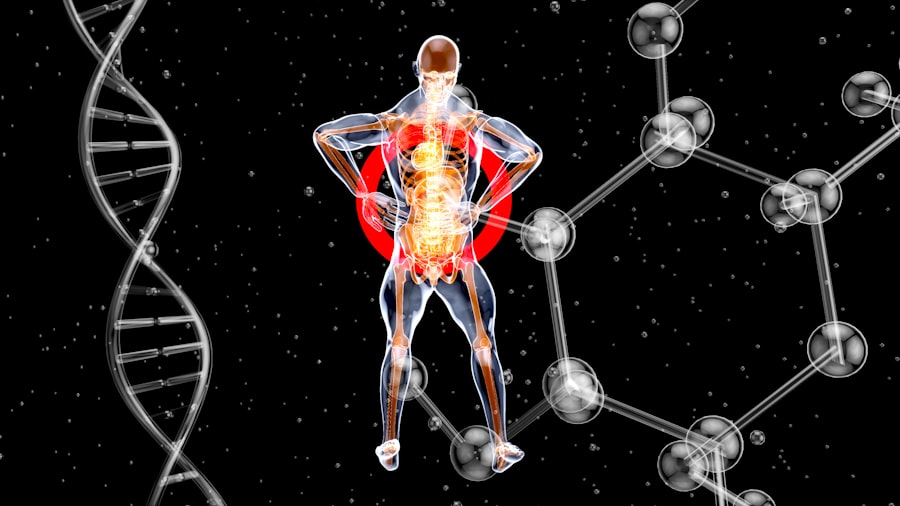
Your heart is a relentless workhorse, beating tirelessly from before you’re even born until your last breath. But its endurance and the sheer volume of work it performs are truly astonishing.
A Lifetime of Pumping: The Incredible Endurance
On average, your heart beats about 100,000 times a day, pumping around 2,000 gallons (7,570 liters) of blood through your body. Over an average lifetime, this amounts to billions of beats and millions of gallons of blood pumped. This consistent, unwavering effort is what keeps your cells supplied with oxygen and nutrients, and removes waste products. It’s an incredible feat of biological engineering, a muscle that performs at an Olympic athlete’s level, day in and day out, without conscious effort from you.
The Electrical Symphony: Maintaining the Rhythm
Your heart’s rhythmic beating is controlled by an intricate electrical system. Specialized cells initiate and conduct electrical impulses that cause the heart muscle to contract in a coordinated fashion. This electrical activity is so precise that it can be detected externally and used to monitor your heart’s health through an electrocardiogram (ECG). The precise timing and coordination of these electrical signals are crucial for efficient blood flow. Any disruption to this electrical symphony can lead to serious health problems.
The Blood’s Journey: A Vast Network
The network of blood vessels that carry blood throughout your body is incredibly extensive. If you were to lay out all the arteries, veins, and capillaries end-to-end, they would stretch for approximately 60,000 miles (96,560 kilometers) – enough to circle the Earth more than twice! This vast network ensures that every single cell in your body receives the oxygen and nutrients it needs, and that waste products are efficiently removed. The constant flow and circulation are vital for life.
The Brain’s Enigmatic Power: More Than Just Thought

Your brain, that three-pound mass of jelly, is the most complex organ in the known universe. Its capabilities extend far beyond conscious thought, delving into realms of creativity, intuition, and the very essence of your being.
The Creative Spark: Where Ideas Are Born
The human brain is the source of all creativity, innovation, and artistic expression. From the simplest doodle to the most complex symphony, your brain is capable of generating novel ideas and transforming them into tangible forms. The interplay of different brain regions, the formation of new neural connections, and the processing of vast amounts of information all contribute to this remarkable ability. It’s the engine of human progress and the wellspring of our imagination.
The Power of Placebo: Mind Over Matter
The placebo effect is a powerful demonstration of the brain’s influence over the body. When you believe a treatment will work, even if it’s a sham, your brain can trigger real physiological changes, leading to improvements in your condition. This highlights the profound connection between your mind and your physical well-being, demonstrating that your thoughts and beliefs can have tangible impacts on your health. It’s a reminder that your mental state is not separate from your physical state.
The Unconscious Navigator: Running the Show
While you’re busy consciously thinking, your brain is also managing countless unconscious processes that keep you alive and functioning. Breathing, digestion, maintaining body temperature, and regulating your heart rate are all handled by your autonomic nervous system, operating below the level of your awareness. This constant background activity is essential for survival, allowing your conscious mind to focus on higher-level tasks. You are a far more capable and multi-tasking organism than you might consciously realize.
If you’re fascinated by the strange and wonderful aspects of our biology, you might enjoy exploring some weird facts about the human body. For instance, did you know that the human nose can detect over a trillion different scents? This incredible ability is just one of many surprising features that make us unique. To learn more about other astonishing facts, check out this related article on Freaky Science, where you can dive deeper into the mysteries of our anatomy and discover even more intriguing information.
The Marvels of Adaptation: Your Body’s Resilience
| Fact | Description |
|---|---|
| Hair growth | The average human will grow 590 miles of hair in their lifetime. |
| Heartbeats | The human heart can beat more than 3 billion times in an average lifespan. |
| Blinking | The average person blinks around 15-20 times per minute. |
| Bone strength | The femur bone is stronger than concrete. |
| Saliva production | The average person produces about 25,000 quarts of saliva in a lifetime. |
Your body is a testament to evolutionary ingenuity, possessing an incredible capacity to adapt and survive in a constantly changing world. These adaptations, often subtle, are what allow you to thrive.
The Immune System: Your Personal Defense Force
Your immune system is a sophisticated army of cells and organs working tirelessly to protect you from a vast array of threats, from viruses and bacteria to cancerous cells. It learns, remembers, and adapts, constantly evolving to combat new pathogens. The sheer complexity of this defense network, with its diverse range of cells and signaling molecules, is a marvel. It’s a silent, vigilant guardian, working 24/7 to keep you safe.
The Sense of Pain: A Crucial Warning System
While often unpleasant, the sensation of pain is a vital warning system. It alerts you to injury or potential harm, prompting you to take action to protect yourself. Without the ability to feel pain, you would be far more susceptible to serious injury. The intricate pathways that transmit pain signals to your brain are finely tuned to ensure you receive these crucial alerts. It’s a protective mechanism that, despite its discomfort, is essential for your survival.
The Blueprint of Life: Your DNA and Genetics
At the core of your being lies DNA, the intricate molecule that carries the genetic instructions for building and operating your entire body. This complex code, passed down through generations, dictates everything from your eye color to your predisposition to certain diseases. The vastness of the genetic information encoded within your DNA is staggering, a testament to the power and complexity of life itself. Understanding your genetics is like unlocking the ultimate instruction manual for your own existence, a constantly unfolding story of inheritance and potential.
You are a walking, talking miracle, a testament to billions of years of evolution. The bizarre world of the human body is your world, and the more you understand it, the more you’ll appreciate the incredible, resilient, and utterly fascinating organism you inhabit. So next time you look in the mirror, remember that beneath that familiar surface lies a universe of wonder, a testament to the extraordinary power of simply being alive.

You’re Emitting Light Right Now—So Why Can’t You See It?
FAQs
What are some weird facts about the human body?
– The human nose can remember 50,000 different scents.
– The human body produces about 1 to 1.5 quarts of saliva each day.
– The strongest muscle in the human body is the masseter (jaw) muscle.
– The human eye can distinguish about 10 million different colors.
– The human stomach lining replaces itself every 3-4 days to avoid digesting itself.
Why does the human body produce so much saliva?
The production of saliva is essential for the digestion process as it helps to moisten food and begins the process of breaking it down. Saliva also contains enzymes that help to break down food particles, making it easier for the body to absorb nutrients.
What is the purpose of the human nose being able to remember 50,000 different scents?
The ability of the human nose to remember a vast number of scents is crucial for survival. It helps in detecting potential dangers, identifying food, and recognizing familiar scents, which can trigger memories and emotions.
Why is the human stomach lining replaced every 3-4 days?
The stomach lining is replaced every 3-4 days to protect the stomach from the strong acids it produces for digestion. This rapid turnover of cells helps to prevent the stomach from digesting itself and maintains a healthy digestive system.
What makes the human eye capable of distinguishing 10 million different colors?
The human eye contains specialized cells called cones, which are responsible for color vision. These cones can detect different wavelengths of light, allowing the eye to perceive a wide range of colors. The ability to distinguish 10 million different colors is a result of the complex interplay of these cones in the human eye.