The vast expanse of the cosmos, a canvas of unimaginable scale and mystery, plays host to phenomena that defy human comprehension. Among these cosmic enigmas, two gargantuan structures have emerged as subjects of intense scientific scrutiny and popular fascination: the Boötes Supervoid and the CMB Cold Spot. While seemingly disparate entities, their existence and potential interactions have ignited a compelling narrative, often framed as a cosmic battle between opposing forces of emptiness and chilling anomaly. This article delves into the nature of these colossal structures, exploring their formation, characteristics, and the ongoing scientific debate surrounding their origins and any potential interconnectedness.
The Great Emptiness: Unveiling the Boötes Supervoid
The Boötes Supervoid, also known as the Great Nothing, stands as one of the largest known voids in the observable universe. Located in the constellation Boötes, approximately 250 million light-years away, it is a region of space utterly devoid of galaxies. Imagine a colossal bubble, stretching an estimated 250 million to 330 million light-years in diameter, within which the cosmic web, the filamentary structure of galaxies and dark matter, is remarkably absent. Its discovery in 1987 by Robert Kirshner and his colleagues sent ripples of astonishment through the astronomical community, challenging prevailing cosmological models that predicted a more uniform distribution of matter.
Genesis of the Void: Cosmic Seeds of Emptiness
The prevailing theory for the formation of such immense voids is rooted in the early universe and the phenomenon of cosmic inflation. In the first fractions of a second after the Big Bang, the universe underwent a period of rapid expansion. This inflation, while smoothing out initial inhomogeneities, also stretched tiny quantum fluctuations into macroscopic density variations. Regions that were slightly less dense in the primordial soup, due to these fluctuations, became the seeds for voids. Over billions of years, gravity, the relentless architect of the cosmos, worked its magic. In denser regions, matter clumped together to form galaxies and galaxy clusters, the cosmic scaffolding. Conversely, in the less dense regions, matter was effectively pushed away by gravity, leading to the formation of vast, empty expanses like the Boötes Supervoid. It’s a cosmic sorting process, where gravity pulls matter towards concentrations, leaving behind the emptier spaces.
Characterizing the Void: A Cosmic Desert
The sheer scale of the Boötes Supervoid is its defining characteristic. Within its vast expanse, astronomers have detected very few galaxies, a stark contrast to the dense clusters and filaments that populate other regions of the universe. The number of galaxies within the Boötes Supervoid is estimated to be a mere fraction of what would be expected in a typical volume of space of comparable size. This scarcity of luminous matter, however, doesn’t necessarily mean the void is entirely devoid of mass. Dark matter, the mysterious substance that constitutes the majority of the universe’s mass, likely still permeates the void, albeit in a more diffuse distribution than in the surrounding cosmic web. The void is not a vacuum in the absolute sense, but rather a region where the building blocks of galaxies have been predominantly absent or have been gravitationally repelled.
Implications for Cosmology: A Challenge and a Confirmation
The existence of such large voids presented an initial challenge to the standard cosmological model, known as the Lambda-CDM model. This model, based on the Big Bang, the expansion of the universe, and the presence of dark matter and dark energy, predicted a relatively homogeneous distribution of matter on large scales. The discovery of the Boötes Supervoid, and subsequently other large voids, led to questions about whether the universe was indeed as uniform as predicted by models. However, further observations and refined simulations have shown that the Lambda-CDM model can, in fact, accommodate the formation of these large-scale structures. The key lies in the statistical nature of the initial fluctuations and the immense timescales involved. While seemingly anomalous, these voids are now understood as natural consequences of the gravitational evolution of the early universe, acting as cosmic confirmation of the model’s predictions rather than a refutation.
The intriguing debate surrounding the supervoid and the cold spot in the cosmic microwave background radiation has captured the attention of many astrophysicists. For those interested in delving deeper into this topic, a related article can be found at Freaky Science, which explores the implications of these phenomena on our understanding of the universe.
The Chilling Anomaly: Investigating the CMB Cold Spot
The Cosmic Microwave Background (CMB) is the afterglow of the Big Bang, a faint radiation that permeates the entire universe. It provides a snapshot of the universe when it was only about 380,000 years old, a time when it had cooled enough for atoms to form and light could travel freely. This ancient light is remarkably uniform in temperature, but it is not perfectly so. Tiny variations, known as anisotropies, reveal the seeds of the large-scale structures we observe today. Among these fluctuations, one anomaly has particularly captured the attention of scientists: the CMB Cold Spot.
Nature of the Cold Spot: A Region of Lower Temperature
The CMB Cold Spot is a region in the CMB sky, spanning roughly 5 degrees, that is significantly colder than its surroundings. On average, the CMB temperature is about 2.7 Kelvin. The Cold Spot deviates from this average by about 0.1 milliKelvin, a minuscule but statistically significant difference. First identified in 2004 by the Wilkinson Microwave Anisotropy Probe (WMAP) satellite, this unusually cool patch of sky has been a source of intense debate and research. It appears as a vast, dark stain against the otherwise more uniform tapestry of the CMB.
Proposed Origins: From Cosmic Structures to Exotic Theories
The existence of such a large and cold anomaly has spurred a variety of explanations, ranging from the mundane to the highly speculative.
The Supervoid Hypothesis: A Gravitational Gravy Boat
One of the leading explanations for the CMB Cold Spot involves the gravitational influence of a massive supervoid lying between us and the region of the CMB we are observing. According to the Sachs-Wolfe effect, photons of light lose energy as they travel through a gravitational potential well. Conversely, they gain energy as they emerge from one. If there is a very large and deep void located between us and the CMB emission in that direction, the photons originating from that region would have to traverse this vast emptiness. As they exit the void, they would climb out of a gravitational potential, effectively losing energy and appearing colder to us. The Boötes Supervoid, with its immense emptiness, has been considered a potential candidate for such a gravitational lens, though its location and precise alignment with the Cold Spot are still under investigation.
Other Explanations: Beyond Standard Cosmology
While the supervoid hypothesis is compelling, other theories have also been proposed to account for the CMB Cold Spot. Some scientists suggest it could be a statistical fluke, an exceptionally rare fluctuation in the otherwise predictable CMB distribution. Another possibility is that it is a remnant of an early cosmic structure that has long since dissolved. More exotic explanations include the possibility of interaction with a parallel universe or the presence of topological defects in spacetime. However, these speculative theories often lack direct observational evidence and are considered less likely by the majority of the scientific community. The prevailing view leans towards explanations rooted in established physics, with the supervoid hypothesis being a strong contender.
The Debate and Ongoing Research: Seeking Definitive Answers
The debate surrounding the CMB Cold Spot is far from settled. Scientists are actively engaged in refining their observations and theoretical models to shed more light on its origin. Missions like the Planck satellite have provided more precise measurements of the CMB, offering higher resolution data to analyze the Cold Spot and its surroundings. Cosmologists are also developing more sophisticated simulations of large-scale structure formation to see if the observed characteristics of the Cold Spot can be reproduced. The challenge lies in disentangling the CMB signal from foreground emissions and understanding the precise distribution of matter in the vast intergalactic medium.
The Cosmic Tango: Potential Interactions Between Void and Spot
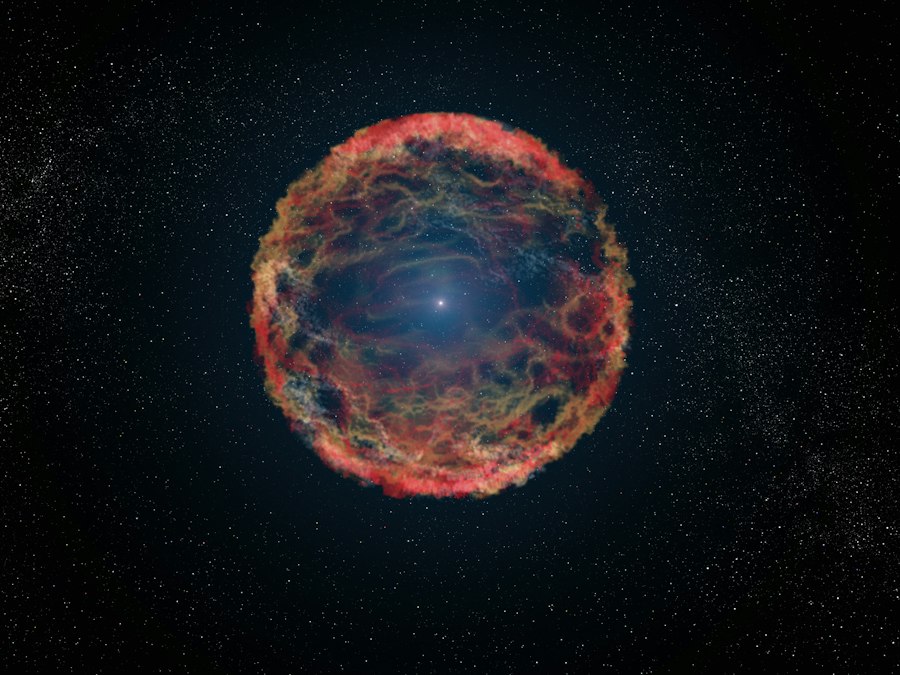
The tantalizing prospect of a connection between the Boötes Supervoid and the CMB Cold Spot forms the core of the “cosmic battle” narrative. While these are not literal adversaries in a physical sense, their existence and potential causal relationship offer a profound insight into the universe’s grand architecture. The idea is that the immense emptiness of the Boötes Supervoid could be responsible for the unusually low temperature observed in the CMB Cold Spot through a gravitational lensing effect.
The Sachs-Wolfe Effect in Action: A Gravitational Shadow
The Sachs-Wolfe effect, as mentioned earlier, describes how photons of light are affected by the gravitational potentials they traverse. In a uniform universe, photons would experience equal gains and losses of energy as they move through expanding and contracting regions of spacetime, resulting in a uniform CMB temperature. However, in a universe with significant large-scale structures like voids, this balance can be disrupted. If a CMB photon originates from a region behind a vast supervoid, it must travel through that region of underdense matter. As it emerges from the gravitational pull of the void, it effectively climbs out of a potential well. This climb requires energy, which is taken from the photon itself, causing it to redshift and appear cooler on arrival. The sheer size and emptiness of the Boötes Supervoid make it a prime candidate for creating such a significant gravitational shadow on the CMB.
Alignment and Evidence: The Search for a Cosmic Clue
The crucial element for the supervoid hypothesis to be definitively proven is the alignment between the Boötes Supervoid and the CMB Cold Spot. Astronomers are meticulously mapping the distribution of galaxies and dark matter to determine the precise location and extent of the Boötes Supervoid. Simultaneously, they are analyzing the CMB data with increasing precision. If the Cold Spot is indeed caused by a supervoid, then that supervoid should be located in the direction of the Cold Spot from our perspective. Current observations suggest a potential overlap in direction, but more precise measurements of the supervoid’s depth and our line of sight to the CMB emission are needed for confirmation. The ongoing efforts in both galaxy surveys and CMB analysis are vital for either solidifying or refuting this compelling hypothesis.
Alternative Interpretations: More Than Just Gravity?
While the gravitational lensing explanation is the most favored, it’s important to acknowledge that the CMB Cold Spot might have other contributing factors or even entirely different causes. The universe is a complex place, and our understanding is constantly evolving. For instance, the distribution of matter within the Boötes Supervoid might not be perfectly uniform, and subtle variations could influence the Sachs-Wolfe effect. Furthermore, the statistical significance of the Cold Spot itself is still a subject of ongoing statistical analysis. While it appears anomalous, the possibility of it being an extreme, but not impossible, random fluctuation within the standard cosmological model cannot be entirely discounted without further investigation.
Cosmic Scales and Our Place Within Them: A Perspective Shift
The existence of structures as vast as the Boötes Supervoid and anomalies as intriguing as the CMB Cold Spot forces humanity to confront its own minuscule scale within the grand cosmic theater. These phenomena are not just abstract scientific curiosities; they are profound indicators of the universe’s evolution and the fundamental forces that shape it. Understanding these cosmic behemoths offers a unique perspective on our place in the universe and the ongoing quest to unravel its deepest mysteries.
The Universe’s Fabric: A Tapestry of Structures
The universe is not a uniform expanse; it is a dynamic tapestry woven with threads of matter and energy, forming intricate patterns on every conceivable scale. The cosmic web, with its dense clusters of galaxies and vast, empty voids, is the large-scale structure that dictates the distribution of matter. The Boötes Supervoid represents one of the deepest depressions in this cosmic fabric, a testament to the power of gravity to segregate matter over immense stretches of time and space. The CMB Cold Spot, in turn, is a subtle imprint left on the very earliest light of the universe, a whisper from the past that might be a direct consequence of these large-scale structures.
Our Cosmic Neighborhood: A View from the Edge
Our own Milky Way galaxy resides within the Local Group, a collection of galaxies that is part of the Laniakea Supercluster. While we are part of a relatively dense region of the cosmic web, the existence of vast voids like Boötes reminds us that our galactic neighborhood is but a small island in a sea of emptiness. The light from distant galaxies travels for billions of years to reach us, traversing these cosmic structures. The information encoded in that light, as seen in the CMB, is shaped by the gravitational landscapes it has crossed. Therefore, studying these phenomena is not just about understanding distant objects; it’s about understanding the very path that light has taken to reach our telescopes and, ultimately, us.
The Ongoing Quest for Knowledge: Unraveling the Universe’s Secrets
The pursuit of understanding phenomena like the Boötes Supervoid and the CMB Cold Spot is a testament to humanity’s insatiable curiosity and our drive to explore the unknown. Each new observation, each refined model, brings us closer to a more complete picture of the universe. The “battle” between the supervoid and the cold spot, as metaphorically framed, is in reality a scientific investigation, a collaborative effort to piece together the cosmic puzzle. The ongoing research promises to not only shed light on these specific anomalies but also to refine our understanding of fundamental cosmological principles, the nature of dark matter and dark energy, and the very origins of the universe itself.
The intriguing debate surrounding the supervoid and the cold spot in the cosmic microwave background radiation has led to various theories about the universe’s structure. For those interested in delving deeper into this topic, a related article can be found at Freaky Science, which explores the implications of these phenomena on our understanding of cosmic evolution. This connection between the supervoid and the cold spot raises questions about the nature of dark energy and the overall fabric of space-time.
The Future of Cosmic Exploration: New Tools, New Insights
| Metric | Supervoid | Cold Spot | Notes |
|---|---|---|---|
| Size (Diameter) | Approximately 1.8 billion light-years | Approximately 1.2 billion light-years | Supervoids are large underdense regions; Cold Spot is a CMB anomaly |
| Temperature Deviation | ~ -20 to -30 μK (microkelvin) | ~ -70 μK | Cold Spot shows a stronger temperature decrement in CMB |
| Redshift | z ~ 0.22 | z ~ 0.5 to 1 (estimated) | Supervoid redshift measured from galaxy surveys; Cold Spot redshift less certain |
| Density Contrast (δ) | Approximately -0.3 to -0.4 | Not well defined | Supervoids have measurable underdensity; Cold Spot origin debated |
| Possible Cause | Large-scale underdensity causing Integrated Sachs-Wolfe effect | Unknown; hypotheses include supervoid, primordial fluctuations, or exotic physics | Cold Spot origin remains a topic of research |
| Impact on CMB | Produces a cold imprint via ISW effect | Significant cold anomaly in CMB temperature map | Cold Spot is one of the largest anomalies in the CMB |
The journey to understand the universe is a continuous process, driven by technological advancements and the relentless pursuit of knowledge. The study of colossal structures like the Boötes Supervoid and enigmatic anomalies like the CMB Cold Spot is at the forefront of this endeavor. Future telescopes, advanced simulation techniques, and innovative observational strategies will undoubtedly unlock new insights and potentially resolve lingering questions.
Next-Generation Observatories: Eyes on the Cosmos
The next generation of astronomical observatories will play a pivotal role in unraveling the mysteries of the cosmos. Telescopes like the James Webb Space Telescope (JWST) are already providing unprecedented views of distant galaxies and the early universe, offering crucial data for mapping large-scale structures. Ground-based telescopes such as the Square Kilometer Array (SKA) will provide even greater sensitivity and resolution for mapping the distribution of hydrogen gas, a proxy for dark matter, across vast cosmic volumes. These instruments will allow astronomers to probe the Boötes Supervoid with greater detail, map its boundaries more precisely, and search for any subtle structures within it that might influence the CMB. Furthermore, future CMB experiments will aim for even higher precision measurements, allowing for a more detailed analysis of anomalies like the Cold Spot.
Advanced Simulations: Recreating Cosmic History
Computational cosmology has become an indispensable tool for understanding the evolution of the universe. Sophisticated simulations can now model the formation of large-scale structures, including voids and filaments, from the early universe to the present day. By inputting the parameters of the standard cosmological model and refining them based on observational data, scientists can create virtual universes that closely resemble our own. These simulations are crucial for testing hypotheses like the supervoid explanation for the CMB Cold Spot. By simulating the gravitational effects of different supervoid configurations on the CMB, astronomers can compare the results with observed data and determine the likelihood of such a scenario.
Unanswered Questions and the Frontier of Knowledge
Despite the immense progress made, many questions remain. The precise relationship between the Boötes Supervoid and the CMB Cold Spot is still a subject of active research. The exact nature and distribution of dark matter within and around these structures are still poorly understood. Furthermore, the possibility of alternative explanations for the Cold Spot, while less favored, cannot be entirely dismissed without further evidence. The ongoing exploration of these cosmic behemoths pushes the boundaries of our understanding, highlighting the vastness of what we don’t yet know. The “battle” between the supervoid and the cold spot, therefore, is not a conflict of forces but a profound scientific inquiry, a testament to the enduring human drive to comprehend the universe in all its grandeur and mystery. The continued investigation promises to reveal even more about the intricate workings of our cosmos.
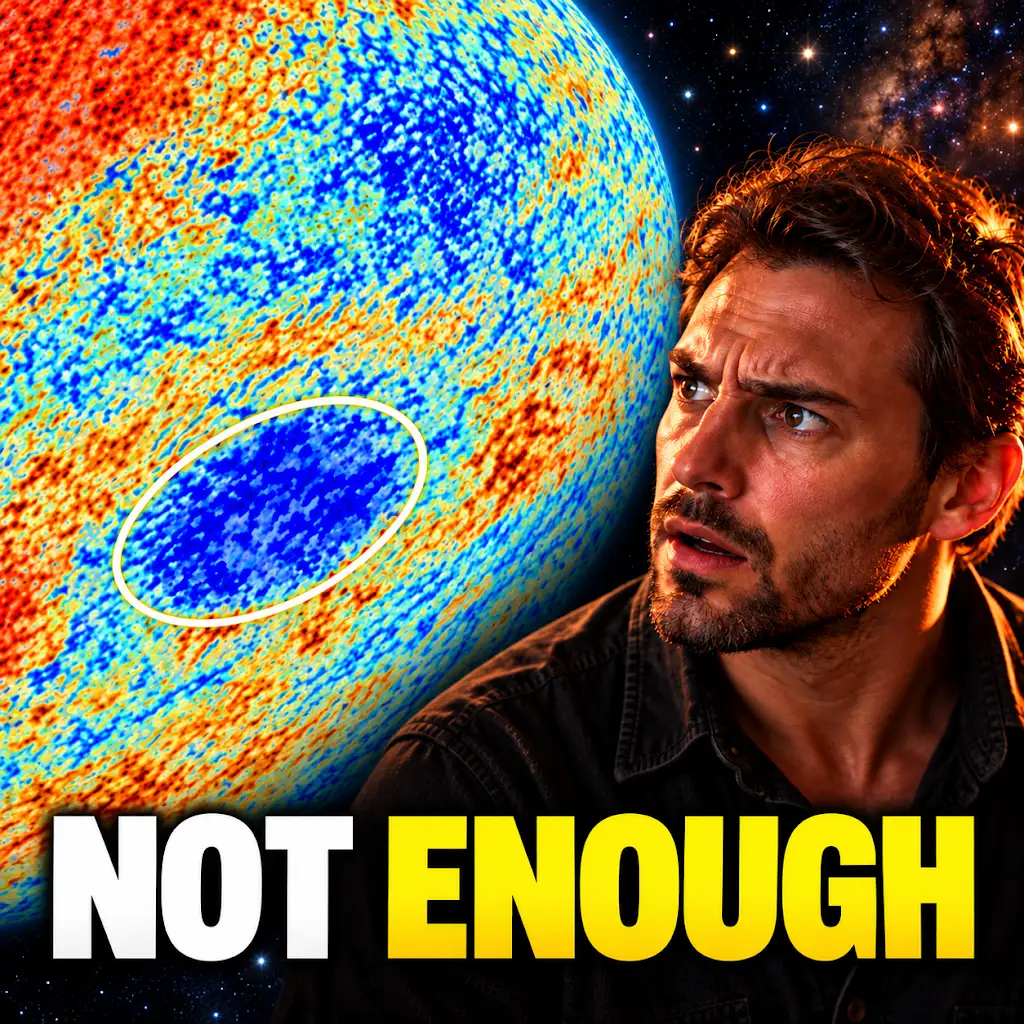
The Universe’s Cold Spot Has an Explanation. It’s Not Enough.
FAQs
What is a supervoid?
A supervoid is a vast region of space that contains significantly fewer galaxies and matter compared to the surrounding areas. It is essentially a large void or empty space in the universe.
What is a cold spot?
A cold spot is an area in the universe where the temperature of the cosmic microwave background radiation is lower than its average temperature. It appears as a cooler patch in the sky when observed through telescopes.
How are supervoids and cold spots related?
Supervoids are often associated with cold spots in the cosmic microwave background radiation. The lower density of galaxies and matter in supervoids can lead to a decrease in temperature, resulting in a cold spot in the universe.
What are the potential implications of supervoids and cold spots in the universe?
Studying supervoids and cold spots can provide valuable insights into the large-scale structure of the universe, the distribution of matter, and the evolution of cosmic structures. They can also help scientists better understand the nature of dark energy and dark matter.
How do scientists study supervoids and cold spots?
Scientists use telescopes and observational data to study supervoids and cold spots in the universe. By analyzing the distribution of galaxies, the temperature of the cosmic microwave background radiation, and other cosmic phenomena, researchers can gain a better understanding of these intriguing cosmic features.