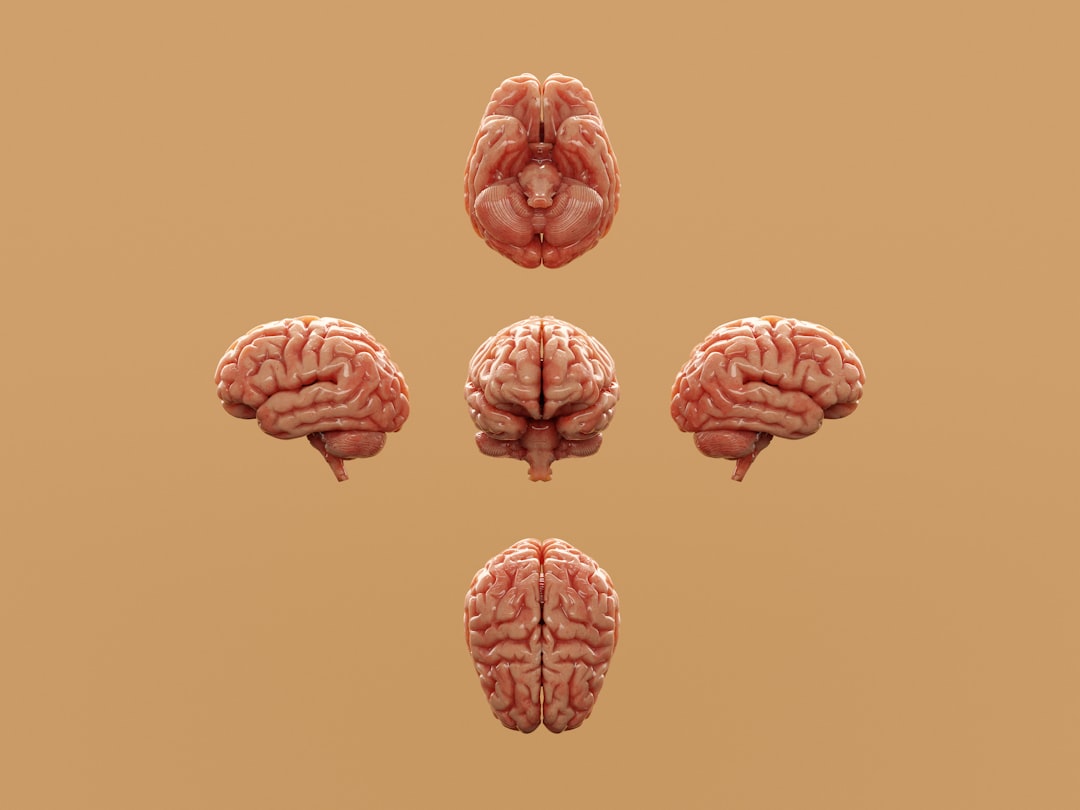
You stand at the precipice, a single point of consciousness in a universe teeming with information, desires, and demands. This is your battleground, an internal arena where your mind, a tempest of thoughts and emotions, clashes with the unyielding force of reality. It’s a constant negotiation, a sophisticated dance, and sometimes, a brutal slugfest, that shapes every decision you make, every ounce of joy you feel, and every sting of disappointment you endure.
Your brain, that three-pound marvel of biological engineering, is the ultimate architect of your perceived reality. It doesn’t just process external stimuli; it actively constructs your experience of the world. This is where your beliefs are forged, your memories stored, and your future dreamt. Understanding its incredible power is the first step in navigating this fundamental conflict.
The Illusion of Control: When Your Mind Paints the Town Red (or Grey)
You believe you possess absolute control, dictating your thoughts and feelings with precision. Yet, this is often an illusion. Your brain operates on a complex interplay of conscious reasoning and subconscious drives, ingrained habits, and evolutionary predispositions. You might intend to feel calm, but a surge of adrenaline, triggered by a perceived threat you haven’t consciously registered, can instantly hijack your emotional state. This disconnect between your conscious will and your automatic responses is a prime battleground. Your brain, in its wisdom (or perhaps, its ancient programming), can generate scenarios, anxieties, and desires that have no immediate basis in your current environment. It’s the classic “what if” syndrome, where your mind conjures up catastrophic possibilities that you then react to as if they are imminent threats. This is your brain attempting to protect you, albeit sometimes with an overzealous vigilance that can paralyze you.
The Echo Chamber: How Beliefs Shape Your Perception
Your beliefs are the lenses through which you view reality. If you believe the world is a hostile place, you’ll spend your days scanning for threats, interpreting neutral interactions as hostile, and reinforcing your initial belief. Conversely, a belief in abundance can make you more open to opportunities and more likely to see positive outcomes. This is not to say that beliefs are inherently good or bad, but rather to emphasize their profoundly biasing effect. Your brain actively seeks out information that confirms your existing beliefs, a phenomenon known as confirmation bias. This creates an echo chamber, where dissenting voices and contradictory evidence are either ignored or dismissed, solidifying your internal narrative and making it increasingly difficult to see beyond your self-constructed reality.
The Fantastical Playground: Imagination and Its Double-Edged Sword
Your imagination is a boundless realm, a vibrant canvas where you can create entire worlds, rehearse future scenarios, and explore the impossible. It’s the engine of innovation, the birthplace of art, and the source of much of your joy. You can spend hours lost in daydreams, conjuring up romantic encounters, thrilling adventures, or ambitious career paths. This capacity for fantasy is one of your brain’s most extraordinary gifts. However, this same playground can become a treacherous mire. When your imagination runs wild, unanchored by the constraints of reality, it can lead to unrealistic expectations, profound disappointment, and a gnawing sense of inadequacy. The perfect relationship you envisioned, the effortless success you predicted, the effortless happiness you craved – when reality inevitably falls short, the contrast can be devastating.
In exploring the intriguing relationship between brain perception and reality, one can gain further insights by reading the article on the fascinating topic of cognitive biases and how they shape our understanding of the world. This article delves into the ways our brains can distort reality, leading to misconceptions and misinterpretations. For more information, you can check out the article at Freaky Science.
The Unyielding Judge: The Imposing Nature of Reality
Reality, on the other hand, is the stubborn, indifferent force that exists independently of your thoughts and feelings. It’s the gravity that pulls you down, the laws of physics that govern your existence, and the consequences of your actions that you cannot escape. It doesn’t bargain, it doesn’t apologize, and it certainly doesn’t care about your aspirations.
The Cold, Hard Facts: The Objective Truth You Can’t Ignore
Facts, by definition, are objective. The sky is blue (on a clear day), water boils at a certain temperature, and two plus two equals four. Your brain can twist these facts, assign them emotional weight, or attempt to rationalize them away, but at their core, they remain immutable. You can believe with all your might that gravity doesn’t apply to you, but the moment you step off a cliff, reality will deliver an undeniable, and potentially fatal, lesson. This is where the battle is often most stark. Your brain might whisper, “I’m too good for this job,” while reality places a stack of rejection letters on your desk. Your mind might proclaim, “I deserve more,” while your bank account displays a starkly different narrative.
The Unforeseen Variables: The Chaos You Can’t Predict
Even with the most meticulous planning, the most brilliant strategies, reality often introduces unforeseen variables. A global pandemic can upend economies, a sudden illness can derail your career, or a chance encounter can alter the course of your life. Your brain is adept at pattern recognition and prediction, but the world is inherently chaotic, a complex system with innumerable interconnected factors. You can analyze probabilities, model scenarios, and strategize for every eventuality, but there will always be X-factors that lie beyond your comprehension and control. Your carefully constructed plan for a serene retirement might be shattered by market volatility or unexpected health expenses, forcing your brain to scramble to adapt.
The Natural Laws: The Boundaries You Must Respect
There are fundamental laws of nature that your brain, however powerful, cannot rewrite. You cannot breathe underwater indefinitely, you cannot fly by flapping your arms, and you cannot reverse the aging process. These are the hard boundaries of existence, the immutable rules of the game. Your brain can dream of immortality, can conjure fantasies of flight, but the physical limitations of your body and the universe are undeniable. Your attempts to defy these laws, however noble or ambitious, will ultimately be met with the unyielding force of reality. Think of the inventor who painstakingly designs a perpetual motion machine; his brilliant mind, while capable of incredible ingenuity, is ultimately bound by the laws of thermodynamics.
The Inevitable Collision: Where Mind Meets Material

The true essence of this battle lies not in the superiority of one over the other, but in their constant, dynamic interaction. You are a being who exists in both the mental and the material realms, and the friction between them defines your experience.
The Gap Between Expectation and Outcome: The Heartbreak of Unmet Desires
This is perhaps the most profound point of conflict. You cultivate expectations, build elaborate mental castles of how things should be, and then reality delivers a starkly different portrait. You might invest years of effort into a relationship, believing it will blossom into lifelong love, only to face a painful breakup. You might dedicate yourself to a career path, envisioning accolades and recognition, only to find yourself in a dead-end position. The gap between your internal narrative and the external unfolding of events is often a source of immense pain. Your brain, having invested so much emotional energy into a particular future, struggles to reconcile it with the unadorned truth. This can lead to feelings of bitterness, resentment, and disillusionment.
The Power of Adaptation: When Your Brain Learns to Bend
While reality is unyielding, your brain possesses an incredible capacity for adaptation. Faced with challenging circumstances, your mind can recalibrate, adjust expectations, and find new paths forward. This is not about accepting defeat, but about actively engaging with reality and finding ways to thrive within its parameters. The individual who loses a limb doesn’t simply cease to exist; their brain learns to compensate, to utilize new tools and techniques, and to redefine their capabilities. This resilience, this ability to learn and evolve in the face of adversity, is a testament to the power of your mind when it engages constructively with reality. Your brain, in essence, learns to negotiate with the unyielding judge, finding ways to achieve its goals within the given framework.
The Courage to Confront: Facing the Truth Without Flinching
The most courageous act in this ongoing battle is the willingness to confront reality as it is, without sugarcoating or denial. This doesn’t mean succumbing to pessimism, but rather acknowledging the facts, understanding the limitations, and then charting a course of action based on that understanding. Your brain might crave comfort and ease, but true progress often requires venturing into uncomfortable truths. This might involve admitting to yourself that a certain goal is unattainable, that a relationship is no longer serving you, or that your current approach is ineffective. This confrontation can be deeply unsettling, as it challenges the narratives your brain has carefully constructed, but it is also the foundation for genuine growth and effective decision-making.
Strategies for Navigating the Battlefield
Understanding the dynamics of this internal war is crucial, but actively engaging with it requires strategic thinking and consistent effort. You are not a passive observer; you are an active participant in shaping your experience.
Cultivating Mindfulness: Anchoring Yourself in the Present
Mindfulness is your secret weapon, a technique for anchoring your awareness in the present moment, free from the ruminations of your past or the anxieties of your future. When your brain starts to spin hypothetical scenarios or dwell on regrets, mindfulness brings you back to the tangible reality of now. It allows you to observe your thoughts and emotions without judgment, recognizing them as fleeting mental events rather than absolute truths. By practicing mindfulness, you develop a greater capacity to distinguish between the whispers of your imagination and the undeniable presence of the world around you. This detachment is invaluable in preventing your mind from creating exaggerated problems or dwelling on phantom threats.
Setting Realistic Goals: Aligning Aspiration with Possibility
The key to avoiding constant disappointment lies in setting realistic goals. This doesn’t mean abandoning dreams, but rather breaking them down into achievable steps that are grounded in the realities of your capabilities and the circumstances you face. Your brain might conjure a grand vision, but it’s your responsibility to assess what is actually feasible. This involves careful planning, an honest evaluation of your resources, and a willingness to adjust your trajectory as needed. When your goals are aligned with possibility, the gap between expectation and outcome shrinks, leading to a greater sense of accomplishment and sustained motivation. Instead of aiming for immediate superstardom, you might focus on mastering a skill, building a foundation, and incrementally working your way towards your larger aspirations.
Embracing Imperfection: The Beauty of the Flawed Reality
You are not a machine designed for flawlessness, nor is the world. Perfection is an abstract ideal, a construct of your mind that often serves as a source of unnecessary stress. Embracing imperfection means accepting that mistakes will happen, that things won’t always go according to plan, and that individuals (including yourself) are inherently flawed. Your brain might strive for an idealized outcome, but reality is often messy and unpredictable. By allowing for imperfection, you reduce the pressure on yourself and create space for grace and learning. This also extends to your interactions with others; when you accept their flaws, you foster more genuine and resilient relationships. It’s in the imperfections that the real stories unfold, the lessons are learned, and the true beauty of experience is often found.
In exploring the intriguing concept of brain versus reality, one can gain deeper insights by reading a related article that delves into the complexities of human perception and cognition. This article discusses how our brains interpret sensory information and how this process can sometimes lead to a distorted understanding of the world around us. For a more comprehensive look at these fascinating topics, you can check out the article here: brain versus reality.
The Art of Reconciliation: Finding Harmony in the Conflict
| Aspect | Brain | Reality |
|---|---|---|
| Processing Speed | Fast | Varies |
| Memory | Limitless | Finite |
| Emotions | Complex | Subjective |
| Decision Making | Logical | Contextual |
The ultimate victory in this battle isn’t about defeating one side, but about finding a way for your mind and reality to coexist, even to collaborate. This is an ongoing process of negotiation and understanding.
Learning from Mistakes: The Forge of Experience
Every misstep, every failed endeavor, is a potent lesson from reality. Your brain might process it as failure, but if approached with the right mindset, it becomes invaluable data. This knowledge, tempered by experience, informs your future decisions and allows you to navigate reality with greater wisdom. The sting of a past mistake, though unpleasant, helps you avoid similar pitfalls in the future. It’s through this iterative process of trying, failing, and learning that your mind becomes more adept at understanding and interacting with the world around you. You begin to see patterns, predict consequences, and develop a more nuanced understanding of what is truly possible.
The Power of Agency: Shaping Your Response
While you cannot always control reality, you always possess the power of agency – the ability to choose how you respond to it. Your brain can generate a myriad of reactions, from anger and despair to curiosity and determination. The choice of which response to embrace is yours. You can be a victim of circumstance, or you can be an active agent in shaping your experience, even within limitations. This is where your conscious will truly shines. Even in the face of overwhelming adversity, your ability to choose your attitude, your effort, and your perspective is a fundamental aspect of your humanity. It’s not about pretending the challenges don’t exist, but about actively deciding how you will engage with them.
Finding Meaning in the Mundane: The Gift of Perspective
Reality, in its raw form, can often feel mundane, repetitive, and lacking in inherent purpose. It is your brain’s capacity to find meaning that elevates the ordinary. You can imbue everyday experiences with significance, discovering joy in small moments, purpose in your work, and connection in your relationships. This ability to inject meaning into reality transforms it from a mere series of events into a rich tapestry of lived experience. It’s the difference between simply existing and truly living. By actively seeking out and creating meaning, you shift the focus from the starkness of reality to the richness that your mind can perceive within it. This is not about denying reality, but about enriching your experience of it through the power of your own understanding and interpretation.
Your journey is a testament to this ongoing battle. You are the brilliant architect of your inner world, constantly at odds and in conversation with the unyielding, indifferent force of existence. The true art lies not in conquering one over the other, but in finding the harmonious balance, the symbiotic relationship where your mind amplifies the beauty of reality and your reality grounds the dreams of your mind. It’s a lifelong endeavor, a continuous negotiation, and the most profound adventure you will ever embark upon. So, stand firm, embrace the challenge, and continue to learn, adapt, and thrive in the magnificent, messy arena of your life.

You’ve Never Experienced the Present
FAQs
What is the “brain versus reality” concept?
The “brain versus reality” concept refers to the idea that our brains can sometimes distort or misinterpret information from the external world, leading to discrepancies between our perception of reality and the actual reality.
How does the brain distort reality?
The brain can distort reality through various cognitive biases, such as confirmation bias, where we seek out information that confirms our existing beliefs, and the availability heuristic, where we overestimate the importance of information that is readily available to us.
What are some examples of the brain distorting reality?
Examples of the brain distorting reality include optical illusions, where our visual perception does not align with the physical reality, and memory distortions, where our recollection of past events may be influenced by our current beliefs and emotions.
How does understanding the brain’s role in distorting reality impact decision-making?
Understanding the brain’s role in distorting reality can help individuals make more informed decisions by being aware of their cognitive biases and actively seeking out diverse perspectives and information to counteract these biases.
What are some strategies for mitigating the brain’s distortion of reality?
Strategies for mitigating the brain’s distortion of reality include critical thinking, fact-checking, seeking out diverse perspectives, and being open to updating one’s beliefs based on new evidence. Additionally, mindfulness practices can help individuals become more aware of their cognitive biases and thought patterns.