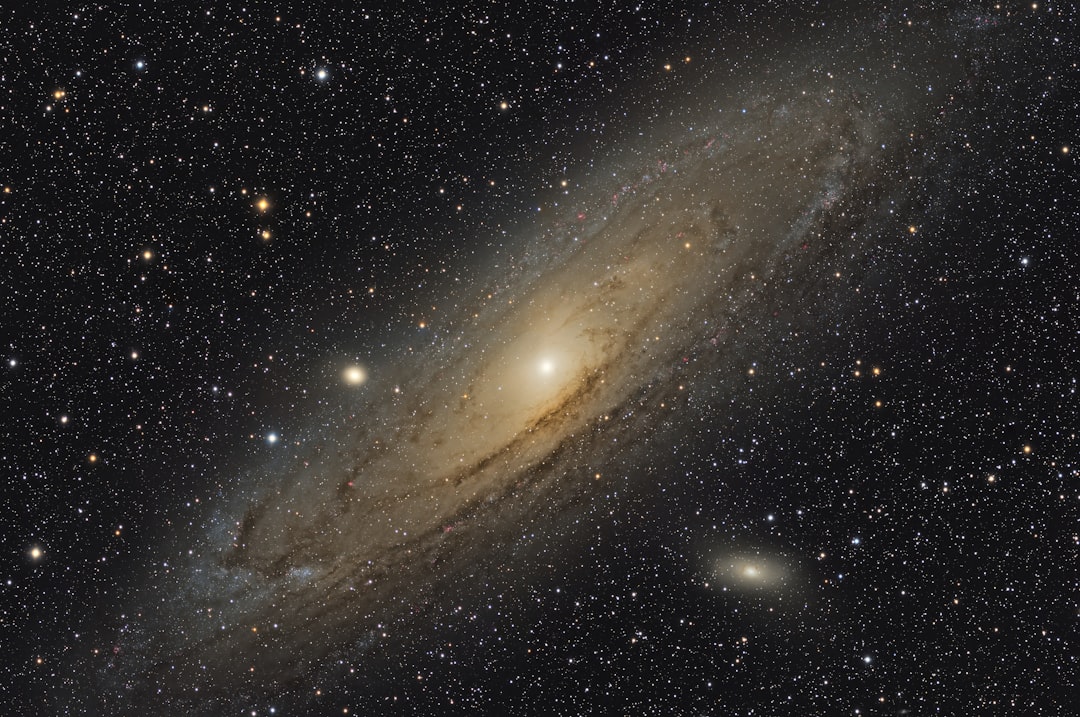
The Andromeda Galaxy, also known cataloged as M31 or NGC 224, resides in the constellation Andromeda. Its distance from Earth is approximately 2.537 million light-years. This celestial body represents the closest large spiral galaxy to our own Milky Way. This vast distance places it beyond the immediate neighborhood of our solar system, rendering it a significant object of study for understanding galactic evolution and large-scale cosmic structures. Its presence, observable in the night sky, has captivated astronomers and stargazers for centuries, providing a tangible link to the immense scale of the universe.
Discovery and Early Observations
The recognition of the Andromeda Galaxy as a distinct entity predates the understanding of galaxies as island universes. Early observations, dating back to the 9th century, described it as a “small cloud” or nebula. Notable observations include those by Persian astronomer Abd al-Rahman al-Sufi in 964 AD, who meticulously documented it in his Book of Fixed Stars. Later, in the 17th century, Simon Marius is credited with the first telescopic observation, noting its distinctive spiral appearance, though its true nature remained a subject of debate for a considerable period. William Herschel, in the late 18th century, cataloged it as a nebula, recognizing its distinct form but not its galactic classification. The prevailing view for a long time was that such nebulae were part of our own Milky Way.
The Great Debate and Edwin Hubble’s Contribution
The precise nature of spiral nebulae became a focal point of astronomical inquiry in the early 20th century. The “Great Debate” held at the Carnegie Institution in Washington D.C. in 1920, featured prominent astronomers like Harlow Shapley and Heber Curtis, who presented contrasting views on the size and scale of the universe. Shapley argued that the Milky Way was the sole galaxy, encompassing all known celestial objects. Curtis, conversely, proposed that spiral nebulae were indeed “island universes,” separate galaxies akin to our own, located at vast distances.
The definitive confirmation arrived with the work of Edwin Hubble in the 1920s. Using the powerful Hooker telescope at Mount Wilson Observatory, Hubble meticulously studied Cepheid variable stars within the Andromeda Nebula. Cepheid variables exhibit a direct relationship between their pulsation period and their luminosity. By observing the period of these stars, Hubble could accurately determine their intrinsic brightness. Comparing this intrinsic brightness to their apparent brightness as seen from Earth allowed him to calculate their distance. His findings unequivocally demonstrated that Andromeda was far beyond the confines of the Milky Way, establishing it as a separate galaxy and revolutionizing our understanding of the cosmos. This monumental discovery marked a paradigm shift in astronomy, expanding the known universe exponentially.
The Andromeda Galaxy, our nearest spiral galaxy neighbor, is located approximately 2.537 million light years away from Earth. This vast distance highlights the immense scale of the universe and the challenges of intergalactic travel. For those interested in exploring more about the universe and its fascinating phenomena, you can read a related article on this topic at Freaky Science.
Physical Characteristics of Andromeda
Size and Mass
The Andromeda Galaxy is a formidable spiral galaxy, surpassing the Milky Way in sheer dimensions. Its estimated diameter spans approximately 220,000 light-years, making it roughly twice the size of our home galaxy. This translates to a considerable expanse of stellar material and interstellar gas. The total mass of Andromeda is also substantial, estimated to be around 1.5 trillion solar masses. A significant portion of this mass is attributed to dark matter, an invisible and pervasive substance that exerts gravitational influence but does not interact with light. Understanding the distribution and nature of dark matter within Andromeda is a crucial aspect of astrophysical research aimed at unraveling the universe’s composition.
Stellar Population and Structure
Andromeda exhibits a typical spiral galaxy structure, characterized by a central bulge, a prominent disk, and an encompassing halo.
The Central Bulge
At the heart of Andromeda lies a dense, spheroidal bulge composed primarily of older, redder stars. This region is thought to be a site of intense stellar activity in the past and may harbor a supermassive black hole at its very center, a common feature in the cores of large galaxies. The current understanding suggests that the supermassive black hole in Andromeda’s nucleus has a mass of approximately 100 million solar masses.
The Galactic Disk
The most visually striking feature of Andromeda is its flattened, rotating disk. This disk is home to younger, bluer stars, as well as vast clouds of gas and dust that serve as the birthplaces of new stars. Within the disk, prominent spiral arms are clearly discernible. These arms are not static structures but rather dynamic regions where star formation is actively occurring, driven by density waves propagating through the galactic disk. The arrangement and complexity of these spiral arms provide valuable insights into the galaxy’s rotational dynamics and gravitational interactions.
The Galactic Halo
Surrounding the disk and bulge is the galactic halo, a diffuse, spherical region populated by older stars, globular clusters, and a significant component of dark matter. The halo is thought to be a remnant of the early universe and plays a crucial role in the overall gravitational potential of the galaxy.
Andromeda’s Galactic Companions
Satellite Galaxies
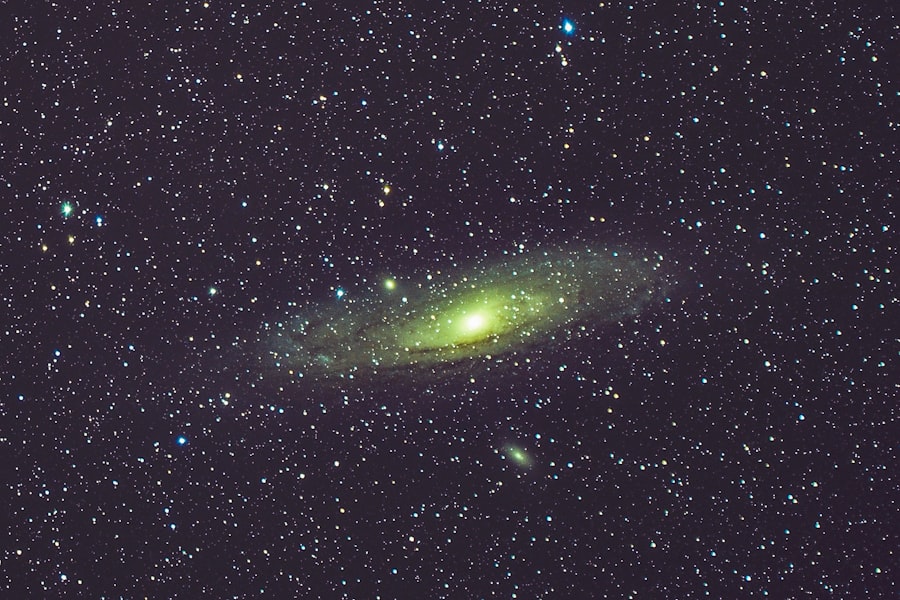
The Andromeda Galaxy is not an isolated entity but is surrounded by a retinue of smaller satellite galaxies. These smaller galaxies orbit Andromeda, much like the Moon orbits Earth, and their gravitational pull influences their dynamics and evolution. Observing these satellites provides crucial information about the distribution of matter in the local group and the processes of galactic accretion.
M32 and M110
Among the most prominent satellite galaxies are M32 and M110. M32 is a compact, elliptical galaxy located close to the center of Andromeda. Its small size and high surface brightness suggest it may have undergone significant tidal interactions with Andromeda. M110 is a larger, irregular galaxy, also gravitationally bound to Andromeda. Its irregular shape suggests it has been distorted by gravitational forces, possibly from Andromeda itself or other interactions within the local group.
The Local Group
Andromeda is a central member of the Local Group, a collection of over 50 galaxies, including our own Milky Way, bound together by gravity. The Local Group is characterized by two large spiral galaxies, Andromeda and the Milky Way, which are the dominant gravitational forces in the cluster. The Andromeda and Milky Way galaxies are on a collision course, a cosmic event that will unfold over billions of years. Current models predict a gradual merging process, culminating in the formation of a larger elliptical galaxy. This impending merger is a significant area of research for astrophysicists aiming to understand the long-term evolution of galactic systems.
Stellar Populations and Star Formation in Andromeda
Types of Stars
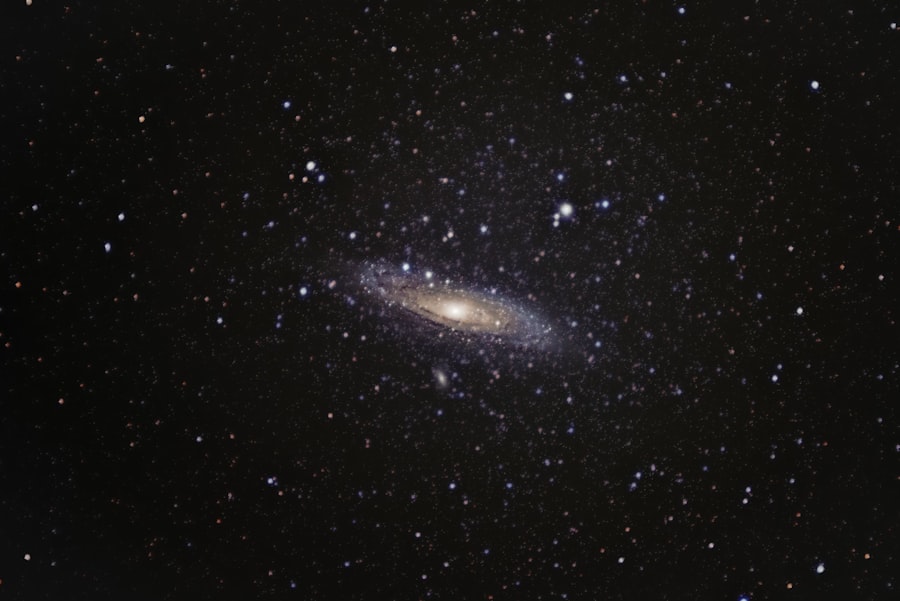
Andromeda hosts a diverse population of stars, reflecting its long and complex history of star formation.
Population I Stars
The spiral arms of Andromeda are rich in Population I stars, which are relatively young and metal-rich. These stars are commonly found in the galactic disk and are characterized by hotter temperatures and brighter luminosities. They represent the ongoing cycle of star birth and evolution within the galaxy.
Population II Stars
The galactic bulge and halo are populated by Population II stars. These stars are older and have a lower metallicity (fewer heavy elements) compared to Population I stars. They are typically cooler and redder and are considered relics of the early universe. Their presence provides crucial data points for reconstructing the early evolutionary stages of Andromeda.
Nebulae and Star Formation Regions
Vast clouds of interstellar gas and dust, known as nebulae, are abundant within the disk of Andromeda. These nebulae are the raw materials for star formation.
Emission Nebulae
Within these nebulae, regions of intense ultraviolet radiation from young, hot stars ionize the surrounding gas, causing it to emit light. These are known as emission nebulae, and they often appear as vibrant, colorful clouds in telescopic images. They are direct indicators of active star-forming nurseries.
Dark Nebulae
Interstellar space is also permeated by dark nebulae, which are dense clouds of dust and gas that obscure the light from stars behind them. While appearing dark, these regions are also crucial sites where gravitational collapse can initiate the formation of new stars and planetary systems.
The Andromeda Galaxy, our closest galactic neighbor, is located approximately 2.537 million light years away from Earth. This vast distance can be difficult to comprehend, but understanding it helps us appreciate the scale of the universe. For those interested in exploring more about the cosmos and its wonders, a related article can provide further insights into the mysteries of space. You can read more about it in this fascinating article.
Studying Andromeda: Methods and Significance
| Distance to Andromeda Galaxy | Light Years |
|---|---|
| Minimum Distance | 2.537 million light years |
| Maximum Distance | 2.5373 million light years |
Observational Techniques
The study of the Andromeda Galaxy relies on a variety of advanced observational techniques.
Optical Telescopy
Traditional optical telescopes, both ground-based and space-based, are fundamental for capturing images of Andromeda and analyzing its visible light spectrum. These instruments allow astronomers to map the distribution of stars, identify nebulae, and observe stellar populations.
Radio Astronomy
Radio telescopes are employed to detect emissions from neutral hydrogen gas and other molecules in the interstellar medium of Andromeda. This allows for the mapping of gas distribution, velocity, and the dynamics of the galaxy, providing insights into its structure and rotation.
X-ray and Gamma-ray Astronomy
Observations in X-ray and gamma-ray wavelengths are crucial for studying high-energy phenomena in Andromeda, such as the accretion disks around its central black hole and the remnants of supernovae. These high-energy emissions reveal energetic processes that are not visible in optical light.
Astrometry and Spectroscopy
Precise measurements of stellar positions and motions contribute to our understanding of Andromeda’s structure and dynamics.
Proper Motion Studies
Studying the proper motion of stars within Andromeda helps astronomers map the galaxy’s rotation and infer its mass distribution. This involves tracking the apparent movement of stars across the celestial sphere over extended periods.
Radial Velocity Measurements
Spectroscopic analysis, which splits light into its constituent wavelengths, allows for the determination of the radial velocity of stars. This tells us whether stars are moving towards or away from us, a key factor in understanding galactic dynamics and inferring gravitational forces. Spectroscopy also reveals the chemical composition of stars, providing clues about their age and origin.
The Significance of Studying Andromeda
The Andromeda Galaxy serves as a vital astronomical laboratory for understanding fundamental processes of galactic evolution.
Galactic Evolution Models
By studying Andromeda’s structure, stellar populations, and star formation history, astronomers can refine theoretical models of how galaxies form and evolve over cosmic time. Its similarities and differences with the Milky Way provide critical comparative data.
The Fate of Our Galaxy
The impending collision between Andromeda and the Milky Way makes studying Andromeda particularly significant for understanding the future of our own galaxy. The dynamics of this merger will shape the ultimate structure and characteristics of the resulting galaxy.
Understanding the Universe
As the nearest large spiral galaxy, Andromeda offers an unprecedented opportunity to study galactic phenomena at a level of detail that is not possible for more distant galaxies. This proximity allows for in-depth analysis, contributing to our broader comprehension of the universe’s composition, structure, and evolution. Its 2.537 million light-year distance allows us to peer into the past while simultaneously providing a blueprint for galactic processes on a grand scale.
FAQs
1. What is the distance to the Andromeda Galaxy in light years?
The Andromeda Galaxy is approximately 2.537 million light years away from Earth.
2. How was the distance to the Andromeda Galaxy measured?
The distance to the Andromeda Galaxy was measured using a variety of methods, including the use of Cepheid variable stars, supernovae, and the phenomenon of redshift in the galaxy’s light.
3. How long would it take to travel to the Andromeda Galaxy at the speed of light?
Since the Andromeda Galaxy is 2.537 million light years away, it would take approximately 2.537 million years to travel there at the speed of light.
4. How does the distance to the Andromeda Galaxy compare to other celestial bodies?
The Andromeda Galaxy is the closest spiral galaxy to the Milky Way, making it the closest large galaxy to our own. However, it is still a significant distance away compared to other celestial bodies in our own galaxy.
5. Will the Andromeda Galaxy collide with the Milky Way in the future?
It is predicted that the Andromeda Galaxy and the Milky Way will collide in approximately 4 billion years, forming a new galaxy often referred to as “Milkomeda” or “Milkdromeda.”