
The quest for materials that can dynamically alter their mechanical properties, particularly their stiffness, has long captivated the imagination of engineers and scientists. Traditional materials possess fixed mechanical characteristics, meaning their resistance to deformation remains constant under varying loads or environmental conditions. However, a new frontier in material science, mechanical metamaterials, is challenging this paradigm. These engineered structures, often with repeating unit cells, derive their macroscopic properties not from their constituent materials but from their precisely designed microarchitectures. Among the most exciting developments in this field is the emergence of switchable stiffness in mechanical metamaterials, offering the unprecedented ability to tune rigidity on demand.
The Concept of Mechanical Metamaterials and the Need for Adaptability
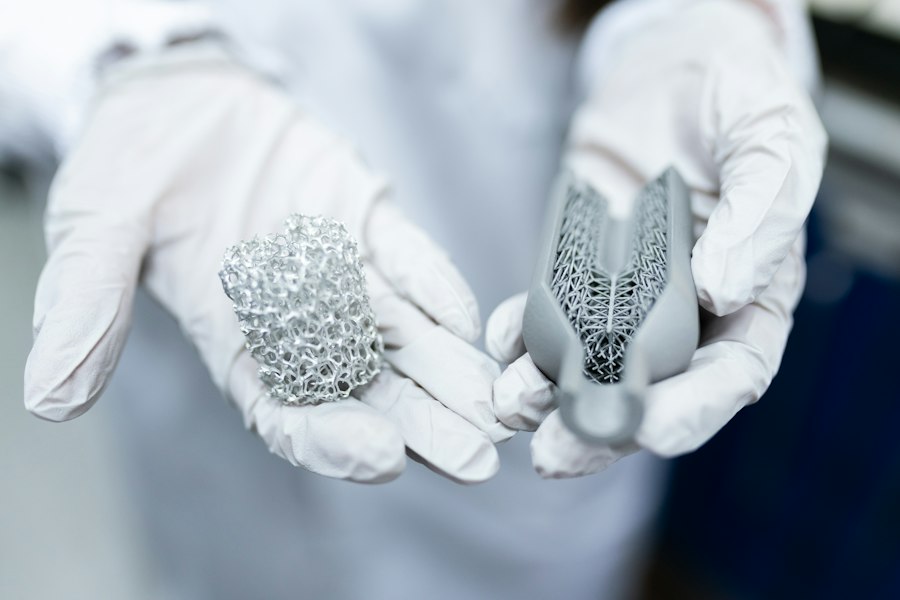
Mechanical metamaterials are artificial materials engineered with structures at sub-wavelength scales that exhibit mechanical properties not found in naturally occurring materials. Their behavior is dictated by the geometry and arrangement of their constituent elements, allowing for functionalities like negative Poisson’s ratio (auxeticity), negative compressibility, and the ability to manipulate wave propagation. The design principles often involve intricate lattice structures, carefully sculpted voids, and carefully chosen material combinations.
The inherent fascination with switchable stiffness stems from the limitations of conventional, static materials. Imagine a robotic gripper that needs to be rigid enough to securely grasp a delicate object without crushing it, but also adaptable enough to maneuver around obstacles. Or consider aerospace components that require extreme rigidity during flight but can be made more compliant for easier maintenance or assembly. The ability to dynamically adjust stiffness opens up a vast array of possibilities for intelligent and adaptive systems.
Traditionally, achieving variable stiffness has been approached through mechanical means, such as adding or removing structural elements, or by using actuators to deform a structure. While effective in some scenarios, these methods can be complex, bulky, and may introduce hysteresis or performance degradation. Switchable stiffness in metamaterials offers a more intrinsic and potentially elegant solution, where the material itself can change its resistance to deformation through an external stimulus. This paradigm shift promises to usher in an era of “smart” materials that can actively respond to their environment and operational demands.
Recent advancements in the field of mechanical metamaterials have led to the development of switchable stiffness materials, which can adapt their mechanical properties in response to external stimuli. These innovative materials have potential applications in various industries, including aerospace, robotics, and biomedical engineering. For further insights into the fascinating world of mechanical metamaterials and their applications, you can read a related article at Freaky Science.
Mechanisms for Inducing Switchable Stiffness
The realization of switchable stiffness in mechanical metamaterials relies on harnessing physical phenomena that can reversibly alter the mechanical response of the constituent microstructures. This typically involves a trigger mechanism that modifies the geometry, connectivity, or intrinsic properties of the metamaterial’s building blocks. Several promising avenues are being explored, each with its own set of advantages and challenges.
Thermal Actuation
One of the most intuitive methods for inducing stiffness changes involves thermal expansion or contraction. Materials that exhibit significant thermal expansion coefficients can be incorporated into the metamaterial’s design. When subjected to a temperature change, these elements expand or contract, altering the relative positions of structural components and thus the overall stiffness of the metamaterial.
Shape Memory Alloys (SMAs)
Shape memory alloys, such as Nitinol, are particularly well-suited for this approach. SMAs possess the remarkable ability to recover their original shape after being deformed, when heated above a specific transformation temperature. By integrating SMA elements into a metamaterial lattice, the heating and cooling cycles can induce significant structural rearrangements.
When cooled below their transformation temperature, SMAs are in a more ductile phase, allowing the metamaterial to deform more easily. Upon heating above the transformation temperature, the SMA elements transform to a stiffer phase, locking the structure into a pre-defined configuration and significantly increasing the overall stiffness. This bistable nature allows for a clear two-state stiffness. The transition can be triggered by electrical current passing through the SMA, providing a facile and controlled method for activation. Researchers are exploring ways to integrate SMA wires or beams into lattice structures, where their phase transitions directly influence the load-bearing capacity of the metamaterial. For instance, a lattice designed with SMA hinges could transition from a flexible configuration to a rigid one when heated, effectively “locking” the structure in place.
Thermally Responsive Polymers
Certain polymers also exhibit significant volume changes with temperature fluctuations. Incorporating these polymers, either as structural elements or as integrated components within the metamaterial, can lead to stiffness modulation. While often offering a more gradual stiffness change compared to SMAs, their lower cost and ease of processing can be advantageous for certain applications. For example, a metamaterial could be designed with internal channels filled with a thermally responsive polymer. Upon heating, the polymer expands, filling voids and increasing the overall stiffness. Cooling reverses this process.
Electrical and Magnetic Field Control
Leveraging the power of electromagnetic fields offers another elegant pathway to switchable stiffness, allowing for non-contact and rapid actuation. These methods often rely on materials that respond to external fields by changing their mechanical properties or geometry.
Electrically Actuated Polymers (EAPs)
Electrically actuated polymers, also known as “artificial muscles,” can undergo significant deformation when an electric field is applied. By integrating EAPs into the structure of a metamaterial, their expansion or contraction can directly influence the overall stiffness. For instance, EAP fibers woven into a lattice could be stretched or compressed by applying a voltage, thereby altering the tension within the lattice and affecting its stiffness.
Magnetorheological (MR) Fluids and Elastomers
Magnetorheological materials are suspensions of magnetic particles in a fluid (MR fluids) or an elastomer (MR elastomers). In their natural state, these materials exhibit a certain viscosity or elasticity. However, when exposed to a magnetic field, the magnetic particles align themselves along the field lines, forming chain-like structures. This alignment significantly increases the viscosity of MR fluids and the stiffness of MR elastomers.
By incorporating MR fluids or elastomers into the voids or structural elements of a metamaterial, the stiffness can be controlled by an external magnetic field. A lattice structure filled with MR fluid, for example, can transition from a relatively soft state to a much stiffer state as a magnetic field is applied, effectively “solidifying” the fluid and reinforcing the lattice. The reversibility of this process is a key advantage, allowing for rapid and precise control over the stiffness.
Piezoelectric Materials
Piezoelectric materials generate an electric charge in response to mechanical stress and, conversely, deform when an electric field is applied. Integrating piezoelectric elements into a metamaterial can enable switchable stiffness through electromechanical coupling. When an electric field is applied, the piezoelectric components will expand or contract, inducing strain within the metamaterial and altering its overall stiffness. This can be used to pre-stress or actively control the rigidity of the structure.
Mechanical Switching and Reconfiguration
Beyond external stimuli like heat or fields, some metamaterials achieve switchable stiffness through internal mechanical mechanisms, where the structure itself can be reconfigured.
Bistable Structures and Latches
Certain metamaterial designs inherently possess multiple stable configurations, each with a distinct stiffness. These “bistable” structures can be switched from one stable state to another through a localized mechanical trigger, such as a small impact or a precisely applied force. Once in a new state, they remain locked until another trigger is applied.
For example, a metamaterial might be designed with buckling beams that can be either in a straight, load-bearing configuration or a buckled, less rigid configuration. A specific force can trigger the buckling, reducing stiffness, while another force can unbuckle them, restoring stiffness.
Jamming and De-jamming Phenomena
Granular jamming, where a collection of particles transition from a loose, disordered state to a rigid, jammed state, offers a unique approach to switchable stiffness. This transition is typically driven by reducing the volume available for particle movement, forcing them into a tightly packed configuration.
Friction-Induced Jamming
In certain granular metamaterials, applying a normal load can cause the constituent particles to interlock and jam, significantly increasing the material’s stiffness. Removing the load or applying a shear force can de-jam the particles, returning the material to a more compliant state. This approach is particularly attractive for applications where simple pressure can be used to activate stiffness.
Volume Exclusion Jamming
Another form of jamming involves enclosing a granular material within a flexible membrane. When the membrane is deflated, the particles are free to move and the material is compliant. When the membrane is inflated, it compresses the granular material, forcing the particles to pack tightly and creating a rigid structure. This principle is the basis for “air muscles” and can be applied to metamaterial designs.
Design Strategies for Switchable Stiffness Metamaterials
The realization of switchable stiffness is not solely dependent on the choice of activating mechanism; the underlying metamaterial architecture plays a crucial role in amplifying and controlling the desired stiffness change. Researchers are employing various design strategies to optimize performance.
Unit Cell Design and Amplification
The fundamental building block of a metamaterial is its unit cell. Designing unit cells that are particularly sensitive to the chosen activation mechanism is paramount. For instance, a unit cell incorporating a hinge that can be locked or unlocked by thermal expansion will be more effective than one with a less sensitive hinge.
Amplification Mechanisms
Some unit cells are designed with internal mechanisms that amplify the displacement or force generated by the actuator. For example, a small thermal expansion in a specific component could trigger a larger geometric change in the unit cell, leading to a more pronounced stiffness variation. This amplification can be achieved through lever mechanisms, buckling structures, or other geometric arrangements.
Hierarchical Structures
In some advanced designs, hierarchical structures are employed. This means that the metamaterial is composed of unit cells, which themselves might contain smaller substructures that also exhibit switchable stiffness or contribute to the overall stiffness modulation. This multi-level approach allows for finer control and potentially larger stiffness variations.
Integration of Actuators and Responsive Elements
The successful implementation of switchable stiffness hinges on the effective integration of the chosen actuation mechanism within the metamaterial structure. This requires careful consideration of material compatibility, interfaces, and the overall structural integrity.
Embedded Actuators
Actuators like SMA wires, EAP films, or magnetic particles are often embedded within the lattice structure of the metamaterial. The placement and configuration of these actuators are critical to ensure they can effectively influence the mechanical response of the unit cells.
Responsive Material Infusion
In cases involving MR fluids or responsive polymers, the metamaterial might be designed with internal voids or channels that are then filled with these responsive materials. The porosity and connectivity of these channels are important factors in controlling the distribution and effectiveness of the responsive material.
Multi-functional Metamaterials
The concept of switchable stiffness can be combined with other functional properties to create truly advanced metamaterials. For example, a metamaterial could be designed to not only change its stiffness but also its damping characteristics or its acoustic properties in response to an external stimulus.
Tunable Damping
Many switchable stiffness mechanisms, particularly those involving jamming or viscous fluids, also influence the damping properties of the metamaterial. This allows for simultaneous control over both stiffness and vibration absorption.
Stimulus-Responsive Acoustic Properties
The geometric changes associated with stiffness switching can also impact the acoustic properties of the metamaterial, such as its sound transmission or reflection characteristics. This opens up possibilities for tunable acoustic cloaking or sound insulation.
Applications and Future Prospects
The ability to dynamically tune stiffness is a transformative capability with the potential to revolutionize numerous fields. The development of switchable stiffness in mechanical metamaterials is moving beyond theoretical exploration and into practical applications.
Robotics and Soft Robotics
Robotics is a prime area where switchable stiffness can offer significant advantages.
Recent advancements in the field of mechanical metamaterials have led to the development of switchable stiffness materials, which can dynamically alter their rigidity in response to external stimuli. This innovative approach has significant implications for various applications, including robotics and aerospace engineering. For a deeper understanding of the underlying principles and potential applications of these materials, you can explore a related article that discusses their unique properties and future prospects. Check it out here to learn more about this exciting area of research.
Enhanced Dexterity and Grasping
In robotic grippers, switchable stiffness can allow for both delicate manipulation and firm holding. A gripper could be designed to be soft and compliant for gently picking up fragile objects, then instantly stiffen to securely hold them during movement. This eliminates the need for complex and sensitive force feedback systems in some cases.
Adaptive Locomotion
For robots operating in unpredictable environments, switchable stiffness can enable adaptive locomotion. A robot’s limbs could be made more rigid for stable movement on uneven terrain and then become more compliant for navigating confined spaces or absorbing impact.
Compliant Actuation
In soft robotics, where robots are designed to mimic biological systems, switchable stiffness can be used to create more controlled and precise movements. Soft actuators could be stiffened at specific points to achieve more directed forces or to maintain a shape under load.
Biomedical Devices and Implants
The field of biomedical engineering can also benefit immensely from the advent of switchable stiffness materials.
Adaptive Prosthetics
Prosthetic limbs could be designed with tunable stiffness, allowing users to adjust the feel and responsiveness of their artificial limbs based on their activity. This could lead to a more natural and intuitive user experience.
Smart Implants
Biocompatible metamaterials with switchable stiffness could be used for implants that adapt to the body’s needs over time. For instance, an orthopedic implant could be initially more flexible to promote bone ingrowth and then stiffen to provide greater structural support as healing progresses.
Targeted Drug Delivery
Micro-scale metamaterials with switchable stiffness could potentially be engineered to change their shape or rigidity in response to physiological cues, enabling controlled release of drugs or other therapeutic agents at specific sites within the body.
Aerospace and Automotive Industries
The demand for lightweight yet strong materials in these industries makes switchable stiffness a highly attractive proposition.
Morphing Structures
Aerospace components, such as aircraft wings or satellite solar panels, could be designed to change their shape and stiffness in flight. This morphing capability could optimize aerodynamic efficiency or allow for deployment in confined spaces.
Adaptive Vibration Control
In automotive and aerospace applications, switchable stiffness metamaterials could be used to actively control vibrations. By adjusting the stiffness of structural components in real-time, manufacturers can reduce noise, improve ride comfort, and enhance structural integrity.
Structural Health Monitoring and Repair
The ability to sense and respond to stress could lead to new paradigms in structural health monitoring. Metamaterials with switchable stiffness might be able to stiffen around damaged areas to prevent further failure or to indicate the location and severity of damage.
Other Emerging Applications
The versatility of switchable stiffness metamaterials extends to a wide range of other potential applications.
Tunable Protective Gear
Protective equipment, such as helmets or body armor, could be designed to stiffen upon impact, providing enhanced protection.
Smart Textiles
Incorporating switchable stiffness elements into textiles could lead to clothing that adjusts its rigidity for support or comfort in different situations.
Reconfigurable Structures
The ability to dynamically alter structural properties opens up possibilities for reconfigurable furniture, architectural elements, and even temporary structures that can be rapidly adapted to changing needs.
Challenges and Future Directions
Despite the remarkable progress, several challenges remain in the widespread adoption and advancement of switchable stiffness mechanical metamaterials.
Scalability and Manufacturing
One of the most significant hurdles is the scalability of manufacturing these intricate microstructured materials. Current fabrication methods, such as 3D printing or microfabrication techniques, can be slow and expensive for mass production. Developing cost-effective and high-throughput manufacturing processes is crucial for commercial viability.
Durability and Fatigue Life
The repeated cycles of stiffness switching can impose significant stress on the metamaterial. Ensuring the long-term durability and fatigue life of these materials, especially under demanding operational conditions, is a critical area of research. Understanding failure mechanisms and developing robust designs are essential.
Energy Efficiency and Control
For applications requiring frequent stiffness adjustments, energy consumption becomes an important consideration. Developing actuation mechanisms that are energy-efficient and offer precise control over the stiffness transitions is vital. Furthermore, the development of sophisticated control systems to manage these transitions in complex environments is necessary.
Integration with Existing Systems
Seamless integration of these novel materials into existing engineering systems requires careful consideration of interfaces, compatibility, and overall system design. Developing standardized interfaces and robust connection methods will be important for widespread adoption.
The future of switchable stiffness in mechanical metamaterials is exceptionally bright. Continued research will likely focus on:
- Developing new actuation mechanisms: Exploring novel stimuli and materials to achieve greater stiffness ranges, faster response times, and lower energy consumption.
- Improving design methodologies: Leveraging computational tools and artificial intelligence for more efficient and predictive design of complex metamaterial architectures.
- Multi-physics integration: Combining switchable stiffness with other functional properties, such as electrical conductivity, thermal management, and sensing capabilities, to create highly integrated and intelligent materials.
- Exploring biological inspiration: Drawing inspiration from natural systems that exhibit adaptive mechanical properties to develop more sophisticated and efficient metamaterial designs.
In conclusion, the field of switchable stiffness in mechanical metamaterials represents a paradigm shift in material science. By engineering materials that can intelligently adapt their rigidity, we are unlocking a new era of possibilities across a vast spectrum of applications, promising to create more intelligent, efficient, and versatile technologies for the future. The ability to control stiffness on demand is no longer a futuristic dream but a tangible reality, actively being shaped by the ingenuity of researchers and engineers worldwide.

Pull Harder… and This Material Suddenly Gets Shorter
FAQs
What are switchable stiffness mechanical metamaterials?
Switchable stiffness mechanical metamaterials are materials engineered to have the ability to change their stiffness or mechanical properties in response to external stimuli, such as temperature, light, or magnetic fields.
How do switchable stiffness mechanical metamaterials work?
These materials are designed with specific structures that can undergo reversible changes in their configuration or properties when triggered by an external stimulus. This allows them to switch between different stiffness levels or mechanical behaviors.
What are the potential applications of switchable stiffness mechanical metamaterials?
Switchable stiffness mechanical metamaterials have a wide range of potential applications, including in soft robotics, adaptive structures, tunable vibration damping systems, and impact protection devices.
What are some examples of switchable stiffness mechanical metamaterials?
Examples of switchable stiffness mechanical metamaterials include shape memory alloys, liquid crystal elastomers, and materials with embedded microfluidic channels that can change their stiffness by altering the pressure or flow of a fluid.
What are the advantages of using switchable stiffness mechanical metamaterials?
The advantages of using switchable stiffness mechanical metamaterials include the ability to tailor their mechanical properties for specific applications, achieve adaptive or tunable behaviors, and potentially reduce the need for complex mechanical systems or actuators.