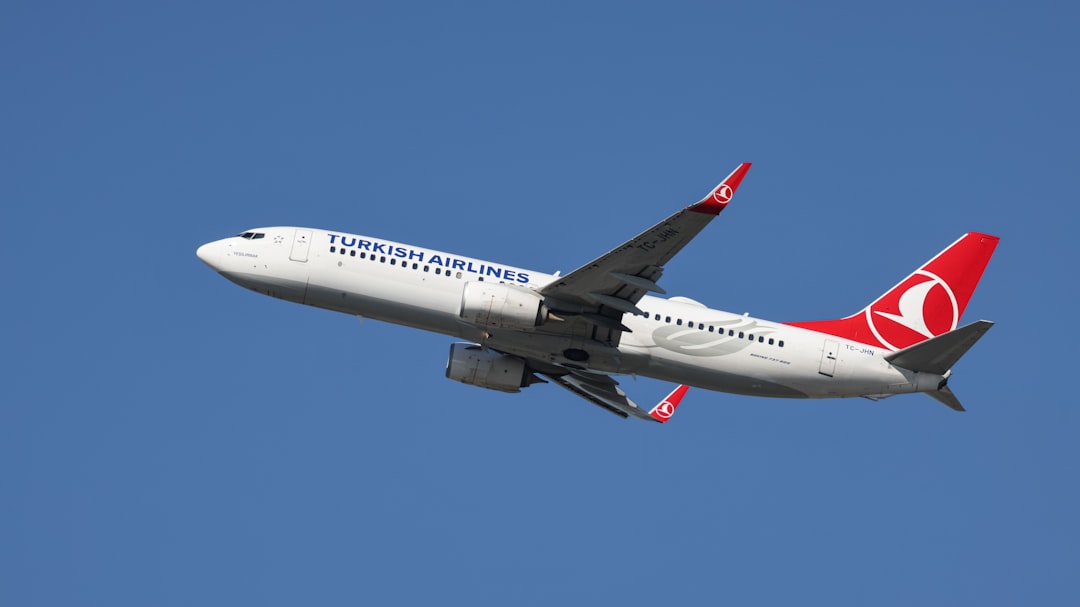
The aviation industry faces a significant challenge in mitigating its environmental impact, particularly concerning greenhouse gas emissions. Sustainable Aviation Fuel (SAF) has emerged as a crucial pathway to decarbonization. While the production and supply chain of SAF are vital, understanding its ignition behavior is paramount for its safe and efficient integration into existing and future aircraft propulsion systems. This article delves into the complex science of SAF ignition, exploring the factors influencing it and the implications for engine design and operation.
The ignition of any fuel, including SAF, is a complex chemical and physical process that involves a cascade of events leading to self-sustaining combustion. For aviation fuels, this process typically occurs within the combustion chamber of a gas turbine engine, where fuel is injected, atomized, mixed with compressed air, and then ignited. The efficiency and reliability of this ignition dictate engine start-up, re-light capabilities, and overall operational safety.
Autoignition and Spontaneous Combustion
Autoignition refers to the spontaneous ignition of a fuel-air mixture without the aid of an external ignition source, such as a spark plug. This phenomenon is governed by the fuel’s chemical properties, temperature, and pressure. In the context of SAF, its molecular composition, which differs from conventional Jet A-1, plays a significant role in determining its autoignition characteristics. For instance, SAF derived from hydroprocessed esters and fatty acids (HEFA) and e-fuels may exhibit different autoignition temperatures and pressures due to variations in their paraffinic and aromatic content. Understanding these differences is critical for ensuring that SAF operates safely under the wide range of conditions experienced within an aircraft engine, from low-temperature starts to hot engine re-lights at altitude.
External Ignition Mechanisms
While autoignition is a critical safety consideration, most engine ignitions rely on external sources. In gas turbine engines, high-energy spark igniters are commonly employed during start-up and for re-light procedures. The effectiveness of these igniters is influenced by several factors, including the fuel-air equivalence ratio, the local turbulence intensity, and the fuel’s physical properties. For SAF, droplet size distribution after atomization, as well as its vaporization characteristics, can impact the formation of an ignitable mixture around the spark. Researchers are investigating how these properties might subtly deviate from conventional jet fuel, potentially necessitating minor adjustments in igniter design or control strategies to maintain robust ignition performance across the SAF spectrum.
Recent studies have highlighted the importance of understanding the ignition behavior of sustainable aviation fuels (SAFs) in order to optimize their use in modern aircraft engines. A related article that delves into the intricacies of fuel combustion and its implications for aviation can be found at Freaky Science. This resource provides valuable insights into the chemical properties of SAFs and their performance compared to traditional jet fuels, paving the way for more environmentally friendly aviation solutions.
Impact of Fuel Properties on Ignition
The intrinsic properties of SAF, stemming from its diverse production pathways, directly influence its ignition behavior. These properties are analogous to the unique “fingerprints” of each SAF type, dictating how they interact with the combustion environment.
Compositional Variations
SAF can be produced through various conversion technologies, including HEFA, Fischer-Tropsch (FT) synthesis, alcohol-to-jet (ATJ), and direct sugar to hydrocarbon (DSHC). Each pathway yields a fuel with a distinct chemical composition, particularly concerning its paraffinic, iso-paraffinic, cycloparaffinic, and aromatic content. Conventional jet fuel typically contains a significant proportion of aromatics, which contribute to flame luminosity and soot formation but also influence ignition delay times. Many SAF types, particularly HEFA and FT-SAF, tend to be highly paraffinic with lower aromatic content, akin to opening a door into a room with different lighting. This compositional shift can alter the initial chemical reactions during ignition, potentially leading to faster or slower flame kernel development depending on the specific operating conditions and the presence of other species.
Physical Properties
Beyond chemical composition, physical properties such as density, viscosity, and volatility are crucial. Density influences the mass flow rate of fuel, while viscosity impacts atomization quality. Lower viscosity generally leads to finer droplets, which vaporize more readily, accelerating the mixing process and promoting faster ignition. Volatility, represented by parameters like flash point and distillation curve, dictates the ease with which fuel vaporizes and forms an ignitable mixture. Some SAF types may exhibit subtle differences in these physical properties compared to Jet A-1. For instance, fuels with a narrower boiling range or different vapor pressure characteristics might require recalibration of fuel injection systems to ensure optimal atomization and mixture formation for consistent ignition.
Lower Heating Value
The lower heating value (LHV) of a fuel represents the amount of energy released per unit mass during combustion. While not a direct ignition parameter, LHV influences the overall energy release during flame propagation and the temperature within the combustion chamber, which can indirectly affect re-ignition capabilities. Many SAF types have a slightly higher LHV than conventional jet fuel due to their higher paraffinic content, which means more energy is packed into the same mass of fuel. This can be beneficial for fuel efficiency but requires careful consideration in engine control systems, particularly during transient operations and re-light sequences, to ensure stable combustion.
Experimental and Computational Approaches

The thorough investigation of SAF ignition behavior relies on a combination of sophisticated experimental techniques and advanced computational modeling. These approaches serve as complementary tools, offering insights into different facets of the combustion process.
Ignition Delay Time Measurements
One of the most fundamental experimental metrics for characterizing ignition is the ignition delay time. This is the period between the introduction of reactants (fuel and air) into a high-temperature environment and the initiation of a discernible flame. Shock tubes and rapid compression machines are commonly employed to measure ignition delay times over a wide range of temperatures and pressures relevant to gas turbine engines. By testing various SAF blends and neat SAF components, researchers can establish empirical correlations between fuel composition, operating conditions, and ignition delay, providing crucial data for combustion model validation. These measurements help us understand how quickly the “spark” translates into a full-blown flame.
Combustion Rig Testing
While fundamental measurements provide valuable data, the ultimate validation of SAF ignition performance occurs in combustion rigs that simulate engine-like conditions. These rigs allow for the study of atomization, mixture preparation, igniter effectiveness, and flame propagation in a controlled environment. High-speed imaging, laser diagnostics, and emission measurements are utilized to visualize and quantify the ignition process. Such tests can reveal practical challenges, such as potential changes in lean blow-out limits or flame stability, which might not be evident from smaller-scale experiments. This is where the theory is put into practice, observing how SAF behaves in a mini-engine.
Computational Fluid Dynamics (CFD)
Computational Fluid Dynamics (CFD) models are indispensable tools for predicting and understanding the complex interplay between fluid flow, heat transfer, and chemical reactions during ignition. These models can simulate the atomization of fuel droplets, their vaporization, mixing with air, and the subsequent chemical pathways leading to ignition. Detailed chemical kinetic mechanisms for various SAF components are integrated into CFD codes to provide high-fidelity predictions of ignition delay, flame propagation speeds, and pollutant formation. CFD allows for the exploration of a much wider parameter space than is feasible with experiments, enabling systematic optimization of combustion chamber designs for SAF. It’s like having a digital laboratory to test countless scenarios.
Implications for Engine Design and Operations
The comprehensive understanding of SAF ignition behavior has direct and cascading implications for the design, certification, and operational procedures of aircraft engines. It’s not just about what the fuel is, but what it does in the engine.
Engine Starting and Re-light Capabilities
Robust engine starting at various ambient temperatures and altitudes is a critical safety and operational requirement. Similarly, the ability to re-light an engine in flight following an unexpected flame-out is paramount. Any significant deviation in SAF ignition characteristics compared to conventional jet fuel could necessitate adjustments to ignition system parameters, such as spark energy, timing, or fuel flow schedules during start-up. While current industry efforts aim for “drop-in” SAF, meaning no engine modifications are required, continuous monitoring and potential fine-tuning of engine control logic may be necessary as SAF blends become more prevalent and diverse. This ensures that the engine lights up reliably every time, regardless of the fuel type.
Combustion Stability and Lean Blow-out
Beyond ignition, maintaining stable combustion across the engine’s operating envelope is crucial. Lean blow-out (LBO) refers to the point at which the fuel-air mixture becomes too lean to sustain a stable flame, leading to engine flame-out. Some SAF types, particularly those with very low aromatic content, might exhibit slightly different LBO characteristics than conventional jet fuel. Understanding these differences is vital for avoiding flame-out under high-altitude, low-power conditions, which are particularly susceptible to LBO. Engine control systems may need to adapt to these subtle changes to ensure continuous and stable operation. It’s about keeping the flame burning steadily, even at the edge of its capabilities.
Materials Compatibility and Durability
While primarily focused on liquid fuel properties, ignition processes also interact with the materials used in combustion chambers and igniters. Elevated temperatures and unique flame characteristics associated with certain SAF formulations could, in principle, affect material degradation or coking tendencies over prolonged periods. Regular monitoring and validation of material compatibility, especially for igniter tips and fuel nozzles, will be essential to ensure engine durability and mitigate unexpected maintenance issues. The fuel must not only ignite well but also be kind to the engine it burns in.
Recent research on sustainable aviation fuel ignition behavior has highlighted the importance of understanding how these fuels perform under various conditions. A related article discusses the advancements in biofuels and their potential impact on reducing carbon emissions in the aviation industry. For more insights, you can read the article on this topic here. This exploration into alternative fuels is crucial for the future of environmentally friendly air travel.
Future Research and Development
| Parameter | Measurement | Unit | Value for SAF | Value for Conventional Jet Fuel | Notes |
|---|---|---|---|---|---|
| Ignition Delay Time | Time from start of injection to ignition | ms | 1.8 | 1.5 | SAF shows slightly longer ignition delay |
| Autoignition Temperature | Minimum temperature for self-ignition | °C | 210 | 195 | SAF requires higher temperature to ignite |
| Activation Energy | Energy required to initiate combustion | kJ/mol | 110 | 95 | Higher activation energy for SAF |
| Flame Speed | Rate of flame propagation | cm/s | 35 | 40 | SAF has slightly lower flame speed |
| Ignition Energy | Minimum energy to ignite fuel-air mixture | mJ | 0.25 | 0.20 | SAF requires marginally higher ignition energy |
The journey towards widespread SAF adoption necessitates ongoing research and development to address remaining uncertainties and optimize its integration. The field of SAF ignition behavior is dynamic and continues to evolve.
Expanding the SAF Portfolio
As new SAF production pathways emerge, a continuous assessment of their ignition properties will be required. Novel feedstocks and conversion technologies might introduce new molecular structures into SAF, necessitating further experimental and computational characterization. The goal is to build a comprehensive database of ignition behaviors for a diverse range of SAF types, akin to charting new territories on a map.
Advanced Diagnostics and Modeling
Further advancements in diagnostic techniques will provide even deeper insights into the microscopic processes governing ignition. For instance, advanced laser-based methods resolving chemical species concentrations and temperature profiles with higher spatial and temporal resolution will enhance our understanding of reaction pathways. Similarly, improvements in computational models, including more accurate chemical kinetic mechanisms and turbulent combustion models, will lead to more predictive capabilities, reducing the reliance on costly engine testing. This means sharper images and more precise predictions, allowing us to see and understand the ignition process with unprecedented clarity.
Hybrid and Electric Propulsion Systems
Looking ahead, the integration of SAF with hybrid-electric or fully electric propulsion systems will introduce new challenges and opportunities. While the core principles of fuel ignition remain, the operational envelopes and transient behaviors of these novel architectures may impose different demands on SAF. Research into the interaction between SAF combustion and electric power generation, particularly during engine start-up and transient load changes, will be critical for the next generation of aircraft. The evolution of aircraft design will demand a parallel evolution in our understanding of how SAF behaves within these new frameworks.
In conclusion, the ignition behavior of Sustainable Aviation Fuel is a cornerstone of its successful and safe adoption. By meticulously studying the chemical and physical processes involved, employing advanced experimental and computational tools, and continuously monitoring their implications for engine design and operation, the aviation industry can confidently navigate its path towards a more sustainable future. The careful exploration of SAF ignition behavior ensures that this vital fuel performs reliably, helping to keep our skies clean and safe.

WATCH NOW ▶️ SHOCKING: Why Your Air Is Literally A Lie
FAQs
What is sustainable aviation fuel (SAF)?
Sustainable aviation fuel (SAF) is a type of biofuel used to power aircraft that is produced from renewable resources such as plant oils, agricultural residues, or waste materials. It is designed to reduce carbon emissions compared to conventional jet fuel.
Why is ignition behavior important for sustainable aviation fuels?
Ignition behavior is critical because it affects how the fuel combusts in an aircraft engine. Proper ignition ensures efficient combustion, engine performance, and safety. Understanding ignition characteristics helps in optimizing fuel formulations and engine designs.
How does the ignition behavior of SAF compare to conventional jet fuel?
SAF generally has similar or slightly different ignition properties compared to conventional jet fuel, depending on its feedstock and production process. Some SAFs may have higher or lower ignition delay times, which can influence combustion efficiency and emissions.
What factors influence the ignition behavior of sustainable aviation fuels?
Factors include the chemical composition of the fuel, such as the presence of hydrocarbons, oxygenates, and aromatic compounds, as well as physical properties like viscosity and volatility. Engine operating conditions like temperature and pressure also play a role.
How is research on SAF ignition behavior conducted?
Research typically involves laboratory experiments using combustion chambers, shock tubes, or rapid compression machines to measure ignition delay times and combustion characteristics. Computational modeling is also used to simulate ignition processes and predict performance in engines.